
Stop Letting Video Game Addiction Hijack Your Life
Learn how to manage your dopamine levels, swap digital hits for lasting peace, and channel your gaming focus into real-world success. Start bridging the gap between digital achievement and a life that actually feels rewarding.
Transcript
Hi,
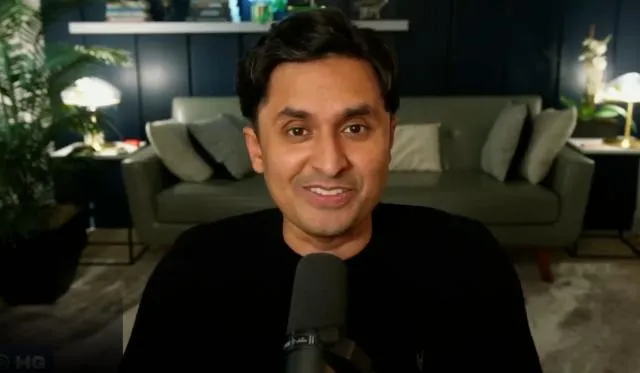
My name is Dr.
Alok Kanojia and today I'm going to explain why we get addicted to video games and hopefully lay a foundation so that you can develop a healthy relationship with video games and technology.
So if we want to understand how to overcome something that is addictive,
I think the best place to start is to understand why it's addictive in the first place.
And with video game addiction especially,
We have to understand why things are fun in the brain.
Now you may start by thinking like,
Oh it's because of dopamine and we get dopamine release and that's why games are addictive.
But it's way more than that,
Right?
So if we sort of think about it statistically,
Crystal meth or cocaine release somewhere between 1,
000 and 10,
000 times a normal dopaminergic release compared to video games which don't release anywhere near that.
And yet we don't have cocaine and crystal meth addiction that are 20 to 30 percent of the population,
Whereas video games are much more addictive.
The question is why?
So the evolutionary purpose of fun is to prepare us for life.
So you can take a look at like a kitten or a puppy or a human child and all of the activities that we engage in that are fun will prepare us for survival or success in the real world.
And if we look at how video games have evolved,
We realize they do way more things than simply dopaminergic stimulation.
Video games now have communities.
They give us a sense of identity.
So our video game characters get dressed a particular way.
We have certain cosmetics.
We can pick their hair color,
Their eye color.
My kids just started playing Monster Hunter Wild and I was stunned because my daughter spent three hours making her character where I haven't spent three hours making characters in the history of like 30 years that I've been gaming.
Key thing though is that if we look at the evolution of video games,
What we find is that there's community aspects,
There are identity aspects.
A lot of games are about optimizing.
A lot of games are about overcoming other people,
Being competitive.
And if we look at something like a battle royale game where there are 100 players at the start and one player wins at the very end,
There's a huge dopaminergic rush,
But it scratches something in our head.
Gaming is so addictive is because we have fundamental psychological needs that are mapped onto parts of our brain that the game is really,
Really good at satisfying.
So if we sort of think about developing a community,
Having a sense of identity,
These are all important goals in life.
And the basic problem with gaming is that the game scratches these itches for us in ways that is easier than real life.
It is easier to fix your appearance in a video game than it is to fix your appearance in real life.
It is easier to make friends online than it is to struggle through meeting people and dealing with social anxiety and feeling awkward and not knowing when you should say something and when you should shut up.
So games have basically given us an avenue to activate all the parts of our brain that are important for success in the real world,
But they make it easier in the video game.
And so our avenue to success with video game addiction is going to be building a life where our needs are met in the real world.
And once our needs are met in the real world,
The draw for the video game starts to reduce very drastically.
Once I feel good about the way that I look in the mirror,
I don't have to spend so much time customizing a character.
I can still do it,
But I'm not going to get a psychological sense of satisfaction.
I will do it because I enjoy it.
It'll become more recreation.
I can develop relationships online,
But I won't be dependent on my relationships online because I have relationships in the real world.
So what are the psychological needs that video games target?
The first is a sense of autonomy.
So in the real world,
It is really hard to do what you want.
I gotta wake up at a particular time.
I gotta go to work.
I gotta study for this test.
I gotta make this YouTube video.
I gotta edit this YouTube video.
I gotta upload this YouTube video.
So in the real world,
We don't get to decide what we do.
Enter video games.
In a game like Minecraft,
You can build whatever you want.
One of my kids come home from school and they're like,
Hey dad,
Can we build a pillow fort?
And I'm like,
Sure,
You can build a pillow fort.
But an hour from now,
All of the work that you've taken,
We're going to destroy and you have to arrange all the pillows back where they belong.
You have to put them on the couches,
Put them on the beds,
Whatever.
So if you think about the real world,
What can they build in the real world?
It's really hard.
Whereas what can you build in Minecraft?
You can devote a year of your life to build something incredibly amazing in Minecraft.
So the first thing that video games give us is autonomy.
The second thing that video games give us is a sense of triumph.
So this is something that's a little bit tricky,
But see,
Anytime something is difficult in life,
When we actually accomplish that thing,
We get a surge of dopamine and reinforcement.
So if you look at games that are too easy,
They feel boring.
If you look at games that are too hard,
We'll quit playing them.
Instead,
What we really look for are games that are punishingly difficult where we succeed in the end.
So not only from a societal standpoint,
But a dopaminergic standpoint,
Both of these things,
Our brain has been trained to value accomplishing things that are difficult.
And what have the game designers done?
They've created an illusion in the game,
Because the game is ultimately designed for you to win.
But it tricks your brain into feeling like things are hard,
And then when we succeed at the end,
We feel really great about it.
So we get a sense of accomplishment from video games.
We also get to activate our competitive drive.
So our brain has a part that doesn't like to lose.
And so when we play a video game,
We sort of activate this competitive drive.
We overcome other human beings.
But the problem is,
Unlike being at the top of your class in school,
Or winning first place at a science fair,
Or getting a promotion that was highly competitive,
When we win in a video game,
We don't really have much to show for it.
So this competitive drive in the real world leads us to success.
But in video games,
It leads us to a lot of nothing.
So video games,
I'm sure you all have noticed,
Will give you trophies,
They'll give you milestones,
They'll give you a sense of progress.
So as you play the game,
You're like,
Okay,
Now I accomplish this,
Now I accomplish this,
Now I accomplish this,
Now I accomplish this.
And that's ideally what we want to be doing in real life.
The problem is that accomplishing this,
This,
This,
And this in the real world is way harder than the video game.
So let's understand how this works.
So here's me,
Okay?
Remember we talked about autonomy,
Accomplishment,
Identity,
Community,
Competitiveness,
Progress,
Emotional regulation.
Now if you kind of think about it,
Which games are you attracted to?
So there are some people who are attracted to games like Minecraft,
And there's some really great research out of University of Toronto that really demonstrates how,
Depending on your personality type,
You're attracted to certain kinds of games.
So women,
For example,
Are more likely to be attracted to games that have social components and community building.
But there's a certain kind of game that you're attracted to.
Why are you attracted to that game?
Because there's a certain part of your brain that is very robust.
So why do people like to play Fortnite?
Why do people like to play competitive Valorant?
Why do people grind to get to the top of a ladder or a leaderboard?
So if you kind of think about it,
You have a part of your brain that is really,
Really designed to be competitive.
So this is a very strong part of your brain.
Now,
Your desire to be number one,
If we remove video games from the equation,
Is the thing that will lead you to the greatest success in life,
Right?
If you're a competitor,
If you're a gladiator,
If you want to be number one,
That drive and fire to be number one is your primary motivator for success.
Now here's the problem.
What games do is they take the strongest parts of your brain and they basically deviate them towards gaming.
So now if we look at the trajectory of your life,
If we take this really potent part of your brain,
Which is,
I want to be number one,
The game takes that strength of yours,
Artificially satisfies it in a video game,
And then deprives you of your strongest motivational drive.
This is true regardless of which part of the brain it's activating.
So if you are driven in life by forming connections with other people,
If you fall into online gaming,
You're going to form a lot of connections over there.
You will develop social anxiety,
And even though you feel really lonely,
That loneliness won't push you to actually form real-life connections,
Because you're going to kind of get deviated towards fulfilling this need in the game.
So the first thing that we have to understand is the very reason why we get addicted is the very thing that will help us overcome addiction.
So we want to take whatever that need is and try to channel it into the real world,
Because that's where we'll get the most positive feedback and the most motivation to actually engage in reality.
The second thing that we need to understand is that dopamine is a limited resource.
So dopamine does three things.
It gives us pleasure,
It gives us cravings,
And it gives us behavioral reinforcement.
Y'all got to remember,
I'm a doctor,
So my handwriting is terrible.
Okay?
So when we wake up in the morning,
Our brain is full of dopamine.
We've regenerated our vesicles,
And we have a bunch of dopamine.
And then there are two kinds of activities.
So we can do something like,
Let's say we play a video game,
Which is a high dopamine activity,
Or we study,
Which is a low dopamine activity.
So what I want you to do is think about the dopamine in your brain like a lemon that's full of juice.
So when the lemon is full of juice,
We don't have to squeeze very hard,
And we get a fair amount of juice out.
And the emptier the lemon gets,
The harder we have to squeeze to get juice out.
So what this sort of means is that I want y'all to think about a dope video game as a highly dopaminergic activity that squeezes a lot.
And think about studying like something that doesn't squeeze very much.
So if y'all have paid attention to yourselves,
What you'll notice is that when you first wake up in the morning,
If you play video games for four hours,
You feel kind of tired,
You feel kind of exhausted,
You don't feel like doing anything.
And then if you try to study,
It's going to feel really,
Really hard.
It's going to feel exhausting,
And at the end of it,
You sure as hell don't feel like studying again.
Now flip it around,
And if we study for the first four hours of the day,
We feel pretty good about ourselves.
After you study for four hours,
You can go play video games for four hours,
And there's still plenty of fun.
Now the reason for that is because when we wake up first thing in the morning,
Our brains are full of dopamine.
We play a video game,
And it's like a really tight squeeze.
We empty out the lemon.
Now once my lemon is completely dry,
If I sit down to do something like study,
There is no pleasure,
There is no craving,
And there is no behavioral reinforcement.
I don't wake up the next day and feel like studying.
If I play video games first thing when I wake up in the morning,
What do I feel like doing the next day?
I have a craving for video games,
I have behavioral reinforcement for games,
And I derive some degree of pleasure from playing when I wake up first thing in the morning.
So this is a really,
Really important thing to understand,
That when our brains are full of dopamine,
Any activity that we do will give us some degree of pleasure,
Will give us some degree of even craving,
And some degree of behavioral reinforcement.
So how did I overcome my video game addiction?
I started focusing on doing the right thing the first thing in the morning.
That's something I learned in these ashrams in India.
I wake up at 4.
30 every day,
And between 4.
30 and 9,
I would have a really productive day.
This is also how I got through medical school,
Studying only two hours a day,
Which I know sounds insane,
Because I was studying for like 15 hours a day.
And what I realized is that when my brain was fresh in the morning,
Instead of going to class for six hours and coming back and forcing myself to study,
If I woke up at 4.
30,
Did yoga for about 30 minutes,
Meditated for 30 minutes,
And I studied between 5 and 7 a.
M.
,
And then I would go to class,
I got a ton of stuff done.
So the key thing to understand here is that we want to engage in healthy activities while our dopaminergic circuits are full,
And the more healthy activities we engage in,
The more pleasure we will experience from them.
Now the next thing that we need to understand is the relationship between dopamine and serotonin.
So dopamine gives us a sense of pleasure,
And serotonin gives us a sense of peace or contentment.
And the problem is that when our dopamine levels are high,
Our serotonin levels tend to drop and vice versa.
So I'll give you all a really simple example.
So if I spend,
Let's say,
10 hours a day playing a video game,
I'm getting a lot of dopamine release,
But how do I feel about myself at the end of the day?
How do I feel about myself when I wake up tomorrow morning?
At the end of the day,
I feel terrible,
I feel guilty,
I feel like,
Oh my god,
I shouldn't have done that,
It was such a waste of time,
I wish I had done things differently,
My mood is low,
I don't feel content at all.
I don't think to myself,
Oh my god,
10 hours of gaming,
Like wasn't that awesome?
I can't wait to do that tomorrow.
I mean,
It was awesome,
But I don't feel peaceful about it.
I don't feel good about it.
On the flip side,
Let's say I wake up and I work for 10 hours a day,
Or I study for 10 hours a day,
How do I feel about myself at the end of the day?
Hopefully I'm patting myself on the back and I'm thinking to myself,
Man,
I got a ton of stuff done today,
Like that was awesome,
I feel really great about myself.
And so we see that there's an inverse relationship between these two neurotransmitters when it comes to our mood.
I've never had a patient who is shooting up heroin and fentanyl,
And I've had my fair share,
By the way.
I've never had a patient who shoots up a bunch of heroin and is like,
Man,
That was such a great way to spend a day.
They enjoyed it,
They got a lot of pleasure,
But over time,
It does not lead to peace or contentment.
In fact,
It leads to the opposite.
It leads to low mood,
It leads to anxiety,
It leads to feelings of guilt and desperation.
But once our serotonin levels are effectively low,
Once our mood is in the pits,
Then what is the way that we regulate that emotion?
How do we sort of fix that?
We become dependent on more dopamine.
Because if my life is falling apart,
And I know this incredibly well,
When I'm grinding on the Warcraft III ladder to try to get into the top 100 Warcraft III players in North America,
And I win a game,
And I climb 25 points on the ladder,
25 spots on the ladder because I beat someone who is like a top 10 player,
Then the dopaminergic surge that I get keeps the terrible mood at bay.
So the lower our serotonin becomes,
The more dependent we become on dopamine to feel good.
Now,
The flip side of it is kind of how I play games now.
So,
You know,
I worked a lot for a long time.
I went to India,
Became a monk,
Became a doctor,
Whatever.
I've got kids.
And so now what happens is my serotonin level is like,
I feel pretty good about my life.
And I'm grateful enough to have gotten a lot of support,
And that's why I'm sort of trying to pay it forward here today.
And so if you feel pretty content about your life,
Then dopamine and video games can be fun,
But you don't become dependent on them.
So what we want to do is be super careful about engaging in a bunch of dopamine and dropping our serotonin levels.
And on the flip side,
The more that we engage in activities that cost a certain amount of investment,
But allow us to feel good about ourselves,
The higher our serotonin levels will rise and the more resistant to the dopaminergic pull of video games we will be.
So now let's get to practicalities.
How do we sort of figure out how to overcome this kind of addiction?
So the first thing is,
If y'all are really struggling with an addiction and it's impairing your function,
If it's interfering with your physical health,
Your mental health,
Your professional life,
Your academic life,
I would strongly recommend that y'all see an actual mental health professional,
Because video game addiction can sometimes be comorbid with things like mood disorders,
Anxiety disorders,
Things like that.
So seeing a mental health professional,
I think is a great first place to start.
The second thing we want to do is take a look at the games that you are addicted to,
And try to figure out which of my needs does this video game actually satisfy.
So what do I get out of this video game?
When I play this game,
How do I feel about myself?
Is it scratching a competitive itch?
Is it giving me a sense of community and connection?
Is it giving me a sense of autonomy and freedom?
And then recognize that the very things that make you addicted to the game are the most important things for you to harness to fix your life.
So my general approach when I'm working with a patient is I will try to figure out why are you playing the game?
What does the game do for you?
That's step number one.
The second thing that I'll ask is how can we start giving you that in the real world?
What would the first step be?
So practically what I'll do is I'll ask them to generate a list of ideas.
I would say 10 to 20 items that will allow you to take one step forward in fulfilling that need in the real world.
Once you have 10 to 20 items,
Then what we're going to do is pick the top three.
And you're going to do one this week,
One next week,
And one the week after.
We're going to try all three.
So a big part of this is that you can't just pick one thing because it may not work out,
And then you kind of get back into the video game.
What we want is a plan for option number one,
Option number two,
And option number three.
Now this is also really important.
You have to schedule those options today.
Don't wait till next week to try number two.
So if you say,
Okay,
I like competition.
I like martial arts.
I think that's pretty cool.
I like programming.
I think that's pretty cool.
And I like chess or Go.
I think that's pretty cool.
What I would do is like open up Dr.
Google and search ways that you can do all three of those things.
Schedule one for this week,
One for the next week,
And one for the week after.
Okay,
So the key thing here is that we want to be able to fulfill our psychological needs in the real world.
Next thing that we want to do is for the first,
I would say minimum of one hour,
But up to four hours,
Do not touch a goddamn video game.
So recognize that anything that you do for the first four hours of the day when your dopaminergic circuits are full will be automatically reinforced,
Right?
So when you wake up and you struggle to stop gaming,
What you need to understand is the reason you're struggling is for hundreds of days,
You have reinforced that behavior when you wake up in the morning.
So what we need to start doing is instead of using willpower to overcome our video game addiction,
What we really want to do is engage in certain activities that give us a sense of pleasure,
Reward,
Or accomplishment before we play video games.
This may not come right away,
But what you want to really do is one to four hours of,
I don't care if it's cleaning,
Exercising,
I find going on walks to be very helpful when I was struggling with gaming addiction.
I would just go walk for like an hour.
Even when I was in med school and still struggling with it some,
What I would do is find that any time I really didn't feel like doing my work and I really wanted to play a video game,
I would go for an hour long walk.
And this is in Boston,
Even in 20 degree weather,
I would go for an hour long walk and it helped a lot.
So the first one to four hours of what you do every morning will be automatically reinforced because your dopaminergic circuits are full.
And even if it's not fun,
You will still get some degree of accomplishment and then you'll feel like doing it a little bit more tomorrow.
The last thing that we're going to talk about is changing your community and your environment.
So one of the key things that we've learned in addiction psychiatry is that basically,
If you maintain the environment that you have right now and the friends that you have right now,
It is very hard to accomplish behavioral change,
Right?
So when we have like,
When I have patients who are alcoholics,
One of the key things that they start doing that becomes critical for their success,
It's not just about the alcohol and the GABA and the dopamine and things like that.
They really have to change their environment because your environment will give you all kinds of cues that will trigger cravings within you.
We offer a bunch more resources here on the channel and other parts of Healthy Gamer about those kinds of things,
So y'all can check those out.
But the key thing here is that,
You know,
If a certain environment has produced an addiction,
If you put the person back in that environment,
They have a very high chance of relapsing.
So a big part of addiction psychiatry isn't just coming to the office and working with me as a therapist.
It's also replacing the bar with alcoholics anonymous meetings.
It means getting out of the house if the house is the place that you end up drinking a lot.
And for gamers,
What I strongly,
Strongly recommend that you do is find some sense of community or some kind of environmental change that is very different from what you are doing now.
So if you're someone who struggles a lot with gaming at home,
I'd say,
Like I said,
I would get out of the house,
I would go to the library a lot to do my work,
Like I'd wake up in the morning,
Pack my bag,
Go to the library,
Stay at the library until my work is done,
Be bored out of my fucking mind for like four hours a day for like a week,
And then it started to get better.
So remember that there's going to be some kind of withdrawal and rewiring process,
Which will probably take somewhere between 72 hours and maybe like up to a week,
Maybe two,
And then it really starts getting better.
So you have to really think about what are the environmental influences that push me to gaming.
That could be simple things like logging out of Steam or being invisible or logging out of Discord instead of Discord automatically popping up.
What are the community and environmental factors that make my mind think about gaming?
The cool thing is that if you do these things,
And you can by all means see a therapist,
You can work with one of our coaches who are really sort of specialized at working with people with technology addictions,
You know,
Definitely check that out if y'all need some help.
I think help goes a long way,
Especially if you want to accomplish things in a very short time frame.
So by all means,
Go the DIY route,
But if it's not working with you,
Get some help.
And what I found is really amazing is that when I have gamers who struggle with all these problems,
Remember,
They have really,
Really powerful brains that are highly attracted to particular things like optimization,
Factorio enjoyers much,
Right,
Or competitiveness.
And once instead of like taking that really potent part of their brain and wasting it on a video game,
The moment that we shift that faculty of the brain to the real world,
Not only do they turn their lives around,
But they excel.
So,
You know,
I'm just thinking about a patient that I had was a 15 year old who I dropped him off in an MIT startup because the dude was bored at school.
Like the reason he loved video games is because real life didn't provide any challenge.
Now you may not have those kinds of opportunities in your backyard.
And that's where it's easy to say like,
Oh,
Like,
Then I can't do that.
But that also is like a gamer mentality where it's like what you need like an FAQ where everything is laid out for you in order to get started.
The key thing here try to figure out,
You know,
What it is that really works for you in the game and try to produce it in the real world.
You'll be amazed at how quickly you bounce back.
Meet your Teacher

Related Meditations
Trusted by 35 million people. It's free.

Get the app