The world’s largest free audio library for everyday wellbeing
Devotional & Prayer
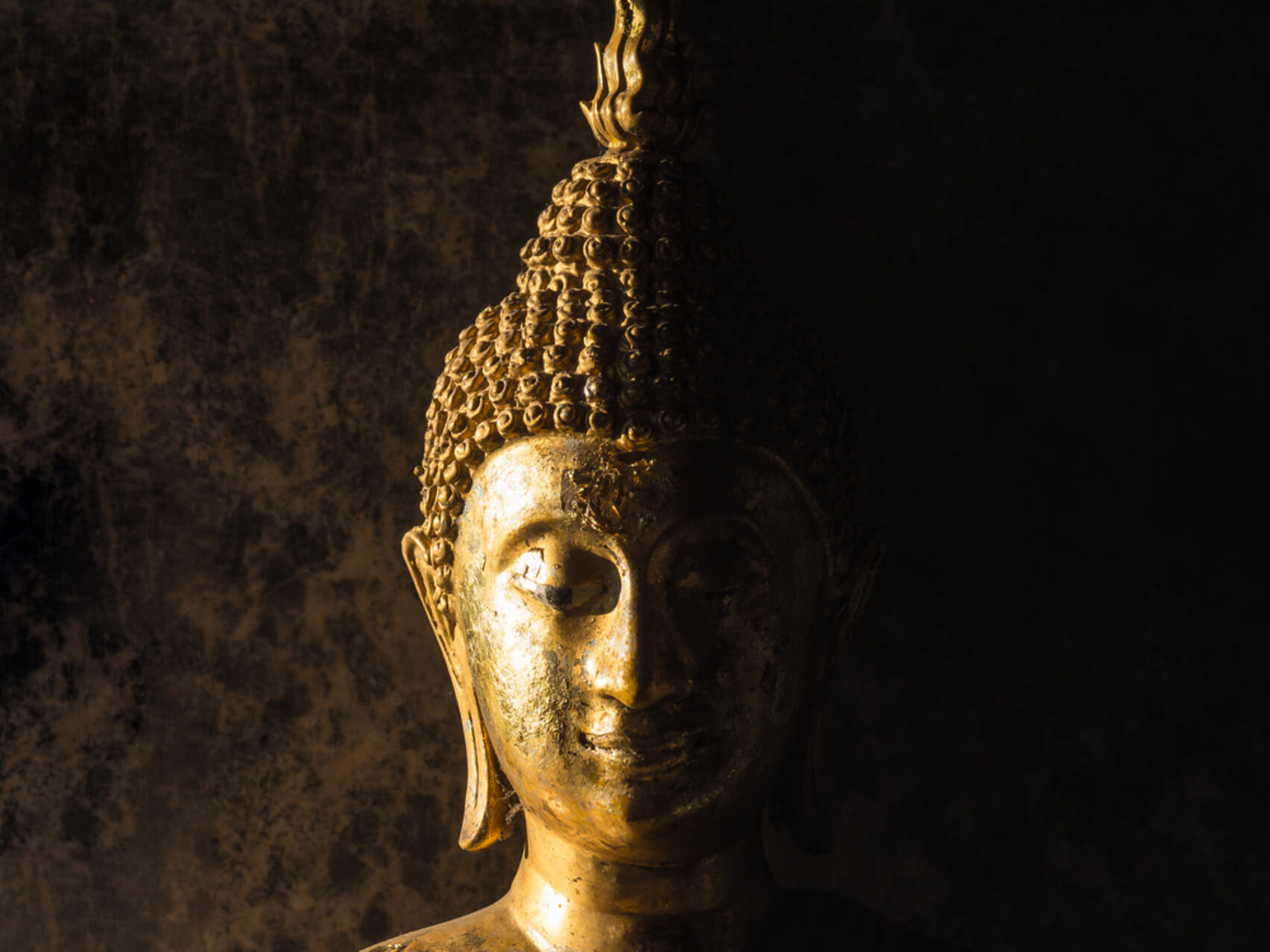
Buddhānussati (Recollection of the Buddha) is a canonical Theravāda devotional meditation in which the practitioner sustains contemplation of the Buddha's nine supreme qualities, one at a time, to cultivate faith, gladness, and steady concentration (Buddhaghosa & (translator), 1991).
Last Updated
3 Jul 2026
We are still reviewing this page. Our research team checks every technique page for accuracy and evidence quality before final release. Details may change as that review completes. The evidence badge shows our current reading of the published research.
RECOMMENDED DOSE
No direct dose-response evidence exists for Buddhānussati (recollection of the Buddha) at an introductory level. This is a conservative editorial starting point chosen to be achievable for someone new to seated recollection meditation.
The session length shown here is an editorial estimate with no direct evidence for this technique. The near-daily practice frequency is extrapolated from closely related contemplative programs — an 8-week programme built on brief, regular practice and an 8-week online mindfulness programme — which produced benefits through consistent practice over several weeks.
Session length remains an editorial estimate; no study reports a specific per-session duration for Buddhānussati. Sustained daily practice is extrapolated from related multi-week contemplative programmes that relied on regular, ongoing engagement to maintain effects.
Session length
Session length: 5–10 minutes
5
MIN
How long each individual practice session should last from start to finish.
Frequency
Frequency: 3–4 days
3
DAYS
The number of days per week to fit a session into your routine.
Session length
Session length: 15–20 minutes
15
MIN
How long each individual practice session should last from start to finish.
Frequency
Frequency: 5–7 days
5
DAYS
The number of days per week to fit a session into your routine.
Session length
Session length: 20–30 minutes
20
MIN
How long each individual practice session should last from start to finish.
Frequency
Frequency: 7 days
7
DAYS
The number of days per week to fit a session into your routine.
About this card. These recommendations are not a substitute for personalised guidance from a qualified practitioner. No dose-response trials exist for Buddhānussati itself; session lengths are editorial estimates and practice frequencies are cautiously extrapolated from related contemplative programmes, so treat all figures as starting points only.
Quick answers to what people most often ask. Each card links to the deeper section below.
evidence
No direct trials of Buddhānussati exist; evidence is borrowed from related practices. Meditation programs show small-to-moderate anxiety reductions, and a meta-analysis of spiritual interventions in cancer care found a small effect for anxiety and spiritual well-being. These adjacent findings suggest gentle steadying, not proof this specific recollection treats any condition.
Read moregood for
Buddhānussati suits adults drawn to a devotional frame who want to ease everyday anxiety, quiet a restless mind, or find steadiness when fear arises, especially those who already resonate with the Theravada tradition. It is not a substitute for care when anxiety, depression, or trauma symptoms are severe, and remains directly untested.
Read moresafety
Most healthy adults can practise Buddhānussati safely, and it tends to feel settling. A minority find that turning attention inward brings up difficult emotions or intrusive thoughts; a systematic review shows such reactions are uncommon but real. People with significant mental-health instability, acute anxiety, or recent trauma should proceed gradually and, where possible, with guidance.
Read morehow it works
Buddhānussati gives scattered attention a single, structured object by dwelling on one of the Buddha's nine awakened qualities at a time. Traditional sources describe this recollection settling attention into steadier focus while easing the effort to hold everything together, drawing calm from confidence in the Buddha's example rather than forcing the mind quiet.
Read moreBuddhānussati is a Theravāda devotional meditation that rests attention on the Buddha's nine awakened qualities, contemplated one at a time to cultivate faith, gladness, and steady concentration.
The practitioner sits quietly and rests attention on the Buddha's nine supreme qualities in turn, from Araham, the worthy one, through to Bhagava, the blessed one, dwelling on one quality at a time before moving to the next. Each quality is held as a meaning-rich image, and the mind is allowed to become absorbed in reverence and inspiration, cultivating faith, joy, and concentration. In its early setting, the sequence was also recalled deliberately as a formula when fear or dread arose.
Buddhānussati is a devotional recollection practice, not a breath- or body-scan meditation and not a petition to a god; in the Theravāda frame the Buddha is a fully awakened human exemplar, not a rescuing deity. It differs from mindfulness practices that observe passing experience without a fixed object, since here attention rests deliberately on the Buddha's qualities. It is the first of ten classical recollections (anussati) and should not be confused with the other recollection subjects, such as recollection of the Dhamma or of death.
Not to be confused with
Secular mindfulness meditation
Not the same as open, non-judgemental present-moment awareness. Buddhānussati deliberately fills attention with the Buddha's qualities and leans on reverence and trust, rather than bare noticing of whatever arises.
Passive resignation or giving up
The devotional surrender in this practice is active trust and self-offering, not fatalism or helplessness. The practitioner leans into confidence drawn from the Buddha's example, releasing the burden of self-directed control rather than abandoning effort.
Prayer to a rescuing deity
The Buddha is recollected as an awakened human exemplar, not a god petitioned to intervene. Steadiness and relief from fear come from confidence in his awakening and freedom from defilements, not from an appeal for divine rescue.
Buddhānussati appears to work by giving scattered attention a single, structured object to rest on, as the practitioner dwells on one of the Buddha's qualities at a time. Traditional sources describe this recollection as both settling attention into steadier focus and allowing a kind of devotional surrender, a release of the effort to hold everything together, as attention turns toward something felt as trustworthy and larger than the self (Canon & (translator), 2012). In its early setting the practice was also recalled deliberately to steady the mind when fear arose, drawing calm from confidence in the Buddha's example rather than from forcing the mind quiet (Anālayo, 2021). These are traditional and scholarly accounts of how the practice may work, not mechanisms measured in trials of this technique.
When holding everything together and managing doubt alone starts to feel exhausting, recollecting the Buddha's awakened qualities one at a time offers a kind of devotional surrender, a gentle release of self-directed control toward a trusted example larger than yourself. Traditional texts describe that weight easing into gladness and quiet confidence, and in its early setting the same recollection was used to steady the mind in the face of fear (Canon & (translator), 2012), (Anālayo, 2021).
When the mind keeps sliding off into worry, Buddhānussati gives it a fixed path to follow: you rest on one of the Buddha's nine qualities at a time, then move to the next. Traditional sources describe this steady recollection settling attention into clearer focus and quieter, less scattered thinking (Canon & (translator), 2012).
As attention rests on one of the Buddha's qualities at a time, the body's overall activation tends to lower: muscles loosen, breathing slows, and the pace of things eases. Classical Theravāda texts describe this settling as gladness and tranquility, noted in tradition rather than measured in modern studies of the practice (Canon & (translator), 2012).
Dwelling on a single quality like "knower of worlds" or "well-gone" can bring a quiet lift of gladness and steadier attention, as each phrase becomes a compact image the mind rests on. Tradition frames this as symbolic processing, the mind's way of linking an abstract ideal to felt meaning, though it describes how the practice may work rather than a tested effect (Canon & (translator), 2012).
What happens in the body has not been measured during Buddhānussati itself, so the closest evidence comes from meditation programs studied more broadly, not this practice specifically. In a trial of adults with Parkinson's disease, meditation compared with usual care lowered interleukin-6, one of the immune signals that rises with inflammation, alongside reduced anxiety over six months (Burke et al., 2016). A downward shift like this is the kind of change some people may feel as the body becoming less keyed-up, muscles loosening, and the pace of things slowing. Traditional texts describe the recollection giving rise to gladness and tranquillity, a progressive settling felt as easing tension rather than anything recorded on an instrument (Canon & (translator), 2012).
When stress lingers, the body can feel physically on-edge and run-down. In clinical trials, sustained meditation lowered interleukin-6, one of the immune signals that rises with inflammation, alongside easing anxiety (Burke et al., 2016). Buddhānussati itself has not been measured this way, so a downward shift like this is what related practice suggests you might feel as the body settling, not a confirmed effect of this recollection.
The evidence here is indirect: Buddhānussati has not been trialled on its own, so what support exists comes from research on related meditation and spiritual practices. Broader meditation programs show small-to-moderate reductions in anxiety (Goyal et al., 2014), reviews of religious and spiritual interventions report reduced anxiety across 23 randomized trials (Gonçalves et al., 2015), and in cancer care spiritual interventions have been linked to modest gains in anxiety, mood, and spiritual well-being (Gokhale, 1980). The clearest signal across these adjacent practices is for anxiety and a felt sense of spiritual well-being. What is not yet supported: any large trial of this specific recollection, long-term follow-up, or a claim that it treats a diagnosed condition.
The most consistent finding from related research is that meditation and spiritual practices produce small reductions in anxiety. A meta-analysis in cancer care, for example, found a Hedges' g of 0.30 for anxiety, a small effect versus comparison groups, meaning the average participant ended up calmer than roughly six in ten of those who did not practise, with similarly modest gains for spiritual well-being (Gokhale, 1980). None of this research tested Buddhānussati itself, so it stands as encouraging context rather than proof, and study quality, populations, and outcome definitions vary widely, with some findings in seriously ill patients coming out mixed or inconclusive.
The research is useful for setting expectations, but study methods and participant groups vary. Treat the findings as general guidance rather than a promise about any single session, and not a replacement for clinical care.
Buddhānussati is a classical Theravāda practice, listed in the 5th-century Visuddhimagga as the first of the ten recollections and rooted in earlier canonical texts where recollecting the Buddha was taught to steady the mind against fear (Buddhaghosa & (translator), 1991), (Anālayo, 2021). In the Theravāda worldview the Buddha is a fully awakened human exemplar rather than a rescuing deity, so dwelling on his qualities draws confidence from his awakening rather than appealing for intervention. These roots help explain the practice's form, the staged recollection of nine qualities and its devotional framing, not its clinical effects.
For most healthy adults, Buddhānussati is low-risk and tends to feel settling: attention rests on one of the Buddha's qualities at a time, and the body often softens as the practice continues. A few situations still call for care. Some people find that turning attention inward brings up difficult emotions, intrusive thoughts, or unease rather than calm; a systematic review of meditation practices found these harder reactions are uncommon but real, a safety signal drawn from research on meditation broadly rather than from this practice specifically (Farias et al., 2020). And because recollection invites reverence and self-offering, grief, loss, or raw emotion can surface during quiet contemplation, a practice-informed caution rather than a documented clinical risk. If recollection begins to feel distressing instead of steadying, ease off and reach out for support.
Take extra care if you are currently living with significant mental-health instability, acute anxiety or low mood, or recent trauma. Approach sustained or intensive contemplation gradually, and where possible with a teacher or clinician, since inward focus can occasionally intensify these states rather than ease them. This is a practice-informed and evidence-informed caution, not a contraindication: the adverse-event evidence comes from meditation generally and included some practitioners with no prior mental-health history, so no group is strictly excluded. If you are in active treatment for a psychiatric condition, treat Buddhānussati as a complement to that care, not a replacement for it, and let your clinician know you are practising.
For most healthy adults recollection feels settling, but turning attention inward can occasionally bring up difficult emotions, intrusive thoughts, or unease rather than calm. A systematic review of meditation practices found these harder reactions are uncommon but real. If practice starts to feel distressing instead of steadying, shorten the session, open your eyes, ground in the room and the body, and reach out for support (Farias et al., 2020).
| Technique | Best for | Use with care | Evidence strength | Distinction |
|---|---|---|---|---|
| Secular mindfulness meditation | Readers who want a well-studied, belief-neutral attention practice for stress and anxiety. | Some people find a stripped-down attention drill harder to sustain without the meaning and reverence a devotional frame provides. | moderate EVIDENCE | Mindfulness trains open, present-moment awareness without a devotional object, noticing whatever arises without judgement. Buddhānussati instead fills attention with the Buddha's admirable qualities and leans on reverence and trust rather than bare noticing. Mindfulness carries a large modern research base; Buddhānussati has not been tested directly, so its evidence is inherited from the wider meditation literature and traditional sources. |
| Loving-kindness (Mettā) meditation | Readers wanting to soften self-criticism and build warmth toward themselves and others. |
Buddhānussati (Recollection of the Buddha) is a Theravāda devotional meditation in which you rest attention on the Buddha's nine awakened qualities, one at a time, letting the mind settle into reverence and steady focus (Buddhaghosa & (translator), 1991).
+
Buddhānussati is a classical Theravāda practice, systematized in the 5th-century Visuddhimagga, that contemplates the Buddha's nine supreme qualities in turn, from Araham (worthy one) through to Bhagava (blessed one) (Buddhaghosa & (translator), 1991). In practice you dwell on one quality at a time, holding it as a meaning-rich image and letting gladness, faith, and steadier concentration build before moving to the next. It is a devotional reflection rather than a breathing or body-scan technique, and a contemplative practice rather than a treatment for any condition.
Nine, held one at a time: Araham (worthy one), Samma-sambuddho (perfectly self-awakened), Vijja-carana-sampanno (endowed with knowledge and conduct), Sugato (well-gone), Lokavidu (knower of worlds), Anuttaro purisa-damma-sarathi (unsurpassed guide), Sattha deva-manussanam (teacher of gods and humans), Buddho (awakened), and Bhagava (blessed one) (Buddhaghosa & (translator), 1991).
+
They form the traditional Theravāda recollection formula systematized in the 5th-century Visuddhimagga, where the practitioner dwells on one quality at a time before moving to the next (Buddhaghosa & (translator), 1991). Each is held as a meaning-rich image of awakened potential rather than analysed, letting the mind settle into reverence and inspiration. This describes the canonical contemplation sequence, not a clinical or treatment claim.
Recollection of the Buddha: a Theravāda devotional meditation in which you contemplate the Buddha's nine supreme qualities one at a time, letting the mind settle into reverence and inspiration.
The ten classical recollections used as meditation subjects in Theravāda practice. Buddhānussati is listed as the first of them.
The traditional list you dwell on: Araham (worthy one), Samma-sambuddho (perfectly self-awakened), Vijja-carana-sampanno (endowed with knowledge and conduct), Sugato (well-gone), Lokavidu (knower of worlds), Anuttaro purisa-damma-sarathi (unsurpassed guide), Sattha deva-manussanam (teacher of gods and humans), Buddho (awakened), and Bhagava (blessed one).
A threshold of steady, collected attention just short of full absorption, felt as the mind becoming gathered and quiet. Traditional manuals say Buddhānussati tends to reach this level rather than deep absorption, because the qualities contemplated are so profound.
Upacāra samādhi: a preliminary stage of concentration adjacent to but short of jhāna (full meditative absorption), described in Theravāda meditation manuals as the level typically attained through recollection subjects.
Confidence or trust in the Buddha's awakening, felt as steadiness and reassurance rather than blind belief. Traditional sources describe recollection as strengthening this quality.
The uplift of joy and gladness that traditional texts describe arising during recollection, experienced as a warm brightening of mood and inspiration.
A settling of body and mind that classical sources name as a fruit of the practice, felt as loosening tension and a slower, less driven pace.
Buddhaghosa, Bhikkhu Ñāṇamoli (translator) (1991). Visuddhimagga, Chapter VII: The Six Recollections / Recollection of the Buddha.
Cited in: Faq, Research, Roots and tradition, What it is
Madhav Goyal, Sonal Singh, Erica M. S. Sibinga, Neda F. Gould, Anastasia Rowland-Seymour, Ritu Sharma (2014). Meditation Programs for Psychological Stress and Well-being: A Systematic Review and Meta-analysis. https://doi.org/10.1001/jamainternmed.2013.13018
Explore guided sessions to deepen your Buddhānussati (Recollection of the Buddha) technique.
Because recollection invites reverence and self-offering, grief, loss, or raw feeling can surface during quiet contemplation. This is a practice-informed caution rather than a documented clinical risk: if strong emotion or old memories arise, ease off, let the breath find a slower pace, and talk with an experienced teacher or clinician rather than pushing through alone.
Take extra care if you are living with significant mental-health instability, acute anxiety or low mood, or recent trauma, since inward focus can occasionally intensify these states rather than ease them. Approach sustained or intensive contemplation gradually and, where possible, with a teacher or clinician. The adverse-event evidence comes from meditation generally and included some people with no prior mental-health history, so treat Buddhānussati as a complement to any active treatment, not a replacement, and let your clinician know you are practising (Farias et al., 2020).
Buddhānussati sits most comfortably as a brief, unhurried practice where you rest attention on a single quality of the Buddha and notice how it feels before you extend the time. A gentle beginner's format works well: a few settling minutes, an eye kept on whether you are steadying or growing more agitated, and the freedom to ease off whenever quiet contemplation turns unsettling. If it is best held alongside any care you are already receiving, treat it as a complement rather than a replacement and keep support within reach.
Start with just a few minutes, resting attention on one quality of the Buddha at a time, so you can feel how the practice sits with you before extending it. Building up gradually lowers the intensity most linked to difficult reactions in the broader meditation research.
Notice whether the mind is settling or growing more agitated. A little restlessness is normal; rising anxiety, low mood, or scattered, intrusive thinking is a signal to slow down.
If the practice starts to feel unsettling rather than steadying, shorten the session, open your eyes, and bring attention back to the room and the body, letting the breath find its own slower pace before you stop.
If difficult emotions or thoughts linger after practice, or if grief or old memories surface strongly, talk with an experienced teacher or a mental-health clinician rather than pushing through alone.
If you are being treated for anxiety, depression, or the after-effects of trauma, practise Buddhānussati alongside that treatment rather than in place of it, and let your clinician know you are practising.
This information is educational and is not medical advice. This practice is not a substitute for professional care and should not replace prescribed medication or treatment for any medical or mental-health condition. If you are managing a health condition or taking medication, talk with a qualified health professional before changing your practice. If you are in distress or crisis, seek professional support.
| Both are Buddhist heart-practices that cultivate warmth and steadiness, and both appear among the classical meditation subjects. Mettā actively radiates goodwill toward oneself and others, while Buddhānussati rests on recollecting the Buddha's awakened qualities and the confidence that recollection inspires. The felt tone differs: outward-flowing kindness versus upward-looking trust in an exemplar. |
| Theistic devotional prayer (petition to a deity) | Readers within a theistic faith who draw comfort from relationship with a personal God. | moderate EVIDENCE | In theistic prayer the practitioner addresses a God who may intervene, and comfort can come from that relationship and appeal. In Buddhānussati the Buddha is recollected as a fully awakened human exemplar, not a rescuing deity; scholarly analysis of early texts shows the steadying, fear-countering effect is drawn from confidence in his awakening rather than from a request for divine rescue. |
| Pure Land Buddha-name recitation (nianfo) | Readers in Mahāyāna or Pure Land traditions seeking devotional refuge through recitation. | emerging EVIDENCE | Pure Land practice repeatedly recites the name of Amitābha Buddha, often with aspiration for rebirth in a Pure Land, and centres on vocal or mental repetition. Theravāda Buddhānussati contemplates the historical Buddha's nine qualities to gladden and steady the mind here and now, dwelling on meaning rather than repeating a name. Both are devotional, but the object and aim differ. |
Possibly, but the support is indirect rather than proven. Buddhānussati has not been trialled on its own, so the evidence is borrowed from broader meditation and spiritual practices, which show small-to-moderate reductions in anxiety (Goyal et al., 2014), (Gonçalves et al., 2015).
+
Possibly, though the support is indirect. No trial has tested Buddhānussati itself for anxiety, so any support is borrowed from adjacent research: meditation programs show small-to-moderate anxiety reductions (Goyal et al., 2014), reviews of religious and spiritual interventions report reduced anxiety across randomized trials (Gonçalves et al., 2015), and spiritual interventions in cancer care have been linked to modest gains in anxiety and spiritual well-being (Gokhale, 1980). That makes gentle steadying plausible rather than established, and it is not a treatment for diagnosed anxiety (Buddhaghosa & (translator), 1991), (Anālayo, 2021).
No, not directly. Buddhānussati has not been tested in its own clinical trials and remains rooted in tradition and scholarship; the support that exists is indirect, borrowed from broader meditation and spiritual-practice research showing small anxiety reductions (Goyal et al., 2014), (Gonçalves et al., 2015).
+
No, not directly. Buddhānussati itself has not been isolated in a clinical trial, so its research base is indirect rather than direct: research on wider meditation programs suggests they can modestly ease anxiety (Goyal et al., 2014), and reviews of religious and spiritual interventions report reduced anxiety across randomized trials (Gonçalves et al., 2015). Its own grounding is traditional and scholarly, described in canonical Theravāda sources rather than tested empirically (Buddhaghosa & (translator), 1991), (Anālayo, 2021). These adjacent findings are suggestive, not confirmation, and may not transfer to this specific recollection or amount to treatment for any diagnosed condition.
Traditionally, by giving scattered attention one clear thing to rest on and by releasing self-directed strain. Dwelling on a single quality at a time steadies focus, while turning toward a trusted awakened example is said to give rise to gladness and calm (Canon & (translator), 2012). These are traditional accounts, not effects measured in trials of this practice.
+
The proposed mechanism is twofold, and it comes from tradition and scholarship rather than trials of this technique. First, resting on one of the Buddha's nine qualities at a time acts as an attentional anchor, so the mind stops repeatedly drifting to worry; classical sources say this recollection gives rise to gladness (pamojja) and tranquillity (passaddhi) alongside steadier concentration (Canon & (translator), 2012). Second, turning toward a trusted awakened exemplar brings a devotional surrender, a release of the effort to hold everything together, which early texts describe as steadying the mind against fear by drawing confidence from the Buddha's example (Anālayo, 2021), (Joanna et al., 2020). This is mechanistic plausibility, not a demonstrated clinical calming effect.
Yes, occasionally. Most people find recollection settling, but a minority notice difficult emotions, intrusive thoughts, or unease when turning attention inward. If practice starts to feel distressing rather than steadying, ease off, open your eyes, and reach out for support (Farias et al., 2020).
+
Yes, occasionally. A systematic review of meditation practices found that hard reactions, difficult emotions, intrusive thoughts, or a sense of unease, are uncommon but real; this is an evidence-based signal drawn from meditation broadly, not measured on Buddhānussati itself (Farias et al., 2020). Because the practice also draws on reverence and self-offering, grief or raw feeling can surface during quiet contemplation, a practice-informed caution rather than a documented clinical risk. In either case, shorten the session, ground in the body, and speak with an experienced teacher or clinician if distress persists.
Use care. For most adults Buddhānussati is low-risk, but if you're living with depression or recent trauma, turning attention inward can sometimes intensify difficult states, so approach it gradually and, where possible, with a teacher or clinician (Farias et al., 2020).
+
Use care rather than avoid it outright. This caution is drawn from meditation research broadly, not from trials of this specific practice: a systematic review found that difficult emotional or cognitive reactions are uncommon but real, and can affect even people with no prior mental-health history (Farias et al., 2020). Because Buddhānussati itself has not been directly tested, treat it as a complement to your existing care, not a replacement, and ease off and reach out for support if recollection starts to feel distressing instead of steadying (Buddhaghosa & (translator), 1991), (Anālayo, 2021).
Start short and unhurried: a few minutes resting attention on one of the Buddha's qualities at a time, building up gradually as it feels steadying (Buddhaghosa & (translator), 1991). There is no validated session length for this practice, so treat timing as a practical suggestion, and ease off if it starts to feel distressing rather than calming (Farias et al., 2020).
+
Begin with brief sessions of just a few minutes, dwelling on one of the Buddha's nine qualities in turn before moving on, so you can notice how the practice feels before extending it (Buddhaghosa & (translator), 1991). Because no trial has tested a specific dose for Buddhānussati, session length is practical guidance rather than a clinical prescription; building up gradually also lowers the intensity most linked to difficult reactions in the broader meditation literature (Farias et al., 2020). If the mind settles, you can lengthen sessions over time; if anxiety, low mood, or scattered thinking grows, shorten the session, open your eyes, and reach out for support rather than pushing through.
The main difference is what attention rests on and how well each is studied. Buddhānussati fills the mind with the Buddha's nine awakened qualities through reverence and trust (Buddhaghosa & (translator), 1991), while secular mindfulness trains open, non-judgemental awareness of whatever arises. Mindfulness has a large research base; Buddhānussati has not been tested directly (Anālayo, 2021).
+
The main difference is the object of attention and the evidence behind each. Buddhānussati is a devotional practice in which you dwell on the Buddha's awakened qualities one at a time, leaning on reverence and trust rather than bare noticing (Buddhaghosa & (translator), 1991). Secular mindfulness instead cultivates open, present-moment awareness of whatever comes up, without a devotional focus. On evidence, broader meditation research suggests such programs may modestly ease anxiety (Goyal et al., 2014), but that support is borrowed; Buddhānussati itself remains rooted in tradition and untested in direct trials (Anālayo, 2021). Neither is a treatment for a diagnosed condition.
No. Buddhānussati recollects the Buddha as a fully awakened human exemplar, not a deity petitioned for rescue. In the Theravāda frame, steadiness and relief from fear come from confidence in his awakening, not from appealing for divine intervention (Anālayo, 2021).
+
No. Although Buddhānussati is devotional, it is not prayer to a rescuing god. In the Theravāda worldview the Buddha is recollected as a fully awakened human being and exemplar, so dwelling on his nine qualities cultivates faith and gladness rather than a request for help. Scholarly analysis of early texts shows the fear-countering effect draws from confidence in the Buddha's awakening and freedom from defilements, not from divine intervention (Anālayo, 2021). This is a distinction of practice form and worldview, not a clinical claim.
The Path of Purification, a 5th-century Theravāda meditation manual by Buddhaghosa that systematises Buddhānussati and describes its traditional effects, including faith, joy, and overcoming fear.
The deliberate release of self-directed control toward a revered awakened ideal, felt as relief and steadiness as the effort of managing everything alone lightens. It is active trust and self-offering, not passive resignation.
Proposed mechanism denoting the release of self-referential control toward a revered ideal, distinct from decentering (observational distance from thoughts) and arousal downregulation (physiological calming). Supported by source-context tradition only; not measured in trials of this technique.
Steadying attention on one clear object, here each quality of the Buddha in turn, so the mind stops repeatedly drifting to worry or distraction. It tends to feel like fewer spiralling thoughts and a clearer sense of staying present.
Focused-attention process in which attention is stabilised on a chosen target to reduce mind-wandering and attentional shifting.
Gonçalves J P B, Lucchetti G, Menezes P R, Vallada H (2015). Religious and spiritual interventions in mental health care: a systematic review and meta-analysis of randomized controlled clinical trials.. https://doi.org/10.1017/s0033291715001166
Traditional Pāli Canon, Bhikkhu Bodhi (translator) (2012). Mahānāma Sutta: Recollection of the Buddha and the Six Recollections.
Cited in: Faq, How it works, Research, What happens in the body
Miguel Farias, Everton de Oliveira Maraldi, K. C. Wallenkampf, Giancarlo Lucchetti (2020). Adverse events in meditation practices and meditation‐based therapies: a systematic review. https://doi.org/10.1111/acps.13225
Cited in: Faq, Research, Use with care
Bhikkhu Anālayo (2021). Overcoming Fear by Recollecting the Buddha: His Role in Early Buddhist Texts. https://doi.org/10.1007/s12671-020-01518-z
Cited in: Faq, How it works, Research, Roots and tradition
Natale Patrizia, Palmer Suetonia C, Ruospo Marinella, Saglimbene Valeria M, Rabindranath Kannaiyan S, Strippoli Giovanni Fm (2019). Psychosocial interventions for preventing and treating depression in dialysis patients.. https://doi.org/10.1002/14651858.cd004542.pub3
Cited in: Research
Adam Burke, David Forbes, Ronald E. Purser (2016). Handbook of Mindfulness. https://doi.org/10.1007/978-3-319-44019-4
Cited in: Research, What happens in the body
Leaviss Joanna, Davis Sarah, Ren Shijie, Hamilton Jean, Scope Alison, Booth Andrew (2020). Behavioural modification interventions for medically unexplained symptoms in primary care: systematic reviews and economic evaluation.. https://doi.org/10.3310/hta24460
Cited in: Faq, How it works, Research
Ernst Waldschmidt (1970). Buddha frees the disc of the moon (<i>Candrasūtra</i>). https://doi.org/10.1017/s0041977x00145264
Cited in: Research
B. G. Gokhale (1980). Bhakti in Early Buddhism. https://doi.org/10.1163/156852180x00022
Editorially curated. Tracks are not themselves clinically studied; evidence on the page applies to Buddhānussati (Recollection of the Buddha) as a technique.
How hard is Buddhānussati (Recollection of the Buddha)?
You move through nine qualities of the Buddha one by one, holding each in mind long enough for reverence and steadiness to build.
3
Mental Effort
4 / 4
▾Emotional Depth
3 / 4
▾Physical Intensity
2 / 4
▾Prior Knowledge
4 / 4
▾