The world’s largest free audio library for everyday wellbeing
Attention & Awareness
Panoramic Awareness is an open-monitoring meditation that widens attention to hold the full field of sights, sounds, and bodily sensations at once, instead of focusing on a single object. You sit quietly, rest in an alert awareness of the whole scene, and whenever attention narrows onto one point you widen it back out. Drawn from the Shambhala Buddhist tradition, it is set apart from tight focus by its non-selective quality and from ordinary drifting attention by its vivid wakefulness.
Last Updated
3 Jul 2026
We are still reviewing this page. Our research team checks every technique page for accuracy and evidence quality before final release. Details may change as that review completes. The evidence badge shows our current reading of the published research.
RECOMMENDED DOSE
No direct dose-response literature exists for this technique. This is a conservative introductory range based on general practice conventions for open-awareness meditation and should be treated as a starting point only. No direct dose evidence; editorial synthesis.
No direct dose-response literature exists for this technique. This step-up reflects a typical established meditation practice level drawn from general conventions for open-awareness practice, not from technique-specific trials. No direct dose evidence; editorial synthesis.
No direct dose-response literature exists for this technique. This maintenance range reflects general conventions for committed meditation practitioners and is offered as an aspirational upper bound, not a technique-specific evidence-based prescription. No direct dose evidence; editorial synthesis.
Session length
Session length: 5–10 minutes
5
MIN
How long each individual practice session should last from start to finish.
Frequency
Frequency: 3–4 days
3
DAYS
The number of days per week to fit a session into your routine.
Session length
Session length: 15–20 minutes
15
MIN
How long each individual practice session should last from start to finish.
Frequency
Frequency: 5 days
5
DAYS
The number of days per week to fit a session into your routine.
Session length
Session length: 25–40 minutes
25
MIN
How long each individual practice session should last from start to finish.
Frequency
Frequency: 6–7 days
6
DAYS
The number of days per week to fit a session into your routine.
About this card. No direct dose-response literature was found for Panoramic Awareness, so these ranges are editorial estimates based on general open-awareness meditation practice and should be treated as starting points only. These recommendations are not a substitute for personalised guidance from a qualified practitioner.
Quick answers to what people most often ask. Each card links to the deeper section below.
evidence
No dedicated trials have tested Panoramic Awareness directly, so no effect sizes or comparator data exist. Related research on open-monitoring meditation links holding a wide, receptive field to steadier awareness of one's own attention and more vivid sensory noticing. Treat these as traditionally reported experiences and plausible mechanisms, not proven outcomes.
Read moregood for
People whose attention feels chronically tight and tunneled onto one worry or task may find Panoramic Awareness helpful, along with those drawn to open, receptive meditation styles or wanting a more spacious way of being present. Because no trials have studied it, these are reasonable expectations rather than evidence-based indications, and it is not a treatment for any condition.
Read moresafety
Most healthy adults can practise Panoramic Awareness safely with no expected harms. Opening attention this wide can occasionally feel ungrounding or floaty, and for people carrying trauma or working through anxiety it may let buried emotion surface. Those prone to dissociation or in acute distress should proceed slowly with professional support.
Read morehow it works
Panoramic Awareness is thought to work by widening attention from a narrow, single-point focus to an open field holding the whole scene at once, so peripheral detail becomes vivid without effort. It also draws on meta-awareness, the background capacity to notice when attention has contracted so you can open it back out. These are proposed pathways, not measured effects.
Read morePanoramic Awareness is a meditation that opens attention wide to take in the whole field of sights, sounds, and body sensations at once, rather than resting on a single object.
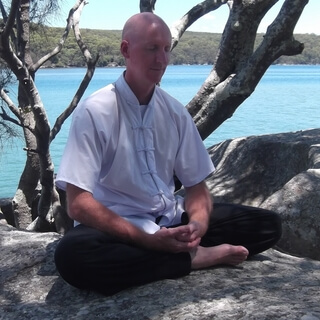
You sit quietly and deliberately widen attention to the full 360-degree sphere of experience at once: peripheral vision, ambient sound, the felt sense of the body in space, and the awareness of open sky above. You hold that field in a way that stays non-selective yet vividly alert, and each time attention contracts onto a single object or sound, you gently open it back out to the whole scene.
Panoramic Awareness differs from focused-attention meditation, which rests attention on one chosen object such as the breath, because it keeps the whole field open and non-selective. It also differs from ordinary daydreamy, diffuse attention through its quality of vivid alertness rather than drift. It is a contemplative attention practice, not a relaxation gimmick, a treatment for any diagnosed condition, or a clinically validated intervention.
Not to be confused with
Hypervigilance or threat-scanning
Widening attention to a full surrounding field can sound like the restless environmental scanning of anxiety, but the tone is opposite. Hypervigilance is a tense, effortful search for danger; Panoramic Awareness is a relaxed, alert openness that holds the whole scene without hunting for threat.
Dissociation or spacing out
Opening attention wide is not the same as going blank or checking out. Dissociation dulls contact with experience, while Panoramic Awareness stays vividly awake, with peripheral sights, sounds, and body sensations becoming more present rather than fading into a haze.
Peripheral-vision or soft-gaze drills
Panoramic Awareness is sometimes reduced to a soft-focus gazing trick for the eyes. Widening peripheral vision can be part of it, but the practice spans all the senses at once, including ambient sound and the felt sense of the body in space, not vision alone.
Panoramic Awareness is thought to work by widening the scope of attention from a narrow, single-point focus to an open field that holds the whole scene at once, a shift practitioners describe as a spacious quality of mind where peripheral detail becomes vivid without effort. The practice also draws on meta-awareness, the quiet background capacity to notice when your attention has contracted onto one thought or sound, so you can open it back out. And holding attention across sight, sound, and body sensation together may, over time, refine how finely you register subtle detail, like tuning a radio until a faint station comes in clearly. These are proposed pathways drawn from the Shambhala contemplative tradition and conceptually related to research on open-monitoring meditation broadly, not measured effects of this specific practice.
When attention keeps tunneling onto one worry or task, Panoramic Awareness widens it back out, deliberately opening to the whole field of sights, sounds, and body sensations at once. Practitioners describe this attentional broadening, a shift from narrow focus to open-field awareness, as a spacious, less effortful way of being present, where peripheral details become vivid without straining to hold them.
Noticing that your attention has quietly narrowed onto one thought or sound is itself a skill, and Panoramic Awareness is thought to train it. Each time you catch the field shrinking and open it back out to the whole scene, you practise meta-awareness, staying aware of the state of your own mind. The support here comes from contemplative tradition and related attention research rather than direct trials, so this is best read as a plausible idea about how the practice works, not a proven effect.
Sounds at the edge of the room, light in your peripheral vision, and faint body sensations that usually blur into the background can start to register more vividly. Panoramic Awareness holds attention open across every sense at once, and doing this is thought to gradually sharpen how finely attention picks up subtle detail. This is a proposed mechanism rather than a measured effect, so treat the sharpening as something you might notice, not something studies have confirmed for this practice.
No study has yet measured what Panoramic Awareness does to the body, so its physiological signature remains unmapped. What practitioners describe is more experiential than physical: the body settling into an upright, alert stillness, breathing becoming easier and less directed, and the sense of the body's edges softening into the surrounding space. Any claim about specific brain or nervous-system changes would go beyond what has actually been observed for this practice.
Emerging, tradition-based support is all that exists for Panoramic Awareness. Through Shambhala contemplative teaching and conceptually related attention research, the practice is associated with broadened attention, a spacious sense of expanded awareness, sharper sensory appreciation, and stronger meta-awareness of one's own mind. These are described experiences and plausible mechanisms rather than measured outcomes. What is not yet supported: there are no randomized trials, no systematic reviews, and no physiological studies of this specific practice, so no effect sizes or comparator data can be offered, and it should not be treated as a treatment for any diagnosed condition.
Attention tends to clamp onto one thing at a time; Panoramic Awareness practices the opposite, deliberately widening the field so you take in sights, sounds, and body sensations all at once. Practitioners describe this as a spacious, open quality of mind where the edges of experience turn vivid without effort, though it remains an early-stage, tradition-based practice rather than a clinically proven outcome.
Panoramic Awareness has not been tested directly in high-quality trials, so there is no technique-specific evidence to report. What can be said borrows from research on open-monitoring meditation broadly, the family of practices that widen attention rather than narrow it, where holding a wide, receptive field is linked with steadier awareness of one's own attention and more vivid sensory noticing, not from studies of this practice itself. The spacious, wide-open quality Panoramic Awareness describes is best read as a traditionally reported experience and a plausible mechanism, not a measured, proven outcome.
The available material is useful for setting expectations, but it is contemplative-tradition description and adjacent attention research rather than trials of this practice. Treat it as general guidance rather than a promise about any single session, and not a replacement for clinical care.
Panoramic Awareness draws on the Shambhala Buddhist tradition's teachings on raising windhorse, an uplifted life-energy called lungta, and cultivating the warrior's open, fearless presence. From these roots comes the practice's central aim: developing what the teachings call 'big mind,' a spacious wakefulness that can hold complexity without becoming overwhelmed. These roots help explain the practice's form, its deliberately wide, non-selective placement of attention, not its clinical effects.
For most healthy adults, Panoramic Awareness is a gentle, low-risk practice with no expected harms. Two situations call for care, and both are usually mild and passing rather than serious. First, opening attention this wide can sometimes feel ungrounding, a floaty or slightly disoriented sense of losing your bearings; this is inferred from how open, non-selective attention works, not something measured in studies of this practice. Second, for people carrying trauma or working through anxiety, widening awareness can let buried emotion surface, a caution drawn from experience with open-monitoring styles rather than from trials of Panoramic Awareness itself. Treat it as a supportive practice, not a treatment, and if difficult feelings intensify or linger, pause, narrow back to a single point of focus, and check in with a qualified professional.
People with a trauma history, a tendency toward dissociation, a sense of feeling detached from your body or surroundings that can be unsettling, or anyone in acute distress should approach Panoramic Awareness slowly and, where possible, alongside professional support. High-quality research specific to this practice is currently limited, so its effects in these groups are not well understood; this caution rests on practical experience and on how the practice works, not on trial evidence. Anyone already under mental-health care should treat the practice as a complement to that care, never a replacement for it.
Opening attention this wide removes the single anchor point that normally gives the mind a sense of place, which can leave some people feeling floaty or slightly disoriented. This is usually mild and passing. Keep a simple anchor within reach, such as your feet on the floor or the weight of your body on the seat, and narrow back to one point of focus if the wide-open field feels like too much.
| Technique | Best for | Use with care | Evidence strength | Distinction |
|---|---|---|---|---|
| Focused-Attention Meditation (concentration) | Settling a scattered or racing mind by giving attention one clear place to rest. | EVIDENCE | Focused-attention practice does the opposite of Panoramic Awareness: it rests attention on a single anchor, such as the breath or a word, and returns there whenever the mind wanders. Panoramic Awareness instead holds the whole surrounding field open at once and treats no single object as the anchor. Many traditions teach concentration first to steady the mind, then open into a wider field. | |
| Open-Monitoring Meditation (mindfulness) | Building a steady, receptive awareness of thoughts, feelings, and sensations as they come and go. | EVIDENCE | Open monitoring is the broader family Panoramic Awareness belongs to: both keep attention receptive and non-selective rather than fixed on one object. The difference is emphasis. Standard open-monitoring practice watches whatever arises moment to moment, while Panoramic Awareness deliberately expands attention outward to the full spatial sphere of sight, sound, body, and open sky at the same time. |
Panoramic Awareness is an open-monitoring meditation that deliberately widens attention to take in the whole field of sights, sounds, and body sensations at once, rather than fixing on a single object. It draws on the Shambhala Buddhist tradition's teachings on raising windhorse and cultivating spacious 'big mind' awareness.
+
Panoramic Awareness is a seated open-monitoring meditation: instead of resting attention on one anchor, you hold an open, alert awareness of the full 360-degree field, widening it again each time attention narrows onto a single object. It differs from tight, focused concentration in its non-selective quality, and from ordinary drifting attention in its vivid wakefulness. Its form and lineage come from the Shambhala Buddhist tradition's teachings on raising windhorse, an uplifted life-energy called lungta, and on cultivating 'big mind,' a spacious wakefulness that can hold complexity without becoming overwhelmed. This describes the practice's roots and form, not a proven treatment for any condition.
No. Widening peripheral sight can be one part of it, but Panoramic Awareness opens attention across all the senses at once, peripheral vision, ambient sound, and the felt sense of the body in space, held with a relaxed, alert quality, not a soft-focus eye trick.
+
No. Softening the eyes into peripheral vision can be one way in, but that reduces the practice to an eye drill and misses its scope. Panoramic Awareness is an open-monitoring meditation that widens attention to hold sights, sounds, and body sensations together, spanning the whole 360-degree field with vivid wakefulness rather than steering the eyes alone. This describes the practice's traditionally taught form within the Shambhala lineage and the broader open-monitoring family, not a measured or clinical effect.
A style of meditation that holds attention wide and receptive to whatever arises, rather than fixing it on one chosen object. It feels like watching the whole field of experience at once instead of zooming in on a single point.
A meditation family characterized by non-selective, receptive attention to the full perceptual field, contrasted with focused-attention (concentrative) practice; sometimes labelled diffuse attention in cognitive science.
Deliberately widening the scope of attention from a narrow, single-point focus to a panoramic field that takes in sights, sounds, and body sensations together. It often feels like a camera lens pulling back from a tight close-up to a wide angle.
The capacity to notice the current state of your own mind, including catching the moment attention has quietly narrowed or drifted. It feels like a quiet background sense of 'I just wandered' that lets you re-open attention without jolting yourself out of the moment.
The gradual sharpening of how precisely attention picks up subtle detail, so faint sights, sounds, and sensations that sat in the background become clearer. It feels like tuning a radio until a distant station comes in vividly.
A Shambhala Buddhist teaching that evokes an uplifted, dignified life-energy met with open, fearless presence. In this practice it names the quality of alert, wide-open awareness the practitioner cultivates.
A Shambhala term for a spacious wakefulness that can hold complexity without becoming overwhelmed. It describes the felt sense of an attention wide enough to include everything at once while staying clear and awake.
A contemplative approach in which attention is not steered toward or away from anything, but simply allowed to rest on whatever presents itself. It is closely related to open monitoring and to the non-selective quality of Panoramic Awareness.
Michelle G. Craske, Murray B. Stein (2016). Anxiety. https://doi.org/10.1016/s0140-6736(16)30381-6
Cited in: –
Pascal Geldsetzer (2020). Knowledge and Perceptions of COVID-19 Among the General Public in the United States and the United Kingdom: A Cross-sectional Online Survey. https://doi.org/10.7326/m20-0912
Cited in: –
For people carrying trauma or working through anxiety, widening awareness can let buried emotion surface. This caution is drawn from experience with open-monitoring styles rather than from trials of Panoramic Awareness itself. Go slowly, keep sessions short, and if difficult feelings intensify or linger, pause, narrow back to a single point of focus, and check in with a qualified mental-health professional.
If you tend to feel detached from your body or surroundings in a way that can be unsettling, approach wide-open attention carefully and, where possible, alongside professional support. Its effects in this situation are not well understood. Stay in contact with the body throughout, and stop and narrow your focus if you notice a sense of detachment growing rather than easing.
Anyone in acute distress, or already under mental-health care, should treat Panoramic Awareness as a complement to that care, never a replacement for it. High-quality research specific to this practice is limited, so its effects in these situations are not well understood. If distress persists, pause the practice and consult a qualified professional before continuing.
Panoramic Awareness is best met gently and without any pressure to hold the wide-open field for long, so a short seated session in a place where you can pause easily makes a sensible starting point. Because opening attention this widely can feel a little floaty or ungrounding, it helps to keep a simple reference within reach and some felt contact with your body, so you always have somewhere steady to return to. Treat it as a supportive practice rather than a treatment, and go slowly, especially if you are carrying trauma or working through anxiety.
Begin with just five to ten minutes in a stable, upright seated position. Keeping the first sessions short means that if the wide-open field of attention feels unfamiliar or slightly floaty, you can stop easily and get your bearings.
Choose one steady reference, such as the weight of your body on the seat or the natural rhythm of your breath, so that whenever the panoramic field feels like too much you can narrow back to that single point and settle.
As you widen attention to take in sights, sounds, and sensations at once, keep some awareness of your feet on the floor and your seat beneath you. This felt sense of contact helps counter any ungrounded or disoriented feeling.
If you notice heightened agitation, a sense of detachment, or emotion surfacing more strongly than you can hold, shorten the session or return to a narrow focus rather than pushing through.
If difficult feelings, disorientation, or intrusive imagery continue after you stop, or you are managing trauma, dissociation, or acute distress, pause the practice and consult a qualified mental-health professional before continuing.
This information is educational and is not medical advice. This practice is not a substitute for professional care and should not replace prescribed medication or treatment for any medical or mental-health condition. If you are managing a health condition or taking medication, talk with a qualified health professional before changing your practice. If you are in distress or crisis, seek professional support.
| Choiceless Awareness | Resting in an unforced awareness that does not push attention toward or away from anything. | EVIDENCE | Choiceless awareness and Panoramic Awareness both drop the deliberate selection of any one object and let experience present itself. Choiceless awareness emphasizes not steering attention at all, allowing it to settle wherever it will. Panoramic Awareness shares that non-selective quality but adds an explicit spatial instruction: widen to the whole surrounding field rather than simply letting attention land where it lands. |
| Secular open-field awareness (non-traditional) | Practitioners who want the wide-attention training without a contemplative-tradition framing. | EVIDENCE | A secular open-field reframe carries the same attentional moves as Panoramic Awareness, widening attention, noticing when it narrows, and re-opening it, without the Shambhala worldview of raising windhorse and 'big mind.' The practice form is nearly identical; what changes is the meaning system that gives it purpose. Readers can choose whichever framing feels sustainable. |

It's not yet proven. Panoramic Awareness hasn't been tested in dedicated high-quality trials, so its support is currently emerging and tradition-based rather than clinically demonstrated. Its widening-of-attention mechanisms are plausible but not yet measured for this specific practice.
+
It is not yet proven, though it isn't only tradition either. No randomized trials, systematic reviews, or physiological studies have examined Panoramic Awareness itself, so it offers no effect sizes or comparator data. Two things support it: the Shambhala contemplative lineage that describes widening attention into a spacious field, and conceptually adjacent research on open-monitoring meditation more broadly. Its core processes, broadening attention, noticing when it narrows, and sharpening sensory detail, are reasonable mechanisms that stay hypothesized rather than measured for this technique, so treat it as suggestive, not established.
Possibly, though this is a reasonable expectation rather than a proven effect. Panoramic Awareness is a traditionally taught, mechanistically plausible way to loosen narrow, tunneled attention by widening it to the whole field and noticing when it re-contracts, but no trials have tested it for worry.
+
Possibly. When attention feels locked onto a single worry, Panoramic Awareness offers a way to widen the field back out to take in sights, sounds, and body sensations at once, then use meta-awareness, the quiet noticing that attention has narrowed again, to open it once more. Think of it as loosening the grip and resting in a wider awareness, not as a treatment for worry or anxiety. High-quality research specific to this practice is currently limited, so this is a tradition-based, plausible mechanism rather than a measured outcome.
Mostly experiential, not measurable. Practitioners describe an upright, alert stillness, easier and less-directed breathing, and the body's edges seeming to soften into surrounding space, with peripheral sights, sounds, and sensations registering more vividly. No study has measured its physiological signature, so no specific body or brain changes can be claimed.
+
Mostly experiential rather than measurable. What people report is more felt than physical: the body settling into an upright, alert stillness, breathing becoming easier and less directed, the body's edges seeming to soften into the surrounding space, and faint peripheral sights, sounds, and sensations coming clearer as attention widens, like tuning a radio until a distant station comes in. This is described experience and a plausible mechanism rather than a proven effect, and it should not be treated as treatment for any condition. No physiological or neuroimaging study of this specific practice yet exists, so any claim about particular nervous-system or brain changes would go beyond what has been observed.
Because widening attention this far loosens the narrow, single-point focus that usually keeps you feeling anchored, an open, non-selective awareness that takes in the whole field at once can leave some people feeling floaty or slightly disoriented. This is a usually mild, occasional effect inferred from how open attention works, not a measured finding. If it rises, keep a simple anchor and narrow your focus to steady yourself.
+
That floaty, ungrounded feeling likely comes from how the practice works. Widening attention from a tight focus to the whole 360-degree field removes the single anchor point that normally gives the mind a sense of place. This caution is drawn from how open, non-selective attention behaves and from practice experience rather than from any trial or physiological study of this specific technique. To steady yourself, keep a simple anchor within reach such as your feet on the floor or the weight of your body on the seat, stay in contact with the body, and narrow back to one point if intensity grows. If the disorientation persists after you stop, or you are working through trauma or a tendency to feel detached from your surroundings, pause the practice and check in with a qualified professional.
Use care. If you carry trauma or tend to dissociate, approach Panoramic Awareness slowly and, where possible, alongside professional support. This is a practice-informed caution, not evidence-based safety guidance, since no research has tested this practice in these groups.
+
Use care. Widening attention this openly can let buried emotion surface or feel ungrounding, so people with a trauma history, a tendency to dissociate, meaning feeling detached from your body or surroundings, or anyone in acute distress should go slowly and, where possible, with professional support. Because high-quality research specific to this practice is limited, its effects in these groups are not well characterised, so this guidance is practice-informed and mechanism-inferred rather than proven. Treat the practice as a complement to any mental-health care, never a replacement, and if distress or dissociation persists, pause and consult a qualified professional.
Start with a short sit of about five to ten minutes in a stable seated posture. Keep one simple anchor within reach, such as the weight of your body on the seat or the natural rhythm of your breath, so you can narrow attention back if the wide-open field feels floaty. This is practice-informed starting guidance, not a fixed protocol.
+
Begin with roughly five to ten minutes seated in a stable, upright position, gently widening attention to take in sights, sounds, and body sensations at once. Keep a single anchor within reach, like your feet on the floor or your breath, so you can return to one point whenever the panoramic field feels too wide or slightly disorienting. Stay in light contact with your feet and seat throughout, and if intensity rises, shorten the session or narrow your focus rather than pushing through. These steps come from the Shambhala-rooted practice tradition and general open-monitoring experience rather than a clinically validated dose.
They are opposite attention styles. Focused-attention meditation rests on one anchor, like the breath, and returns to it when the mind wanders; Panoramic Awareness instead holds the whole field of sight, sound, and body open at once, with no single anchor.
+
They point attention in opposite directions. Focused-attention practice narrows onto a single chosen object and returns there whenever the mind drifts, while Panoramic Awareness deliberately widens to hold the entire surrounding field of sights, sounds, and body sensations at once, re-opening it each time it contracts. Many traditions teach concentration first to steady the mind, then open into a wider field. This is a difference in attentional form, not a claim that either practice is more effective, and neither is a treatment for any condition.
No. Hypervigilance is a tense, effortful scanning for danger, while Panoramic Awareness is a relaxed, non-selective openness that holds the whole field without hunting for threat. The tones are opposite, though this distinction is descriptive rather than measured for this specific practice.
+
No. Both widen attention across a broad field, but the felt tone is the key difference. Hypervigilance is a stressed search for what might go wrong, while Panoramic Awareness opens attention to sights, sounds, and body sensations at once with relaxed alertness rather than vigilance. This is a phenomenological, mechanism-inferred distinction drawn from how open, non-selective attention works, not proof that the practice lowers anxiety. If you carry trauma, tend toward anxiety, or feel wide-open attention tipping into tense scanning, approach gently, narrow back to a single anchor, and seek professional support if distress persists.
Laelia Benoit, Sarah R. Lowe, Isaiah Thomas, Doron Amsalem, Andrés Martin (2025). Climate change hopefulness, anxiety, and behavioral intentions among adolescents: randomized controlled trial of a brief “selfie” video intervention. https://doi.org/10.1186/s13034-025-00872-x
Cited in: –
Ting Chi, Luying Cheng, Zhijie Zhang (2023). Global prevalence and trend of anxiety among graduate students: A systematic review and meta‐analysis. https://doi.org/10.1002/brb3.2909
Cited in: –
João Maurício Castaldelli-Maia, Megan E. Marziali, Ziyin Lu, Sílvia S. Martins (2021). Investigating the effect of national government physical distancing measures on depression and anxiety during the COVID-19 pandemic through meta-analysis and meta-regression. https://doi.org/10.1017/s0033291721000933
Cited in: –
Anne‐Marie Turcotte‐Tremblay, Gabrielle Fortier, Richard E. Bélanger, Claude Bacque Dion, Rabi Joël Gansaonré, Scott T. Leatherdale (2024). Adolescents’ impairment due to climate anxiety is associated with self-efficacy and behavioral engagement: a cross-sectional analysis in Quebec (Canada). https://doi.org/10.1186/s12889-024-20333-y
Cited in: –
Gillian Butler, Andrew Mathews (1987). Anticipatory anxiety and risk perception. https://doi.org/10.1007/bf01183858
Cited in: –
Bedirhan Teke (2025). Can artificial intelligence anxiety serve as a facilitator: the relationship between pre-service teachers’ AI anxiety, their motivated learning and AI self-efficacy. https://doi.org/10.1080/10494820.2025.2559930
Cited in: –
Mengcen Qian, Qianhui Wu, Peng Wu, Zhiyuan Hou, Yuxia Liang, Benjamin J. Cowling (2020). Psychological responses, behavioral changes and public perceptions during the early phase of the COVID-19 outbreak in China: a population based cross-sectional survey. https://doi.org/10.1101/2020.02.18.20024448
Cited in: –
Pryjmachuk Steven, Kirk Susan, Fraser Claire, Evans Nicola, Lane Rhiannon, Neill Liz (2024). Service design for children and young people with common mental health problems: literature review, service mapping and collective case study.. https://doi.org/10.3310/dkrt6293
Cited in: –
Jenney Zhu, Nicole Racine, Elisabeth Bailin Xie, Julianna Park, Julianna Watt, Rachel Eirich (2021). Post-secondary Student Mental Health During COVID-19: A Meta-Analysis. https://doi.org/10.3389/fpsyt.2021.777251
Cited in: –
Bernd Löwe, Oliver Decker, Stefanie Müller, Elmar Brähler, Dieter Schellberg, Wolfgang Herzog (2008). Validation and Standardization of the Generalized Anxiety Disorder Screener (GAD-7) in the General Population. https://doi.org/10.1097/mlr.0b013e318160d093
Cited in: –
Huali Zhan, Chunmei Zheng, Xianqin Zhang, Meng Yang, Lin Zhang, Xu Jia (2021). Chinese College Students' Stress and Anxiety Levels Under COVID-19. https://doi.org/10.3389/fpsyt.2021.615390
Cited in: –
Francesca Pisano, Giulia Torromino, Daniela Brachi, Agnese Quadrini, Chiara Incoccia, Paola Marangolo (2021). A Standardized Prospective Memory Evaluation of the Effects of COVID-19 Confinement on Young Students. https://doi.org/10.3390/jcm10173919
Cited in: –
Cosh Suzanne M, Williams Sarah E, Lykins Amy D, Bartik Warren, Tully Phillip J (2024). Detecting and classifying eco-anxiety: development of clinical cut-off scores for the climate change anxiety scale.. https://doi.org/10.1186/s40359-024-02240-4
Cited in: –
Ashlee Cunsolo, Sherilee L. Harper, Kelton Minor, Katie Hayes, Kimberly G. Williams, Courtney Howard (2020). Ecological grief and anxiety: the start of a healthy response to climate change?. https://doi.org/10.1016/s2542-5196(20)30144-3
Cited in: –
Peng Xiong, Wai‐Kit Ming, Caiyun Zhang, Jian Bai, Chaohua Luo, Wenyuan Cao (2021). Factors Influencing Mental Health Among Chinese Medical and Non-medical Students in the Early Stage of the COVID-19 Pandemic. https://doi.org/10.3389/fpubh.2021.603331
Cited in: –
Pu Peng, Yuzhu Hao, Yueheng Liu, Shubao Chen, Yunfei Wang, Qian Yang (2022). The prevalence and risk factors of mental problems in medical students during COVID-19 pandemic: A systematic review and meta-analysis. https://doi.org/10.1016/j.jad.2022.10.040
Cited in: –
Sultan Ayoub Meo, Khalid Mahmood Shafi, Abid Hussain (2025). The psychological cost of climate change: anxiety among adolescents and young adults - a cross-sectional study. https://doi.org/10.3389/fpsyt.2025.1422338
Cited in: –
Emily A. Hurley, Sarah L Dalglish, Emma Sacks (2022). Supporting young people with climate anxiety: mitigation, adaptation, and resilience. https://doi.org/10.1016/s2542-5196(22)00015-8
Cited in: –
Aminah Collery, Claire L. Niedzwiedz (2025). Climate change worry and the association with future depression and anxiety: cross-national analysis of 11 European countries. https://doi.org/10.1136/bmjment-2024-301318
Cited in: –
Rute Mendes, Wanessa Cristina Baccon, Carlos Laranjeira (2023). Fear of COVID-19, Mental Health and Resilient Coping in Young Adult Male Inmates: A Portuguese Cross-Sectional Study. https://doi.org/10.3390/ijerph20085510
Cited in: –
Judy Wu, Gaelen Snell, Hasina Samji (2020). Climate anxiety in young people: a call to action. https://doi.org/10.1016/s2542-5196(20)30223-0
Cited in: –
Ma Tianyi, Moore Jane, Cleary Anne (2022). Climate change impacts on the mental health and wellbeing of young people: A scoping review of risk and protective factors.. https://doi.org/10.1016/j.socscimed.2022.114888
Cited in: –
Lawrance Emma L, Jennings Neil, Kioupi Vasiliki, Thompson Rhiannon, Diffey James, Vercammen Ans (2022). Psychological responses, mental health, and sense of agency for the dual challenges of climate change and the COVID-19 pandemic in young people in the UK: an online survey study.. https://doi.org/10.1016/s2542-5196(22)00172-3
Cited in: –
Yen‐Ko Lin, Ita Daryanti Saragih, Chia‐Ju Lin, Hsin-Liang Liu, Chao‐Wen Chen, Yung‐Sung Yeh (2024). Global prevalence of anxiety and depression among medical students during the COVID-19 pandemic: a systematic review and meta-analysis. https://doi.org/10.1186/s40359-024-01838-y
Cited in: –
Ziyuan Ren, Yaodong Xin, Junpeng Ge, Zheng Zhao, Dexiang Liu, Roger Ho (2021). Psychological Impact of COVID-19 on College Students After School Reopening: A Cross-Sectional Study Based on Machine Learning. https://doi.org/10.3389/fpsyg.2021.641806
Cited in: –
Huidi Xiao, W. Shu, Menglong Li, Ziang Li, F. Tao, Xiaoyan Wu (2020). Social Distancing among Medical Students during the 2019 Coronavirus Disease Pandemic in China: Disease Awareness, Anxiety Disorder, Depression, and Behavioral Activities. https://doi.org/10.3390/ijerph17145047
Cited in: –
Rebecca A. Ferrer, William M. P. Klein (2015). Risk perceptions and health behavior. https://doi.org/10.1016/j.copsyc.2015.03.012
Cited in: –
Manasi Kumar, Hossein Akbarialiabad, Mohsen Farjoud Kouhanjani, Sarah Kanana Kiburi, Pallavi Shidhaye, Mohammad Hossein Taghrir (2022). Association of Major Disease Outbreaks With Adolescent and Youth Mental Health in Low- and Middle-Income Countries. https://doi.org/10.1001/jamapsychiatry.2022.3109
Cited in: –
Isabel Lasheras, Patricia Gracia‐García, Darren M. Lipnicki, Juan Bueno‐Notivol, Raúl López‐Antón, Concepción de la Cámara (2020). Prevalence of Anxiety in Medical Students during the COVID-19 Pandemic: A Rapid Systematic Review with Meta-Analysis. https://doi.org/10.3390/ijerph17186603
Cited in: –
Vercammen Ans, Oswald Tassia, Lawrance Emma (2023). Psycho-social factors associated with climate distress, hope and behavioural intentions in young UK residents.. https://doi.org/10.1371/journal.pgph.0001938
Cited in: –
Thais Perissotto, Thamires Clair Rodrigues Pereira da Silva, Fabricio Petermann Choueiri Miskulin, Mariana Berwerth Pereira, Beatriz Astolfi Neves, Beatriz Cantieri Almeida (2021). Mental health in medical students during COVID-19 quarantine: a comprehensive analysis across year-classes. https://doi.org/10.6061/clinics/2021/e3007
Cited in: –
Mengcen Qian, Qianhui Wu, Peng Wu, Zhiyuan Hou, Yuxia Liang, Benjamin J. Cowling (2020). Anxiety levels, precautionary behaviours and public perceptions during the early phase of the COVID-19 outbreak in China: a population-based cross-sectional survey. https://doi.org/10.1136/bmjopen-2020-040910
Cited in: –
Nega Assefa, Abdramane Soura, Elena C. Hemler, Michelle L. Korte, Dongqing Wang, Yasir Y. Abdullahi (2021). COVID-19 Knowledge, Perception, Preventive Measures, Stigma, and Mental Health Among Healthcare Workers in Three Sub-Saharan African Countries: A Phone Survey. https://doi.org/10.4269/ajtmh.20-1621
Cited in: –
Yuxi Tang, HE Wei-guang (2023). Meta-analysis of the relationship between university students' anxiety and academic performance during the coronavirus disease 2019 pandemic. https://doi.org/10.3389/fpsyg.2023.1018558
Cited in: –
Toby Wise, Tomislav D. Zbozinek, Giorgia Michelini, Cindy C. Hagan, Dean Mobbs (2020). Changes in risk perception and protective behavior during the first week of the COVID-19 pandemic in the United States. https://doi.org/10.31234/osf.io/dz428
Cited in: –
Richa Srivastava, Srikant Gupta, M. A. Sanjeev (2021). Comprehending and measuring pandemic induced stress among professionals due to lockdown and work from home. https://doi.org/10.1002/pa.2791
Cited in: –
Steward Mudenda, Moses Mukosha, Chiluba Mwila, Zikria Saleem, Aubrey Chichoni Kalungia, Derick Munkombwe (2021). Impact of the coronavirus disease on the mental health and physical activity of pharmacy students at the University of Zambia: a cross-sectional study. https://doi.org/10.18203/2319-2003.ijbcp20211010
Cited in: –
Xiaolei Zheng, Yuji Guo, Hui Yang, Liyan Luo, Bailiu Ya, Hong Xu (2021). A Cross-Sectional Study on Mental Health Problems of Medical and Nonmedical Students in Shandong During the COVID-19 Epidemic Recovery Period. https://doi.org/10.3389/fpsyt.2021.680202
Cited in: –
Dante M. Quiñones-Laveriano, Hillary Guillen-Vidarte, Claudia Benavides-Luyo, Jhony A. De La Cruz‐Vargas (2022). Perception of risk to COVID-19 and mental health indicators in workers of a Peruvian hospital: An analytical cross-sectional study. https://doi.org/10.5867/medwave.2022.02.002513
Cited in: –
Cook Robert, Nam Xinyue, Weitzman Michael (n.d.). Eco-anxiety and Climate Anxiety: Bellwethers of the Climate Crisis's Mental Health Impact on Children and Adolescents.. https://doi.org/10.1097/dbp.0000000000001357
Cited in: –
Julia Velten, Angela Bieda, Saskia Scholten, André Wannemüller, Jürgen Margraf (2018). Lifestyle choices and mental health: a longitudinal survey with German and Chinese students. https://doi.org/10.1186/s12889-018-5526-2
Cited in: –
Ediz Çiçek, Yanik Derya (2023). The effects of climate change awareness on mental health: Comparison of climate anxiety and hopelessness levels in Turkish youth.. https://doi.org/10.1177/00207640231206060
Cited in: –
Ahmed H. Ebrahim, Ali Dhahi, Mohamed A. Husain, Haitham Jahrami (2021). The Psychological Wellbeing of University Students Amidst COVID-19 Pandemic. https://doi.org/10.18295/squmj.6.2021.081
Cited in: –
L. Benoit, I. Thomas, Andrés Martin, Benoit Laelia, Thomas Isaiah, Martin Andrés (2021). Review: Ecological awareness, anxiety, and actions among youth and their parents - a qualitative study of newspaper narratives.. https://doi.org/10.1111/camh.12514
Cited in: –
T. Léger-Goodes, C. Malboeuf-Hurtubise, Trinity Mastine, Mélissa Généreux, Pier-Olivier Paradis, C. Camden (2022). Eco-anxiety in children: A scoping review of the mental health impacts of the awareness of climate change. https://doi.org/10.3389/fpsyg.2022.872544
Cited in: –
Yang Li, Aiwen Wang, Yalin Wu, Nana Han, Huiming Huang (2021). Impact of the COVID-19 Pandemic on the Mental Health of College Students: A Systematic Review and Meta-Analysis. https://doi.org/10.3389/fpsyg.2021.669119
Cited in: –
Jasmine Khouja, Marcus R. Munafò, Kate Tilling, Nicola Wiles, Carol Joinson, Peter J. Etchells (2019). Is screen time associated with anxiety or depression in young people? Results from a UK birth cohort. https://doi.org/10.1186/s12889-018-6321-9
Cited in: –
Janis Whitlock (2023). Climate change anxiety in young people. https://doi.org/10.1038/s44220-023-00059-3
Cited in: –
Explore guided sessions to deepen your Panoramic Awareness technique.
Editorially curated. Tracks are not themselves clinically studied; evidence on the page applies to Panoramic Awareness as a technique.
How hard is Panoramic Awareness?
You open attention to the whole 360-degree field at once — sight, sound, body, the space around you — and rest there.
2
Mental Effort
3 / 4
▾Emotional Depth
2 / 4
▾Physical Intensity
2 / 4
▾Prior Knowledge
3 / 4
▾