Tjerva!
Here is some mythology,
Folklore and history from the Sámi.
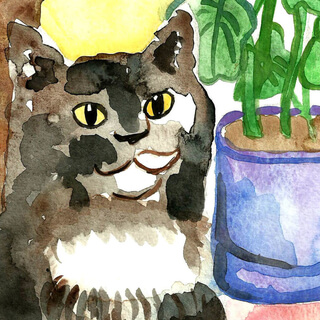
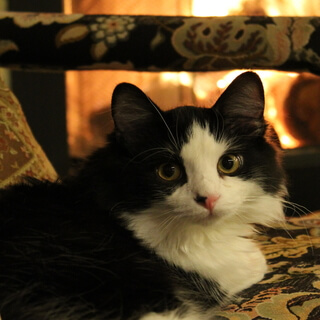
Cat.
Rats played a significant role,
Particularly in the regions of East Lapland.
The Koltasámi regarded cats as spiritual animals,
Believing that treating them well would lead to success in reindeer herding and other aspects of life.
One special reindeer was often designated for a cat,
And this reindeer might even be marked to signify its connection to the cat.
This cat-reindeer was thought to be a good luck charm that linked the well-being of the cat to the success of the reindeer herd.
If something unfortunate happened to the reindeer,
It was believed that it would have repercussions for the entire herd.
Not all cats were seen as bringers of luck,
However.
It was believed that a ruto,
The deity of diseases and death,
Could take the form of a cat.
In such cases,
All objects that the cat had touched were to be burned,
And the house needed to be cleansed with juniper incense.
Additionally,
Skunkka,
A mischievous ghost or poltergeist,
Could also assume the form of a cat and cause disturbances for the inhabitants of the home.
Dogs.
Dogs were important.
They helped the reindeer herders with their work and pulling sleighs.
Once upon a time,
There were too many dogs,
And they were talking with one another.
The older dog said that he loved his family.
They gave him food and let him sleep inside the warm kotta with the family.
The other dog was sad.
He was forced to sleep outside all year and was only given scraps of food to eat.
The dog that was taken care of was handsome and healthy,
While the other dog was shaggy and depressed.
No matter how hard the dog served the family,
He was treated badly.
After listening to the life of the well-kept dog,
The neglected dog ran away from his family.
Luck was on his side,
For he found another home for himself,
For a family who looked after it with the love and care that it deserved.
Sami believed that even the animals had their own hardy spirit,
An invisible protector guardian who looked after them during hard times.
Fly Flies are not the most common spirit animals,
But some Sami shamans consider flies as their spirit guides.
Most Sami considered flies and other bugs as disease bringers,
And tried to avoid them.
In the shape of a small fly,
It was easy for the shaman to fly inside the person's ear and find out what the cause of the disease was.
These,
However,
Required the shaman to be very experienced.
Fly worms were used in folk medicine to heal gangrene wounds.
If a fly suddenly appears in your dreams or during shamanic journeying,
It is a message to consider your behavior towards others.
In the Sami folklore,
A person's soul could travel away when sleeping in the form of a small bird,
Fly or butterfly.
The soul returned to the body when the person woke up.
Animal symbolism Bat Bats are the only mammals that can fly.
They have very good eyesight and hunt using echolocation.
As a spirit animal,
Bat represents trusting one's instinct and ability to read between the lines and find hidden messages.
In the northern hemisphere,
Bats sleep during the day.
Those who have bats as their spirit animals should pay attention to their daytime activities.
In shamanism,
The bat symbolizes initiation,
Death,
Rebirth and transformation.
Bat symbolizes shadow work and the dark night of the soul.
The powers of the bat are connected to magic and subconsciousness.
Growth can only happen through self-realization.
Swan Swans are,
In fact,
Finland's national birds.
It has been speculated that in the Stone Age there was possibly a tribe who considered the swan as their totem animal.
In shamanism,
The swan brings beauty.
This beauty can be feeling and peace that is felt in nature or more abstract,
Such as beauty in dance and music.
The swan symbolizes self-love.
If a person has difficulties loving and cherishing themselves,
A swan can bring self-assurance,
Safety and confidence.
Swan is the bird of dreamers and dreaming.
It is a monogamous bird and is connected to romantic love.
In Sami shamanism,
Birds were sacred creatures.
Swans were often painted to the Sami shaman drums.
In the Sami mythology,
The underworld,
Rutaimo,
Was located in the bottom of the bottomless lake.
The animals that had access to this world were birds and fish.
When the swan pressed its long neck beneath the water,
The Sami believed that it was communicating with the spirit world.
In another story,
The swan used to be a man.
In archeological excavations,
A child's gray was found and the child was buried in a bed made of swan feathers.
Since the swan was a man,
It was forbidden to kill swans and hunt them.
The spiritual significance of the swan was quite important among the Eastern Sami tribes.
For the Kota Sami,
It was considered a sacred bird.
They composed many idiotic traditional Sami songs about the swan.
The swan's tendency to return to the same location each year resonated deeply with the people.
Rock paintings depicting swans in Lapland date back around 5000 years.
Most of these artworks portray flocks of swans,
Likely reflecting a desire to maintain their population.
The carvings can be found on islands and in areas where people engaged in fishing and hunting swans.
Many of these carvings are mythical in nature,
Also featuring motifs of the sun,
Deer,
Boats and moose.
Images that include a swan and egg allude to creation myths,
While representations of the sun and moon symbolize life.
In contrast,
Depictions of a boat and swan signify death and a journey to the underworld.
Frog The relationship with frogs was complex.
They were both respected and feared.
Frogs were seen as creatures of water,
An element that connected the human world to the spirit world.
It was believed that frogs had loud voices and if someone tormented a frog,
The gods above would hear its cries and punish those who harmed it.
Children were especially warned not to tease frogs or to harm their spawn.
Frogs were also often used in folk medicine.
People would place live frogs on wounds and boils to promote healing.
In winter,
Individuals might dig frogs from the bottoms of wells for this purpose.
Additionally,
There was a strong belief that accidentally drinking frogs' spawn could be deadly.
To avoid this,
People would distill water or drink it through a straw just in case.
Raven Raven has been seen as a cunning and smart bird.
During the winter time,
It can snatch a worm from a fishing hook or even the fish itself.
In the old times,
Children tamed ravens and kept them as pets.
Unlike many other birds,
Ravens are not afraid of humans.
In shamanism,
The raven is seen as a messenger.
The Sami saw the raven as a divine messenger.
The message could be from an ancestor or a spirit.
Messages were interpreted according to how many ravens were seen in the air,
Which way they were flying and where they landed.
People could ask questions from the ravens by asking questions from the wind.
The answer was found from the direction where the sound of the raven answered.
If the answer came from southeast,
It meant that the enemy was approaching.
South meant that a guest was arriving.
West signified the arrival of harsh winds.
Southwest meant unexpected good news.
In all of these interpretations,
The number of birds,
The direct and the sound of the bird were essential.
One of the nicknames for the raven is pirolotti,
Meaning the devil's bird.
Ravens are famously associated with witches and many superstitions surround them.
It was believed that a raven could twist a hunter's weapon or make it resemble its beak if the hunter attempted to shoot at it.
A hunter could restore their weapon by blowing juniper smoke into it.
According to lore,
Ravens possess a special feather underneath their wings called levedolki.
Levedolki,
Or the good luck feather.
The feather is linked to the bird's instinct,
Which allows it to sense its prey.
If a hunter were to acquire such a feather,
They could gain the same instinct.
The owner of the feather would know where the wolf packs were running and could help locate lost reindeer.
Finding this type of feather is extremely difficult.
First one must locate and catch a raven,
Which should be down near water.
The feather must be plucked from a living bird,
Then it should be tested to see if it floats against the current.
It is deemed the magical feather.
The feather needs to be tied underneath one's armpit for three days and three nights,
Then moved to the other arm for another three nights,
And finally tied in the hair for three more nights.
After this,
The feather should be released into the wind with the words,
Come and be my guide when I need you.
Loon One of the most important birds for the Sami was the loon.
This bird,
Which can dive deeper than any other bird,
Had a direct link to the underworld and its ancestors.
In the old Siberian myth,
The two creators of the world are water birds.
The species of birds varies depending on the culture.
In many of these stories the birds are loons.
In this story,
There is a good spirit,
The creator god bird,
Who creates the world from nothingness.
The creator bird lives in the eternal sea,
And they have a helper,
A trickster spirit.
The creator god and the trickster dive together to the sea and bring pieces of dirt with them to create land.
Trickster spirit,
However,
Hides some of the dirt in its feathers.
Once the creator god notices this,
The trickster is abandoned,
And he is no longer welcome on this new earth.
In some versions of the story the trickster builds their land to himself,
And in other versions he is evicted to the bottom of the sea.
We can see similarities in this story to the Christian myth of Lucifer being evicted from heaven.
Loon is also known by its other name,
The Great Northern Diver.
When searching for food,
The loon dives,
In swift and easy,
As it descends to a depth of 180 feet beneath the water's surface.
Loon can remain there for 15 minutes if the need arises.
Its diving abilities cause loon to symbolize emotional exploration of inner journey work.
After they emerge from the water's depth,
Loon has a relaxed and content attitude.
They float,
Putting one foot up in the air and freeing themselves.
The rackling of their food in the air also happens when diving,
But there is a purpose to it.
The position helps cool the bird on sultry days.
Loon therefore symbolizes resourcefulness,
Cleverness,
And the ability to keep a cool head or maintain a moderate temperament.
The significance of reindeer as an important animal is reflected in the terminology used to describe them.
There are multiple words to indicate their color,
Gender,
Age,
And the shape of their antlers.
The fur color of reindeer can vary from light brown to gray and black.
A white female albino reindeer,
Known as Valkko,
Was considered a symbol of good luck,
One that every reindeer herder desired to have in their herd.
In folklore it was believed that there was a leader of reindeer,
Known as the Great Reindeer Spirit.
This spirit was said to take the form of either a man with antlers or a reindeer.
White albino reindeer appear occasionally in nature,
And these animals were regarded as sacred.
The White Reindeer was seen as the king and leader of all animals.
The Great Reindeer Spirit was highly revered deity.
Supernatural beliefs also surrounded the bones of a reindeer.
If someone discovered a reindeer skeleton in the wild,
It was necessary to bury the remains and place all the bones anatomically correct.
Only then could the reindeer continue its journey in the afterlife.
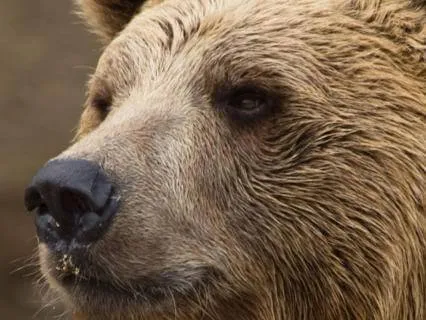
Bear Bears have long been associated with northern peoples.
In Greek,
The word for bear is Arktos,
And several myths about bears have been passed down by those living in the Arctic Circle.
These tribes are called Arctic because they reside beneath the constellation known as the Great Bear,
Arktos.
Bears have been a sacred animal in many shamanistic cultures.
From Siberia to North America In the Sami stories,
The bear is a powerful totem animal.
The powers of the bear were connected to the fact that,
In the northern hemisphere,
The bears go to hibernation.
Hunters believed that the bear died during winter and was then born again in the spring.
This made the bear an immortal being.
In Uralic mythology,
The bear was born in the star sky in the constellation of Ursa Major.
His father was the sky god Numtorum,
And his son,
The bear,
Looked down from the skies at the lives of humans and wanted to live among them.
His father agreed,
And the bear was sent to the Earth in a golden cradle.
However,
When on Earth the bear lived a sinful life and the humans killed it,
We can still see the bear in the sky.
His father,
Numtorum,
In the constellation of Ursa Major,
And the bear in Ursa Minor.
This story is widespread in Siberian and Finno-Ugric cultures.
For the shaman,
The bear was a sacred ancestor and had to be dealt with respect.
Bears' ability to be reborn also gave it the reputation of a shaman.
Bear was a wise creature and a divine being.
For the Sami,
Bears were considered sacred animals.
Bear hunting was a ritual filled with great festivities.
The Sami bears were part of the forest and possessed its magic.
According to their folklore,
There were three types of bears,
Regular bears,
Evil bears known as nostokarhu,
Which were believed to be controlled by an evil shaman,
And bears that represented people who were either bewitched or capable of shapeshifting into bears.
Regular bears typically avoided humans.
So if a bear approached a village,
People often interpreted this as a sign that it was bewitched.
Their worship has been prevalent in several Arctic cultures.
Historical evidence shows that the Sami engaged ritualistic bear hunts during the 17th and 18th centuries.
Bears were buried similar to humans,
With all their bones,
So they could continue their existence in the next world.
Some Sami groups believed that the gods could grow flesh around the bear's body,
Allowing the bear to be reborn in the saiva.
Bears often appear in shamanic trams,
Depicted either in their caves or walking in the woods.
The shaman may have used the tram to determine if the day was suitable for a bear hunt.
It has also been speculated that bear rituals were connected to Läppälmäi,
The god of the hunt.
After the hunt,
Bear meat was served at ritualistic feasts.
Bears were buried in ways similar to humans.
Along with the bones,
A knife,
A pair of skis,
And a piece of brass were placed in the grave,
So the bear could manage in the next world.
The ceremony concluded in a festive manner.
The skin of a bear was spread out in a net,
And men would shoot arrows at its center.
Women had to cover their eyes and then throw a stick towards the bear skin.
The one who landed closest was deemed the winner,
And it was decided that their husband would be the one to hunt the bear next time.
There was lots of taboos related to women when it came to bear hunt.
Before the hunt,
Men had to live in celibacy for a few days.
Upon their return from the hunt,
The men had to follow a specific path that ensured they would not encounter any women.
Additionally,
They had to enter their home through the Boassu,
A route already designated solely for men.
These rituals were believed to ensure success in bear hunting,
While also protecting women from the bear's magical powers.
The Ina-Harisaami hold the belief that the bear was one of their ancestors.
Moose is the largest animal in Scandinavia.
With its strong feet,
It walks through obstacles.
As a totem animal,
Moose symbolizes the ability to raise above problems and pettiness,
And to see the bigger picture.
They possess very good hearing and a sense of smell.
Among different Uralic tribes,
The story of the moose is about the creation of the Milky Way.
In the story,
Two hunters are hunting a giant moose in the star sky,
And we see this hunt as the Milky Way.
According to the legend,
The day when the hunters catch the moose,
We can no longer see the stars.
In some versions of the story,
The hunters are not men but bears,
And the moose is carrying the sun in its antlers.
In the myths,
Moose are described to be as solitary animals.
This is not the case in nature.
Moose are very family-oriented.
Moose are connected to the element of water,
Because they often stand or walk next to wet marshes and desert lakes.
Moose who carries the sun In Siberian and Sami myths and legends,
A great moose runs in the skies and it holds the sun in its antlers.
It is chased by a giant hunter who skis behind it.
Hunter chases the moose again and again each day.
According to the Sami,
Milky Way is the track where this chase happens.
In the night time,
The moose swims in the river of death.
When the hunter shoots the moose,
The sun goes out and the world comes to an end.
This myth is common among all native groups in the Northern Hemisphere.
In the mythology of the Mansi people,
God created a moose that had six legs.
It was way too fast for a man to hunt,
So he asked the spirit of the forest to help him.
After a long time of skiing,
The man finally caught the moose and cut two of its legs off.
The moose wasn't too fast for the man anymore.
The moose became the constellation of Ursa Major,
And the Milky Way was given to the forest spirit as a thank you gift.
Wolf Wolf is as feared to be dangerous to both people and the reindeer.
One of the beliefs connected to wolves was that a wolf had a magical ability to tire a person,
And then attack.
There were joiks,
Sami chants,
Especially for the wolves.
It was believed that wolves were afraid of them.
Years ago wolves were respected,
Like other beasts of the forest.
According to one joik,
The wolf was Suolo Kjevra,
A name that means old and powerful of the island.
While some people believed that the world was an island that was floating in the sea,
Universe,
In some stories the wolf is a shamanistic traveler who can travel across the different layers of the world.
Or a shaman takes the wolf's shape.
Oral tradition tells how people could turn into wolves and bears.
A witch or a shaman could also conjure their enemy into a wolf,
But some could turn to a wolf for their own will.
They had to find a twisted tree and circle under it counterclockwise.
After the reindeer,
Most joiks were composed about the wolf.
As reindeer herders sang joiks to keep the wolves at bay.
From the perspective of the reindeer herders,
It is understandable that wolves were viewed as feared animals.
Predators,
Like the lynx and the wolf,
Were buried differently from other animals,
Because people did not want them to be reborn.
Sometimes they were buried underneath the stones,
In the river,
Or remains were placed into a swamp.
The Sami believed that there was a connection between water and the underworld.
With the spread of Christianity,
The belief emerged that a wolf that hunted reindeer was created by the devil.
There have been many explanations for the wolf's natural behavior,
And it was commonly thought that wolves possessed supernatural powers.
The approach of the wolf could cast a spell that would make the herder and their dog sleepy.
It was believed that young Koltasaami transformed themselves into wolves and chased reindeer just for fun.
According to one legend,
A person needed to find a special tree in the forest,
Touch it and say the name of the animal they wished to shapeshift into.
Myths surrounding reindeer,
Bears and wolves indicate that humans have a connection to these animals,
Which may help explain the shapeshifting legends among the Sami people.
But all three have stories linking them to humans.
Tales about the wolf as an ancestor are less common compared to those about bears and reindeer.
There are tales of shamans who can transform themselves into wolves.
According to the lore,
The animal helpers guide them on how to change forms.
In most werewolf stories,
A man is turned into a wolf against his will.
However,
In surprisingly many tales,
When a man lives as a wolf,
He enjoys the experience so much that he no longer wishes to become human again.
One common fable tells of a wedding party that was transformed into wolves by someone harboring a grudge against a family member.
Additionally,
There are stories about herders who have turned one another into wolves,
Often as an act of revenge.
If a wolf attacked the reindeers brutally,
It often inspired stories about werewolves.
The end.
Thank you for listening.