An Old War Horse Captain had been broken in and trained for an army horse.
His first owner was an officer of cavalry going out to the Crimean War.
He said he quite enjoyed the training with all the other horses,
Trotting together,
Turning together to the right hand or to the left,
Halting at the word of command,
Or dashing forward at full speed at the sound of the trumpet or signal of the officer.
He was,
When young,
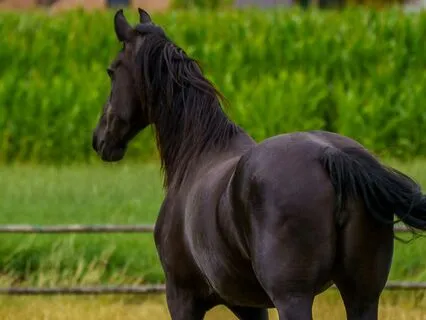
A dark,
Dappled,
Iron-gray and considered very handsome.
His master,
A young,
High-spirited gentleman,
Was very fond of him and treated him from the first with the greatest care and kindness.
He told me he thought the life of an army horse was very pleasant,
But when it came to being sent abroad over the sea in a great ship,
He almost changed his mind.
That part of it,
He said,
Was dreadful.
Of course,
We could not walk off the land into the ship,
So they were obliged to put strong straps under our bodies,
And then we were lifted off in spite of our struggles and were swung through the air over the water to the deck of the great vessel.
There we were placed in small clothes stalls and never for a long time saw the sky or were able to stretch our legs.
The ship sometimes rolled about in high winds and we were knocked about and felt bad enough.
However,
At last it came to an end and we were hauled up and swung over again to the land.
We were very glad and snorted and neighed for joy when we once more felt firm ground under our feet.
We soon found that the country we had come to was very different from our own and that we had many hardships to endure besides the fighting.
But many of the men were so fond of their horses that they did everything they could to make them comfortable in spite of snow,
Wet,
And all things out of order.
But what about the fighting,
Said I?
Was not that the worse than anything else?
Well,
Said he,
I hardly know.
We always liked to hear the trumpet sound and to be called out and were impatient to start off,
Though sometimes we had to stand for hours waiting for the word of command,
And when the word was given we used to spring forward as gaily and as eagerly as if there were no cannonballs,
Bayonets,
Or bullets.
I believe so long as we felt our rider firm in a saddle and his hands steady on the bridle,
Not one of us gave way to fear,
Not even when the terrible bombshells whirled through the air and burst into a thousand pieces.
I with my noble master went into many actions together without a wound,
And though I saw horses wounded,
I don't think I feared for myself.
My master's cheery voice as he encouraged his men made me feel as if he and I could not be injured.
I had such perfect trust in him that while he was guiding me I was ready to charge up to the very cannon's mouth.
I saw many brave men fall.
I had heard the cries,
I had cantered over ground slippery,
And frequently had to turn aside to avoid trampling on folks.
I had never felt terror until one day.
Herold Captain paused for a while and drew a long breath.
I waited and he went on.
It was one autumn morning and as usual an hour before daybreak our cavalry had turned out,
Ready for the day's work,
Whether it might be fighting or waiting.
The men stood by their horses waiting,
Ready for orders.
As the light increased there seemed to be some excitement among the officers,
And before the day was well begun we heard the firing of the enemy's guns.
Then one of the officers rode up and gave the word for the men to mount,
And in a second every man was in his saddle,
And every horse stood expecting the touch of the rain or the pressure of his rider's heels.
All animated,
All eager,
But still we'd been trained so well that except by the champing of our bits and rustive tossing of our heads from time to time it could be said that we did not stir.
My dear master and I were at the head of the line,
And as all sat motionless and watchful he took a little stray lock of my mane,
Which had turned over on the wrong side,
Laid it over on the right,
And smoothed it down with his hand,
Then patted my neck and said,
We shall have a day of it today,
But we'll do our duty as we have done.
He stroked my neck,
That morning I think more than he'd ever done before,
Quietly on and on,
As if he was thinking of something else.
I loved to feel his hand on my neck,
And arched my crest proudly and happily,
But I stood very still,
For I knew all his moods,
And when he liked me to be quiet,
And when he liked me to be gay.
I cannot tell all that happened that day,
But I will tell of the last charge that we made together.
It was across a valley right in front of the enemy's cannon.
By the time we were well used to the roar of heavy guns,
The rattle of musket fire,
And the flying of shot near us,
But never had I been in such fire as we rode through on that day.
From the right,
From the left,
From the front,
Shot and shell poured in upon us.
Many a brave man went down,
And many a horse fell.
Fearful as it was,
No one stopped,
No one turned back.
Every moment the rakes were thinned out.
But we chose to keep together,
And instead of being shaken or staggered in our pace,
Our gallop became faster and faster as we neared the cannon.
My master,
My dear master,
Was cheering on his comrades,
With his right arm raised on high,
And there he was struck.
I wanted to keep my place by his side,
And not leave him under the rush of the horse's feet,
But it was in vain.
And now without a master or a friend,
I was alone on the great ground.
Then fear took hold of me,
And I trembled as I had never trembled before.
And I,
Too,
As I had seen other horses do,
Tried to join in the ranks and gallop with them.
Just then a soldier whose horse had been killed under him caught me at my bridle and mounted me,
And with this new master I was again going forward.
But our gallant company was cruelly overpowered.
Only few of us remained.
I never saw my dear master again,
And I never loved any other master so well.
I went into many other engagements,
But was only once wounded,
And then not seriously,
And when the war was over I came back to England,
As sound and strong as I went out.
I said,
I have heard people talk about war as if it was a very fine thing.
Ah,
Said he,
I should think they never saw it.
No doubt it was very fine when there is no enemy,
When it is just exercise and parade and sham fight.
Yes,
It's very fine then.
But when thousands of folks and animals are injured,
It has a very different look.
Do you know what they fought about,
Said I?
No,
Said he.
That is more than a horse can understand.
But the enemy must have been awfully wicked people,
If it was right to go all that way over the sea,
On purpose.
Chapter 35.
Jerry Baker I never knew a better man than my new master.
He was kind and good,
And as strong for the right as John Manley,
And so good-tempered and merry that few people could pick a quarrel with him.
He was very fond of making little songs and singing them to himself.
One he was very fond of was this,
Come father and mother and sister and brother,
Come all of you,
Turn to and help one another.
And so they did.
Harry was as clever as Stablework,
As a much older boy,
And he always wanted to do what he could.
Then Polly and Dolly used to come in the morning to help with the cab,
To brush and beat the cushions and rub the glass,
While Jerry was giving us a cleaning in the yard and Harry was rubbing the harness.
There used to be a great deal of laughing and fun between them,
And it put Captain and me in such better spirits than if we had heard scolding and hard words.
They were always early in the morning,
For Jerry would say,
If you in the morning throw minutes away,
You can't pick them up in the course of a day.
You may hurry and scurry and flurry and worry.
You've lost them forever,
Forever and aye.
He could not bear any careless loitering and waste of time,
And nothing was so near making him angry as to find people,
Who were always late,
Wanting a cab horse to be driven hard to make up for their idleness.
One day two wild-looking young men came out of the tavern close by the stand and called Jerry.
Here,
Cabby,
Look sharp.
We are rather late.
Put on the steam,
Will you,
And take us to Victorian time for the one o'clock train.
You shall have a shilling extra.
I will take you at the regular pace,
Gentlemen.
Shillings don't pay for putting on the steam like that.
Larry's cab was standing next to ours.
He flung open the door and said,
I'm your man,
Gentlemen.
Take my cab.
My horse will get you there all right.
And as he shut them in with a wink toward Jerry,
Said,
It's against his conscience to go beyond a jog trot.
Then slashing his jaded horse,
He set off as hard as he could.
Jerry patted me on the neck.
No,
Jack,
A shilling would not pay for that sort of thing,
Would it,
Old boy?
Although Jerry was determinedly set against hard driving to please careless people,
He always went a very good pace and was not against putting on the steam,
As he said,
If he only knew why.
I well remember one morning as we were standing waiting for a fare that a young man trot on a piece of orange peel which lay on the pavement and fell down with great force.
Jerry was the first to run and lift him up.
He seemed much stunned,
And as they led him to the shop,
He walked as if he were in great pain.
Jerry,
Of course,
Came back to the stand,
But in about ten minutes one of the shopmen called him,
So he drew up to the pavement.
Can you take me to the Southeastern Railway,
Said the young man?
This unlucky fall has made me late,
I fear,
But it is of great importance that I should not lose the twelve o'clock train.
I should be most thankful if you could get me there in time,
And will gladly pay you an extra fare.
I will do my very best,
Said Jerry,
Heartedly,
If you think you're well enough,
Sir,
For he looked dreadfully white and ill.
I must go,
He said earnestly,
Please,
To open the door,
And let us lose no time.
The next minute Jerry was on the box,
With a cheery cheer up to me and a twitch of rain that I well understood.
Now then,
Jack,
My boy,
Said he,
Spin along,
We'll show them how we can get over the ground,
If we only know why.
It was always difficult to drive fast in the city in the middle of the day,
When the streets are full of traffic.
But we did what could be done,
And when a good driver and a good horse,
Who understand each other,
Are of one mind,
It is wonderful what they can do.
I had a very good mouth,
That is,
I was to be guided by the slightest touch of the rain,
And that is a great thing in London,
Among carriages,
Omnibuses,
Carts,
Vans,
Trucks,
Cabs,
And great wagons creeping along at a walking pace,
Some going one way,
Some another,
Some going slowly,
Others wanting to pass them,
Omnibuses stopping short every few minutes to take up a passenger,
Obliging the horse that is coming behind to pull up to or to pass,
And to get before them,
Perhaps you try to pass,
But just then something else comes dashing in through the narrow opening,
And you have to keep in behind the omnibus again.
Presently,
You think you see a change,
And manage to get to the front,
Going so near the wheels on each side,
That half an inch nearer and they would escape.
Well you get along for a bit,
But soon find yourself in a long train of carts and carriages,
All obliged to go at a walk.
Perhaps you come to a regular block up,
And have to stand still for minutes altogether,
Till something clears out the side street,
Or the policeman interferes and you have to be ready for any chance to dash forward if there be an opening,
And be quick as a rat dog to see if there should be room,
And if there be,
Lest you get your own heels locked or smashed,
Or the shaft of some other vehicle run into your chest or shoulder.
All this is what you have to be ready for,
If you want to get through London fast,
In the middle of the day,
It wants a great deal of practice.
Jerry and I were used to it,
And no one could beat us at getting through when we were set upon it.
I was quick and bold,
And could always trust my driver.
Jerry was quick and patient at the same time,
And could trust his horse,
Which was a great thing too.
He very seldom used the whip.
I knew by his voice and his click-click when he wanted to get on fast,
And by the rain where I was to go,
So there was no need for whipping,
But I must get back to my story.
The streets were very full that day,
And we got on pretty well as far as the bottom of the Cheapside,
Where there was a block for three or four minutes.
The young man put his head out and said anxiously,
I think I'd better get out and walk,
I shall never get there if this goes on.
I'll do all that can be done,
Sir,
Said Jerry,
I think we shall be in time,
This block-up cannot last much longer,
And your luggage is very heavy for you to carry,
Sir.
Just then the cart in front of us began to move on,
And then we had a good turn.
In and out,
In and out,
We went as fast as horse-flesh could go,
And for a wonder had a good clear time on London Bridge,
For there was a whole train of cabs and carriages all going our way at a quick trot,
Perhaps wanting to catch that very train.
At any rate,
We whirled into the station with many more,
Just as the great clock pointed to eight minutes to twelve.
Thank God,
We are in time,
Said the young man,
And thank you too,
My friend,
And your good horse,
You have saved me more than money can ever pay for,
Take this extra half-crown.
No,
Sir,
No,
Thank you all the same,
So glad we hit the time,
Sir,
But don't stay now,
Sir,
The bell is ringing,
Here,
Porter,
Take this gentleman's luggage,
Dover Line,
Twelve o'clock train,
That's it,
And without waiting for another word,
Jerry wheeled me round to make room for another cab that were dashing at the last minute,
And drew up on one side till the crush was past.
So glad,
He said,
So glad,
Poor young fellow,
I wonder what it was that made him so anxious.
Jerry often talked himself quite loud enough for me to hear when we were not moving.
On Jerry's return to the rank,
There was a good deal of laughing,
For driving hard to a train for an extra fare,
As they said,
All against his principles,
And they wanted to know how much he had pocketed.
A good deal more than I generally get,
Said he,
Nodding slyly,
What he gave me will keep me in little comforts for several days.
It's a humbug,
Said another,
Preaching to us and then doing the same himself.
Look here,
Mate,
Said Jerry,
The gentleman offered me half a crown extra,
But I didn't take it.
T'was quite pay enough for me to see how glad he was to catch that train,
And if Jack and I chose to have a quick run now and then to please ourselves,
That's our business and not yours.
Well,
Said Larry,
You'll never be a rich man.
Most likely not,
Said Jerry,
But I don't know that I shall be less happy for it.
I have heard the commandments read a great many times,
And I never noticed that any of them said,
Thou shalt be rich,
And there are a good many curious things said in the New Testament about rich men that I think would make me feel rather queer if I was one of them.
If ever you do get rich,
Said Governor Gray,
Looking over his shoulder across the top of his cab,
You'll deserve it,
Jerry,
And you won't find a curse come with your wealth.
As for you,
Larry,
You'll die poor.
You spend too much in whipcord.
Well,
Said Larry,
What is a fellow to do if his horse won't go without it?
You never take the trouble to see if he will go without it.
Your whip is always going as if you had the St.
Vitus dance in your arm,
And if it does not wear you out,
It wears your horse out,
And you know you're always changing your horses,
And why?
Because you never give them any peace or encouragement.
Well,
I have not had good luck,
Said Larry.
That's where it is.
And you never will,
Said the Governor.
Good luck is rather particular who she rides with,
And mostly prefers those who have got common sense and a good heart.
At least that's my experience.
Governor Gray turned round again to his newspaper,
And the other men went to their cabs.
CHAPTER THIRTY-SIX THE SUNDAY CAB One morning,
As Jerry had just put me into the shafts and was fastening the traces,
A gentleman walked into the yard.
"'Your servant,
Sir,
' said Jerry.
"'Good morning,
Mr.
Barker,
' said the gentleman.
"'I should be glad to make some arrangements with you for taking Miss Briggs regularly to church on Sunday mornings.
We go to the new church now,
And it's rather further than she can walk.
' "'Thank you,
Sir,
' said Jerry.
"'But I've only taken out six days' license,
And therefore I cannot take a fare on a Sunday.
It would not be legal.
'" A few years since the annual charge for a cab license was very much reduced,
And the difference between the six- and seven-days cabs was abolished.
"'Oh,
' said the other.
"'I did not know yours was a six-day cab,
But of course it would be very easy to alter your license.
I would see that you did not lose it.
The fact is Miss Briggs is very fond of you and prefers you to drive her.
'" "'I should be glad to oblige the lady,
Sir,
But I had a seven-days license once,
And the work was too hard for me,
And too hard for my horses.
Year in and year out,
Not a day's rest,
And never a Sunday with my wife and children.
You're never able to go to a place of worship,
Which I'd always been used to before I took the driving box.
So for the last five years,
I've only taken six-days license,
And I find it better all the way around.
'" "'Well,
Of course,
' replied Mr.
Briggs.
"'It is very proper that every person should have rest and be able to go to church on Sundays,
But I should not have thought you would have minded such a short distance for the horse,
And only once a day.
You would have all the afternoon and evening for yourself,
And we're very good customers,
You know.
'" "'Yes,
Sir,
That is true,
And I'm grateful for all the favors.
I am sure,
In anything that I could do to oblige you or the lady,
I should be proud and happy to do it.
But I can't give up my Sundays,
Sir,
Indeed I can't.
I read that God made man,
And he made horses and all the other beasts,
And as soon as he had made them,
He made a day of rest,
And bade that all should rest one day in seven.
And I think,
Sir,
He must have known what was good for them,
And I'm sure it's good for me.
I am stronger and healthier altogether,
Now that I have a day of rest.
The horses are fresh,
Too,
And do not wear up nearly so fast.
The six-day drivers all tell me the same,
And I have laid by more money in the savings bank than I ever did before.
And as for the wife and children,
Sir,
Why,
Heart alive!
They would not go back to the seven days for all they could see.
" "'Oh,
Very well,
' said the gentleman.
Don't trouble yourself,
Mr.
Barker,
Any further.
I will inquire somewhere else.
" And he walked away.
"'Well,
' said Jerry to me,
"'we can't help it,
Jack,
Old boy.
We must have our Sundays.
' "'Polly,
' he shouted,
"'Polly,
Come here!
' She was there in a minute.
"'What is it all about,
Jerry?
' "'Well,
My dear,
Mr.
Briggs wants me to take Miss Briggs to church every Sunday morning.
I say I have only a six-day license.
He says get a seven-day license,
And I'll make it work through a while.
And you know,
Polly,
There are very good customers to us.
Miss Briggs often goes shopping for hours or making calls,
And then she pays down fair and honorably like a lady.
There's no beating down or making three hours into two and a half,
As some folks do.
And it's easy work for the horses.
Not like tearing along to catch trains for people that are always a quarter of an hour too late.
And if I don't oblige her in this matter,
It is very likely we shall lose them altogether.
What do you say,
Little woman?
' "'I say,
Jerry,
' she says,
Speaking very slowly,
"'I say if Miss Briggs would give you a sovereign every Sunday morning,
I would not have a seven-day's cabman again.
We have known what it was like to have no Sundays,
And now we know what it is like to call them our own.
Thank God you earn enough to keep us,
Though it is sometimes close work to pay for all the oats and hay,
The license and the rent besides.
But Harry will be earning something soon,
And I would rather struggle on harder than we do than go back to those horrid days where you hardly had a minute to look at your own children and we never could go to the place of worship together or have a happy quiet day.
God forbid that we should ever turn back to those times.
That's what I say,
Jerry.
' "'And that is just what I told Mr.
Briggs,
My dear,
' said Jerry.
"'And what I mean,
I stick to.
So don't go and fret yourself,
Polly,
' for she had begun to cry.
"'I would not go back to the old times if I earned twice as much.
So that is settled,
Little woman.
Now cheer up,
And I'll be off to the stand.
' Three weeks had passed after this conversation,
And no order had come from Miss Briggs,
So there was nothing but taking jobs from the stand.
Jerry took it to heart a good deal,
For of course the work was harder for horse and man,
But Polly would always cheer him up and say,
"'Never mind,
Father,
Never mind.
Do your best and leave the rest.
T'will all come right some day or night.
' It soon became known that Jerry had lost his best customer,
And for what reason.
Most of the men said he was a fool,
But two or three took his part.
"'If workmen don't stick to their Sunday,
' said Truman,
"'they'll soon have none left.
It is every man's right and every beast's right.
By God's law we have a day of rest,
And by the law of England we have a day of rest.
And I say we ought to hold to these rights and the laws that these give us to keep them for our children.
' "'All very well for you religious chaps to talk so,
' said Larry,
"'but I'll turn a shilling when I can.
I don't believe in religion,
For I don't see that your religious people are any better than the rest.
' "'If they are not better,
' put in Jerry,
"'it is because they're not religious.
You might as well say that our country's laws are not good because some people break them.
If a man gives way to his temper and speaks evil of his neighbor and does not pay his debts,
He is not religious.
I don't care how much he goes to church.
If some men are shams and humbugs,
That does not make the religion untrue.
Real religion is the best and truest thing in the world,
And the only thing that can make a man really happy or make the world we live in any better.
' "'If religion was good for anything,
' said Jones,
"'it would prevent your religious people from making us work on Sundays,
As you know many of them do.
And that's why I say religion is nothing but a sham.
Why,
If it was not for the church and chapel goers,
It would be hardly worthwhile our coming out on a Sunday.
But they have their privileges,
As they call them,
And I go without.
I shall expect them to answer for my soul if I can't get a chance of saving it.
'" Several of the men applauded this till Jerry said,
"'That may sound well enough,
But it won't do.
Every man must look after his own soul.
You can't lay it down at another man's door like a foundling and expect him to take care of it.
And don't you see?
If you are always sitting on your box waiting for a fare,
They will say,
"'If we don't take him,
Someone else will.
' And he does not look for any Sunday.
Of course,
They don't go to the bottom of it,
Or they would see if they never came for a cab,
It would be no use you standing there.
But people don't always like to go to the bottom of things.
It may not be convenient to do it,
But if you Sunday drivers would all strike for one day of rest,
The thing would be done.
" "'And what would all the good people do if they could not get to their favorite preacher?
' said Larry.
"'Tis not for me to lay down plans for other people,
' said Jerry.
But if they can't walk so far,
They can go to what is nearer.
And if it should rain,
They can put on their Macintoshes as they do during the weekday.
If a thing is right,
It can be done.
And if it is wrong,
It can be done without.
And a good man will find a way.
And that is as true for us cabmen as it is for the churchgoers.
" And that is the end of our story this evening.
Until next time,
Sweet dreams.