Pride and Prejudice by Jane Austen Chapter 4 When Jane and Elizabeth were alone,
The former,
Who had been cautious in her praise of Mr.
Bingley before,
Expressed to her sister how very much she admired him.
He is just what a young man ought to be,
Said she.
Sensible,
Good-humoured,
Lively,
And I never saw such happy manners,
So much ease with such perfect good breeding.
He is also handsome,
Replied Elizabeth,
Which a young man ought likewise to be,
If he possibly can.
His character is thereby complete.
I was very much flattered by his asking me to dance a second time.
I did not expect such a compliment.
Did you not?
I did for you,
But that is one great difference between us.
Compliments always take you by surprise,
And me never.
What could be more natural than his asking you again?
He could not help seeing that you were about five times as pretty as every other woman in the room.
No thanks to his gallantry for that.
Well,
He certainly is very agreeable,
And I give you leave to like him.
You have liked many a stupider person.
Dear Lizzie,
Oh,
You are a great deal too apt,
You know,
To like people in general.
You never see a fault in anybody.
All the world are good and agreeable in your eyes.
I never heard you speak ill of a human being in my life.
I would not wish to be hasty in censoring anyone,
But I always speak what I think.
I know you do,
And it is that which makes the wonder.
With your good sense,
To be so honestly blind to the follies and nonsense of others.
Affectation of candor is common enough.
One meets it everywhere,
But to be candid without ostentational design,
To take the good of everybody's character and make it still better and say nothing of the bad,
Belongs to you alone.
And so you like this man's sisters too,
Do you?
Their manners are not equal to his.
Certainly not at first,
But they are very pleasing women when you converse with them.
Miss Bingley is to live with her brother and keep his house,
And I am much mistaken if we shall not find a very charming neighbour in her.
Elizabeth listened in silence,
But was not convinced.
Their behaviour at the assembly had not been calculated to please in general,
And with more quickness of observation and less pliancy of temper than her sister,
And with a judgment too unassailed by any attention to herself,
She was very little disposed to approve them.
They were in fact very fine ladies,
Not deficient in good humour when they were pleased,
Nor in the power of being agreeable when they chose it,
But proud and conceited.
They were rather handsome,
Had been educated in one of the first private seminaries in town,
Had a fortune of £20,
000,
Were in the habit of spending more than they ought,
And of associating with people of rank,
And were therefore in every respect entitled to think well of themselves,
And mainly of others.
They were of a respectable family in the north of England,
A circumstance more deeply impressed on their memories than that their brother's fortune and their own had been acquired by trade.
Mr.
Bingley inherited property to the amount of nearly £100,
000 from his father,
Who had intended to purchase an estate,
But did not live to do it.
Mr.
Bingley intended it likewise,
And sometimes made choice of his county,
But as he was now provided with a good house and the liberty of a manor,
It was doubtful to many of those who best knew the easiness of his temper,
Whether he might not spend the remainder of his days at Netherfield,
And leave the next generation to purchase.
His sisters were very anxious for his having an estate of his own,
But though he was now established only as a tenant,
Miss Bingley was by no means unwilling to preside at his table,
Nor was Mrs.
Hurst,
Who had married a man of more fashion than fortune,
Less disposed to consider his house as her home when it suited her.
Mr.
Bingley had not been of age two years when he was tempted by an accidental recommendation to look at Netherfield House.
He did look at it and into it for half an hour,
Was pleased with the situation and the principal rooms,
Satisfied with what the owner said in its praise,
And took it immediately.
Between him and Darcy there was a very steady friendship,
In spite of great opposition of character.
Bingley was endeared to Darcy by the easiness,
Openness,
Ductility of his temper,
Though no disposition could offer a greater contrast to his own,
And though with his own he never appeared dissatisfied.
On the strength of Darcy's regard,
Bingley had the firmest reliance,
And of his judgment the highest opinion.
In understanding Darcy was the superior,
Bingley was by no means deficient,
But Darcy was clever,
He was at the same time haughty,
Reserved and fastidious,
And his manners,
Though well-bred,
Were not inviting.
In that respect his friend had greatly the advantage.
Bingley was sure of being liked wherever he appeared.
Darcy was continually giving offence.
The manner in which they spoke of the Meriton assembly was sufficiently characteristic.
Bingley had never met with pleasanter people or prettier girls in his life,
Everybody had been most kind and attentive to him,
There had been no formality,
No stiffness,
He had soon felt acquainted with all the room,
And as to Miss Bennet he could not conceive an angel more beautiful.
Darcy,
On the contrary,
Had seen a collection of people in whom there was little beauty and no fashion,
For none of whom he had felt the smallest interest,
And from none received either attention or pleasure.
Miss Bennet he acknowledged to be pretty,
But she smiled too much.
Mrs.
Hurst and her sister allowed it to be so,
But still they admired her and liked her,
And pronounced her to be a sweet girl,
And one whom they should not object to know more of.
Miss Bennet was therefore established as a sweet girl,
And their brother felt authorized by such commendation to think of her as he chose.
Chapter 5 Within the short walk of Longbourn lived a family with whom the Bennets were particularly intimate.
Sir William Lucas had been formerly in trade in Meriton,
Where he had made a tolerable fortune,
And risen to the honour of knighthood by an address to the King during his meralty.
The distinction had perhaps been felt too strongly.
It had given him a disgust to his business and to his residence in a small market town,
And quitting them both,
He had removed with his family to a house about a mile from Meriton,
Denominated from that period Lucas Lodge,
Where he could think with pleasure of his own importance,
And unshackled by business,
Occupy himself solely in being civil to all the world.
For though elated by his rank,
It did not render him supercilious.
On the contrary,
He was all attention to everybody.
By nature inoffensive,
Friendly,
And obliging,
His presentation at St.
James's had made him courteous.
Lady Lucas was a very good kind of woman,
Not too clever to be a valuable neighbour to Mrs.
Bennet.
They had several children.
The eldest of them,
A sensible,
Intelligent young woman,
About twenty-seven,
Was Elizabeth's intimate friend.
That the Miss Lucas's and the Miss Bennet should meet to talk over a ball was absolutely necessary,
And the morning after the assembly brought the former to Longbourn to hear and to communicate.
You began the evening well,
Charlotte,
Said Mrs.
Bennet,
With civil self-command to Miss Lucas.
You were Mr.
Bingley's first choice.
Yes,
But he seemed to like his second better.
Oh,
You mean Jane,
I suppose,
Because he danced with her twice.
To be sure,
He did seem as if he admired her.
Indeed,
I rather believe he did.
I heard something about it,
But I hardly know what.
Something about Mr.
Robinson?
Perhaps you mean what I overheard between him and Mr.
Robinson.
Did I not mention it to you?
Mr.
Robinson's asking him how he liked our Meritan assemblies,
And whether he did not think there were a great many pretty women in the room,
And which he thought the prettiest.
And he's answering immediately to the last question,
Oh,
The eldest Miss Bennet,
Beyond a doubt,
There cannot be two opinions on that point.
Upon my word,
Well,
That was very decided indeed.
That does seem as if,
But however,
It may all come to nothing,
You know.
My overbearings were more to the purpose than yours,
Eliza,
Said Charlotte.
Mr.
Darcy's not so well worth listening to as his friend,
Is he?
Poor Eliza.
To be only just tolerable.
I beg you would not put it into Lizzie's head to be vexed by his ill-treatment,
For he is such a disagreeable man,
That it would be quite a misfortune to be liked by him.
Mrs.
Long told me the last night that he sat close to her for half an hour without once opening his lips.
Aye,
Because she asked him at last how he liked Netherfield,
And he could not help answering her,
But she said he seemed very angry at being spoke to.
Miss Bingley told me,
Said Jane,
That he never speaks much unless amongst his intimate acquaintance.
With them he is remarkably agreeable.
I do not believe a word of it,
My dear.
If he had been so very agreeable,
He would have talked to Mrs.
Long,
But I can guess how it was.
Everybody says that he is ate up with pride,
And I dare say he had heard somehow that Mrs.
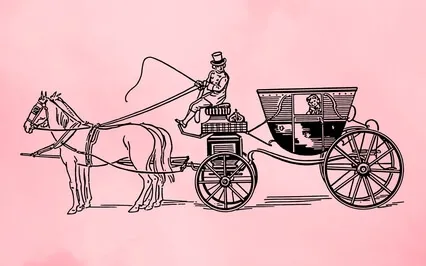
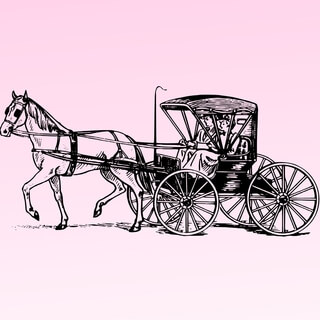
Long does not keep a carriage,
And had come to the ball in a hackshaze.
I do not mind his talking to Mrs.
Long,
Said Miss Lucas,
But I wish he had danced with Eliza.
Another time,
Lizzie,
Said her mother,
I would not dance with him if I were you.
I believe,
Mum,
I may safely promise you never to dance with him.
His pride,
Said Miss Lucas,
Does not offend me so much as pride often does,
Because there is an excuse for it.
One cannot wonder that so very fine a young man,
With family,
Fortune,
Everything in his favour,
Should think highly of himself.
If I may so express it,
He has a right to be proud.
That is very true,
Replied Elizabeth,
And I could easily forgive his pride if he had not mortified mine.
Pride,
Observed Mary,
Who peaked herself upon the solidity of her reflections,
Is a very common failing,
I believe.
By all that I have ever read,
I am convinced that it is very common indeed,
That human nature is particularly prone to it,
And that there are very few of us who do not cherish a feeling of self-complacency on the score of some quality or other,
Real or imaginary.
Vanity and pride are different things,
Though the words are often used synonymously.
A person may be proud without being vain.
Pride relates more to our opinion of ourselves,
Vanity to what we would have others think of us.
If I was as rich as Mr.
Darcy,
Cried a young Lucas,
Who came with his sisters,
I should not care how proud I was.
I would keep a pack,
I would keep a pack of foxhounds and drink a bottle of wine every day.
Then you would drink a great deal more than you ought,
Said Mrs.
Bennet,
And if I were to see you at it,
I should take away your bottle directly.
The boy protested that she should not.
She continued to declare that she would,
And the argument ended only with the visit.
I hope you enjoyed these chapters.
If you did,
Please consider following me to hear more.