Welcome to the I Can't Sleep Podcast,
Where I help you drift off one fact at a time.
I'm your host,
Benjamin Boster,
And today's episode is about the Fermi Paradox.
The Fermi Paradox is the discrepancy between the lack of conclusive evidence of advanced extraterrestrial life and the apparently high likelihood of its existence.
The paradox is named after physicist Enrico Fermi,
Who informally posed the question,
Remembered by Emil Konopinsky as,
But where is everybody?
During a 1950 conversation at Los Alamos with colleagues Konopinsky,
Edward Teller,
And Herbert York.
The paradox first appeared in print in a 1963 paper by Carl Sagan,
And the paradox has since been fully characterized by scientists.
The early formulations of the paradox have also been identified in writings by Bernard Labovier de Fontenelle,
1686,
And Jules Verne,
1865,
And by Soviet rocket scientist Konstantin Tsiolkovsky,
1933.
There have been many attempts to resolve the Fermi Paradox,
Such as suggesting that intelligent extraterrestrial beings are extremely rare,
That the lifetime of such civilizations is short,
Or that they exist,
But for various reasons humans see no evidence.
Some of the facts and hypotheses that together serve to highlight the apparent contradiction,
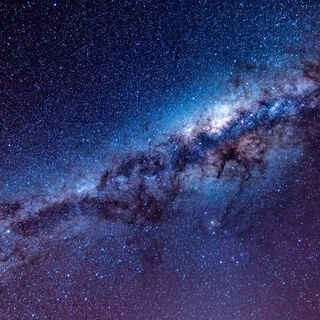
There are billions of stars in the Milky Way,
Similar to the Sun.
With high probability,
Some of these stars have Earth-like planets orbiting in the habitable zone.
Many of these stars,
And hence their planets,
Are much older than the Sun.
If Earth-like planets are typical,
Some may have developed intelligent life long ago.
Some of these civilizations may have developed interstellar travel,
A step that humans are investigating.
Even at the slow pace of envisioned interstellar travel,
The Milky Way galaxy could be completely traversed in a few million years.
Since many of the Sun-like stars are billions of years older than the Sun,
The Earth should have already been visited by extraterrestrial civilizations,
Or at least their probes.
However,
There is no convincing evidence that this has happened.
Enrico Fermi was a Nobel Prize winning physicist who predicted the existence of neutrinos,
And helped create the first artificial nuclear reactor,
An early feed of the Manhattan Project.
He was known to pose simple,
But seemingly unanswerable questions,
Termed Fermi questions to his colleagues and students.
Like,
How many atoms of Caesar's last breath do you inhale with each lungful of air?
In 1950,
Fermi visited Los Alamos National Laboratory in New Mexico,
And while walking to the Fuller Lodge for lunch,
Conversed with fellow physicists Emil Konopinsky,
Edward Teller,
And Herbert York about reports of flying saucers,
And the feasibility of faster-than-light travel.
When the conversation shifted to unrelated topics at the lodge,
Fermi blurted a question variously recalled as,
Where is everybody?
Teller,
Don't you ever wonder where everybody is?
York,
Or,
But where is everybody?
Konopinsky.
According to Teller,
The result of his question was general laughter,
Because of the strange fact that,
In spite of Fermi's question coming out of the blue,
Everybody around the table seemed to understand at once that he was talking about extraterrestrial life.
According to York,
Fermi followed up with a series of calculations on the probability of Earth-like planets,
The probability of life given on Earth,
The probability of humans given life,
The likely rise in duration of high technology,
And so on.
He concluded,
On the basis of such calculations,
That we ought to have been visited long ago,
And many times over.
However,
Teller recalled that Fermi did not elaborate on his question beyond,
Perhaps,
A statement that the distances to the next location of living beings may be very great,
And that,
Indeed,
As far as our galaxy is concerned,
We are living somewhere in the sticks,
Far removed from the metropolitan area of the galactic center.
Fermi was not the first to note the paradox.
In his 1686 book,
Conversations on the Plurality of Worlds,
Bernard Labouvier de Fontenelle,
Later the secretary of the French Academy of Sciences,
Constructs a dialogue in which Fontenelle's claims of intelligent beings exist in other worlds,
For instance the Moon,
Are refuted by a character who notes that,
If this were the case,
The Moon's inhabitants would already have come to us before now.
This may have inspired a similar discussion in Jules Verne's 1865 novel Around the Moon,
Which has also been identified as an early conceptualization of the Fermi Paradox.
Another early formulation,
Fermi Paradox,
Was presented and dissected in the 1930s writings of Russian rocket scientist Konstantin Tsiolkovsky.
Although his rocketry work was embraced by the materialist Soviets,
His philosophical writings were suppressed and unknown for most of the 20th century.
Tsiolkovsky noted that critics refute the existence of advanced extraterrestrial life as such civilizations would have visited humanity or left some detectable evidence.
He posed a solution to the paradox.
Humanity is quarantined by aliens to protect its independent cultural development,
Which resembles the Zoo Hypothesis proposed by John Ball.
The Fermi question first appeared in print in a footnote of a 1963 paper by Carl Sagan.
Two years later,
Stephen Dole noted the dilemma at a symposium.
If there are so many advanced forms of life around,
Where is everybody?
But did not attribute it to Fermi.
A chapter of Intelligent Life in the Universe,
Co-authored by Sagan and Iosif Shklovsky,
Was headlined with the Fermi attributed,
Where are they?
The Fermi question also appeared in NASA's 1970 Project Cyclops report,
A 1973 book by Sagan,
And a 1975 article in JBIS Interstellar Studies by David Viewing,
That first described it as a paradox.
Later that year,
Michael Hart published a detailed examination of the paradox in the Quarterly Journal of the Royal Astronomical Society.
Hart,
Who concluded that we are the first civilization in our galaxy,
Proposed four broad categories of solutions to the paradox.
Those that are physical,
A space travel limitation.
Sociological,
Aliens choose not to visit Earth.
Temporal,
Aliens have not had time to travel to Earth.
Or that extraterrestrials have already visited.
His paper sparked significant interest in the paradox among academics,
And even politicians,
With a discussion held in the House of Lords.
A seminal response,
Extraterrestrial intelligent beings do not exist,
Was written by Frank Tipler,
Who argued that if an advanced extraterrestrial civilization existed,
Their self-replicating spacecraft should have already been detected in the solar system.
The term Fermi paradox was coined in a 1977 article by David Stevenson,
And was widely adopted.
The popularization of the Fermi paradox damaged SETI efforts,
And Senator William Proxmire cited Tipler when he spurred the termination of the federally funded NASA SETI program in 1981.
According to Robert Gray,
The paradox may contribute to a de facto prohibition on government support for research in a branch of astrobiology.
Fermi did not publish anything regarding the paradox,
With Sagan once suggesting the quote to be apocryphal.
Scientists like Robert Gray have criticized its attribution to Fermi,
And alternative terms like the Hart-Tipler argument or Tsiolkovsky-Fermi viewing Hart paradox have been proposed.
According to Gray,
The current understanding of the paradox misinterprets Fermi's question and subsequent discussion,
Which was challenging the feasibility of interstellar travel,
Rather than the existence of advanced extraterrestrial life.
The Fermi paradox is a conflict between the argument that scale and probability seem to favor intelligent life being common in the universe,
And the total lack of evidence of intelligent life having ever arisen anywhere other than on Earth.
The first aspect of the Fermi paradox is a function of the scale or the large numbers involved.
There are an estimated 200 to 400 billion stars in the Milky Way,
And 70 sextillion in the observable universe.
Even if intelligent life occurs on only a minuscule percentage of planets around these stars,
There might still be a great number of extant civilizations,
And if the percentage were high enough,
It would produce a significant number of extant civilizations in the Milky Way.
This assumes the mediocrity principle by which Earth is a typical planet.
The second aspect of the Fermi paradox is the argument of probability.
Given intelligent life's ability to overcome scarcity,
And its tendency to colonize new habitats,
It seems possible that at least some civilizations would be technologically advanced,
Seek out new resources in space,
And colonize their star system,
And subsequently surrounding star systems.
Since there is no significant evidence on Earth,
Or elsewhere in the known universe,
Of other intelligent life after 13.
8 billion years of the universe's history,
There is a conflict requiring a resolution.
Some examples of possible resolutions are that intelligent life is rarer than is thought,
That assumptions about the general development or behavior of intelligent species are flawed,
Or more radically,
That the scientific understanding of the nature of the universe is quite incomplete.
The Fermi paradox can be asked in two ways.
The first is,
Why are no aliens or their artifacts found on Earth or in the solar system?
If interstellar travel is possible,
Even the slow kind nearly within the reach of Earth's technology,
Then it would only take from 5 million to 50 million years to colonize the galaxy.
This is relatively brief on a geological scale,
Let alone a cosmological one.
Since there are many stars older than the sun,
And since intelligent life might have evolved earlier elsewhere,
The question then becomes why the galaxy has not been colonized already?
Even if colonization is impractical or undesirable to all alien civilizations,
Large-scale exploration of the galaxy could be possible by probes.
These might leave detectable artifacts in the solar system,
Such as old probes or evidence of mining activity,
But none of these have been observed.
The second form of the question is,
Why are there no signs of intelligence elsewhere in the universe?
This version does not assume interstellar travel,
But includes other galaxies as well.
For distant galaxies,
Travel times may well explain the lack of alien visits to Earth,
But a sufficiently advanced civilization could potentially be observable over a significant fraction of the size of the observable universe.
Even if such civilizations are rare,
The scale argument indicates they should exist somewhere at some point during the history of the universe,
And since they could be detected from far away over a considerable period of time,
Many more potential sites for their origin are within range of human observation.
It is unknown whether the paradox is stronger for the Milky Way galaxy or for the universe as a whole.
The theories and principles in the Drake equation are closely related to the Fermi paradox.
The equation was formulated by Frank Drake in 1961 in an attempt to find a systematic means to evaluate the numerous probabilities involved in the existence of alien life.
The equation is n equals r-star times f-sub-p times n-sub-e times f-sub-l times f-sub-i times f-sub-c times l,
Where n is the number of technologically advanced civilizations in the Milky Way galaxy,
And n is asserted to be the product of r-star,
The rate of formation of stars in the galaxy,
F-sub-p,
The fraction of those stars with planetary systems,
N-sub-e,
The number of planets per solar system was an environment suitable for organic life,
F-sub-l,
The fraction of those suitable planets where on organic life appears,
F-sub-i,
The fraction of life-bearing planets where on intelligent life appears,
F-sub-c,
The fraction of civilizations that reach the technological level whereby detectable signals may be dispatched,
And l,
The length of time that those civilizations dispatch their signals.
The fundamental problem is that the last four terms,
F-sub-l,
F-sub-i,
F-sub-c,
And l,
Are entirely unknown,
Rendering statistical estimates impossible.
The Drake equation has been used by both optimists and pessimists with wildly differing results.
The first scientists meeting on the search for extraterrestrial intelligence,
SETI,
Which had 10 attendees,
Including Frank Drake and Carl Sagan,
Speculated that the number of civilizations was roughly between 1,
000 and 100 million civilizations in the Milky Way galaxy.
Conversely,
Frank Tipler and John D.
Barrow used pessimistic numbers and speculated that the average number of civilizations in a galaxy is much less than one.
Almost all arguments involving the Drake equation suffer from the overconfidence effect,
A common error of probabilistic reasoning about low-probability events,
By guessing specific numbers for likelihoods of events whose mechanism is not understood,
Such as the likelihood of abiogenesis on an Earth-like planet,
With estimates varying over many hundreds of orders of magnitude.
An analysis that takes into account some of the uncertainty associated with this lack of understanding has been carried out by Anders Sandberg,
Eric Drexler,
And Toby Ord,
And suggests a substantial ex-ante probability of there being no other intelligent life in our observable universe.
The Great Filter,
A concept introduced by Robin Hansen in 1996,
Represents whatever natural phenomena that would make it unlikely for life to evolve from inanimate matter to an advanced civilization.
The most commonly agreed upon low-probability event is abiogenesis,
A gradual process of increasing complexity of the first self-replicating molecules by a randomly occurring chemical process.
Other proposed Great Filters are the emergence of eukaryotic cells,
Or of meiosis,
Or some of the steps involved in the evolution of a brain-like organ capable of complex logical deductions.
Astrobiologists Dirk Schulze-Makus and William Baines,
Reviewing the history of life on Earth,
Including convergent evolution,
Concluded that transitions such as oxygenic photosynthesis,
The eukaryotic cell,
Multicellularity,
And tool-using intelligence are likely to occur on any Earth-like planet given enough time.
They argue that the Great Filter may be abiogenesis,
The rise of technological human-level intelligence,
Or an inability to settle other worlds because of self-destruction or a lack of resources.
Paleobiologist Olive Vinn has suggested that the Great Filter may have universal biological roots related to evolutionary animal behavior.
In 2021,
The concepts of quiet,
Loud,
And grabby aliens were introduced by Hansen et al.
The proposed loud aliens expand rapidly in a highly detectable way throughout the universe and endure,
While the quiet aliens are hard or impossible to detect and eventually disappear.
Grabby aliens prevent the emergence of other civilizations in their sphere of influence,
Which expands at a rate near the speed of light.
The authors argue that if loud civilizations are rare,
As they appear to be,
Then quiet civilizations are also rare.
The paper suggests that humanity's existing stage of technological development is relatively early in the potential timeline of intelligent life in the universe,
As loud aliens would otherwise be observable by astronomers.
Earlier in 2013,
Anders Sandberg and Stuart Armstrong examined the potential for intelligent life to spread intergalactically throughout the universe and the implications for the Fermi paradox.
Their study suggests that with sufficient energy,
Intelligent civilizations could potentially colonize the entire Milky Way galaxy within a few million years,
And spread to nearby galaxies in a time span that is cosmologically brief.
They conclude that intergalactic colonization appears possible with the resources of a single planetary system,
And that intergalactic colonization is of comparable difficulty to interstellar colonization,
And therefore the Fermi paradox is much sharper than commonly thought.
Critics such as David Kipping have contended that the Grabby aliens model is reliant on unproven assumptions,
Lacking enough scientific rigor to be empirically falsifiable,
And suggested other explanations for the proposed earliness of humans,
Such as planets and M-dwarf systems being uninhabitable.
Robin Hansen has responded to these criticisms.
Anthropic reasoning,
And the question of why we happen to find ourselves as humans,
Creates a number of potential problems for astrobiology.
Walter Barta argues that Hansen's Grabby aliens model creates an anthropic dilemma.
According to Hansen's model,
Most observers in our reference class should be Grabby aliens,
Themselves.
This leads to the question of why we do not find ourselves as Grabby aliens,
But rather as a species confined to a single planet.
There are two parts of the Fermi paradox that rely on empirical evidence,
That there are many potentially habitable planets,
And that humans see no evidence of life.
The first point,
That many suitable planets exist,
Was an assumption in Fermi's time,
But is since supported by the discovery that exoplanets are common.
Existing models predict billions of habitable worlds in the Milky Way.
The second part of the paradox,
That humans see no evidence of extraterrestrial life,
Is also an active field of scientific research.
This includes both efforts to find any indication of life,
And efforts specifically directed to finding intelligent life.
These searches have been made since 1960,
And several are ongoing.
Although astronomers do not usually search for extraterrestrials,
They have observed phenomena that they could not immediately explain,
Without positing an intelligent civilization as a source.
For example,
Pulsars,
When first discovered in 1967,
Were called little green men,
LGM,
Because of the precise repetition of their pulses.
In all cases,
Explanations with no need for intelligent life have been found for such observations.
But the possibility of discovery remains.
Proposed examples include asteroid mining,
That would change the appearance of debris disks around stars,
Or spectral lines from nuclear waste disposal in stars.
Radiotechnology and the ability to construct a radio telescope are presumed to be a natural advance for technological species,
Theoretically creating effects that might be detected over interstellar distances.
The careful searching for non-natural radio emissions from space may lead to the detection of alien civilizations.
Sensitive alien observers of the solar system,
For example,
Would note unusual intense radio waves for a G2 star,
Due to Earth television and telecommunication broadcasts.
In the absence of an apparent natural cause,
Alien observers might infer the existence of terrestrial civilizations.
Such signals could be either accidental by products of a civilization,
Or deliberate attempts to communicate,
Such as the Arecibo message.
It is unclear whether leakage,
As opposed to a deliberate beacon,
Could be detected by an extraterrestrial civilization.
The most sensitive radio telescopes on Earth,
As of 2019,
Would not be able to detect non-directional radio signals,
Such as broadband,
Even at a fraction of a light-year away.
But other civilizations could hypothetically have much better equipment.
A number of astronomers and observatories have attempted,
And are attempting,
To detect such evidence,
Mostly through SETI organizations,
Such as the SETI Institute and Breakthrough Listen.
Several decades of SETI analysis have not revealed any unusual bright or meaningfully repetitive radio emissions.
Exoplanet detection and classification is a very active sub-discipline in astronomy.
The first candidate terrestrial planet discovered within a star's habitable zone was found in 2007.
New refinements in exoplanet detection methods,
And use of existing methods from space,
Such as the Kepler and TESS missions,
Have detected and characterized Earth-sized planets,
And determined whether they are within the habitable zone of their stars.
Such observational refinements have allowed better estimates of how common these potentially habitable worlds are,
Typically in the range of 0.
5 to 1 potentially habitable planets per star.
Thank you for watching.