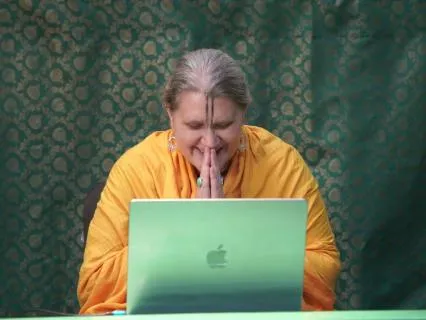
Hare Krishna Welcome to the Ahankara Party.
Thank you for still coming and attending.
We're on the sixth time of ego bashing and it's going to get even harder today.
So you guys are the brave ones who are continuing with this program.
Good job.
Okay.
So today we're going to do a review of last week's.
We're going to talk about the Ahamkara characteristic of criticism this week,
Criticizing,
Right?
And then we're going to talk about something called an inferiority complex.
And then we're going to do a practical exercise related to all this.
See how that goes.
So the.
.
.
Remember last week,
This is Vilas's nice wordsmithing.
He wrote The Bitter Truth About Sweet Love.
So last week we talked about love,
Right?
When people.
.
.
We love the people that pump us up,
Basically,
Right?
That make us feel good about ourselves and however we see ourselves and our good qualities,
If they say those same things,
That's who we love.
And then the people we hate are the opposite.
The ones who like,
You know,
Say something negative or bad about us or make us feel inferior.
The ones who make us feel superior we love and inferior we hate.
That's a nutshell.
Then we talked about possessiveness,
That was a characteristic we talked about,
Right?
You kind of become obsessed or like fixated on one person and then you feel like you own them,
You know,
And you bombard them with texts,
Messages or emails,
You always have to be around them,
You have to try to have them for you only,
You know,
And the reason,
The underlying reason for that is you have a void of not being loved,
You know,
And it's not coming from now,
You probably have plenty of love now in your life,
But from childhood.
So it's a very young child who didn't get their emotional needs met.
And that's driving you today.
And eventually when we get to samskara land you understand much better from a deeper place of where it's coming from.
But for now it's just good enough to know that it's like lack of love and childhood lack of acceptance.
Or approval in childhood.
Okay.
So that's a quick review.
Now let's see,
So we have to praise ourselves,
Right?
Because we've already done.
.
.
Quite a few characteristics.
We've survived the hate,
We've survived the love,
And we've survived the praises self,
Right?
We did that one,
Insensitive,
This checkmark.
Whenever I take it from Canva and put it into this,
It always messes up where the checkmark is.
But anyway,
Today we are doing we are doing criticizes others.
So what is criticism?
We use it all the time,
Right?
But what is it actually?
So the definition is the expression of disapproval of someone or something.
On the basis of perceived faults or mistakes.
So it's pretty simple,
And it's just a natural thing that ahamkara does.
We don't have to feel bad about it.
We have to just first see that that's what it's just doing.
It just naturally is comparing,
It's naturally criticizing.
Then we can control it,
But if we try to pretend like,
Oh,
I don't do that,
My ahamkara is blemish-free,
It doesn't do that,
Then we can't get very far in trying to manage it.
So first we have to see,
OK,
Just like our body sometimes expels gas and it smells bad,
That's natural.
We're not going to be like,
I never pass gas,
Not me,
I never pass gas.
Okay,
Fine.
But you pass gas and you also criticize.
That's just how the body and mind work.
Okay?
So criticism begins at a very young age,
And I just wanted to show you a few things to keep it,
You know,
Just to normalize that it's happening even when we're young kids,
These innocent,
Cute,
Little,
Young,
Sweet kids.
They're already criticizing.
So let's see if this works.
I'm trying to actually play this.
Here are a few letters we found that could give you some really good insight into how kids really feel about camp sometimes.
Can you guys hear it?
There's this one right here.
Dear mom and dad,
Thank you for the care package.
Hate devil's food cake.
Don't care for Fig Newtons.
I ask for candy.
Send M&M's,
Hershey Bars,
Reese's Peanut Butter Cups,
Kit Kat.
Please,
No cookie.
I'll write again.
I love you.
Clearly,
You did not understand what I asked for.
All right,
Here's another one right here.
Don't waste your money by leaving me here any longer.
Not happening here.
These are kids who are at summer camp and they're writing these letters to their parents.
That's a little boy that knows if he can get this note to his father.
Cause there it go,
We're wasting money.
Let's pull it.
All right,
You gotta see this one right here.
Dear mom,
Good you packed.
Extra underwear since I had diarrhea.
That's how I spell it.
It got on my shoes,
But not on my pillow.
I'm having fun at camp and learning stuff.
I've ate more push pops than anyone.
I've ate 23 since Monday.
Ice cream.
Still two days left.
23 ice creams.
You ate 23 push pops,
You gonna have some diarrhea.
Okay,
So you see these are kids,
Their parents paid for them to go to a nice summer camp.
You know,
They're at camp.
They're supposed to be like playing sports and having fun,
You know,
Right?
And there's something called a care package,
Right?
Where the parents will send like gifts to the kid.
Oh,
We miss you and here's some things.
And the parents send like all these sweets.
And the kid wrote,
I hate all the sweets you sent.
I don't like Devil's Food Cake.
I don't like Fig Newtons.
I don't like anything you sent.
I want candy.
You send me M&Ms.
You send me Hershey's.
It's probably like a seven-year-old kid,
You know?
So from such a young age,
We already are like,
You know,
Dislike and criticism,
You know?
And the other two also,
They're complaining,
You know?
So complaining and criticizing is just part of the ahamkara,
That's what it does.
As soon as you identify with your body when you're born,
Your first breath,
This is me.
So I just wanted you to see that so you see how.
.
.
It's just a natural part of what our ahankara does.
It's a little hard probably to understand the context if you're not American and you're going to camp and all that.
I was trying to find kids.
Yeah?
The play again.
OK.
Okay,
Now here's one more,
But it's probably going to be the same problem.
I think I'll just skip it.
You got the idea,
I think.
OK.
So let's talk about criticizing others.
So ahankara impels us to gossip or complain or find faults.
And mistakes in others,
Right?
That's pretty much criticism.
So the more inferior we feel,
Right?
I'm always doing this in the ahankara class.
So the more inferior we feel.
.
.
The more indiscriminate our criticism becomes.
So we feel a little bit inferior,
Maybe that we're not so far off,
We might do a specific criticism.
But if we're getting desperate,
Imagine that you're about to fall,
I don't know,
Down a flight of stairs.
Wouldn't you just grab for anything,
So you don't fall?
So that's how it feels when your ahamkara is really triggered,
When somebody really is threatening you.
You're going to grab for anything.
So you'll be like,
I can't believe he's wearing a gray scarf.
I hate gray.
How stupid is that?
It's so tamasic.
But you're not actually jealous about the scarf or criticizing about the scarf.
You're triggered because maybe he's better at Sanskrit than you.
But you're going to criticize about the scarf just out of a desperation to somehow pull that person down so they are worse than you.
So it's an interesting experiment to watch your own ahankara and see when I'm criticizing,
How desperate am I getting here to pull the person down,
You know?
So if we feel threatened by someone whom we thought we were superior to,
And then they did something better than us and got recognized and praised for it,
Then we're going to feel inferior.
So we'll look at them under a microscope with this,
Like,
Laser sharp precision to find any little thing.
Oh,
The hair's out of place.
Or,
You know,
Any little thing you can find to just pull them down and just to say what's wrong with them,
You know,
Because then you get a relief.
Then you're back up in your rightful place as better than them.
Then you're going to feel happy when you can pull them down,
Right?
Because it's a relief actually,
It feels like a relief.
It feels so stressful when you feel worse than somebody who you thought you're better than,
You know?
It feels like you're like losing a part of yourself almost.
And so.
.
.
Then,
The next thing that really makes the hankar feel good is if you.
.
.
Shame somebody in a public arena.
So first of all,
Find something to get them on.
It doesn't matter what,
If you're desperate,
It doesn't matter what.
And then say it in a public arena,
Or do something to make them feel ashamed.
That feels so good to the hankara.
And for you,
When you see they feel ashamed or embarrassed or they're triggered in some way,
Then that makes you feel better because you've projected all of your shame onto them.
The mind is so tricky.
It's so tricky when you actually analyze what it's actually doing,
You know?
So when then you see them feeling shamed or embarrassed or angry or somehow they slap back.
.
.
You're like,
Phew,
Yes,
I knocked them off balance.
I threw them off the pedestal,
And now they're falling down.
So this is.
.
.
The lovely Ahangar.
So why do we criticize people?
Remember our friend the cat who wants to kill the fish,
Who doesn't care,
Who was actually last time possessed,
Looking over the top watching it,
Now it's like,
How can I get it,
You know?
So if they if they feel superior to you and they want to keep you in your inferior place,
You know That's what I just said,
Right?
Or they feel threatened by your competence,
Your skill,
Your attractiveness,
Your kindness,
Your empathy.
Some people hate it.
If you're not in touch with your feelings.
.
.
There are some people who are not and there are some people who are.
Both are fine,
But.
.
.
The people who are not,
Who can't quite feel because they've probably been shut down from some sort of childhood trauma,
So they're not in touch with their heart,
They detest people who are in their hearts,
Who are coming from a feeling place.
So that is a big trigger for them,
And they will do things.
They just can't stand it that you're an empathetic person,
That you're in your heart,
And they will try to do things to hurt you.
Hopefully not physically,
But.
.
.
Sometimes there's something worse than that,
You know?
Gossip and criticism is even worse than that.
So they'll compete with you for status,
If you're in a relationship that they want to be in,
For the position that you're in.
They might see you as an obstacle to their goal,
You know So I want that and you have that or or you're closer to that than me.
How can I pull you down?
They see themselves as an expert on a topic that you know about,
And so they want you to admit that they know more than you.
So they'll come and they'll say,
Oh.
And they'll start spouting off on something they think they know more.
And then they want you to be like,
Oh my God,
You're so right.
I didn't realize that.
You're totally right.
Like,
Yes,
That's it.
You're so smart.
Can you share more with me?
That's like their dream response for you.
But usually that's not how it goes because you also think you're an expert on that.
So then you're like,
Oh,
OK,
Well,
Actually,
No,
I think it's like this.
So they're like,
Really?
Well,
I think it's like this.
And then you're like,
No,
I think it's like that.
Really?
OK,
No,
That.
And it just never stops.
It never goes.
So that's why,
If you understand the hankara,
The best thing to do is just give the food.
If somebody comes up to me and tries to tell me about Vedic psychology,
I just say,
Wonderful,
Good,
That's so great that you know that.
You know,
I don't think I know everything about Vedic psychology.
Maybe I can learn something from you.
Because I don't want to get in a debate with them.
And I also am not the only person who knows about it.
We all know about it.
I mean,
It's our own mind.
We're all applying what Babaji has taught us,
You know.
So I just say,
OK,
That's great.
I'm not going to try to educate you on your own samskara or something or on somebody else's ahankara,
You know.
So that actually can save a lot of time too.
If you just say,
This person is coming and trying to.
.
.
Show that they know more about something.
And sometimes it's not something that you even know about.
They just want to feel important that they know something.
And so it's like,
Okay,
As soon as they start doing it.
What?
One up mission.
Yeah.
So it's because obviously if you have to get one up,
That means you're already down.
You're down,
That's why you're trying to get one up.
So then you can also be compassionate to that person,
Say they're not feeling very good about themselves in this situation.
Give them the free Ahankara food or whatever.
So they're trying to hide something about themselves.
That's another one.
I don't know if you've ever done it yourself or you've ever seen someone else do it,
But there's something they feel ashamed about or embarrassed about or they don't want anybody to know,
So they try to say something really good about themselves to pump them up to cover.
That thing.
That they don't want anyone to know,
That they feel very ashamed or bad about or inadequate about,
You know.
Maybe everyone else is at a certain level in something and you're not.
So then instead,
You know,
Like you try to talk about something you're really good at,
That's not even relevant to the conversation,
You know,
But you come in and you're like,
Oh,
I'm,
You know,
This and this and this,
I'm accomplished in these ways.
And it's like,
Okay,
You know,
But we weren't even talking about that.
But it makes you feel.
.
.
Okay,
Everybody sees that I'm good at that.
So at the root of all this is just low self-esteem and feeling inadequate or inferior.
That's at the root of all this behavior.
So what is inferiority?
Right?
We also use that a lot.
What is it?
So it's a feeling of unworthiness.
Feeling unworthy.
So criticism,
We can think of it as a coping mechanism.
It's what people do when they're feeling unworthy,
When they're feeling inferior.
So they criticize.
To,
You know,
Like,
We know,
Get themselves pumped back up,
Right?
So unworthiness means lacking in Excellence or value?
Feeling worthless?
Feeling not good enough?
Not having the necessary qualities to deserve something.
Not deserving respect,
Admiration or support.
So you imagine somebody feeling like that.
They're going to try to make you feel like that.
So they're going to do things to make you feel disrespected.
They're going to do things to take the wind out of your sails or to take the air out of your tires,
You know?
So they're going to try to make you feel not valuable,
Not excellent,
Not interesting,
Not good enough.
So if you're leaving a conversation with someone,
They've made you feel like that,
That's a good sign,
You know,
Not to be hateful to them,
But to be compassionate and go,
OK,
This person is actually feeling really inferior.
They're not going to come to you and be like,
I'm feeling inferior,
And I'm going to say mean things to you now.
That's not how it goes.
Right?
They're going to come to you and it's going to seem the opposite.
They're going to seem so confident.
They're going to seem so,
You know,
They have so much going on.
But you can tell,
Like,
When somebody does that,
I mean,
I think Babaji is like a living example of somebody who's not feeling inferior,
Right?
I mean,
How often do you hear him talking,
Bragging about himself?
Even if people ask him,
He doesn't do it.
Because he doesn't need to,
Because he doesn't feel inferior,
You know?
So that's a role model for us.
We all know him,
You know,
He's a guru to a lot of us,
Right?
So he's such a good role model for that.
I always think about that when I think of somebody,
You know,
And then I'm like,
Okay,
And then when you see somebody who's doing something that's not matching that,
It's like,
Okay,
That's to the extent that they're feeling inferior.
So,
And that's not another thing for ahankara to be like,
Okay,
Cool,
Now I know who's feeling inferior,
Awesome,
Yeah,
They're not as good as I thought.
That's kind of like ahankara,
Again,
Getting a win,
Instead of,
You know,
Rising beyond that,
At least to a sattvic ahankara of being like,
Wow,
I didn't know that person had like a.
.
.
A wound that's not been healed.
And I'll try to be more tender with them and be more supportive because obviously if you're talking like that about yourself.
.
.
Literally what that means is that your mom and dad didn't hear you and didn't see you.
So it's like a very long time ago that the problem started.
So this person is needing still to be heard and seen,
And that could be a gift you give them,
Just to hear them.
And just to see them and say,
Wow,
That's cool that you're interested in that or that you've been working on that,
And good job.
That's all that people really want,
Actually.
So the purpose then of this trying to criticize is to shift the spotlight off of themselves,
Even though it may not even be on them,
But they feel like it is,
Because they feel like there's something that you're going to see in them,
This inadequate thing.
So it's to shift it onto you.
To you and shift onto your bad part,
Your dirty marks,
So they can feel better.
That's all.
So the inferiority complex.
So the American Psychological Association defines an inferiority complex,
Which is like a psychological problem.
Last time,
Remember,
I talked about possessiveness gone bad is like obsessive love disorder.
So this is like this inferiority gone bad,
More intense.
It actually can become a disorder.
And they define it as a basic feeling of inadequacy and insecurity deriving from actual or imagined physical or psychological deficiency.
So a lot of times with these disorders,
People you know or maybe you yourself even may have some of the qualities but you don't have it full-blown because a lot of these disorders to be a disorder it means it has to be functioning your like daily activities of life like that you can't function in your life,
Then it's like,
Okay,
That's a disorder.
But you may have some of these symptoms,
But more mildly.
It's not like a full-blown problem.
Because sometimes when you hear it,
You're like,
Oh my God.
The five disorders she's had,
I have all five.
It's like,
Probably not.
If you worked in a hospital and you saw how it looks really in a person,
You probably don't have them,
Or you have mild.
.
.
You know,
Because everybody's functioning in life,
You know.
So here's some symptoms.
The smallest criticism makes you feel terrible for days.
You're a perfectionist and nothing is ever quite good enough for you.
You feel like an outsider looking in and like you're different in some way.
You know,
People don't understand me.
I just don't fit.
You have an overriding sense of worthlessness and not feeling good enough.
You hide the real you from the world because you think that you are unacceptable.
You're a people pleaser and you're constantly deferring to others.
You always compare yourself against other people's top qualities.
One time I heard somebody say that about Facebook,
You know?
Facebook is like,
Everybody's playing their best reels and you're comparing it in your mind to your worst,
And that's why it feels so bad.
You're like,
Those people are so happy,
You know?
And then you're thinking of your most unhappy time.
Social media can be very hard to make you feel miserable because everyone seems to be happier and more successful than you,
Right?
And you're always comparing.
That's another quality of ahankara.
Always comparing.
It can't help itself.
So if you regularly feel bad about yourself when you compare yourself to others and it's interfering with your life,
That's a key part of it,
Interfering with your life significantly so you cannot do what you need to do in the day.
Then you might have an inferiority complex.
Okay,
So the logic of criticism.
I feel inferior to you,
So I will criticize you to make you feel inferior so that I can feel superior.
It's so basic when you look at it,
And it's not that difficult.
And so the Ankara is always just doing that.
And that's why it does that criticism.
It's just a real quick automatic thing.
And we don't think about it.
We're not like,
Oh,
I feel inferior,
So now let me pull out that tool.
I'm going to criticize.
It doesn't do that.
It's just like,
Oh,
I need to breathe now.
It's not doing that.
It's as automatic as breathing.
It's just an automatic thing that it's doing all the time.
As soon as it feels a little off and it starts shivering and shaking,
That person's getting into my territory,
Then it just does its thing.
It does the criticism thing.
Criticism is an ignorant and desperate attempt.
To feel superior to the person who's threatening one's ahamkara or one's sense of identity,
Right?
Our identity is the I,
Me,
And my,
Mine.
Okay,
So these are a lot of examples of identity.
It's kind of small,
I'm sorry,
But I'll just read a few,
OK?
There's many.
But identity,
We have thousands of senses of identity.
So one would be like,
I'm a senior devotee,
Or I'm very close to my guru,
Or I know my guru's heart.
My seva pleases my guru.
And there's always the other part of the sentence,
Like,
And yours doesn't.
And I know my gurus are,
And you don't.
And I'm very close to my Guru,
More close than you.
And I'm a senior devotee and you're a junior devotee.
That's the other half of these sentences,
You know.
There's always the,
And you are,
Less than,
Just fill in the blank,
Right?
Others think I'm a great devotee,
Better than you.
My guru agrees with me,
Not you.
My guru likes me better than you or others.
I have a special bond with my guru more than you.
I am very knowledgeable about bhakti yoga.
I know more than you.
I understand the Vedic psychology concepts well more than you do.
I'm a humble devotee,
More humble than you.
I'm surrendered,
More surrendered than you.
This is the hankara all day long.
I mean,
It gets nauseating.
You just hear it,
Right?
People like me more than you.
I'm not jealous,
But you are.
I don't have a sex desire,
But you do.
I don't need psychotherapy,
But you do.
I am doing pure seva with no ulterior motive,
But you are.
I'm predominantly Sattvic,
But you're Tamasic.
I am empathetic.
You're not.
I had a good childhood.
You had a bad childhood.
I'm doing a good job and you're doing a bad job.
I'm right and you're wrong.
Welcome to Ahankara.
This is our constant companion,
As constant as our breath.
Okay?
So what do these statements all have in common?
I know I did it really fast.
What was a theme?
What do these statements all have in common?
What do you guys think?
What's one theme you can see?
Put myself up and the other down.
Good.
Yep,
I put myself up and put the other down.
I am,
Yep,
It's all about me.
I am.
Anything else?
Superiority complex.
Good,
Superiority complex.
Good for showtime.
Okay,
What else anything else?
Always comparing,
Right?
I'm like this and you're like that.
Okay,
Anything else?
Huh?
Competing?
Oh,
Comparing?
Yes,
Comparing and competing,
Right?
And also it's like implied.
Yes,
Yes,
Yes.
It implies it.
It's always like,
Whenever it's I,
It's ahankara,
Which is mostly I,
I,
I,
Oftentimes the you is left out,
But it always means that I am better than you.
So whatever they say,
I am,
You can assume that that person is inferring that you're not.
Or at least that you're less than.
That's our friendly ahamkara.
Okay.
Go ahead.
Tanvi.
Okay,
Tanvi.
Yeah,
But actually you just said,
I just wanted to say I am better than you.
That's what I actually wanted to say.
Yeah.
Yep.
Yep.
That's it.
Good.
So.
.
.
The person continues to put themselves in a positive light.
Did you hear anything that the person said that was negative about themselves?
So not only are they putting themselves up,
Which is right,
You know,
The other down,
But it's always positive.
Eternally Sing!
In a positive way.
It's amazing.
Even,
I mean,
I know I've mentioned this a few times in other classes,
But even you can literally meet somebody who's murdered somebody,
Even their own child,
And they will talk about themselves in a positive way.
It's insane,
Like the extent the ahankara can go.
It's very.
.
.
I mean,
It really does not have the ability to take responsibility for its negative side or even see it.
So.
.
.
If you look back with these ahankara statements,
Basically I have no problems,
I make no mistakes.
And.
.
.
Other people,
Including my group,
They think I'm just great.
This is how we're walking around and the reason why I'm highlighting it is because If we didn't think this way,
We wouldn't be so upset or shocked when somebody says a negative thing about us.
Including our Guru,
Right?
So to the extent that we react in a negative way when somebody says something that's critical of us,
That's to the extent that Ahankara was thinking something else,
Which is how great we are,
You know?
So let's do a practical exercise to bring it home.
Now,
What I want to say is this is Ahamkara class 6.
Up until now,
We've pretty much been what I call an armchair traveler.
We're just getting our feet wet learning about it,
But we're not actually experiencing it.
When I did Manas,
Remember how we experienced it?
We were smelling and tasting and touching and feeling.
So it's not fair to not give Ahamkara its chance to give you your full experience of Ahamkara.
So there's three parts to this exercise,
And you can choose to observe.
If it's going to be too much for you,
You can just observe,
Or you can participate to the level you want.
So at each point,
Make your decision.
You can be like,
I'm sitting it out,
I just want to watch.
Because sometimes if your Ahamkara is very sensitive,
Watching is enough.
You'll feel it and be like,
Yeah,
That's good for me.
I am good.
So there's no judgment in that.
You're here for your own benefit.
So however you can get the most out of it,
Make your own decision,
Okay?
So,
Let's start with this.
So get out a pen and paper or your phone or your computer to take some notes.
Because the first part of the exercise is writing something down.
Okay?
And if you don't have,
Maybe you can ask somebody nearby.
To give you a paper and a pen if you want to participate.
Does anybody have any extra paper or writing utensil for somebody who might want one?
Can your ahamkara share?
Can you share?
Can you share?
It's just mine,
My paper,
My paper.
Okay,
Everybody got something to write on or write with?
Paper pen.
Everybody online ready to go?
Alhankara,
Here we go.
I know.
Get ready.
I can get booed off the stage,
Potentially.
I'm enjoying my last few minutes of that we're all happy together now.
Okay,
So how will a person,
The question,
Is everybody ready?
You got something to write with or on?
Yep?
Okay,
So the question is for exercise one.
Yes,
Vila?
Okay,
How will a person feel if they are told the opposite of how they view themselves,
Right?
The exact opposite of how they view themselves.
Most of us know because we've been criticized before to our face.
It does not feel good.
We know that,
Right?
But now let's actually purposely make ourselves feel it and see,
Okay?
So if you need to do anything to tell your ahamkara that we're coming to see you,
We're shining the spotlight right on you,
We're taking it off other people,
We're putting it right on you,
Which is not a comfortable experience at all,
You might need to prepare yourself for that.
Okay,
Because ahankara does everything it can to.
.
.
You know,
Focus on others and their needs.
So we're going to turn that spotlight back in and we're doing step one now,
Level one.
So let's give it a try.
Just pick one of these statements.
There's 22.
Just pick one that you strongly identify with and write it down.
One,
My guru understands me and sees how good I am.
Or two,
I am a senior devotee.
Three,
I'm very close to my guru.
4.
I know my Guru's heart.
Five,
My seva pleases my guru.
Six,
My guru agrees with me.
Seven,
I am a humble devotee.
Eight,
I'm doing pure sailor with no ulterior motive.
Nine,
I have a special bond with my guru.
I'm very knowledgeable about bhakti yoga.
11,
I understand the Vedic psychology concepts well.
So we're halfway there,
Just pick one of those or on the other side I'll read the others.
12,
I'm surrendered.
13.
I'm a nice person.
14.
I'm not jealous.
15.
I don't have sex desire.
16.
I don't need psychotherapy.
17.
My guru likes me better than others.
18.
I'm predominantly Sattvic.
19.
I'm empathetic.
20,
I had a good childhood.
21,
I'm doing a good job.
And 22,
I'm right.
So out of those 22,
Just pick one.
Just write one sentence down that's the one you most strongly associate with.
That you're like,
Yeah,
That's me.
That's pretty much me for the most part.
Don't overthink it.
Ahankara is quick.
Don't let your booty get in there.
Ahankara knows,
You know.
Just pick one.
Write it down.
Everybody got it?
Okay,
Now the next part of this.
Now write down,
You yourself,
Write a critical response to the statement you selected.
Criticize yourself.
Okay,
Here's the example.
I had a good childhood.
That's the one I picked,
Just saying.
I had a good childhood.
I really resonate with that.
Here's the critical challenge to that.
You did not have a good childhood.
In fact,
You had an abusive childhood because your toxic mother emotionally neglected you,
And this has caused you to become emotionally insensitive,
Unempathetic,
And downright ignorant as an adult.
How does that feel to be a hunker?
Criticize yourself.
Throw yourself a critical response.
And if that's too hard to do for your ahankara,
Think of somebody you really don't like.
And think of something where they're really ignorant about themselves and you're just like,
I wish you would just see how,
Or hear how,
Whatever they really are.
And practice it on themselves.
If someone you don't like said something about themselves that you don't see that way at all.
How would you criticize that person?
If it's too hard to do it to yourself.
And write it down.
Give that ahankara a good whipping.
Like those kids did with the camp letters.
I don't want these sweets.
Give me chocolate.
Give me Hershey's chocolate.
Smash that ahankara.
Anybody can feel their hankar shaking a little bit already?
Ooh,
Doesn't feel good.
Ooh.
Dowdy's on a roll.
Ooh,
Dowdy's a good ahankara smasher.
I think there's smoke coming up that keyboard.
He's like,
Bop,
Bop,
Bop,
Bop,
Bop,
Bop,
Bop.
Okay,
Good.
Everybody got some criticism written down for their ahankara?
Anybody need more time?
Got it.
Okay.
So now.
Congratulations,
Part one is done.
How do you guys feel?
Anybody want to share a feeling word,
How you feel?
Haha.
No feelings?
No feelings.
Sad.
Okay,
So Bharata is saying sad.
I knew it.
Who?
Go ahead,
Tanvi.
Yeah,
Like sad and discouraged and.
.
.
Inferior,
Actually.
Yeah,
There you go.
Yeah.
You see how easy Hankara just moved on?
Good you're in touch with your feelings,
As you can feel it.
Anyone else?
Feeling,
Malati?
Angry.
Angry?
Very interesting.
OK,
So we have sad,
Inferior,
Discouraged,
Angry.
Ahankara doesn't like this.
It's like,
What?
What the hell?
We've had a good game all along,
You know,
And why are you putting it on me now?
It's Saturday night.
I thought we were relaxing.
What are you doing?
This is so not fun.
Discouraging.
Discouraging,
Yeah.
Really light.
Decreasing energy.
Yeah,
Heavy,
Right?
Because our whole personality is developed to avoid this very thing,
Exercise we're doing.
We have all these defense mechanisms.
Criticism is just one.
We have so many ways.
We're pulling back all those defense mechanisms to do this exercise,
Right?
Can I criticize everyone?
We used to be so good.
Okay,
The mics.
Okay,
So Vilas would like that we use the mics,
Please,
So everybody online can hear too.
Okay.
So are there mics passed around,
Around so everybody can have one nearby that needs one?
Or are they all clustered in one area or something?
You're good?
Everybody has one?
Okay.
So now,
Anybody else want to share how you felt?
Good job getting in touch with your feelings,
You guys.
Did you want to share how you felt?
No,
Not what you wrote.
One second.
She's going to say how she feels.
I don't like what I've said,
The criticism,
But at the end of it,
I'm actually.
.
.
Saying thank you for bringing it to my attention.
Okay,
So you're talking about what you're thinking and what you did,
But my question is feelings.
It should be one word.
Lonely.
Discouraged.
Sad.
Thankful.
Thankful,
Okay,
So grateful.
Doing great for her.
Thankful.
OK.
That's an extra special ahankara.
Anyone else?
Any other feelings?
Yes.
I was going to say that I feel like it's not fair,
Because this thing Kara was making me feel good,
Now I have the opposite,
And it's true,
And it's like,
Damn,
It's not good.
Can I find somebody,
Maybe even in this room,
Maybe a neighbor,
I don't know,
Green scarf,
Hate that.
Yeah,
Because I had a good childhood.
It would feel better,
Right?
If someone could just do something to get you back up again.
What would you like to do?
What would you like to do to feel a little bit better?
What could happen right now to boost that ahankara?
Yeah,
It kind of shakes your comfort.
Kind of like,
You know,
Makes you come off your comfort zone and like it shakes you.
Like all this time you were holding on to the fact that you had a good childhood and now you're like.
.
.
I did.
Now what?
Yeah,
It's deflating.
It's quite troubling.
Depressing.
Yeah,
It's heavy.
It is.
So now part two,
If you're ready.
Whoever wants to do it can.
If you want to sit out and just watch,
Also fine.
This is a partner exercise,
Okay?
So what you do is partner with somebody sitting next to you so we don't make a little shuffling around.
Just pick somebody next to you,
Right?
And give your partner what you wrote down and they're going to read it to you.
In other words,
They're not going to pick their own criticism.
They're literally just going to read what you wrote.
They're going to read your positive statement to you,
Okay?
Your positive statement,
We're going to start with that.
They're going to give you your ahankara food first.
They're going to read the one you said of how I see myself in the positive way.
And then you're going to take a minute.
Hear it,
And then write down how you feel,
Not what you think.
How you feel.
And then they're going to say,
Are you ready?
And then they're going to read you your negative statement.
And you write down how you feel,
Okay?
Do you understand the exercise?
Then once you've done it on that side,
Swap roles.
Then the person reads to you.
You know,
The person number two,
The one who is listening.
And saying how they felt for the two,
Now then they read yours back to you.
So it's not that you read the positive and they read the positive.
You read the positive to them,
Let them write down how they feel,
Then you read the negative to them,
Let them write down how they feel.
Then swap,
Positive and negative.
Does anybody have any questions?
No?
Okay.
Write down how you feel.
Don't tell the other person how you feel.
Okay?
So I'm going to give you the instructions so we do it all together.
Get your partner first.
Daoji,
Get your partner.
Get a partner?
Go ahead.
Yep,
Go over there.
Look at the Ahankara battle already.
Neither one wants to move.
Okay,
You be a gladly.
Everybody have a partner?
Sit down.
Sit down.
Sit down.
She'll tell you.
She's your partner.
Do you guys,
Everybody have a partner?
Okay,
Ready you guys?
Everybody have a partner?
Hold on.
Ask your partner.
Okay,
Ready?
I'm going to give you the first instruction,
OK?
Please don't talk.
And Naruto.
Please don't talk yet,
Okay?
Okay,
I'm going to give you the instructions so we all do it at the same time,
Okay?
So the first thing is,
Exchange your papers with each other or your phones or whatever you wrote it on.
Exchange with each other.
You have each other's now.
Everybody has each other's,
Okay?
Okay,
Now face each other with your shoulders facing like this.
Okay?
This is a healthy way to communicate.
You're actually facing square.
You're not looking over like that.
You know,
You face each other square.
This is a healthy communication.
So your heart.
.
.
Your hearts should actually be facing each other and your shoulders square.
Wrote them all the way around okay everybody all the way around perfect now Decide who's going to be the one reading first.
Who's going to be the one?
Dowdy,
Face her square.
Raise your hand if you're the one reading first.
Okay,
Everybody has decided in their partners who's reading first.
Okay,
You guys?
Okay,
Ready?
So the first person,
Go ahead and read the positive statement that that person said.
So you would say,
Genova,
You said that you,
Like that.
Read the positive statement only.
Okay.
You should like that one.
Write down how you feel.
Okay,
Or just remember.
Just remember.
If you don't have a place to write down.
Okay,
Next step.
Now,
Go ahead and read the negative.
.
.
That person gave to themselves.
Read them that now.
You've read them the positive thing,
They thought about how they felt,
Now read the criticism that person said.
Read the criticism.
Step two is read the person's criticism to them.
Once you've heard your criticism,
Write down how you feel.
How you can call yourself a nice person.
A nice person,
You don't get to say that,
But if you do,
You are full of progress.
So think about how you feel.
Don't share with the other person.
Just think about how you feel and either keep it in your head or write it down.
Just take a minute.
Once you've completed the first partner listening and the second one reading or whatever,
Just be quiet for a minute.
Just let the room quiet down and then we'll switch roles,
Okay?
No,
We're not on the second partner yet.
Now it's quiet time to feel your feelings.
So everybody,
Get your feelings down and we're about to switch and have the second person now be the reader and the other one be the listener,
Okay?
Okay,
So let's switch roles.
Go ahead.
So now the reader is the person who was the listener before.
So now you're going to read the positive.
Read the positive statement the person said to them.
Your ahankaras did its own thing.
You made up your own rules and followed them.
You didn't follow the instructions.
I don't know what to say besides that I gave the instructions and you didn't follow them.
Person number two,
Go ahead and read the negative now.
I can't hear you Sorry What do you want me to do,
Come up and find them a partner?
You can get rid of that.
No big deal.
So person number two,
You should have read the negative now.
OK.
So let's come back now.
Good job,
You guys.
So each person should have read your negative and positive and written down your feelings and vice versa.
So now let's come back.
It's not a discussion.
It should be a very quick exercise.
It's not,
This is not partner therapy.
It's a very quick exercise.
Okay.
So now let's take it up a notch.
Who is brave enough to come up on the hot seat and do it in front of the whole group?
Who wants to bear and expose their ahankara to the whole group?
Janava,
You want to do it?
Come on up.
Come on up.
Velas,
You can do it after.
Come.
No,
No,
No.
I don't think you need your computer.
Just come next to me.
I don't know if we have a cushion.
You can sit on my cushion.
Yes,
Here.
Okay,
You guys,
Can everybody please turn to the front because we're going to do a very hard exercise for Janava.
This is level three.
Level three,
Okay?
Yeah.
It's okay.
No,
But you have to be in the hot seat.
That's the whole idea.
I'm just coaching you.
Can they see her now?
Okay.
This is Janava.
You probably heard her voice.
Now you see her,
The beautiful Janava.
She's getting prepared to be criticized.
So we're going to give Janava this mic.
Okay,
Give Donova the mic.
I should give her mine?
Because I want to guide it.
OK.
Here we go.
Okay,
So share with the group one statement that you strongly identified with.
Pick a different one,
Okay?
Pick a different one.
I am right.
I'm right.
Okay?
What are you right about?
Give us something that you know you're right about,
That you are sure that you are right about.
Yeah,
Give us something specific.
What are you sure you're right about?
Narottam probably could tell us.
What is she sure she's right about?
She always argues that she's right about that.
Give him the monkey.
You're right about knowing how.
.
.
By knowing others' feelings.
Oh,
That's a good one.
Oh,
Good one.
It's true.
OK,
So say it.
Tell us.
Tell us.
Yeah,
I'm right about how people's feels.
You can tell how people feel.
Good.
OK,
So now everybody in the class and online,
Let's criticize her.
Hot seat times a thousand.
So tell her she's wrong.
Tell her what she's wrong about.
Think about what you want to write down.
To give her the feedback that she's wrong.
And if you know her well,
You can already tell her.
You get ready.
Breathe.
Yeah.
And watch your ahankara.
Well,
Just watch it react.
Go ahead,
Narottam.
You are so self-centered.
How can you know what others feel?
Come back with your feeling.
Come back with your feelings.
I hope.
You're like,
Mm-hmm.
Remember?
It's a hot seat.
There it is.
Yes,
It is.
Yeah.
Yeah.
So tell him.
Come back.
Come back.
Okay.
What should I do?
How do you feel when he said that?
How do you feel?
I feel,
Um.
.
.
Angry?
Um.
.
.
I don't like it.
Yeah,
It's very painful actually.
Yeah.
Yeah.
Are you done?
Or do you want to hear more?
Okay,
It's up to you.
You got the gas?
No,
It's okay.
Okay.
Who wants to give an Ahankara criticism,
She knows how to tell you what your feelings are.
Give her criticism direct to that.
Go ahead,
Melody.
You were totally insensitive the other day when I asked you something and you thought you understand me but you were totally wrong.
You said the opposite of how I felt.
Ooh,
Blow.
Where do you feel it in your body?
Yeah,
It's tight,
Your heart,
Right?
Because the heart means you can feel the other people's feelings and you're like,
Is it getting constricted?
Okay,
Okay.
What does your ahamkara want to say?
Now we know how you feel.
Let your ahamkara strike back.
Go ahead.
It's an Ahankara battle.
It's okay.
We're just playing a game.
This is an Ahankara game.
It's not real.
Not how you really feel.
No,
I mean,
It's not really how you feel.
I mean,
Malati probably just made that up.
Okay,
Can you say that again?
You're totally insensitive because the other day when I spoke with you about something.
.
.
Then you thought you understand exactly what I mean,
But you completely misunderstood me and my intention.
Okay,
Then you should be more clear when you speak,
Because.
.
.
Yeah!
Yeah!
Ahankara!
Ahankara!
Ahankara!
Okay,
Malati,
Come back.
Come back,
Ahankara.
Come back,
Ahankara.
Strike back.
What does your ahankara have to say to that?
It's just your imagination.
Everybody else understood it very clearly around you.
There's so many people around.
You're down.
You are down girl.
Come on back.
Come on back.
You're the only one who doesn't understand.
Everybody else got it,
But you didn't.
Yeah,
They agree with you because they all want something from you.
So,
They're being nice to you,
But,
You know,
They tell me so many things bad about you,
So.
.
.
Strike back!
Strike back!
Come on,
Malachi,
Take it up a notch!
What does your hankar have to say to that?
Ratchet it up.
You have no idea what they tell me about you.
OK,
I'm ready.
Tell me.
Tell me.
I'm sure what I have is more than you have.
For sure.
Girl,
You're not ready.
Good job.
Thank you very much.
Good job.
OK,
So how do you feel?
How did you feel?
So in my body,
It's shaking.
Yeah.
And When she said about,
You know,
Others,
I can picture the scene when others are looking at me,
And I feel ashamed.
Like,
Oh,
You're the bad girl.
Like,
You did that.
So you cannot listen,
You cannot understand people.
And you're the only one who's looking at you,
Right?
So it's like a public humiliation.
Yeah,
I feel like it's like,
I'm in center,
But it's not a good center.
It's like I'm,
And everyone is like dark and like laughing at me.
And this is feeling,
It's really,
Really strong.
And even though we knew it was an exercise and you guys are friends and it was a joke,
Did you see how real it felt here at Hankara?
Yes.
To criticism that was made up.
It was just made up.
And so it's already shaking.
It's already shivering.
So that's the power.
So thank you for being so brave for doing that.
And thank you guys for being brave to give her.
Good job,
You guys.
Good job.
OK,
So we had a little,
Little taste of our friendly ahankara.
Good job,
You guys.
So that's level 1,
2,
And 3 we did.
So there's ways to respond to criticism.
I'm just going to go over this quickly,
And then I'll start next week,
And we'll go over it a little more,
Because I don't want to speed through this.
But here's a few ways.
One,
Don't take it personally.
Criticisms,
They may be more of a reflection of what that person is feeling,
Actually,
Like we know now,
Than what's really going on about you.
If that person's feeling inferior,
They're going to slap you with some criticism.
When you point a finger,
Your finger is pointed.
Take pause until your mind becomes calm and clear.
That's very hard to do,
Right?
Right,
Geneva?
See,
You're still getting,
You're still,
You're shaking.
Geneva's shaking from it.
So even though this was just an exercise and she signed up for it and she knew it was coming.
She's still shaking from it.
And most of you guys know I have a major phobia of needles,
Right?
So even when I knew,
When I planned,
I'm like,
OK,
I know I'm going to have to get this injection,
And I know it,
And I want to do it like this,
And put just a butterfly needle,
And let me breathe my sensual as before,
Whatever,
I still was shaking after.
It's like such a deep,
Visceral experience,
You know,
Of something that you're afraid of,
And ahankara makes you afraid of almost everything.
So anyway,
So you can take pause.
If somebody throws you a criticism,
Instead of firing back,
Which was the exercise to fire back,
But if you take pause,
You just relax and say,
You know what?
That stung me and I can feel it in my body,
So I'm actually not going to respond.
I'm going to walk away.
I'll say,
OK,
Let me think about that,
Cool down,
Probably nurture inner child,
And then come back with a cool head.
So one of the ideas is to become like a rock.
There's a concept called gray rock.
Where you act like how a gray rock would respond.
Because when that person's criticizing you,
What they want is they want to throw you off.
They want to see you on the pedestal and start stumbling.
And then you fall.
They love that.
That would feel so good to them.
So if you just sit there on the pedestal and be like,
Ohm,
Don't let it affect you.
And just be like,
OK,
Thank you for sharing.
I appreciate that.
Thank you for sharing.
Then they don't get the rise out of you,
And they'll find someone else to pick on.
To find someone else to pick on.
So the critics,
They're looking to upset you.
That's what I said here,
Right?
So you want to react in a boring,
Unemotional way like a rock.
I'll consider that.
Okay.
And especially with kids.
Kids are so blunt.
They say the rudest things.
And people who are uncensored as adults who never got the feedback that you don't do that.
And it's very offensive.
It's very rude.
But if you get triggered,
They'll keep doing it.
It's funny for them,
Or fun.
So you can also flex your empathy muscles,
Which we talked about,
Right?
Realize that when someone's being critical,
They're most likely hurting,
And they're feeling bad about themselves.
It's not about you.
Don't take it personally.
Introspect.
You can also reflect and see if any part of what they said is actually true.
Because usually,
At least a grain of sand,
At least one thread is actually true.
That's hard to see,
But Babaji always says that,
Right?
He says,
Try to actually hear what they're saying.
And actually,
Maybe one part,
Maybe one little sliver is true.
And could you use that to improve yourself?
And he always says,
Right?
You don't have to pay a therapist for it.
It's free.
They're going to criticize you for free.
So just go for it.
Say,
Thank you very much.
I didn't have to pay for therapy for this.
Because the therapist might take them a year to actually tell you the truth,
Right?
Okay,
And then the other thing is cultivate gratitude,
Right?
For every complaint that a business receives,
This doesn't have to do with criticism,
But it kind of does.
I'm just going to apply it.
About seven other people are making the same complaint,
But they don't ever tell you.
So that probably also happens in human relations,
Right?
A lot of people,
For some reason or another,
Can't tell you.
Maybe you're more senior than them and you'll get fired.
They'll get fired if they tell you,
Or maybe they want to keep a harmonious relation,
Or they just love you and they don't want to hurt you.
So for that one person who,
For whatever reason,
Tells you.
Most likely they're not the only one who's thinking that.
So you could say,
Wow,
Thank God that that person told me,
And I'm going to use that to try to improve myself.
So I'll end on that today.
We can think about these things.
You guys did a great job.
We took it up a notch today for Ahankara.
And,
Yeah.
So I'm saying if somebody throws their bricks at you,
You step on the brick and you climb up there.
That's his advice.
Okay.
Thank you.
Response in my when I when I do seminars is thank thank you to care enough about me to be honest Yeah,
That's a nice way to say it.
So so severed.
Ah,
She's saying,
You know,
If somebody criticizes you you say wow Thank you for caring enough about me to be honest,
And that's actually a very compassionate Even if it's a criticizing I think the microphone if even if Criticized it's it's honesty.
It's what it's honesty even if I criticize you to put you down,
But I feel honest because I say something,
Maybe it's bad,
And if you take it,
Thank you to care enough about me,
To be honest,
It creates something,
Some connection.
It's not just like,
I listen to you but I don't care.
There's lots of ways to look at it in a positive light,
You know,
And so that's the goal.
Next week I'm going to talk about ways to give constructive criticism.
Here's how to receive it.
And I'm going to talk about how to give it.
I have two slides on that.
So I don't want to rush through it.
So just think about what we talked about this week.
If you can,
Watch your ahamkara.
Just try to catch it one time when it's about to snap and tell somebody something.
Or it's doing it in your own head.
You're sitting here trying to do japa and you're totally criticizing someone in your head.
So try to catch it and calm it down.
And see that it's coming from a much deeper place than probably that person.
And try to say something kind and nurturing to yourself to bring yourself up about your good qualities.
Everybody has them.
By someone who's highlighting something we don't have as much of,
Probably.
Okay?
Great job,
You guys.
Very beautiful work.
You know,
Haribol,
Thank you.
Thank you so kindly.
Hahahahaha!
Haribo,
You guys,
Good job.
Thank you.