Welcome back.
Today we are going to sit with an idea that is incident,
Yet remarkably difficult to implement in life.
An idea that has been spoken in the battlefields of Mahabharata,
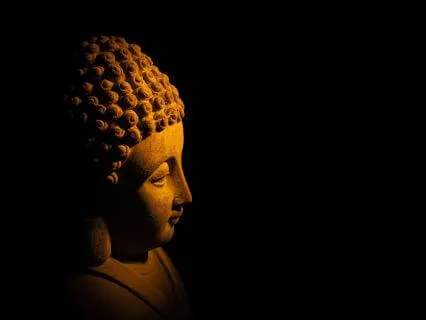
In the quiet monasteries of Buddhist tradition,
And perhaps,
If you are honest,
In the quiet recesses of our own minds,
During our most honest moments.
We are talking about non-attachment.
Now before we assume that we already know what that means,
I want to ask you to set that assumption aside for a moment.
Because non-attachment is one of those ideas that is far more nuanced than the way it is casually tossed in our conversations.
Don't get attached to the results.
We have all heard it.
Many of us have nodded along as well,
But how many of us have truly understood it?
And more importantly,
How many of us have actually lived it?
Let's find out together.
To understand non-attachment,
We first need to understand the anatomy of an action.
And I mean really understand it,
Not just intellectually,
But in a way that illuminates why we suffer when things don't go our ways.
So,
What is an action?
At its most fundamental level,
An action is nothing but an intention transforming into a result.
Through a process that involves mental,
Verbal or physical activities.
That's it.
That's the whole machinery.
But here is the thing.
Every action requires an intention to begin.
Intention is the ignition without which nothing moves.
If you want to ask your mother for food,
There must be an intention to satiate your hunger.
If you want to write a book,
There must be first an intention to express something meaningful.
There is no action without intention.
None.
Now this is where it gets interesting.
The nature of intention is such that it inherently carries an expectation.
There is no such thing as an intention without an expectation.
And this is the truth that many people misunderstand when they first encounter the idea of non-attachment.
We often hear things like expectations are the root cause of all suffering and so people go about trying to get rid of themselves of all the expectation entirely.
But think this for a moment.
Even the most selfless act,
Say going out to feed a homeless person,
Carries within it an expectation,
An expectation that you will be able to buy food,
That the person will be there,
That the act will somehow make a difference.
Expectations aren't the enemies.
They are inherent to intention itself.
Blaming expectation for all our miseries is frankly too simplistic and not the real solution.
So what happens next?
You form an intention,
You carry an expectation and then nature takes over.
The universe processes these intentions through what I can only describe as an incomprehensibly wide and interdependent way of systems,
Your body,
Your mind,
Other people,
Circumstances,
Timing,
Luck,
Karma,
Etc.
And eventually renders the result.
The Bhagavad Gita calls this the fruits of action.
And here is the uncomfortable truth.
Those fruits are almost never matches the original expectation exactly.
Let me give you the example.
The earlier example of feeding the homeless person.
Your intention is compassionate and your expectation is that you will feel good,
That warm glow of having done something meaningful.
So you set out to buy some food.
But when you arrive at the store,
It is closed.
You go to the next one,
It's further away.
By the time you come back,
That person is gone.
Now instead of that warm glow,
You feel irritation,
Dissatisfaction or even a sense of defeat.
That gap between what you expected and what you received is where most of our suffering lives.
So how do we navigate this?
How do we act fully,
Care deeply and yet not be at the mercy of outcomes that are ultimately beyond our control?
This is exactly where the principle of non-attachment offers us a lifeline.
The problem is in that we have expectations.
The problem is that we lose sight of our intentions the moment it enters the world.
We hand our intention over entirely to the outcome and in doing so we hand over our peace.
Think about it this way.
When you conceived your intention was pure,
It was yours,
It was clear.
The moment it stepped into the vast wave of interconnected processes,
You forgot it.
You started tracking the results instead.
Suddenly your sense of self,
Your sense of worth,
Your every mood,
All of it became hostage to something that you never fully controlled.
A noble person,
Someone who has done the inner work and has cultivated mindfulness and self-reflection,
Understands this deeply.
And so,
They do something radical.
They remain anchored to their intention,
Not to the outcomes.
I love this metaphor.
Intention is like the sun.
The sun shines fully,
Completely,
Regardless whether there is cloud,
Rain or a thick forest canopy blocking its light below.
The sun does not become less of itself because the clouds are heavy.
Its nature is to shine.
And so,
The noble person,
Their nature is their intention.
With science independent of the shadows that outcomes may cast.
If you are too attached to the outcome,
Here is what happens.
When you fail,
You become hopeless.
When you succeed,
You become greedy.
You are under a perpetual emotional roller coaster ride,
Exhilarated by wins and crushed by losses.
This is the trap.
But why are we so attached to the outcomes in the first place?
Because our attention is hooked to them.
And that our attention is hooked to them because of the momentary pleasantness of meaning,
That dopamine hit,
That validation,
The sense of control etc.
Etc.
The practice and it is indeed a practice.
Is to redirect that attention.
Not away from the world,
But back to the intention.
To ask yourself in any given moment,
What I am truly trying to fulfill here?
What is the deeper purpose I am serving?
When your intention is rooted in compassion and goodwill,
Rather than jealousy,
Greed or fear,
Something profound happens.
It becomes self-sustaining.
It doesn't need a result to get validated.
The Bhagavad Gita calls this the essence of Karma Yoga.
Buddha called right intention.
Is one of the pillars of Noble Eightfold Path.
Both traditions understood that noble intentions operate from a place of abundance.
They are fulfilled in themselves.
Ignoble intentions,
On the other hand,
Operate from scarcity.
They demand an output,
And they cannot rest,
They cannot be at peace without the fruit.
Therefore,
The quality of intention matters as much as the act itself.
Now let's bring this down from the philosophical realm into the practice.
Because non-attachment when truly understood isn't just a spiritual concept.
It is a framework for leadership,
For culture,
For the way we live in organizations and societies.
A noble person who has internalized this principle doesn't blindly discard the outcomes.
They are not indifferent.
That would be a misreading.
What they do is intelligently use outcomes as feedbacks without being enslaved to them.
Here is an example.
Imagine someone who sets out to solve a large complex problem.
They launch a product,
Full of intention,
Full of vision,
But the response is lukewarm.
A lesser person would either abandon the mission entirely or double down defensively.
But a noble person does something differently.
They absorb the feedback.
They zoom in on a smaller,
More solvable piece of problem.
They recalibrate.
Not their intention,
But their approach.
Throughout the process,
They remain closer to the intention rather to the outcomes.
This is also what distinguishes truly great leaders.
Noble leaders give the credit of success to the people around them.
And they take the blame of failure on themselves.
Why?
Because they genuinely understand that output is never entirely one's control.
What is under your control,
What will always be under your control is your intention,
Your effort,
Your direction.
To absorb the blame,
To realign the team,
To refocus on the deeper purpose,
This is not weakness.
It is arguably the most intelligent thing leaders can do.
And if we step back even further to the level of society,
The implications are profound.
We live in a culture that is almost entirely goal-driven.
Metrics,
KPIs,
Quarterly earnings,
Follower counts,
We have built systems that relentlessly measure output and we pay no attention to the quality of intention driving that output.
And look at the results,
Burnout,
Inequality,
Environmental destruction,
A pervasive sense of meaninglessness even among the most successful people.
The gold-driven culture has delivered materialism no doubt,
Yes.
But at what cost?
The cost of our health,
Our well-being.
Our communities and sustainability of our planet.
What we need.
And what is truly needed is a correction mechanism,
A shift towards an intention-driven culture.
One where we ask not just what we achieved but why are we trying to achieve it.
One where sustainability is not an afterthought but foundational principle.
This is not a naive idealism.
It is the unseen wisdom of both the Gita and the Buddha,
Reframed for the world we live today.
So as we close today,
We are going to leave with a question to sit with.
What is the sun at the center of your life?
What is the intention?
Not the goal,
Not the output,
Not the reward,
But the pure intention that you are truly living by.
Thank you for listening.
Until next time,
Stay rooted.