Hello,
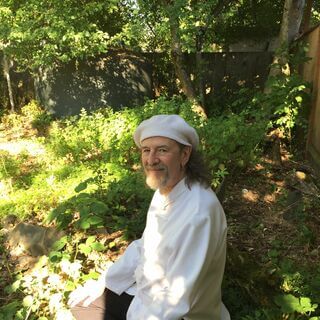
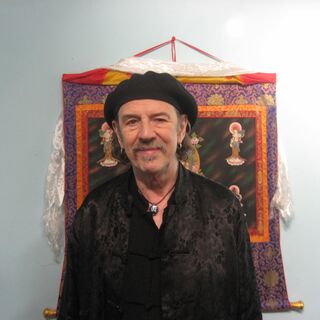
This is Salala Taler here with another.
Sure.
But very powerful and amazing practice,
One that is not known by a lot of people in the West.
Even people who study qigong in the West don't know about this.
But it is a foundational practice.
That we do after every qigong or even meditation practice.
And it's called the swallowing saliva practice.
So let me share with you a few notes about this.
The swallowing saliva practice,
Yan-ya,
Is a very well-known in Qigong and other Taoist practices in China.
But Westerners are often not familiar with it and may find it unappealing at the beginning.
It is an important practice and should be done after each Qi Gong or meditation session.
To the Taoists,
Saliva is regarded as a magical elixir.
How's that for different?
Especially when we do the simple practice described in this meditation.
Saliva.
Is not a waste product.
But something our body makes to help with digestion.
It is also considered a component of jing,
Which is also prenatal qi,
The energy we receive from our parents at conception.
Which is also the first of the three treasures in Taoism.
We'll be talking about that more in future videos.
We have a jing,
And then we have another treasure,
The qi,
Our vital energy body,
And shen,
Our spiritual center.
So this is one of the root practices for the root part of our treasures.
In Taoist practice,
It is also referred to as Jade Dew or Divine Water.
Not only is saliva full of digestive enzymes,
Hormones and proteins,
But it also has antibacterial properties.
Which is why animals,
When they injure themselves,
You see they're licking the wound.
People probably did this way,
Way back in the day,
But people don't do this so much anymore.
But it actually has a basis in factual reality,
As we see when our dog or cat or animal injure themselves,
They immediately start licking the wound.
By swallowing our saliva,
We get the benefit of those enzymes directly into our digestive system.
So.
.
.
Remember that.
What we're calling saliva in the West,
Sometimes we just call spit.
Saliva is full of all these amazing functions and abilities.
When we're doing our meditation,
Which I've shown you in other videos,
We put the tip of our tongue to the roof of our mouth.
This is partly because we have a superhighway of chi that goes up our back,
The du min ends at our upper palate.
And the other superhighway called the Rennmai begins here in our lower palate.
By putting our tongue to the roof of our mouth,
We connect these superhighways like a bridge.
As a matter of fact,
This area is called the Magpie Bridge.
Also,
We have two salivary glands under our tongue,
Which the Chinese have great poetic names for,
Which I can't think of in the moment.
But putting our tongue to the roof of our mouth also helps us create more saliva.
And what we're going to be doing is,
First,
We're going to be tapping our teeth together 36 times.
Like that.
This is so that we can energize and keep things going in a cheeful way in our gums.
Teeth problems start in the gums.
As a matter of fact,
One of my Taoist teachers once told me,
He said,
Too much meditation will make your teeth fall out.
So at the time,
I really didn't understand what in the world he was talking about,
But I think From what I've been able to understand is that when we're just doing stillness practices,
Then our energy starts to only pool down in what we call our lower jowl,
In the lower part of our body,
And we're not getting energy coming up to the upper part of our body.
And that was when we do stillness practices,
Of course,
Like Zo Long,
Sitting and Forgetting.
Fasting of the heart,
But we also do movement practice.
We also do things like Qigong and Taiji,
Taiji Quan.
Which is called stillness within movement.
Even though our body is moving and our chi is moving,
We still have that central place of stillness in the center of our being.
So we're tapping our teeth together.
And then we're going to swirl our tongue around in our mouth in front of our teeth.
Like that.
36 times to the right,
36 times to the left.
And this also collects more of the saliva.
And then we rinse the saliva.
As a matter of fact,
We have these very cool names for all of this stuff.
When we're turning our tongue around,
It's called the red dragon stirs up the saliva.
In Chinese,
Qilong jiao shui jin.
And then we're rinsing it,
And that part is called.
.
.
Gu Shu San Shi Liu,
Also called evenly fill the mouth with divine water.
Mongo Yoon.
And we're going to do that back and forth 36 times.
Now,
A lot of you have watched some of these videos and you see that at the end we're rubbing our palms together 36 times.
And people often have questions about that is because in Taoism,
As in many other cultures,
The number three is like a sacred number,
A magic number.
The three treasures,
Jing,
Qi,
Shen,
Mind,
Body,
Spirit,
Earth,
Human,
Heaven.
And in other cultures,
Too,
The number 3 is considered a sacred number.
And then we often do things in multiples of 3,
Like 9,
Or multiples of 9,
Like 36.
That's why we're doing all these 36 things.
And so when we're sitting here to do this,
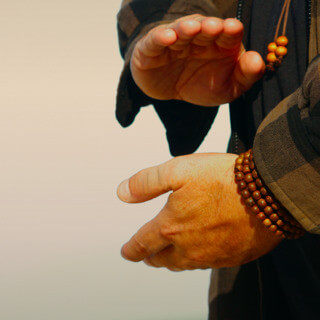
We have our thumb in our fist and we're resting our fists on our thighs.
And then once we finish rinsing and warming and energizing the saliva,
We're going to We're going to put it into three parts and swallow each part separately.
And imagine that you're swallowing is going all the way down your esophagus,
Down into your lower dantian.
So you're sending this medicine down to the lower dantian.
So let's begin with tapping the teeth.
And then swirling our tongue,
The dragon is swirling about in our mouth.
And then 36 times.
Or if it's too hard for your tongue,
Especially in the beginning,
You can do it 21 times.
But let's do the 36 right now.
And then rinsing back and forth 36 times.
And then separate into three parts and swallow each part separately all the way down to the lower down tan.
There,
And there you have it.
Swallowing saliva practice.
When I'm talking it doesn't work as well,
But if you're doing your meditation,
Your qigong practice for 15-20 minutes or more,
You will actually create a lot of saliva.
So don't just swallow it right away.
And remember,
The saliva is full of enzymes.
And even chi,
Remember,
It's the heavenly dew.
So do the practice,
Tapping the teeth.
Turning the tongue,
Rinsing back and forth.
Separating the three parts down.
And after every practice that you do,
Even yoga practice,
You can do that.
And I imagine,
I'm pretty sure there are saliva swallowing practices in the yogic tradition of India as well.
So if you have any questions about this or any of my videos you can go to the the group page here in Insight Timer.
The group under dowsum spelled with a D slash dowsum spelled with a T.
And you can ask me questions there.
And I'll check in and answer them if I am at all able to.
So see you next video.
Bye for now.