The Railway Children by E.
Nesbitt Read by S.
D.
Hudson Chapter 4 The Engine Burglar What was left of the second sheet in the brunswick black came in very nicely to make a banner bearing the legend,
She is nearly well,
Thank you.
And this was displayed to the green dragon about a fortnight after the arrival of the wonderful hamper.
The old gentleman saw it and waved a cheerful response from the train.
And when this had been done,
The children saw that now was the time when they must tell mother what they had done when she was ill.
And it did not seem nearly so easy as they had thought it would be.
But it had to be done.
And it was done.
Mother was extremely angry.
She was very seldom angry,
And now she was angrier than they had ever known her.
This was horrible.
But it was much worse when she suddenly began to cry.
Crying is catching,
I believe,
Like measles and whooping cough.
At any rate,
Everyone at once found themselves taking part in a crying party.
Mother stopped first.
She dried her eyes and then she said,
I'm sorry I was so angry,
Darlings,
Because I know you didn't understand.
We didn't mean to be naughty,
Mummy,
Sobbed Bobby,
And Peter and Phyllis sniffed.
Now listen,
Said mother.
It's quite true that we're poor,
But we have enough to live on.
You mustn't go telling everyone about our affairs.
It's not right.
And you must never,
Never,
Never ask strangers to give you things.
Now always remember that,
Won't you?
They all hugged her and rubbed their damp cheeks against hers and promised that they would.
And I'll write a letter to your old gentleman and I shall tell him that I didn't approve.
Oh,
Of course I shall thank him too for his kindness.
It's you I don't approve of,
My darlings,
Not the old gentleman.
He was as kind as ever he could be.
And you can give the letter to the station master to give to him,
And we won't say any more about it.
Afterwards,
When the children were alone,
Bobby said,
Isn't mother splendid?
You catch any other grown-ups saying they were sorry that they had been angry?
Yes,
Said Peter.
She is splendid,
But it's rather awful when she's angry.
She's like a binging and bright in the song,
Said Phyllis.
I should like to look at her if it wasn't so awful.
She looks so beautiful when she's really downright furious.
They took the letter down to the station master.
I thought you said you hadn't got any friends except in London,
Said he.
We made him since,
Said Peter.
But he doesn't live hereabouts.
No,
We just know him on the railway.
Then the station master retired to that sacred inner temple behind the little window where the tickets are sold,
And the children went down to the porter's room and talked to the porter.
They learned several interesting things from him,
Among others that his name was Perks,
That he was married,
And that he had three children,
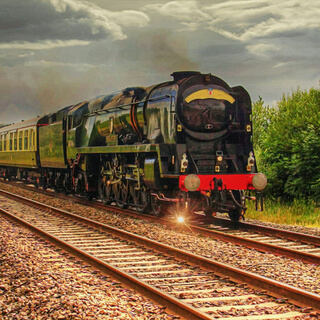
That the lamps in front of the engines are called headlights,
And the ones at the back,
Tail lights.
And that just shows,
Whispered Phyllis,
That trains really are dragons in disguise with proper heads and tails.
It was on this day that the children first noticed that all engines are not alike.
Alike?
Said the porter,
Whose name was Perks.
Lord love you,
No miss,
No more alike nor what you and me are.
That little one without tender has went by just now on her own.
That was a tank that was.
She's off to do some shunting to the other side of Maybridge.
That's as it might be you,
Miss.
Then there's goods engines,
Great strong things with three wheels on each side,
Joined with rods to straighten them,
As might be me.
Then there's mainline engines,
As it might be this here young gentleman when he grows up and wins all the races at his school,
So he will.
The mainline engine she's built for speed as well as power.
That's one to the 915 up.
The green dragon,
Said Phyllis.
We call her the snail,
Miss,
Among ourselves,
Said the porter.
She's oftener been in and not had any train on the line.
But the engine's green,
Said Phyllis.
Yes,
Miss,
Said Perks.
So's a snail some seasons of the year.
The children agreed as they went home to dinner that the porter was most delightful company.
Next day was Roberta's birthday.
In the afternoon she was politely but firmly requested to get out of the way and keep there till tea time.
You aren't supposed to see what we're going to do till it's done.
It's a glorious surprise,
Said Phyllis.
And Roberta went out into the garden all alone.
She tried to be grateful,
But she felt she would much rather have helped in whatever it was than to have to spend her birthday afternoon by herself,
No matter how glorious the surprise might be.
Now that she was alone,
She had time to think.
And one of the things she thought about the most was what her mother had said in one of those feverish nights when her hands were so hot and her eyes so bright.
The words were,
Oh,
What a doctor's bill there'll be for this.
She walked round and round the garden,
Among the rose bushes that hadn't any roses yet,
Only buds,
And the lilac bushes and syringas and American currants.
And the more she thought of the doctor's bill,
The less she liked the thought of it.
And presently she made up her mind.
She went out through the side door of the garden and climbed up the steep field to where the road runs along by the canal.
She walked along until she came to the bridge that crosses the canal and leads to the village,
And here she waited.
It was very pleasant in the sunshine to lean one's elbows on the warm stone of the bridge and look down at the water of the canal.
Bobby had never seen any other canal except the Regent's Canal,
And the water of that is not at all a pretty colour.
And she had never seen any river at all except the Thames,
Which also would be all the better if its face were washed.
Perhaps the children would have loved the canal as much as the railway,
But for two things.
One was that they found the railway first,
On that first wonderful morning when the house and the country and the moors and the rocks and the great hills were all new to them.
They had not found the canal till some days later.
The other reason was that everyone on the railway had been kind to them,
The station master,
The porter,
And the old gentleman who waved.
And the people on the canal were anything but kind.
The people on the canal were,
Of course,
The bargees,
Who steered the slow barges up and down,
Or walked beside the old horses that trampled up the mud of the towing path and strained at the long tow ropes.
Peter had once asked one of the bargees the time,
And had been told to get out of that,
And atoned so fierce that he did not stop to say anything about it having just as much right on the towing path as the man himself.
Indeed,
He did not even think of saying it till some time later.
Then another day,
When the children thought they would like to fish in the canal,
A boy in a barge threw clumps of coal at them,
And one of these hit Phyllis on the back of the barge.
She was just stooping down to tie up her boot lace,
And though the coal hardly hurt at all,
It made her not care very much about going on fishing.
On the bridge,
However,
Roberta felt quite safe,
Because she could look down on the canal,
And if any boy showed signs of meaning to throw coals,
She could duck behind the parapet.
Presently there was a sound of wheels,
Which was just what she expected.
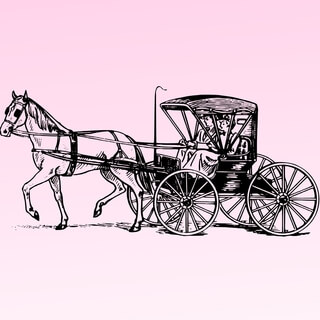
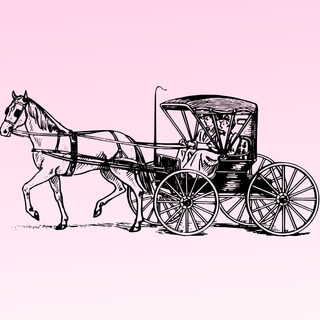
The wheels were the wheels of the doctor's dog cart,
And in the cart,
Of course,
Was the doctor.
He pulled up and called out,
Hello,
Head nurse,
Want a lift?
I wanted to see you,
Said Bobby.
Your mother's not worse,
I hope,
Said the doctor.
No,
But.
.
.
We'll skip in then,
And we'll go for a drive.
Roberta climbed in,
And the bony brown horse was made to turn around,
Which it did not like at all,
For it was looking forward to its tea,
I mean,
Its oats.
This is jolly,
Said Bobby,
As the dog cart flew along the road by the canal.
We could throw a stone down any one of your three chimneys,
Said the doctor,
As they passed the house.
Yes,
Said Bobby,
But you'd have to be a jolly good shot.
How do you know I'm not?
Said the doctor.
Now then,
What's the trouble?
Come out with it.
It's rather hard,
You see,
Said Bobby,
To out with it,
Because of what mother said.
What did mother say?
She said I wasn't to go telling everyone that we're poor,
But you aren't everyone,
Are you?
Not at all,
Said the doctor cheerfully.
Well?
Well,
I know doctors are very extravagant,
I mean expensive,
And Mrs.
Viney told me that her doctoring only cost her toppants a week because she belonged to a club.
Yes.
You see,
She told me what a good doctor you were,
And I asked her how she could afford you because she's much poorer than we are.
I've been in her house,
And I know.
And then she told me about the club,
And I thought I'd ask you,
And.
.
.
Oh,
I don't want mother to be worried.
Can't we be clubbed too,
The same as Mrs.
Viney?
The doctor was silent.
He was rather poor himself,
And he had been rather pleased at getting a new family to attend,
So I think his feelings at that minute were rather mixed.
You aren't Cross with me,
Are you?
Said Bobby in a very small voice.
The doctor roused himself.
Cross?
How could I be?
You're a very sensible little woman.
Now look here,
Don't you worry.
I'll make it all right with your mother,
Even if I have to make a special brand new club all for her.
Look here.
This is where the aqueduct begins.
What's an aqueduct?
What's its name?
Asked Bobby.
A water bridge,
Said the doctor.
Look.
The road rose to a bridge over the canal.
To the left was a steep,
Rocky cliff,
With trees and shrubs growing in the cracks of the rock.
And the canal here left off running along the top of the hill,
And started to run on a bridge of its own.
A great bridge with tall arches that went right across the valley.
Bobby drew a long breath.
It is grand,
Isn't it?
She said.
It's like pictures in the history of Rome.
Right,
Said the doctor.
That's just exactly what it is like.
The Romans were dead nuts on aqueducts.
It's a splendid piece of engineering.
I thought engineering was making engines.
Ah,
There are different sorts of engineering.
Building roads and bridges and tunnels is one kind,
And making fortifications is another.
Well,
We must be turning back.
And remember,
You aren't to worry about doctor's bills or you'll be ill yourself.
And then I'll send you in a bill as long as the aqueduct.
When Bobby had parted from the doctor at the top of the field that ran down the road to three chimneys,
She could not feel that she had done wrong.
She knew that mother would perhaps think differently.
But Bobby felt that for once she was the one who was right,
And she scrambled down the rocky slope with a really happy feeling.
Phyllis and Peter met her at the back door.
They were unnaturally clean and neat,
And Phyllis had a red bow in her hair.
There was only just time for Bobby to make herself tidy and tie up her hair with a blue bow before the little bell rang.
There,
Said Phyllis,
That's to show the surprise is ready.
Now you wait till the big bell rings again,
And then you might come into the dining room.
So Bobby waited.
Tinkle,
Tinkle,
Said the bell,
And Bobby went into the dining room feeling rather shy.
Directly she opened the door.
She found herself,
As it seemed,
In a new world of light and flowers and singing.
Mother and Peter and Phyllis were standing in a row at the end of the table.
The shutters were shut,
And there were twelve candles on the table,
One for each of Roberta's years.
The table was covered with a sort of pattern of flowers,
And at Roberta's place was a thick wreath of forget-me-nots and several most interesting little packages.
Mother and Phyllis and Peter were singing to the first part of the tune of St.
Patrick's Day.
Roberta knew that Mother had written the words on purpose for her birthday.
It was a little way of Mother's on birthdays.
It had begun on Bobby's fourth birthday when Phyllis was a baby.
Bobby remembered learning the verses to say to Father for a surprise.
She wondered if Mother remembered too.
The four-year-old verse had been,
Daddy dear,
I'm only four,
And I'd rather not be more.
What's the nicest age to be,
Two and two and one and three.
What I love is two and two,
Mother Peter,
Phyll,
And you.
What you love is one and three,
Mother Peter,
Phyll,
And me.
Give your little girl a kiss,
Because she's learned and told you this.
This song the others were singing now went like this.
Oh darling Roberta,
No sorrow shall hurt her,
If we can prevent it her whole life long.
Her birthday's our fate day,
We'll make it our great day,
And give her our presents,
And sing her our song.
May pleasures attend her,
And may the fate send her the happiest journey along her life's way.
With skies bright above her,
And dear ones to love her,
Dear Bob,
Many happy returns of the day.
When they had finished singing,
They cried,
Three cheers for our Bobby,
And gave them very loudly.
Bobby felt exactly as though she were going to cry.
You know that odd feeling in the bridge of your nose and the pricking in your eyelids?
But before she had time to begin,
They were all kissing and hugging her.
Now,
Said Mother,
Look at your presents.
They were very nice presents.
There was a green and red needle book that Phyllis had made herself in secret moments.
There was a darling little silver brooch of Mother's shapes like a buttercup,
Which Bobby had known and loved for years,
But which she had never,
Never thought would come to be her very own.
There was also a pair of blue glass vases from Mrs.
Viney.
Roberta had seen and admired them in the village shop.
And there were three birthday cards with pretty pictures and wishes.
Mother fitted the forget-me-not crown on Bobby's brown head.
Now look at the table,
She said.
There was a cake on the table covered with white sugar,
With Dear Bobby on it in pink sweets.
And there were buns and jam.
But the nicest thing was that the big table was almost covered with flowers.
Wallflowers were laid all around the tea tray.
There was a ring of forget-me-nots round each plate.
The cake had a wreath of white lilac round it,
And in the middle was something that looked like a pattern,
All done with single blooms of lilac or wallflower or laburnum.
What is it?
Asked Roberta.
It's a map,
A map of the railway,
Cried Peter.
Look those lilac lines are the metals.
And there's the station done in brown,
Wallflowers.
The laburnum is the train,
And there are the signal boxes and the road up to here.
And those fat red daisies are us three waving to the old gentleman.
That's him,
The pansy in the laburnum train.
And there's three chimneys done in the purple primroses,
Said Phyllis.
And that little tiny rosebud,
Is Mother looking out for us when we're late for tea.
Peter invented it all,
And we all got the flowers from the station.
She thought she'd like it better.
That's my present,
Said Peter,
Suddenly dumping down his adored steam engine on the table in front of her.
Its tender's been lined with fresh white paper and full of sweets.
Oh Peter,
Cried Bobby,
Quite overcome by this magnificence.
Not your own dear little engine that you're so fond of?
Oh no,
Said Peter,
Very promptly.
Not the engine,
Only the sweets.
Bobby couldn't help her face changing a little.
Not so much because she was disappointed at not getting the engine,
As because she had thought it so very noble of Peter.
And now she felt she had been silly to think it.
Also she felt she must have seemed greedy to expect the engine as well as the sweets.
So her face changed.
Peter saw it.
He hesitated a minute.
Then his face changed too and he said,
I mean,
Not all the engine.
I'll let you go halves if you like.
You're a brick,
Cried Bobby.
It's a splendid present.
She said no more aloud,
But to herself she said,
That was awfully jolly decent of Peter,
Because I know he didn't mean to.
Well,
The broken half shall be my half of the engine and I'll get it mended and give it back to Peter for his birthday.
Yes,
Mother dear,
I should like to cut the cake,
She added,
And tea began.
It was a delightful birthday.
After tea,
Mother played games with them,
Any game they liked,
And of course their first choice was blind man's buff,
In the course of which Bobby's forget-me-not wreath twisted itself crookedly over one of her ears and stayed there.
Then,
When it was near bedtime and time to calm down,
Mother had a lovely new story to read to them.
You won't sit up late working,
Will you,
Mother?
Bobby asked as they said goodnight.
And mother said no,
She wouldn't.
She would only just write to father and then go to bed.
But when Bobby crept down a little later to bring up her presents,
For she felt she really could not be separated from them all night,
Mother was not writing,
But leaning her head on her arms and her arms on the table.
I think it was rather good of Bobby to slip quietly away,
Saying over and over,
She doesn't want me to know she's unhappy and I won't know,
I won't know.
But it made a sad end to the birthday.
The very next morning Bobby began to watch her opportunity to get Peter's engine mended secretly.
And the opportunity came the very next afternoon.
Mother went by train to the nearest town to do shopping.
When she went there,
She always went to the post office.
She was asked to post her letters to father,
For she never gave them to the children or Mrs.
Viney to post,
And she never went to the village herself.
Peter and Phyllis went with her.
Bobby wanted an excuse not to go,
But try as she would,
She couldn't think of a good one.
And just when she felt that all was lost,
Her frock caught on a big nail by the kitchen door,
And there was a great criss-cross tear all along the front of the skirt.
I assure you this really was an accident.
So the others pitied her and went without her,
For there was no time for her to change because they were rather late already and had to hurry to the station to catch the train.
When they had gone,
Bobby put on her everyday frock and went down to the railway.
She did not go to the station,
But she went along the line to the head of the platform where the engine is,
Where the down train is alongside the platform.
The place where there is a water tank and a long limp leather hose like an elephant's trunk.
She hid behind a bush on the other side of the railway.
She had the toy engine done up in brown paper,
And she waited patiently with it under her arm.
Then when the next train came in and stopped,
Bobby went across the metals of the upline and stood beside the engine.
She had never been so close to an engine before.
It looked much larger and harder than she had expected,
And it made her feel very small indeed and somehow very soft,
As if she could very easily be hurt rather badly.
I know what silkworms feel like now,
Said Bobby to herself.
The engine driver and fireman did not see her.
They were leaning out on the other side,
Telling the portrait tale about a dog and a leg of mutton.
If you please,
Said Roberta.
But the engine was blowing off steam and no one heard her.
If you please,
Mr.
Engineer,
She spoke a little louder,
But the engine happened to speak at the same moment,
And of course Roberta's soft little voice hadn't a chance.
It seemed to her that the only way would be to climb onto the engine and pull at their coats.
The step was high,
But she got her knee on it and clambered into the cab.
She stumbled and fell on hands and knees on the base of the great heap of coals that led up to the square opening in the tender.
The engine was not above the weakness of its fellows.
It was making a great deal more noise than there was the slightest need for.
And just as Roberta fell on the coals,
The engine driver,
Who had turned without seeing her,
Started the engine.
And when Bobby had picked herself up,
The train was moving.
Not fast,
But much too fast for her to get off.
All sorts of dreadful thoughts came to her altogether in one horrible flash.
There were such things as express trains that went on,
She supposed,
For hundreds of miles without stopping.
Suppose this should be one of them.
How would she go home again?
She had no money to pay for the return journey.
And I've no business here.
I'm an engine burglar,
That's what I am,
She thought.
I shouldn't wonder if they could lock me up for this.
And the train was going faster and faster.
There was something in her throat that made it impossible for her to speak.
She tried twice.
The men had their backs to her.
They were doing something to things that looked like taps.
Suddenly she put out her hand and caught hold of the nearest sleeve.
The man turned with a start and he and Roberta stood for a minute looking at each other in silence.
Then the silence was broken by them both.
The man said,
He's a blooming go!
And Roberta burst into tears.
The other man said he was blooming well-blessed or something like it.
But though naturally surprised,
They were not exactly unkind.
You're a naughty little girl,
That's what you are,
Said the fireman.
And the engine driver said,
Daring little piece I call her.
But they made her sit down on an iron seat in the cab and told her to stop crying and tell them what she meant by it directly that minute.
She did stop as soon as she could.
One thing that helped her was to stop crying.
It was a thought that Peter would give almost his ears to be in her place on a real engine really going.
The children had often wondered whether any engine driver could be found noble enough to take them for a ride on an engine.
And now there she was.
She dried her eyes and sniffed earnestly.
Now then,
Said the fireman.
Out with it.
What do you mean by it,
Eh?
Oh,
Please,
Sniffed Bobby and stopped.
Try again,
Said the engine driver encouragingly.
Bobby tried again.
Please,
Mr Engineer,
She said.
I did call out to you from the line,
But you didn't hear me.
And I just climbed up to touch you on the arm.
Quite gently I meant to do it.
And then I fell into the coals and I'm so sorry if I frightened you.
Oh,
Don't be cross,
Please don't,
She sniffed again.
We ain't so much cross,
Said the fireman.
As interested like.
It ain't every day a little girl tumbles up to our coal bunker out of the sky,
Is it,
Bill?
But what did you do it for,
Eh?
That's the point,
Agreed the engine driver.
What did you do it for?
Bobby found that she had not quite stopped crying.
The engine driver patted her on the back and said,
Here,
Cheer up,
Mate.
It ain't so bad as all that.
I'll be bound.
I wanted,
Said Bobby,
Much cheered to find herself addressed as mate.
I only wanted to ask you if you'd be so kind as to mend this.
She picked up the brown paper parcel from among the coals and undid the string with hot red fingers that trembled.
Her feet and legs felt the scorch of the engine fire,
But her shoulders felt the wild,
Chill rush of the air.
The engine lurched and shook and rattled,
And as they shot under a bridge,
The engine seemed to shout in her ears.
The fireman shoveled on coals.
Bobby unrolled the brown paper and disclosed the toy engine.
I thought,
She said wistfully,
That perhaps you'd mend this for me because you're an engineer,
You know.
The engine driver said he was blowed if he wasn't blessed.
I'm blessed if I ain't blowed,
Remarked the fireman.
But the engine driver took the little engine and looked at it,
And the fireman ceased for an instant to shovel coal and look too.
It's like your precious cheek,
Said the engine driver.
Whatever made you think we'd be bothered tinkering penny toys?
I didn't mean for it to be a precious cheek,
Said Bobby.
Only everybody that has anything to do with railways is so kind and good.
I didn't think you'd mind.
You don't really,
Do you?
She added,
For she had seen not an unkindly wink pass between the two.
My trade's driving of an engine,
Not mending her,
Especially such an outsize in engines as this was,
Said Bill.
And how are we going to get you back to your sorrowing friends and relations and all be forgiven and forgotten?
If you'll put me down next time you stop,
Said Bobby firmly,
Though her heart beat fiercely against her arm as she clasped her hands,
And lend me the money for a third class ticket,
I'll pay you back on a bright.
I'm not a confidence trick like in the newspapers,
Really I'm not.
You're a little lady every inch,
Said Bill,
Relenting suddenly and completely.
We'll see who gets home safe.
And about this engine,
Jim,
Ain't you got no powerless can use a soldering iron?
Seems to me that's about all the little bounder wants doing to it.
That's what father said,
Bobby explained eagerly.
What's that for?
She pointed to a little brass wheel that he had turned as he spoke.
That's the injector.
In what?
Injector to fill up the boiler.
Oh,
Said Bobby,
Mentally registering the fact to tell the others.
That is interesting.
This is the automatic brake,
Bill went on,
Flattered.
By her enthusiasm,
You just move this here little handle,
Do it with one finger,
You can,
And the train jolly soon stops.
That's what they call the power science in the newspapers.
He showed her two little dials like clock faces and told her how one showed how much steam was going and the other showed if the brake was working properly.
By the time she had seen him shut off steam with a big shining steel handle,
Bobby knew more about the inside working of an engine than she had ever thought there was to know.
And Jim had promised that his second cousin's wife's brother should solder the toy engine or Jim would know the reason why.
Besides all the knowledge she had gained,
Bobby felt she and Bill and Jim were now friends for life.
And that they had wholly and forever forgiven her for stumbling uninvited among the sacred coals of their tender.
At Stacklepool Junction,
She parted from them with warm expressions of mutual regard.
They handed her over to the guard of a returning train,
A friend of theirs.
And she had the joy of knowing what guards do in their secret fastness.
And understood how,
When you pull the handle in railway carriages,
Properly or improperly,
A wheel goes round under the guard's nose and a loud bell rings in his ears.
She asked the guard why his van smelt so fishy and learned he had to carry a lot of fish every day.
And that the wetness in the hollow of the corrugated floors had all drained out of boxes full of place and cod and mackerel and sole and smelt.
Bobby got home just in time for tea.
And she felt as though her mind would burst with all that she had been put into since she parted from the others.
How she blessed the nail that had torn her frock.
Where have you been?
Asked the others.
To the station,
Of course,
Said Roberta.
But she would not tell a word of her adventures till the day appointed,
When she mysteriously led them to the station at the hour of the 3.
19's transit and proudly introduced them to her friends,
Bill and Jim.
Jim's second cousin's wife's brother had not been unworthy of the sacred trust reposed in him.
The toy engine was literally as good as new.
Goodbye,
Oh goodbye,
Said Bobby,
Just before the engine screamed its goodbye.
I shall always love you and Jim's second cousin's wife's brother as well.
And as the three children went home up the hill,
Peter hugging the engine,
Now quite its own man again.
Bobby told,
With joyous leaps of the heart,
The story of how she had been an engine burglar.