Why you should garden.
There are more reasons today than ever before why the owner of a small place should have their own vegetable garden.
The days of home weaving,
Home cheese making,
Home meat packing are gone.
With a thousand and one other things that used to be made or done at home,
They have left the fireside and followed the factory chimney.
These things could be turned over to machinery.
The growing of vegetables cannot be so disposed of.
Garden tools have been improved but they are still the same old one-person affairs,
Doing one thing,
One row at a time.
Labour is still the big factor and that,
Taken in combination with the cost of transporting and handling such perishable stuff as garden produce,
Explains why the home gardener can grow their own vegetables at less expense than they can buy them.
That is a good fact to remember,
But after all,
I doubt if most of us will look at the matter only after consulting the columns of the household ledger.
The big thing,
The salient feature of home gardening is not that we may get our vegetables 10% cheaper but that we can have them 100% better.
Even the long-keeping sorts like squash,
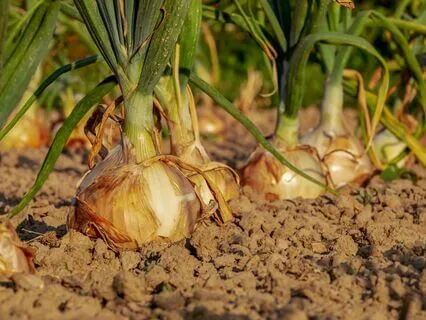
Potatoes and onions are very perceptibly more delicious right from the home garden,
Fresh from the vines or the ground.
But when it comes to peas and corn and lettuce,
Well,
There is absolutely nothing to compare with the home garden ones gathered fresh in the early slanting sunlight,
Still gemmed with dew,
Still crisp and tender and juicy,
Ready to carry every atom of savoury quality without loss to the dining table.
Stale,
Flat and unprofitable indeed,
After these have once been tasted,
Seem the limp,
Travel-weary,
Dusty things that are jounced around to us in the butcher's cart and the grocery wagon.
It is not in price alone that home gardening pays.
There is another point.
The market gardener has to grow the things that give the biggest yield.
They have to sacrifice quality to quantity.
You do not.
One cannot buy golden bantam corn or mignonette lettuce or greatest peas in most markets.
They are top quality,
But they do not fill the market crate enough times to the row to pay the commercial grower.
If you cannot afford to keep a professional gardener,
There is only one way to have the best vegetables,
To grow your own.
And this brings us to the third,
And what may be the most important reason why you should garden.
It is the cheapest,
Healthiest,
Keenest pleasure there is.
Give me a sunny garden patch in the golden springtime,
Where the trees are picking out their new gowns,
In all the various self-coloured delicate greys and greens.
Strange how beautiful they are in the same old unchanging styles,
Isn't it?
Give me seeds to watch as they find the light,
Plants to tend as they take hold in the fine,
Loose,
Rich soil.
And you may have the other sports.
And when you have grown tired of their monotony,
Come back in the summer to even the smallest garden,
And you will find in it,
Every day,
A new problem to be solved,
A new campaign to be carried out,
A new victory to win.
Better food,
Better health,
Better living.
All these the home garden offers you in abundance.
And the price is only the price of every worthwhile thing.
Honest,
Cheerful,
Patient work.
But enough for now of the dream garden.
Put down your book,
Put on your old togs,
Light your pipe,
And let's go outdoors and look the place over,
And pick out the best spot for that garden patch of yours.
Requisites of the home vegetable garden.
In deciding upon the site for the home vegetable garden,
It is well to dispose once and for all of the old idea that the garden patch must be an ugly spot in the home's surroundings.
If thoughtfully planned,
Carefully planted,
And thoroughly cared for,
It may be made a beautiful and harmonious feature of the general scheme,
Lending a touch of comfortable homeliness that no shrubs,
Borders,
Or beds can ever produce.
With this fact in mind,
We will not feel restricted to any part of the premises merely because it is out of sight behind the barn or garage.
In the average,
Moderate-sized place,
There will not be much choice as to land.
It will be necessary to take what is to be had and then do the very best that can be done with it.
But there will probably be a good deal of choice as to first,
Exposure,
And second,
Convenience.
Other things being equal,
Select a spot near at hand,
Easy of access.
It may seem that a difference of only a few hundred yards will mean nothing,
But if one is depending largely upon spare moments for working in and for watching the garden,
And in the growing of many vegetables,
The latter is almost as important as the former,
This matter of convenient access will be of much greater importance than is likely to be at first recognised.
Not until you have had to make a dozen time-wasting trips for forgotten seeds or tools,
Or gotten your feet soaking wet by going out through the dew-drenched grass,
Will you realise fully what this may mean.
Exposure.
But the thing of first importance to consider in picking out the spot that is to yield you happiness and delicious vegetables all summer,
Or even for many years,
Is the exposure.
Pick out the earliest spot you can find,
A plot sloping a little to the south or east that seems to catch sunshine early and hold it late,
And that seems to be out of the direct path of the chilling north and northeast winds.
If a building or even an old fence protects it from this direction,
Your garden will be helped along wonderfully,
For an early start is a great big factor towards success.
If it is not already protected,
A board fence or a hedge of some low-growing shrubs or young evergreens will add very greatly to its usefulness.
The importance of having such a protection or shelter is altogether underestimated by the amateur.
The soil.
The chances are that you will not find a spot of ideal garden soil ready for use anywhere upon your place.
But all except the very worst of soils can be brought up to a very high degree of productiveness,
Especially such small areas as home vegetable gardens require.
Large tracts of soil that are almost pure sand,
And others so heavy and mucky that for centuries they lay uncultivated,
Have frequently been brought,
In the course of only a few years,
To where they yield annually tremendous crops on a commercial basis.
So do not be discouraged about your own soil.
Proper treatment of it is much more important,
And a garden patch of average run-down or never-brought-up soil will produce much more for the energetic and careful gardener than the richest spot will grow under average methods of cultivation.
The ideal garden soil is a rich sandy loam,
And the fact cannot be overemphasised that such soils are usually made,
Not found.
Let us analyse that description for a bit,
For right here we come to the first of the four all-important factors of gardening.
Food.
The others are cultivation,
Moisture and temperature.
Rich in the gardener's vocabulary means full of plant food.
More than that,
And this is a point of vital importance,
It means full of plant food ready to be used at once,
All prepared and spread out on the garden table,
Or rather in it,
Where growing things can at once make use of it,
Or what we would term in one word,
Available plant food.
Practically no soils in long-inhabited communities remain naturally rich enough to produce big crops.
They are made rich,
Or kept rich,
In two ways.
First,
By cultivation,
Which helps to change the raw plant food stored in the soil into available forms.
And second,
By manuring or adding plant food to the soil from outside sources.
Sandy,
In the sense here used,
Means a soil containing enough particles of sand so that water will pass through it without leaving it pasty and sticky a few days after a rain.
Light enough,
As it is called,
So that a handful,
Under ordinary conditions,
Will crumble and fall apart readily after being pressed in the hand.
It is not necessary that the soil be sandy in appearance,
But it should be friable.
That hardly covers it,
But it does describe it.
It is soil in which the sand and clay are in proper proportions,
So that neither greatly predominate and usually darken in colour from cultivation and enrichment.
Such a soil,
Even to the untrained eye,
Just naturally looks as if it would grow things.
It is remarkable how quickly the whole physical appearance of a piece of well-cultivated ground will change.
An instance came under my notice last fall in one of my fields,
Where a strip containing an acre had been two years in onions,
And a little piece jutting off from the middle of this had been prepared for them just one season.
The rest had not received any extra manuring or cultivation.
When the field was ploughed up in the fall,
All three sections were as distinctly noticeable as those separated by a fence.
And I know that next spring's crop of rye,
Before it is ploughed under,
Will show the lines of demarcation just as plainly.
This,
Then,
Will give you an idea of a good garden soil.
Drainage There is,
However,
One thing you must look out for in selecting your garden site,
And that is drainage.
Dig down 8 or 12 inches after you have picked out a favourable spot and examine the subsoil.
This is the second strata,
Usually of different texture and colour from the rich surface soil,
And harder than it.
If you find a sandy or gravelly bed,
No matter how yellow and poor it looks,
You have chosen the right spot.
But if it be a stiff,
Heavy clay,
Especially a blue clay,
You will have either to drain it or be content with a very late garden,
That is,
Unless you are at the top of a knoll or on a slope.
Soil antecedents There was a further reason for mentioning that strip of onion ground.
It is a very practical illustration of what last year's handling of the soil means to this year's garden.
If you can pick out a spot,
Even if it is not the most desirable in other ways,
That has been well enriched or cultivated for a year or two previous,
Take that for this year's garden,
And in the meantime have the spot on which you intend to make your permanent vegetable garden thoroughly fitted and grow there this year a crop of potatoes or sweetcorn.
The next year you will have conditions just right to give your vegetables a great start.
Checklist January 1st Send for catalogues Make planting plan and table Order seeds February 1st Inside Cabbage,
Cauliflower first sowing Onions for plants February 15th Lettuce,
Cabbage,
Cauliflower,
Brussel sprouts,
Beets March 1st Inside Lettuce,
Celery,
Early tomato March 15th Inside Lettuce,
Tomato main Eggplant,
Pepper,
Lima beans,
Cucumber,
Squash Sprout potatoes in sand April 1st Inside Cauliflower,
Muskmelon,
Watermelon,
Corn Outside seed bed Celery,
Cabbage,
Lettuce Onions,
Carrots,
Smooth peas,
Spinach Beets,
Chard,
Parsnips,
Turnip,
Radish Lettuce,
Cabbage,
Plants May 1st Beans,
Corn,
Spinach,
Lettuce,
Radish May 15th Beans,
Limas,
Muskmelon,
Watermelon,
Summer squash Peas,
Potatoes,
Lettuce,
Radish Tomatoes early Corn,
Limas,
Melon,
Cucumber and squash Plants Pole lima Beets,
Corn,
Kale,
Winter squash,
Pumpkin,
Lettuce,
Radish June 1st Beans,
Carrots,
Corn,
Cucumber,
Peas,
Summer spinach,
Summer lettuce Radish,
Eggplant,
Pepper,
Tomatoes,
Main plants June 15th Beans,
Corn,
Peas,
Turnip,
Summer lettuce,
Radish,
Late cabbage and tomato plants July 1st Beans,
Endive,
Kale,
Lettuce,
Radish,
Winter cabbage,
Cauliflower,
Brussel sprouts and celery plants July 15th Beans,
Early corn,
Early peas,
Lettuce,
Radish August 1st Early peas,
Lettuce and radish August 15th Early peas,
Lettuce,
Radish in seed bed,
Forcing lettuce for fall in frames September 1st Lettuce,
Radish,
Spinach and onions for wintering over