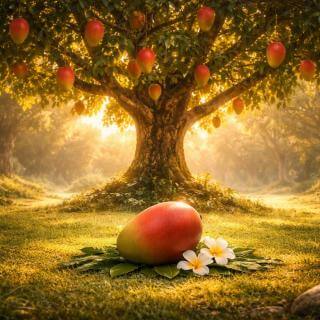
I was born on a beautiful tropical island in the middle of the sea.
Exotic,
Complex,
Controversial,
And deeply alive.
This island is the root and inspiration of these writings.
I don't know if this story is memory,
Desire,
Longing,
Or dream.
Perhaps it is all of them at once.
It is childhood remembered through fragments,
Family voices,
Shared meals,
Warm air,
Familiar scents,
And moments that still glow inside me.
It is also the wish to return,
To see again,
To walk again,
To feel again what once felt eternal.
I want to tell this story through plants,
The ones I loved,
The ones that surrounded my early life,
The ones connected to certain relatives,
Certain places,
Certain emotions.
Some are tied to family stories,
Others belong to the deeper spirit of the island itself.
Together,
They hold a map of memory and heart.
My land is calling me.
My island is calling me.
This comes as a surprise.
It had not spoken to me in a very long time.
I thought I'd had forgotten it.
I thought it had forgotten me.
But now,
It is pulling me again.
I feel it as I write,
The pull,
The longing,
The quiet insistence.
The words are not forced.
They arrive like a tide.
This is not only desire.
It feels like a summons.
As I sit with the memories,
The scents,
The plants,
The voices,
Something deeper moves underneath.
A spiritual call to remember,
To gather,
To give shape to what lives inside me.
Writing becomes listening.
Listening becomes devotion.
And as I have learned,
When the call comes from spirit,
I answer.
I listen.
I follow.
I write.
Guava.
Guayaba.
The fruit of comfort.
Guava was never dramatic.
And that is why I loved it.
His perfume traveled further than his appearance promised.
You could smell it before you saw it.
Warm,
Rounded,
Almost floral.
It felt like being welcome before arriving.
Cutting it open revealed softness.
Seeds,
Pink or cream flesh,
Never sterile,
Always alive with texture.
It was my favorite.
And favorites met early in life are never logical.
They are emotional alliances.
Guava felt friendly,
Approachable,
Faithful.
It never shocked.
It always pleased.
We know it was good for the body,
For strength,
For resistance,
The lips powerful for healing the skin.
But the knowledge lived quietly beyond enjoyment.
Medicine did not feel like medicine when wrapped in sweetness.
Even now,
The scent alone carries me backward.
To the country,
To climbing and staying on the branches for hours,
Letting the imagination fly.
To days that did not rush.
Comfort has a fragrance,
A taste.
For me,
It smells and tastes like guava.
Guava teaches that comfort can be simple,
Faithful,
And quietly healing.
Pineapple,
Piña,
Crown of abundance.
No fruit entered the table with more presence.
The pineapple did not hide its authority.
It wore a crown.
Its skin was patterned like armor.
Its top like a royal prom.
To serve it was to make a statement.
Today we celebrate.
Its taste was brightness sharpened into gold.
Sweet,
Acidic,
Awakening.
It did not whisper flavor.
It declared it.
Every bite felt like sunlight organized into geometry.
There was something luxurious about it.
Not because it was rare,
But because it felt ceremonial.
It required preparation,
Carving,
Intention.
No one absent-mindedly eats a pineapple.
It asked to be honored with attention.
Abundance is not only quantity.
It is vibrancy.
Piña teaches that richness can be loud,
Generous,
And apologetic.
Mango,
Mango,
Sticky childhood.
Mango was never eaten politely.
It was eaten leaning forward,
Over sinks,
Outdoors,
With elbows lifted and wrists dripping.
Mango demanded surrender.
Jewels run down for arms.
Threads cut between teeth.
Cheeks wore color like war paint.
Cleanliness did not belong in mango season.
Childhood lived inside that mess.
Freedom from self-consciousness.
Permission to enjoy fully.
No one said,
Be careful.
They said,
Enjoy it before it's gone.
Some mangoes were smooth,
Others fibrous.
The ones with the strings were the truest to me.
You worked for every bite.
You pulled sweetness from resistance.
Your face told the story afterward.
In memory,
Mango is not just fruit.
It is innocence without embarrassment.
A time when joy did not apologize for leaving stains.
Mango teaches that true joy is wholehearted,
Messy,
And unashamed.
Coconut,
Coco,
Sweet water of blessing.
The coconut teaches patience.
Nothing about it opens easily.
Its surface is rough,
Resistant,
Almost stubborn,
As if sweetness must be earned.
Watching one being opened was always an event.
The strikes,
The turning,
The focused effort.
Then,
Suddenly,
A small hole is opened,
And inside,
Clear water like captured rain.
That first sip was always a surprise.
Cool,
Clean,
Alive.
Not sugary like candy.
Sweet like something untouched.
It felt less like drinking and more like receiving.
In spiritual spaces,
The coconut was never casual.
It washed,
It marked,
It offered.
It stood for purity and protection.
Break it,
And something invisible was acknowledged.
Its water was just not refreshment.
It was permission,
Reset,
Grace.
The white flesh inside,
Dense,
Nourishing,
Felt like a second gift hidden behind the first.
Layer after layer.
Provision after effort.
Some blessings are like cocos.
Armored outside,
Generous within.
They do not open to force alone.
They open to intention.
Watermelon.
Melon.
The quiet refresher.
Watermelon belonged to heat and buzz.
It appeared when the air felt heavy,
And the day stretched long.
Its eyes alone promised relief.
A green globe holding red mercy.
When it was cut open,
The sound was soft but decisive.
And inside waited color like a celebration.
Slices were served wide and generous,
Never delicate.
You held them with both hands.
Juice escaped no matter how careful you tried to be.
And no one expected elegance.
Watermelon was about restoration,
Not matters.
Its sweetness was mostly water,
And that is what made it holy.
It did not overwhelm.
It revived.
It cooled the mouth,
The throat,
The mood.
After eating it,
Laughter came easier.
Bodies softened into chairs.
Conversations slowed.
Little brother was truly happy.
Some foods energize.
Watermelon forgives.
It says,
Rest now.
You are hydrated again.
Melon teaches that true refreshment comes from slowing down,
Nourishing the body,
And allowing yourself to rest.
Cherimoya.
Chirimoya.
A soft miracle.
The first time I tasted Cherimoya,
It felt like discovering a secret kept by trees.
Its outside gave no clear promise.
Pale orange-yellow,
Scared,
Almost prehistoric.
But inside was softness beyond expectation.
Custard-like,
White,
Delicate,
Spoonable.
It did not need teeth.
It asked only for welcome.
Its sweetness was gentle,
Rounded,
Almost chai.
Not the bright sweetness of tropical fruit that announces itself.
This was sweetness that sat close to the heart.
A private joy.
It always felt like a gift.
When Chirimoya appeared,
It meant someone thought of you.
Someone chose carefully.
Someone brought treasure.
Chirimoya teaches that blessings are often like that.
Modest exterior.
Tender interior.
Unforgettable.
Once known.
Sugar apple.
Unknown.
The whispering fruit.
Sugar apple was quieter than its cousin,
Cherimoya.
Softer in flavor.
Softer in memory.
But it stayed.
It never demanded attention.
Its taste did not arrive loudly.
It unfolded slowly.
You had to notice it on purpose.
It rewarded patience more than excitement.
There are people like that too.
Not impressive at first glance.
But steady in goodness.
Subtle does not mean weak.
Subtle means refined.
Its leaves were good for the kidneys.
Good for inner cleansing.
That felt right.
It tasted like something that works gently,
Without drama.
Not every healer announces itself.
Some whisper and still transform.
Unknown teaches that subtly carries its own strength.
And quiet patience brings lasting transformation.
Soursop.
Guanabana.
The wild medicine.
Soursop looked like a warning.
Covered in soft spines.
Oversized.
Irregular.
It did not resemble friendliness.
But inside was pale flesh.
Fibrous and aromatic.
Sour-sweet and powerful.
It challenged the tongue and awakened the senses.
Its flavor did not settle easily into categories.
It was not simply sweet.
It was not simply acid.
It was alive.
Shifting.
Complex.
Almost electric.
People spoke of its healing strength with respect.
This was not a casual fruit.
It belonged to remedies,
Tonics,
Serious nourishment.
It crossed the line between food and medicine without asking permission.
Some of the most beneficial things in life look intimidating at first touch.
Guanabana teaches not to judge by appearance.
To look at the essence of things and persons.
To exercise courage and dare to experience.
Starfruit.
Carambola.
The bright surprise.
When sliced it became a star.
And that alone felt like magic.
Starfruit carried novelty in its shape.
Brightness in its taste.
Tart.
Crisp.
Shining.
It woke the mouth instantly.
It did not comfort.
It alerted.
It said,
Pay attention.
I associate it with the specialness of being offered something uncommon.
I also associate it with father and the wine he crafted to mark my 15th birthday.
It was never everyday fruit.
It was presentation.
Gesture.
Moment.
Its acidity felt playful.
Almost mischievous.
A fruit that is sparkled rather than soothed.
Some memories are like starfruit.
Sharp.
Bright.
Beautifully shaped.
Small but impossible to forget.
Carambola teaches that life's most memorable moments shine when we notice the small,
Bright and extraordinary.
Tamarind.
Tamarindo.
The sweetness that bites.
Tamarind never pretended to be simple.
Its pulp looked dry.
Almost brittle.
Like something forgotten on a branch.
But inside lived a paste both sweet and sharply sour.
A contradiction that delighted the tongue and confused expectation.
The first taste always made the face change.
Eyes narrowing.
Lips tightening.
Then smiling.
It was not a fruit you rushed.
You peeled it slowly.
Removed the fibers.
Worked around the seeds.
Effort was part of the experience.
Reward followed patience.
It felt rare when it appeared.
A find.
A gift.
A small miracle.
Not something obtained casually but discovered or offered.
Tamarind carried the feeling of blessing earned rather than given freely.
Life has flavors like tamarind.
Moments so intense they feel divided against themselves.
And yet we return for another taste.
Tamarindo teaches that the sweetest rewards often come through effort,
Patience and embracing life's contrast.
Cashew.
Marañón.
The lesson in astringency.
Cashew surprised the mouth.
It looked inviting.
Colorful.
Fragrant.
Juicy.
But its first contact tightened everything.
The tongue.
The cheeks.
The throat.
All pulled inward.
It was as if the fruit said,
Slow down.
Respect me.
And still we ate it.
Because behind the astringency was brightness and nourishment and something deeply alive.
It was not gentle pleasure.
It was an education in sensation.
Not all enjoyment is soft.
Some is sharp and memorable.
There was also caution around it.
How to handle it.
What part to eat.
What part to avoid.
Some gifts come with instructions.
Marañón was one of them.
It teaches awareness,
Attention,
Discernment.
Avocado.
Aguacate.
Green life.
Avocado was abundance without noise.
Cut it open and there it was.
Smooth yellow green flesh.
Perfect and generous.
Surrounding a single round seed like a center of gravity.
No complicated preparation.
No ceremony required.
Just slice and serve.
It went with everything and improved everything.
Rice and beans,
Tamal,
Meals of any kind.
It entered quietly and made them richer.
Nutritious.
Satisfying.
Deeply grounding.
Eating avocado felt like agreement with life.
Like saying yes to nourishment.
Yes to strength.
Yes to pleasure without excess.
Some foods feel like support more than flavor.
Avocado was emotional nutrition as much as physical.
Aguacate teaches that true abundance is beautiful,
Nourishing and always supportive.
Spanish lime.
Mamoncillo.
Summer in the palm.
Spanish lime tasted like vacation.
It arrived in clusters.
Small green orbs hiding light orange flesh around the seed.
Eating it was a rhythm.
Bite.
Be careful not to damage your clothes with the juice.
Peel with teeth.
Roll the fruit in the mouth.
Savor the thin sweetness.
Discard the seed.
Repeat.
It could not be hurried.
It belonged to summer.
To heat.
To grandmother's house.
To days without schedules.
Hands became sticky.
Piles of seeds grew beside laughter.
No one counted how many.
Only how long the moment lasted.
It felt like freedom food.
Seasonal.
Playful.
Shared.
Its joy lived not only in taste but in repetition and company.
Some memories come back as flavors.
Spanish lime returns as happiness itself.
Mamoncillo teaches that joy is found in shared moments,
Playful rhythms and the sweetness of presence.
Malay apple.
Pera roja.
The fruit of serendipity.
The Malay apple never appeared in markets the way other fruits did.
It appeared in moments.
Unexpected.
Almost accidental.
As if the tree itself chose the meeting.
It appeared as we discarded the seed of the fruit received as an exotic gift.
Which decided voluntarily to grow for us.
To stay.
To bless the family.
Its shape was delicate.
Bent like.
Tinted with soft red or pink.
And its scent carried a faint perfume.
Floral and clean.
Biting into it was like biting into scented water.
Crisp.
Light.
Refreshing.
Never heavy.
It did not try to satisfy hunger.
It satisfied curiosity.
Finding one felt like being favored by chance.
We did not plan for it.
We discovered it.
And discovery changes flavor.
What is found tastes better than what is bought.
Pera roja teaches that fortune is sometimes quiet.
That serendipity grows on branches while we are busy looking at the ground.
Orange.
Naranja.
Fields of giving.
Oranges belong to my memories of gathering.
Not just eating.
Collecting.
Caring.
Reaching.
The work of filling hands and baskets with neighbors.
The trees stood like generous hosts.
Each branch offering ransoms with enrich.
The air smelled alive.
Citrus oil released with every twist of the peel.
Opening an orange is an intimate act.
Thumbs pressing in.
Skin breaking.
Fragrance rising instantly.
It is a fruit that announces itself before the first bite.
Segments separated like small gift.
Ready to share.
No knife required.
No ceremony.
Only presence.
You could divide it among many without diminishing it.
Growing up felt like that.
Learning through naranja that some blessings come in multiples.
Easy to distribute.
Meant to be passed hand to hand.
Mamey.
The elusive treasure.
Mamey was spoken of before it was seen.
Desired.
Remembered.
Praised.
But not always available.
Its absence increased its legend.
When it finally appeared it felt important.
Like a guest of honor arriving late but welcome.
Its rough brown exterior hid deep orange flesh.
Dense.
Creamy.
Sunset colored.
Its flavor was rich and unmistakable.
Somewhere between earth and dessert.
Between memory and indulgence.
You did not forget mamey once you knew it.
It marked the senses.
It created loyalty.
Some blessings are not constant and that is why they are treasured.
Rarity sharpens gratitude.
Mamey teaches to recognize value not by frequency but by death.
Hog plum.
Ciruela.
The fruit that didn't ruin the party.
Hog plums arrived with laughter already attached.
They were small,
Bright,
Festive.
Passed around in gatherings,
Eaten outdoors,
Shared without counting.
Sometimes when opened they revered tiny worms inside.
Leaving proof that sweetness attracts life.
And still the celebration continued.
We learned not to panic.
Not to waste.
Not to dramatize imperfection.
If one was spoiled you chose another.
Joy did not collapse because of loss.
There was something honest about that.
The understanding that nature is alive,
Not sterile.
That abundance includes inconvenience.
That pleasure does not require perfection.
The party was never canceled.
The sweetness was still real.
Ciruela teaches that joy does not require perfection.
Only openness,
Adaptability,
And a willing heart.
Mandarin.
Mangarina.
The gentle luxury.
Mandarins felt refined.
Smaller than oranges,
Easier to peel,
More fragrant.
They carry the sense of specialness.
Opening one released a perfume that felt almost elegant.
The skin came off willingly,
As if cooperation were part of its design.
Each segment was neat,
Self-contained,
Glowing.
It felt like a fruit arranged by intention rather than chance.
Eating it was calm,
Orderly,
Satisfying.
It was a small luxury,
Not extravagant,
But elevated.
A reminder that delicacy has its own richness.
Some pleasures are quiet upgrades to ordinary life.
Mandarin was one of them.
Mandarina teaches that refinement can be gentle and small luxuries can deeply nourish the spirit.
Bitter orange.
Naranja agria.
The tireless helper.
Bitter orange was not loved for eating.
It was loved for usefulness.
Too sharp,
Too sour to enjoy raw.
It found its purpose in transformation.
In cooking,
In preparation,
It turned other foods into their best versions.
It worked behind the scenes.
It carried the energy of the reliable worker.
Not praised for sweetness,
But respected for contribution.
Kitchens trusted it.
Recipes depended on it.
There are beings like that,
Not meant for display,
But essential to outcome.
Supportive,
Consistent,
Effective.
Not every gift is meant to be tasted alone.
Some are meant to make everything else better.
Naranja agria teaches that true value is not always in sweetness or recognition,
But in quiet service.
The kind that transforms everything it touches and makes the whole greater than the parts.
Lemon.
Limón.
The bright awakener.
Lemon was clarity.
Its scent alone could reset a mood.
One cut released a burst of brightness that felt like light made liquid.
Its taste sharpened attention,
Woke the tongue,
Lifted heaviness.
A few drops could change an entire dish or an entire drink,
Turning the world into alive.
It taught proportion.
A little is enough to transform.
It also cleaned,
Purified,
Refreshed.
It belonged as much to remedies as to recipes.
Some presences in life function like lemon.
They clarify situations,
Cut through confusion,
Bring things into focus.
Limón teaches that clarity is a gift.
A small bright truth can awaken what feels heavy,
Cut through confusion,
And bring life back into focus.
A little sharpness offered with purpose can refresh the whole moment and restore what seemed dull or stagnant.
Sea grape.
Uba caleta.
Treasure by the shore.
Sea grapes belong to journeys.
They grew near the beach,
Among sand and salt air,
Hidden in clusters under broad leaves.
Finding them was an activity,
A hunt,
A short mission among kids walking together.
We searched among roots and branches while crabs moved nearby and waves sounded in the distance.
Discovery felt earned.
Eating them tasted like success.
Their flavor carried earth and sea together,
Mild sweetness with wild edges.
They were not commercial fruit.
They were place fruit,
Landscape fruit,
Memory fruit.
Family vacations were measured in moments like that.
Bent knees,
Reaching hands,
Shared finds,
Salt on the skin,
Laughter in the background.
Some foods are coordinates on the map of love.
Uba caleta teaches that treasures are found where curiosity meets care and that the sweetest discoveries are tied to place,
Presence,
And shared moments of connection.
Papaya.
Frutabomba.
Mother's sweet care.
Papaya was care made edible.
At home,
It often appeared transformed,
Cooked slowly into sweetness by mother's hands,
Prepared with patience and intention.
It was not just fruit.
It was provision.
A container packed for school days,
For long mornings,
For the years that stretched all the way into university.
Different ages,
Same gesture.
Nourishment sent with love.
Its color was pale yellow.
Its texture hard instead of the traditional soft.
Mother's special recipe.
Its sweetness calm and steady.
It did not overwhelm.
It supported.
Eating it felt like being accompanied,
Like not being alone in the distance.
Papaya became the fruit of being looked after,
Of being prepared for,
Of being sustained across years of study and growth.
A sweetness that said,
Go,
You are cared for.
Some foods are loved,
Packed into a container and placed in your hands before you leave the house.
Frutabomba teaches that true care is quiet,
Consistent,
And nourishing.
A steady sweetness that supports growth,
Presence,
And journey,
Even from afar.
Shepherd's Needle,
Romerillo,
The humble power.
Shepherd's Needle was small but insistent.
It grew quietly,
Without show,
Wild,
Humble,
And unassuming.
Yet in its flowers and leaves lived strength.
A cure for throat infection,
Ailment too common to be remarkable,
Although painful.
The remedy sometimes was gentle,
Sometimes rough.
But it worked.
Stubborn and effective,
Like the quiet wisdom of elders.
Its generosity was abundant.
It asked nothing in return,
Required no ceremony,
And yet offered everything.
There was a lesson in that.
Power is not always loud.
It can be modest,
Hidden,
Waiting to serve.
Romerillo reminds that even the smallest beings,
If given respect,
Carry profound gifts.
It teaches that true power is humble,
Quiet,
And generous.
That unnoticed beings can carry profound gifts and offer healing without fanfare.
Cure for All,
Salvia,
The Trusted Leaf.
Cure for All belonged to ritual and reassurance.
Placed on the feet to fight colds,
Held over the chest to clear the air,
It smelt of trust and protection.
Its aroma carried warmth and intent,
Weaving through the home and grounding the heart.
There was faith in the act of using Cure for All,
Not blind faith,
But inherited understanding.
It healed because we believed in its presence,
And perhaps because presence itself is a kind of medicine.
Some leaves teach us not only about the body,
But about the mind and the spirit.
Salvia reminds that trust,
Once planted,
Nurtures more than health.
It nurtures calm and courage.
Holy Basil,
Albaca Morada,
Field Mystery.
Holy Basil grew in Grandmother's wild garden,
Dark and enigmatic.
His leaves carried shadows and secrets.
Picking one felt like holding a fragment of the earth mystery,
Fragrant,
Powerful,
And slightly untamed.
It was the herb of whispered knowledge,
Of subtle influence,
Of hidden magic.
It was the herb that wore on the ear,
Could deter flies from keep bothering.
Those more,
It drew attention.
Its color marked it as unusual,
Special,
Even sacred in its quiet way.
The wind carried its scent,
Reminding anyone nearby of what thrives when left to its own devices.
Some lessons are subtle,
Some magic grows unannounced.
Albaca Morada reminds that wonder is often in the unnoticed.
Anamu,
Anamu,
The Fearsome Healer.
Anamu demanded respect.
Strong,
Pungent,
And potent.
It commanded attention even before its medicinal value was known.
Adults whispered its uses with reference,
And sometimes a hint of fear.
His scent alone warned that this was no ordinary herb.
It healed in ways that were undeniable,
Precise,
And sometimes astonishing.
One could not ignore it,
Nor underestimate it.
It demanded engagement,
Attention,
Care,
Understanding,
And rewarded it with effectiveness beyond ordinary expectation.
Some remedies require awe.
Some gifts ask that we honor them fully.
Anamu teaches that reverence is part of healing.
Cuban oregano,
Oregano,
Taste of home.
Cuban oregano carried the essence of kitchens and comfort.
Slips were familiar,
Earthy,
Spicy,
Seasoning beans,
Soups,
And any possible meal,
And simultaneously,
Medicine for colds and coughs.
It is tied to memories of mother-tending pots and pans,
Of warmth rising from stoves,
Of aromas threading through rooms.
It was home in herb form,
Practical,
Resilient,
Flavorful,
And protective.
Oregano reminds that the most essential things are often the ones that live quietly,
Nourishing both body and soul.
Rú,
Ruda,
Wild protection.
Rú grew untamed at the edges of the garden,
Thorny and mysterious.
Grandmother tended it with reverence,
Plucking branches with care,
Whispering prayers over them.
The scent was sharp,
Almost forbidding,
Warning that this was no ordinary herb.
Yet,
Within its wildness lay protection,
For the home,
For the body,
For the spirit.
We were told stories of its power,
Of the unseen dangers it could guard against,
Of the respect it demanded.
Rú teaches that strength can be hidden in wildness,
That protection often comes from the edges,
Where care meets courage.
Some guardians are subtle but formidable.
Rúda is one of them.
White vinca,
Vicaria blanca,
Tiny eyes of relief.
White vinca grew close to the ground,
Quiet and modest,
As if it preferred not to be noticed.
Its small flowers opened like little stars,
Simple and steady,
Watching the day without asking for attention.
Many people walked past it without knowing what it could offer,
But in our homes it was known.
When someone had an irritated or infected eye,
White vinca became a gentle helper.
It was a tender ritual,
Slow,
Patient,
Done with care.
You had to lie still,
Breathe,
And allow the coolness to work.
Relief did not rush,
It arrived softly.
There was something deeply comforting in that moment.
The dim light behind the eyelids,
The scent of clean water and plant life,
The relief offered by the compress.
Healing was not only in the plant,
But in the gesture.
We learn to look closer,
To appreciate subtlety,
To see how the tiniest things can carry power.
Vicaria blanca reminds that relief sometimes comes in miniature,
That tenderness is strength.
It teaches that not all remedies come from vibrant colors or dramatic flowers.
Some come from the smallest blossoms,
From quiet preparations,
From taking the time to care for your pain with gentleness.
Lemongrass,
Caña santa,
Morning infusion of care.
Lemongrass grew tall and slender,
Its blades catching the light and releasing their fragrance at the slightest touch.
Memories of it begin in the morning.
Sometimes mother prepared an infusion with its fresh leaves.
The steam would rise,
Carrying that unmistakable citrus green aroma,
Clean,
Warm,
Alive.
The flavor was gentle but distinctive,
Slightly sweet,
Slightly bright and deeply comforting.
Even now,
One sip of lemongrass brings the entire memory back intact.
The kitchen,
The light,
The presence.
There was no ceremony announced out loud,
Yet it was always a ritual of care.
Water heating,
Leaves cut and placed,
Time allowed for steeping,
A cup offered.
It was nourishment beyond the physical,
A message without words.
I am taking care of you.
Caña santa,
Which literal translation is holy cane,
Teaches the love of and lives inside small repeated acts.
A morning drink,
A remembered flavor,
A scent travels across years without losing its way.
Some plants do not mark special occasions,
They sanctify the ordinary,
And in doing so,
They become part of the heart's earliest language of safety and tenderness.
Aloe,
Savila,
The prepared healing.
Aloe did not taste the way it looked.
Before it reached the spoon,
It had already been handled with knowledge.
The thick green skin was removed.
The gel rinsed and drained carefully so that the bitterness,
Which lived near the peel,
Would disappear.
What remained was clear,
Almost flavorless,
Cool and clean.
To a child,
It still looked mysterious in the refrigerator,
Translucent,
Slippery,
Unlike any other food.
But when swallowed,
It did not attack the tongue,
It passed quietly,
Doing its work without drama.
Its soot burns,
It calms the stomach,
It restores from the inside out.
Aloe taught something subtle.
Healing does not always need to hurt.
Sometimes the bitterness belongs to the outer layer.
And with patience and proper care,
What remains is pure relief.
Some remedies require knowledge before they can nourish.
Aloe was one of them.
Savila teaches that with patience and proper care,
Even what seems harsh on the outside can become gentle medicine within.
Mint.
Yerba buena.
Balcony remedy.
Mint lived on the balcony,
In sunlight,
In small pots that smelled of care.
Mother tended it carefully,
Lips waving in the breeze,
Whispering relief to anyone nearby.
It healed stomachs,
Refreshed spirits,
Lifted languid afternoons.
The maid from it carried the scent of home,
Trust and love.
The act of plucking lips became ritual.
Touch,
Smell,
Taste,
Release.
Some remedies require proximity,
Care and patience.
Yerba buena offered all three generously,
Teaching that small things can restore the largest discomforts.
Tilo.
Calm in the nerves.
Tilo was a plant of serenity.
Its leaves and flowers carried soothing aromas,
Making these the quieted nerves and eased hearts.
Walking near it was a lessening calm.
Its delicate leaves and subtle fragrance carried a softness that slowed the breath.
It did not tower or cast shade.
It rested close to the earth,
Quiet and unassuming.
Yet,
Once prepared,
Its infusion released a gentle reassurance into the body.
We turned to Tilo for anxiety,
For sleeplessness,
For moments when the mind ran too fast.
Its essence lingered long after the tea was gone,
In memory and in the body's quiet response.
Some presences teach stillness without words.
Tilo reminds that peace does not have to loom above us like a tree.
Sometimes it grows low to the ground,
Waiting to be gathered,
Steeped and received.
Hibiscus.
Mar Pacifico.
Beauty everywhere.
Hibiscus was part of the landscape,
As common as sidewalks and sunlight.
It grew along fences,
At street corners,
In front gardens without ceremony,
As white pink blooms opened generously to the day,
Bright and unapologetic.
You could not walk far without seeing one.
It did not belong to special occasions.
It belonged to ordinary afternoons,
To the rhythm of neighborhood life.
Children passed it without awe,
Yet always noticed it.
Its color interrupted routine in the gentlest way,
Reminding the street that beauty required no invitation.
Hibiscus did not hide or demand admiration.
It simply bloomed,
Again and again,
Wherever it was planted.
Its constancy made it trustworthy.
Its openness made it welcoming.
Some beauty does not arrive dramatically.
It settles into daily life until it becomes part of how we remember a place.
Mar Pacifico teaches that beauty does not need rarity to be meaningful.
It can live in the everyday,
Bright and steady,
Asking only to be noticed.
Sensitive plant.
Dormidera.
The shy teacher.
Sensitive plant grew low along the path near the schoolyards and open lots,
Easy to overlook,
Until you touch it.
Then the miracle happened.
Its leaves folded inward at the slightest contact,
As if the plant itself were alive with awareness,
Modest and alert.
Children never tired of testing it,
Laughing each time the green fingers closed like a secret.
We would return again and again,
Tapping,
Waiting,
Watching,
Amazed that a plant could respond,
Could react,
Could seem to feel.
It turned an ordinary walk into an experiment,
A lesson,
A small ceremony of wonder.
Those moments planted something deeper than curiosity.
They taught respect.
They taught that life answers when approached,
That sensitivity is not weakness,
But intelligence.
Dormidera shows that awareness can be gentle,
Boundaries can be natural,
And even the smallest living beings know how to protect their energy.
It teaches that responsiveness is wisdom,
And that being sensitive is its own quiet strength.
Yellow Ardor.
Marilope.
The gentle relief.
Yellow Ardor bloomed small and golden,
Almost unnoticed along roadsides and open fjords.
Its petals opened with the sun,
Delicate yet persistent,
As if light itself had taken root close to the ground.
It was not a plant of grand trunks or heavy fruit.
It did not dominate the landscape.
Instead,
It lived quietly among grasses,
Offering something intimate,
Comfort where the body tightens and aches.
When steeped into tea,
Its warmth moved inward,
Softening the sharp grip of menstrual pain.
What felt like contraction slowly loosened.
What felt like heaviness began to ease.
Yellow Ardor did not erase the cycle.
It accompanied it.
It reminded the body that pain,
Too,
Moves in waves.
There is a wisdom in plants that tend to women's rhythms.
Yellow Ardor carried that wisdom gently.
It understood that monthly renewal requires both strength and tenderness,
That creation and release are part of the same sacred pattern.
Some healers do not shout.
They bloom quietly and work where it matters most.
Marilope teaches that relief can be gentle and that honoring life cycles with care transforms discomfort into deeper understanding.
Night-Blooming Jasmine Galant de Noche The Sweet Darkness Night-blooming jasmine revered its magic after dusk.
Its scent rose into the warm night air,
Rich,
Intoxicating,
Impossible to ignore.
While daytime left it quiet and unassuming,
Night unlocked its full presence.
Walking near it after sunset was an experience of wonder,
The perfume enveloping you,
Inviting reflection,
Rest and awe.
Galant de Noche reminds us that some beauty is revealed only in patience,
In darkness,
Or in the waiting.
It teaches that timing matters and that magic often blossoms in the hours we least expect.
Florida Thoroughbred Abre Camino,
The Road Opener Florida Thoroughbred grows where paths hesitate,
Along borders,
At the edges of fields,
In spaces between wildness and passage.
It does not demand attention,
Yet its name carries certainty,
The one who opens the way.
Its leaves are unassuming,
Its flowers pale and clustered,
Almost modest,
But its work is not decorative.
It moves in the unseen currents of stagnation,
Where plants stall and doors remain closed,
Where confusion lingers like fog.
In cleansing baths and ritual sweepings,
Abre Camino is steeped and poured,
Brushed across thresholds,
Carried in intention.
It does not force outcomes.
It clears interference.
It untangles what has tightened.
It makes space for motion again.
Some moments in life require effort.
Others require clearing.
Florida Thoroughbred understands that progress is not always about pushing harder.
Sometimes it is about removing what blocks the natural flow.
The road may already exist.
It may simply be overgrown with doubt,
Fear,
Or unseen resistance.
Florida Thoroughbred does not build the journey for you.
It reveals that the way was always there,
Waiting to be walked.
Abre Camino teaches that when obstacles dissolve,
Movement returns naturally,
And the path forward becomes visible beneath your own feet.
Sugar cane,
Caña de azúcar,
Sweet labor.
Sugar cane lives in the memory of hands,
Strong hands peeling the outer skin with a blade,
Skilled hands cutting sections,
Patient hands passing pieces to eager ones.
It was never prepared carelessly.
There was craft in the cutting.
Chewing sugar cane was an experience,
Not a bite.
You crushed the fiber slowly,
Drawing out the juice.
Sweet,
Wildly refreshing.
Then you spit out the dry remains.
Extraction required participation.
It belonged to the countryside,
To fields,
To heat,
To grandfather energy.
Work and sweetness side by side.
Effort and reward in the same stock.
We learn from caña de azúcar that sweetness is often stored inside structure,
That you must press life a little to taste what it carries.
Tobacco,
Tabaco,
The offering.
Tobacco belonged to ritual and respect.
Grandfather grew it,
Handled it with care,
And smoked it with pleasure.
We offered it to orishas with reverence.
Scent was heavy,
Earthy,
Sacred.
It carried spirituality as much as flavor,
Linking the present with ancestors,
The visible with invisible.
Handling it was an act of mindfulness,
An acknowledgment of connection.
Tobacco teaches patience in growth,
In preparation,
In the giving of offerings.
Some gifts are not for consumption alone,
But for honoring.
Tabaco is one of them.
Coffee,
Café,
The mountains and independence.
Coffee taught lessons beyond taste,
Gathered in cold mountains,
Worked through long days,
Shared.
It carried both effort and joy.
It awakened the senses and the spirit,
Red and yellow colors,
Connection and accomplishment.
It was independence brewed,
Labor in the fields,
Endurance in harsh conditions,
Surviving away from family.
Its aroma was intoxicating,
Familiar,
Beloved.
It spoke of home and journey,
Of school activities,
Of chilly mornings softened by warmth.
Coffee connected people,
Places,
And memory.
Some experiences are aromatic,
Tactile,
And deeply social.
Coffee held all three.
Café teaches that growth is brewed slowly,
Through endurance,
Companionship,
And awakening.
Corn,
Maíz,
The many forms of one gift.
Corn was never just one thing.
It arrived in the kitchen as kernels,
But it never stayed that way for long.
Ground into cornmeal,
It became trusted food.
Wrapped and steamed into tamales,
It carried warmth and memory inside folded leaves.
Shaped into fritters,
It met hot oil and turned golden.
Simmered into a torre,
It softened into comfort,
Thick and sweet,
Cradled in a cup.
One grain,
Countless expressions.
Corn adapted to hunger,
To celebration,
To scarcity,
To abundance.
It could be humble or festive,
Simple or elaborate.
Morning drink,
Midday meal,
Evening sustenance.
It was always ready to transform.
There is something sacred in that kind of versatility.
Corn did not resist becoming something new.
It yielded to grinding,
To heat,
To water,
To hands.
And in each transformation,
It remained itself.
It taught without speaking.
Strength is not rigidity.
Identity is not limitation.
From the same harvest came nourishment in many forms.
From the same source,
Endless creativity.
Maíz teaches that true abundance lies in adaptability.
That what we are can take many shapes and still remain whole.
Burro banana,
Platano burro,
The faithful provider.
Burro banana was never a treat.
It was sustenance,
Always present,
Always dependable,
Always adaptable.
Green or ripe,
Fried or boiled,
Mashed or sliced.
It showed up in many forms,
But with one purpose,
To feed well and fully.
It was the food you could trust,
The one that did not disappear with seasons or trends.
It held the table steady.
It filled hunger without drama.
There is love in reliability.
There is dignity in foods that do not try to impress,
Only to sustain.
Burro banana carried the energy of provision,
Of continuity,
Of being heard.
Some presences in life are like burro banana,
Not flashy,
Not rare,
But essential.
Platano burro teaches that true strength lies in reliability,
In showing up again and again for ourselves and others to nourish,
Sustain,
And hold steady without needing praise.
Cassava,
Yuca,
Trust in the root.
Cassava grew quietly,
Buried beneath the soil,
Firm and unassuming.
Its true value was hidden,
Known only to those willing to dig,
To peel,
To cook.
It was the food of trust.
You worked with care,
And it rewarded you.
Boiled,
Roasted,
Or fried,
It sustained and grounded.
Simple,
Dependable,
Generous,
Without flair,
Yet central to every meal.
Like roots in life,
Yuca reminds that strength often comes from what we cannot immediately see.
Stability comes from patient cultivation.
Malanga,
The coveted beginning.
Malanga was never ordinary.
It was rare,
Whispered about,
Sought after in markets,
And treasured in kitchens.
Its appearance alone suggested something special,
A promise of nourishment unlike any other.
Its flesh was creamy,
Dense,
And deeply satisfying,
A root meant to sustain,
To strengthen,
To give life.
In many homes,
Malanga was the first solid food offered to babies,
A gentle introduction to the world of eating beyond mother's milk.
It carried care,
Patience,
And intention.
Beyond its nutrition,
Malanga was a symbol of value,
Desire,
A root that spoke quietly of abundance that matters.
It was more than sustenance.
It was a gift,
An initiation into taste and into life itself.
Malanga teaches that nourishment is a treasure to be honored,
And the beginnings are often found in the simplest,
Most cherished roots.
Sweet potato,
Boniato,
Indulgent hands.
Sweet potato was ordinary until it met grandmother's hands.
Fried,
Golden,
Crisp at the edges,
Sweet and tender within.
To please a finicky kid,
It carried flavor,
Timing,
Care.
Each piece was a quiet act of care,
A way of saying,
I see you,
I will please you.
It became more than food.
It became comfort,
Attention,
And indulgence all at once.
The kitchen is made of warmth,
Patience,
And love,
And every bite carried the memory of hands,
Bending to make something ordinary taste like delight.
Boniato teaches that love often shows itself in the small gestures,
In the willingness to bend the norm,
To transform the ordinary into joy.
Tomato,
Tomate,
Fruits of labor.
Tomatoes were large,
Red,
And perfect under grandfather's care.
He grew them as if each were a child,
Nurtured,
Protected,
And displayed with pride.
We learned the satisfaction of tending,
The reward of patience,
The joy of freshness.
Sliced on bread with oil and salt,
They became the best vegetable.
Flavor simple,
Wholesome,
Alive.
Tomatoes required diligence,
Care,
And appreciation for effort.
Some gifts are cultivated with hands and heart.
Tomatoes are one of those.
Tomatoes teach that patient care ripens into fulfillment,
And that every season of effort carries within the promise of harvest.
Watercress,
Berro,
Gift from water and mud.
Watercress grew where water met earth,
In small streams,
Muddy edges,
And quiet currents.
Mother and grandfather would gather it carefully,
Washing away the mud and tasting the crisp freshness.
Its flavor carried the earth and stream,
Alive,
Sharp,
Nourishing.
It was more than a vegetable.
It was a lesson in patience and attention,
Teaching that abundance thrives where we care enough to seek it.
Eating watercress meant connection to family,
To water,
To land.
It reminds us that sustenance often grows in hidden,
Humble places,
And that joy comes from sharing what we find.
Berro teaches that what feels dense or messy can become the very soil that sustains our becoming.
The growth does not reject the mud.
It draws strength from it,
Rising nourished by the very ground that seemed heavy.
Okra,
Quimbombo,
The slippery surprise.
Quimbombo teaches perseverance.
Its slim interior could frustrate the unprepared cook,
Clinging to utensils and food alike.
Yet it added flavor,
Texture,
And character to meals,
Rewarding effort with depth.
Children sometimes wrinkled their noses,
Then grew to love its uniqueness.
Handling okra demanded patience and awareness.
It reminds us that not all challenges are obstacles.
Some are invitations.
Slippery but rewarding,
Quimbombo embodies lessons in persistence,
Adaptation,
And eventual delight.
Royal palm,
Palmarreal,
The fields of green.
Royal palm dominated the fields,
Tall and elegant,
Swaying against the sky.
It marked the scenery,
Guided the eye,
Defined space.
Its green fronts signaled the island,
The green landscape,
The openness,
The warmth.
It was a constant companion childhood memories,
Familiar.
Royal palm carried dignity,
Beauty,
And identity.
It reminded us some trees are not just plants.
They are symbols,
Markers of home and belonging.
Some presences shape memory as much as imagination.
Royal palm did that with every breeze and every frond.
Palmarreal teaches that identity can rise tall and steady,
Becoming a landmark of belonging for all who recognize its silhouette.
That what stands consistently in our landscape becomes part of who we are.
Teak,
Teka,
Father's strength.
Teak stood strong,
Unyielding,
And patient.
His wood was dense,
Resilient,
And enduring,
Like father.
We would walk past the trees in town,
Noticing their straight trunks and powerful presence.
They taught lessons of persistence,
Of standing tall,
Of through years,
Of offering strength without complaint.
The scent of teak carried the earth and the sun,
The quiet authority of something that endures.
His wood became furniture,
Beams,
Shelters,
Giving structure to life in both literal and symbolic ways.
Some presences,
Like teak,
Remind us that strength is both silent and enduring.
Father's lessons lived in this wood.
Teka teaches that presence speaks louder than words,
And that a solid structure underlies all growth and stability in life.
Flamboyant,
Flamboyant,
Fire above,
Shelter below.
The flamboyant tree rised like a celebration.
When it bloomed,
It did not do so quietly.
It crowned itself in red,
Orange,
Or golden fire,
As if the sky itself decided to flower.
From a distance,
It looked almost unreal,
A burst of color suspended above the earth.
But its true generosity was not only in its beauty,
It was in its shade.
Its canopy spreaded wide and protective,
Forming natural gathering places beneath it.
Children were drawn there instinctively.
The ground around its root became a small world of games,
Conversations,
Discoveries,
And poses from the heat.
The thick trunk invited leaning,
Circling,
Hiding,
And resting.
Time slowed under the flamboyant tree.
When the long seed pods dried and opened,
They offered new toys to curious hands.
Rattling seeds,
Curved shells,
Textures to explore.
Nothing was wasted.
Even what fell became part of play and imagination.
Flamboyant teaches abundance without restraint.
It did not measure its color,
Its shade,
Or its offerings.
It gave spectacle and refuge at the same time.
It reminds that true generosity can be both magnificent and practical.
Beauty above,
Shelter below,
And that the most memorable places are often made not by walls,
But by living branches.
Calabash Tree,
Cuira,
The Vessel That Clings Calabash Tree hung in silence before it ever sang.
At first glance,
It is hard to understand how something could be ended and become more powerful because of it.
The dried shell looks modest,
Almost forgotten,
Like an object between usefulness and discard.
But in the hands of others,
It transforms.
Hollow becomes instrument.
Emptiness becomes rhythm.
A simple body becomes a carrier of prayer.
I remember the sound first,
That dry,
Textured music that seemed older than any song I knew.
It did not sound polished or distant.
It sounded close,
Like footsteps on earth,
Like breath through wood.
The rhythm did not entertain.
It summoned,
It gathered attention,
It cleared the space.
Some vessels are used not to hold things,
But to move energy,
To cleanse,
To protect,
To call.
The Calabash Tree was never just an object.
It was a bridge between the visible and the invisible,
Between hands and spirit.
Cuira comes when you have felt emptied by life,
Scrapped out,
Uncertain,
Echoing inside.
It reminds.
Hollow is not ruined.
Hollow is ready.
Hollow can become sacred sound.
It teaches that emptiness is not loss,
But preparation.
A hollowed space can become a vessel for rhythm,
Prayer,
And unseen power.
That being hollow is not being broken,
Is becoming ready to resonate.
Kaypok,
Ceiba,
Sacred island's mother.
Kaypok was strength embodied,
Strung thick,
Massive,
Roots spreading wide.
It held the sky and the earth with quiet authority.
Legends spoke of it as sacred and connected to Orishas.
Sitting beneath its branches,
One felt protected,
Anchored,
Part of something larger.
It gave that sense of untouchability,
Since she cannot be harmed even by lightning.
Kaypok is so spiritually powerful,
No one dares to cut it or burn it.
It is respected,
Revered,
Loved,
And feared.
It symbolizes the island itself.
Enduring,
Resilient,
Rooted in history and belief.
Nurturing generations beneath its shade.
Kaypok is strength,
Spirituality,
And identity,
All in one living monument.
Some beings teach identity through presence.
Ceiba does that effortlessly.
She teaches that true strength is both rooted and protected,
And that identity grows from what we revere,
Remember,
And refuse to destroy.
That what is deeply rooted cannot be shaken,
And that sacred presence shapes who we are.
White Butterfly Ginger,
Mariposa,
Hidden Blessing.
White Butterfly Ginger,
Delicate and vibrant,
Carried the soul of the island in color and scent.
Hidden beneath leaves or near water,
It revealed itself like a secret,
A soft,
Delicious fragrance.
Petals tender and fleeting,
Its presence felt like a blessing.
Rare,
Feminine,
Gentle.
A reminder that beauty is often subtle,
Waiting for careful observation.
Its white petals and gentle perfume felt ceremonial,
Almost like a natural offering.
Because of this,
It carried a sense of identity and belonging,
A floral symbol of the land itself,
Graceful and enduring.
We noticed it in shared quiet moments,
A walk,
A sound of a stream of water,
A moment of pause.
Mariposa teaches that some gifts are hidden until we truly look,
And that discovery brings joy deeper than expectation.
Returning to the island.
I have walked through these pages with the plants that shaped my memories,
The fruits,
Herbs,
Trees,
And flowers that taught me about life,
Love,
Patience,
And joy.
Each one carries a piece of my island.
The soil,
The sun,
The water,
The beach,
The soul,
The family,
The laughter,
The rituals,
The quiet moments,
And the storms,
The mighty hurricanes.
Some are sweet,
Some bitter,
Some sharp,
Some gentle,
Just like life itself.
Some demanded effort to know,
Others gave themselves freely.
Yet,
Everyone left a mark,
A lesson,
A memory that endures.
Through them,
I have remembered the pulse of my land,
The rhythm of life,
The energy of home.
I have written this story as a journey,
Not only through plants,
But through heart,
Spirit,
And memory.
I have hoped to capture the call of my island,
The whispers of ancestors,
The touch of childhood,
The care of parents,
The unconditional love of grandma,
And the lessons of nature.
Perhaps you,
Too,
Will feel the sun on your face,
The salt on your lips and lungs,
The scent of leaves,
The sweetness of fruit,
And the grounding strength of fruits as you read.
In the end,
This story is a love letter to the island that shaped me,
To the plants that helped me,
To the family that nurtured me,
And to the spirit that continues to call me home,
Back home.
May these writings remind us all that the smallest leaves,
The humblest roots,
The most fleeting blooms carry words within them,
And that listening,
As I have learned to do,
Is how we return to what matters most.