Emma,
By Jane Austen This story,
Set in the village of Highbury,
Follows Emma Woodhouse,
A privileged young woman who fancies herself a matchmaker.
Meddling in the romantic lives of those around her,
Particularly her new friend Harriet Smith,
Emma finds her misguided interventions lead to hurt feelings and unexpected revelations.
Chapter One Emma Woodhouse,
Handsome,
Clever and rich,
With a comfortable home and happy disposition,
Seemed to unite some of the best blessings of existence and had lived nearly 21 years in the world with very little to distress or vex her.
She was the youngest of the two daughters of her most affectionate,
Indulgent father and had,
In consequence of her sister's marriage,
Been mistress of his house from a very early period.
Her mother had died too long ago for her to have more than an indistinct remembrance of her caresses and her place had been supplied by an excellent woman as governess who had fallen little short of a mother in affection.
Sixteen years had Miss Taylor been in Mr Woodhouse's family,
Less as a governess than as a friend,
Very fond of both daughters,
But particularly of Emma.
Between them it was more the intimacy of sisters.
Even before Miss Taylor had ceased to hold the nominal office of governess,
The mildness of her temper had hardly allowed her to impose any restraint.
And the shadow of authority being now long passed away,
They had been living together as friend and friend,
Very mutually attached,
And Emma doing just what she liked,
Highly esteeming Miss Taylor's judgment,
But directed chiefly by her own.
The real evils,
Indeed,
Of Emma's situation were the power of having rather too much her own way and a disposition to think a little too well of herself.
These were the disadvantages which threatened alloy to her many enjoyments.
The danger,
However,
Was at present so unperceived that they did not by any means rank as misfortunes with her.
Sorrow came,
A gentle sorrow,
But not at all in the shape of any disagreeable consciousness.
Miss Taylor married.
It was Miss Taylor's loss which first brought grief.
It was on the wedding day of this beloved friend that Emma first sat in mournful thought of any continuance.
The wedding over and the bride-people gone,
Her father and herself were left to dine together with no prospect of a third to cheer the long evening.
Her father composed himself to sleep,
After dinner as usual,
And she had then only to sit and think of what she had lost.
The event had every promise of happiness for her friend.
Mr Weston was a man of unexceptional character,
Easy fortune,
Suitable age and pleasant manners,
And there was some satisfaction in considering with what self-denying generous friendship she had always wished and promoted the match.
But it was a black morning's work for her.
The want of Miss Taylor would be felt every hour of every day.
She recalled her past kindness,
The kindness,
The affection of sixteen years,
How she had taught and how she had played with her from five years old,
How she had devoted all her powers to attach and amuse her in health,
And how nursed her through the various illnesses of childhood.
A large debt of gratitude was owing here,
But the intercourse of the last seven years,
The equal footing and perfect on reserve which had soon followed Isabella's marriage,
On their being left to each other,
Was yet a dearer,
Tenderer recollection.
She had been a friend and companion such as few possessed,
Intelligent,
Well-informed,
Useful,
Gentle,
Knowing all the ways of the family,
Interested in all its concerns,
And peculiarly interested in herself,
In every pleasure,
Every scheme of hers,
One to whom she could speak every thought as it arose,
And who had such an affection for her as could never find fault.
How,
Then,
Was Emma to bear the change?
It was true her friend was going only half a mile from them,
But she was aware that great must be the difference between a Mrs.
Weston only half a mile away and a Miss Taylor in the house,
And with all her advantages,
Natural and domestic,
She was now in great danger of suffering from intellectual solitude.
Emma dearly loved her father,
But he was no companion for her.
He could not meet her in conversation,
Rational or playful.
The evil of the actual disparity in their ages,
And Mr.
Woodhouse had not married early,
Was much increased by his constitution and habits,
For having been a valetudinarian all his life,
Without activity of mind or body,
He was a much older man in ways than he she is,
And though everywhere beloved for the friendliness of his heart and his amiable temper,
His talents could not have recommended him at any time.
Emma's sister,
Though comparatively but little removed by matrimony,
Being settled in London only sixteen miles off,
Was much beyond her daily reach,
And many along October and November evening must be struggled through at Hartfield before Christmas brought the next visit from Isabella and her husband and their little children to fill the house and give her pleasant society again.
Highbury,
The large and populous village,
Almost amounting to a town,
To which Hartfield,
In spite of its separate lawn and shrubberies and name,
Did really belong,
Afforded her no equals.
The Woodhouses were first in consequence there.
All looked up to them.
Emma had many acquaintance in the place for her father was universally civil,
But not one among them who could be accepted in lieu of Miss Taylor for even half a day.
It was a melancholy change and Emma could not but sigh over it and wish for impossible things till her father awoke and made it necessary to be cheerful.
His spirits required support.
He was a nervous man,
Easily depressed,
Fond of everybody he was used to and hating to part with them,
Hating change of any kind.
Matrimony,
As the origin of change,
Was always disagreeable and he was by no means yet reconciled to his own daughter's marrying,
Nor could ever speak of her but with compassion,
Though it had been entirely a match of affection when he was now obliged to part with Miss Taylor too and from his habits of gentle selfishness and being never able to suppose other people could feel differently from himself,
He was very much disposed to think Miss Taylor had done a sadder thing for herself as for them.
He would have been a great deal happier if she had spent all the rest of her life at Hartfield.
Emma smiled and chatted as cheerfully as she could to keep him from such thoughts.
But when tea came,
It was impossible for him not to say exactly as he had said at dinner.
Poor Miss Taylor!
I wish she were here again.
What a pity it is Mr Weston ever thought of her.
I cannot agree with you,
Papa,
You know I cannot.
Mr Weston is such a good-humoured,
Pleasant,
Excellent man that he thoroughly deserves a good wife.
And you would not have had Miss Taylor live with us wherever and bear all my odd humours when she might have a house of her own?
A house of her own!
But where is the advantage of a house of her own?
This house is three times as large and you never have any odd humours,
My dear.
How often we shall be going to see them and they coming to see us.
We shall be always meeting.
We must begin.
We must go and pay a wedding visit very soon.
My dear,
How am I to get so far?
Randles is such a distance.
I could not walk half so far.
Nobody thought of your walking,
Papa.
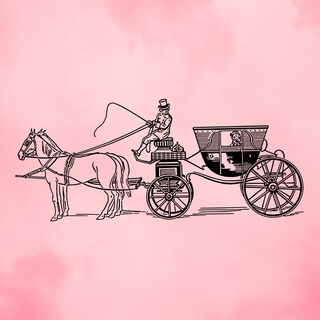
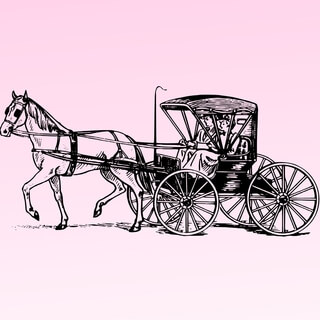
We must go in the carriage to be sure.
The carriage?
But James will not like to put the horses to for such a little way.
And where are the poor horses to be while we are paying our visit?
They are to be put into Mr Weston's stable,
Papa.
You know we have settled all that already.
We talked it over with Mr Weston last night.
And as for James,
You may well be sure he will always like going to Randles because of his daughters being housemaid there.
I only doubt whether he will ever take us anywhere else.
That was your doing,
Papa.
You got Hannah that good place.
Nobody thought of Hannah till you mentioned her.
James is so obliged to you.
I am very glad I did think of her.
It was very lucky.
I would not have had poor James think himself slighted upon any account.
I am sure she will make a very good servant.
She is a civil,
Pretty,
Spoken girl.
I have a great opinion of her.
Whenever I see her,
She always curses and asks me how I do in a very pretty manner.
And when you have had her here to do needlework,
I observe she always turns the lock of the door the right way and never bangs it.
I am sure she will be an excellent servant and it will be a great comfort to poor Miss Taylor to have somebody about her she is used to see.
Whenever James goes over to see his daughter,
You know,
She will be hearing of us.
He will be able to tell her how we are.
Emma spared no exertions to maintain this happier flow of ideas and hoped by the help of Bat Gammon to get her father tolerably through the evening and be attacked by no regrets but her own.
The Bat Gammon table was placed,
But a visitor immediately afterwards walked in and made it unnecessary.
Mr Knightley,
A sensible man about 7 or 8 and 30,
Was not only a very old and intimate friend of the family but particularly connected with it as the elder brother of Isabella's husband.
He lived about a mile from Highbury,
Was a frequent visitor and always welcome and at this time more welcome than usual as coming directly from their mutual connections in London.
He had returned to a late dinner after some days absence and now walked up to Hartfield to say that all were well in Brunswick Square.
It was a happy circumstance and animated Mr Woodhouse for some time.
Mr Knightley had a cheerful manner which always did him good and his many enquiries after poor Isabella and her children were answered most satisfactorily.
When this was over Mr Woodhouse gratefully observed It's very kind of you Mr Knightley to come out at this late hour to call upon us.
I'm afraid you must have had a shocking walk.
Not at all sir,
It's a beautiful moonlight night and so mild I must draw back from your great fire.
But you must have found it damp and dirty.
I wish you may not catch cold.
Dirty sir,
Look at my shoes,
Not a speck on them.
Well that is quite surprising.
We've had a vast deal of rain here.
It rained dreadfully hard for half an hour while we were at breakfast.
I wanted them to put off the wetting.
By the by,
I have not wished you joy.
Be pretty well aware of what sort of joy you must both be feeling.
I've been in no hurry with my congratulations but I hope it all went tolerably well.
How did you all behave?
Who cried the most?
Ah,
Poor Miss Taylor,
It's a sad business.
Poor Mr and Miss Woodhouse if you please but I cannot possibly say poor Miss Taylor.
I have a great regard for you and Emma but when it comes to the question of dependence or independence at any rate,
It must be better to have only one to please than two.
Especially when one of those two is such a fanciful,
Troublesome creature said Emma playfully.
That is what you have in your head,
I know and what you would certainly say if my father were not by.
I believe it is very true,
My dear,
Indeed said Mr Woodhouse with a sigh.
I am afraid I am sometimes very fanciful and troublesome.
My dearest papa,
You could not think I could mean you or suppose Mr Knightley to mean you.
What a horrible idea.
No,
I meant only myself.
Mr Knightley loves to find fault with me,
You know,
In a joke.
It's all a joke.
We always say what we like to one another.
Mr Knightley,
In fact,
Was one of the few people who could see faults in Emma Woodhouse and the only one who ever told her of them.
And though this was not particularly agreeable to Emma herself she knew it would be so much less so to her father that she would not have him really suspect such a circumstance as her not being thought perfect by everybody.
Emma knows I never flatter her,
Said Mr Knightley but I meant no reflection on anybody.
Miss Taylor has been used to have two persons to please but now she will have but one.
The chances are that she must be a gainer.
Well,
Said Emma,
Willing to let it pass You want to hear about the wedding and I shall be happy to tell you for we all behaved charmingly.
Everybody was punctual,
Everybody in their best looks not a tear and hardly a long face to be seen.
Oh no,
We all felt we were going to be only half a mile apart and we are sure of meeting every day.
Dear Emma bears everything so well,
Said her father but Mr Knightley,
She's very sorry to lose poor Miss Taylor and I'm sure she will miss her more than she thinks for.
Emma turned away her head,
Divided between tears and smiles.
It is impossible that Emma should not miss such a companion,
Said Mr Knightley We should not like her so well as we do,
Sir,
If we could suppose it But she knows how much the marriage is to Miss Taylor's advantage She knows how very acceptable it must be at Miss Taylor's time of life to be settled in a home of her own and how important to her to be secure of a comfortable provision and therefore cannot allow herself to feel so much plain as pleasure.
Every friend of Miss Taylor must be glad to have her so happily married.
And you have forgotten one matter of joy to me,
Said Emma and a very considerable one,
That I made the match myself I made the match,
You know,
Four years ago and to have it take place and be proved in the right when so many people said Mr Weston would never marry again may comfort me for everything.
Mr Knightley shook his head at her Her father fondly replied Oh,
My dear,
I wish you would not make matches and foretell things for whatever you say always comes to pass Pray do not make any more matches I promise you to make none for myself,
Papa but I must indeed for other people It's the greatest amusement in the world and after such success,
You know Everybody said Mr Weston would never marry again Mr Weston,
Who'd been a widower so long and who seemed so perfectly comfortable without a wife so constantly occupied either in his business in town or among his friends here always acceptable wherever he went always cheerful Mr Weston need not spend a single evening in the year alone if he did not like it Oh,
No,
Mr Weston certainly would never marry again Some people even talked of a promise to his wife on her deathbed and others of the son and the uncle not letting him All matter of solemn nonsense was talked on the subject but I believed none of it Ever since the day about four years ago that Miss Taylor and I met with him in Broadway Lane when,
Because it began to drizzle he darted away with so much gallantry and borrowed two umbrellas for us from Farmer Mitchell's I made up my mind on the subject I planned the match from that hour and when such success has blessed me in this instance,
Dear papa you cannot think I shall leave off matchmaking I do not understand what you mean by success said Mr Knightley Success supposes endeavour Your time has been properly and delicately spent if you have been endeavouring for the last four years to bring about this marriage a worthy employment for a young lady's mind But if which I rather imagine you're making the match as you call it,
Means only you're planning it you're saying to yourself one idle day I think it will be a very good thing for Miss Taylor if Mr Weston were to marry her and saying it again to yourself every now and then afterwards Why do you talk of success?
Where is your merit?
What are you proud of?
You made a lucky guess and that is all that can be said And you have never known the pleasure and triumph of a lucky guess?
Well I pity you I thought you cleverer said Emma But depend upon it a lucky guess is never merely luck There is always some talent in it and as to my poor word success which you quarrel with I do not know I'm so entirely without any claim You have drawn two pretty pictures but I think there may be a third as something between the do-nothing and the do-all If I had not promoted Mr Weston's visits here and given many encouragements and smoothed many little matters it might not have come to anything after all I think you must know heartfully enough to comprehend that A straightforward open-hearted man like Weston said Mr Knightley and a rational unaffected woman like Miss Taylor may be safely left to manage their own concerns You are more likely to have done harm to yourself,
Emma than good to them by interference Emma never thinks of herself if she can do good to others rejoined Mr Woodhouse understanding but in part But my dear,
Pray do not make any more matches They are silly things and break up one's family circle grievously Only one more,
Papa Only for Mr Elton Poor Mr Elton You like Mr Elton,
Papa I must look about for a wife for him There is nobody in Highbury who deserves him and he's been here a whole year and has fitted up his house so comfortably it would be a shame to have him single any longer and I thought when he was joining their hands today he looked so very much as if he would like to have the same kind of office done for him I think very well of Mr Elton and this is the only way I have of doing him a service Mr Elton is a very pretty young man,
To be sure said her father and a very good young man and I have great regard for him but if you want to show him any attention,
My dear ask him to come and dine with us some day that will be a much better thing I dare say Mr Knightley will be so kind as to meet him With a great deal of pleasure,
Sir,
At any time said Mr Knightley,
Laughing and I agree with you entirely it will be a much better thing Invite him to dinner,
Emma and help him to the best of the fish and the chicken but leave him to choose his own wife depend upon it a man of six or seven and twenty can take care of himself