So welcome everyone and thank you.
Thank you for listening.
Thank you for being here.
So I want to start with a film.
Not a specific film but all of them.
The collective,
Century-long,
Extraordinarily well-produced story that we have all been watching since before we were old enough to read the subtitles.
You know the story.
The person is fine,
Functional,
Capable,
Arguably doing quite well on their own until they meet someone and in meeting someone they discover what was missing.
The music swells,
The lighting improves,
The person smiles in a way that they have not smiled before because they have found in this other human being the thing that makes them complete.
Roll credits.
We have watched this story approximately 10,
000 times.
Films,
Music,
Books,
Advertising.
In the way adults speak to children,
In the way friends speak to each other,
In the way we speak to ourselves at 2 a.
M.
When we are alone and the flat is quiet and something in us says this is not quite right.
Something is missing.
You should be looking for it and the something the culture has decided very firmly is a person and I want to gently respectfully with considerable affection for the belonging underneath it suggest that we have been.
Not about love.
Love is real and profound and one of the most extraordinary experiences available to human beings nervous system.
Not about connection.
Connection is not only real but biologically necessary in ways that neuroscience is only beginning to fully map.
About the premise that you are incomplete without another person.
That wholeness is something someone else gives you.
That the ache you feel is evidence of a missing person rather than a missing relationship with yourself.
So the premise I want to explore today is not a love story.
It is a nervous system story dressed in a very convincing costume.
Now in 1979 a psychologist named Dorothy published a book about a phenomena she had observed in hundreds of research subject and she called it limerence.
So limerence is the intense involuntary and often overwhelming state of romantic obsession that we typically call falling in love.
So the inability to stop thinking about someone.
The acute sensitivity to every signal from them.
A message responded to or not responded to.
The physical symptoms.
The quickening.
The tightening.
The extraordinary aliveness.
The conviction that this specific person and only this person contains something you cannot live without.
Now she distinguished limerence very specifically from love.
So love in her framework is stable,
Chosen and deepening and limerence is volatile,
Involuntary and this is the most important part.
Primarily about the limerent person's internal state rather than the qualities of the person they are focused on.
So in other words the intensity is not evidence that the other person is extraordinary.
It is evidence that your nervous system has found something to attach its hope to.
The neuroscience has since filled in the picture considerably.
So limerence involves a specific cocktail of neurochemicals.
So dopamine in its anticipatory form,
The seeking system,
Not the satisfaction system which is why it feels so urgently incomplete.
Now I want to pause on that for a moment.
The experience we have decided to build most of our cultural mythology around,
The one that sells films and songs and perfumes and the entire Valentine's Day economy has the same neurological profile as anxiety disorder and this is not a coincidence and it is not an indictment of love.
It is a very important piece of information about what limerence is doing and what it is not.
So limerence is the nervous system's response to perceived incompleteness.
It is the dopamine seeking system targeting an external solution to an internal ache.
So when the intensity comes I have never felt this alive in my life.
So it might not be evidence of extraordinary compatibility or that you are soulmates.
It is often evidence of extraordinary activation.
So a nervous system that has been hungry for something finally fixating on what it believes to be the source.
Now here is the quietly devastating part in all this.
The hunger is real,
The longing is genuine but the object of limerence,
The person who has been designed as the solution almost never contains what the hunger is actually for.
Because what the hunger is actually for cannot be given by another person.
It can only be cultivated within.
So I want to say something that I want you to hear without self-criticism.
Neediness is not love.
It feels like love.
It presents itself as love.
It also uses the language of love but it is something quite different.
So neediness is what happens when a person reaches outside themselves for what they have not yet been able to build inside.
It is a search for regulation in another person's nervous system for the failed sense of okayness that a chronically dysregulated nervous system cannot generate on its own.
It is the attempt to use intimacy as therapy.
Intimacy as therapy for wounds that predate the relationship entirely.
All of it is human.
The capacity for neediness is not a flaw.
It is a consequence of being a person who did not receive adequate mirroring,
Holding,
Safety or attunement at the developmental stage when those things were being laid down.
So not a single person can be the source of your regulation.
Sorry to break that to you.
Your validation,
Your sense of worthiness,
Your experience of being enough.
Not because they do not love you enough but because it is not a job that can be done from outside.
The nervous system can be co-regulated genuinely beautifully and this is real but it cannot be permanently regulated by a proxy.
The source has to be internal or the co-regulation has nowhere to land.
So this distinction matters enormously and is almost never made clearly.
Co-regulation is one of the most beautiful capacities of the human nervous system.
The ability of two nervous systems to mutually influence each other towards safety,
Warmth and calm.
Brilliant.
This is real,
It is documented and it is one of the primary reasons human connection is necessary also.
Now then comes co-dependence.
Co-dependence is the pathological version of this beautiful capacity.
It is when co-regulation becomes the only regulation.
When the partner's nervous system state determines your internal experience.
When their approval is the only source of self-worth.
When being alone is genuinely intolerable rather than simply uncomfortable.
But when the relationship is not an addition to your life but a substitute for one.
The difference is not in love,
It is in the starting point.
Are you coming into a relationship as someone who is imperfectly and on most days okay in themselves and choosing to share that okayness with another person?
Or are you coming into this as someone who is fundamentally not okay alone and hoping either you admit it or not that this relationship will fix that?
The first one is love.
The second is an extraordinarily understandable attempt to solve a nervous system problem with a relationship solution.
And it is not sustainable because the nervous system problem follows you in the relationship and stays there.
So where did this belief come from?
The felt sense that you're not quite whole alone.
Something is missing.
That the quiet has a quality of lack rather than simply space.
I think some of it is cultural.
We have been established that the story is everywhere but culture lands differently in different bodies.
For some people the cultural script slides off.
They watch the film,
They feel warmly about it and they return to their own life without really feeling any absence.
For others it lands like a confirmation of something already felt.
A pre-existing sense of incompleteness that the culture simply gave a name and solution to.
And the pre-existing sense is where it gets really interesting.
So in the work of attachment theory and in the deeper work of family constellations the sense of incompleteness almost always has a specific origin.
A developmental experience in which the child received the message in whatever form it took that they were not quite enough as they were.
That love was conditional on something.
On behavior,
On achievement,
On emotional management,
On taking up a certain role in the family system.
That the bare fact of existing was not sufficient justification of being loved.
So children who receive that message do not usually experience it as a message about their parents limitations.
They experience it as information about themselves and they carry that information as a felt sense,
As a body posture,
As a quality of low-level anxiety that becomes so habitual it starts to feel like personality in adulthood.
So in family constellation work this pattern often runs deeper than the individual's own experience.
The belief that you are not alone,
That safety requires another and that love must be earned.
That the self without a partner is a lesser version can run through family systems across generations.
Parents who modeled anxious attachment passed it on from their own unmet needs.
Grandparents who survived by bonding tightly because the world was genuinely dangerous.
A family culture in which being single was stigmatized or treated as a problem to be solved.
The longing is real,
The wound underneath it is also real but the person shaped the solution the nervous system has been searching for and that is a case of a misdirected address.
The letter is going to the right zip code but to the wrong recipient if that makes sense.
Now I want to be clear about something.
I am not saying you should not want love.
I am not saying relationships are unnecessary and I'm not saying the desire for intimacy,
For being known,
For sharing a life with someone is evidence of weakness or dysfunction.
These are amongst the most profoundly human of all experiences.
They are neurologically real,
Ancient and beautiful when they arise from the right place.
I am saying something more specific.
The love you find when you are genuinely whole has a different quality of love than the love you find when you're searching for completion.
When you are complete,
Not perfectly,
Not permanently but substantially and on most days,
You come to a relationship as someone who has something to offer rather than something to fill.
You choose a partner rather than requiring one.
Big difference.
You enjoy being with them rather than needing to be with them and when they are not there,
You just return to yourself rather than as an anxious hole where they usually live.
So this is not wholeness.
That is freedom.
The freedom to actually love another person rather than to need them so much that the love and the need becomes indistinguishable which is exhausting actually for both parties,
However you frame it romantically.
So wholeness in this sense is not an absence of longing.
It is the capacity to be with yourself in the longing,
To sit with the quiet and find it spacious rather than threatening,
To be alone without it feeling like abandonment,
To want connection without it feeling like an emergency.
This is somatic work.
It is the slow patient process of building a relationship with your own inner experience first.
Your feelings,
Your body,
Your company and that is characterized by something approaching respect and even warmth.
It is the nervous system learning through accumulating evidence that you are safe in yourself,
That the silence is not dangerous,
That you are enough company for at least one person.
That's yourself and when you build that foundation,
When you become genuinely comfortable in your own company,
Genuinely resourced from within,
What love looks like in your life becomes entirely your own business.
Now for some people it looks like a long partnership chosen freely not desperately from a place of genuine desire rather than existential need.
For some it looks like a deep friendship that provides more nourishment than any romantic relationship ever has.
For some it looks like a rich network of connections across many people,
None of whom are required to be everything and for some it looks like time alone that is not lonely and the occasional intimacy but that's not a rescue.
So none of these are the right answers.
All of them are expressions of life lived from the inside rather than in searching for something to fill it.
What matters is not the structure,
It is the starting point.
Are you choosing from fullness,
From a self that is most days okay or are you choosing it from the ache,
From a self that needs this particular arrangement before it can feel whole and start living and we all possibly might have had relationships and experiences from both.
The first is freedom and the second is the cage that the culture built and forgot to label it.
I want to say one thing about desire because this conversation would be incomplete without it.
Desire,
Sexual desire,
The longing for closeness and physical contact is one of the body's most honest languages but like all languages it can be used to say more than one thing.
Sometimes desire is simply what it appears to be,
A genuine embodied wanting that exists in its own right,
Clean,
Direct and appropriately calibrated to the situation and the person.
This is desire from wholeness,
The body expressing vitality,
Connection and pleasure for its own sake and sometimes desire is carrying something else.
The validation bid dressed as attraction,
The longing for proximity because the internal state is intolerable without it,
The use of sexual connection as the fastest available route to feeling temporarily okay.
The body is reaching for touch not because it is genuinely moved,
Because it is lonely,
Anxious or desperately in need of evidence that it is wanted by somebody and neither of those are moral failure because they are different experiences and learning to tell them apart,
Learning to feel the difference in the body between a desire that is genuinely mine and a desire that is doing something else is one of the most intimate and most important forms of self-knowledge available.
The body when it is listened to rather than managed is very accurate it knows the difference between wanting and needing,
Choosing and reaching connection and rescue.
So the work of becoming whole includes learning to hear those distinctions,
To let the body speak without immediately acting on what it says,
To be curious about what the desire is actually for before deciding what to do with it.
That's not suppression that's literacy and a person who is genuinely fluent in their own body's language is less likely to end up somewhere they did not actually want to go.
Now to bring this all together I'd like to invite you into something now.
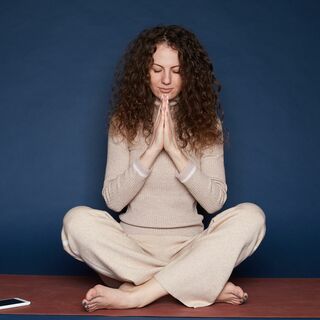
Find a comfortable position,
Let your eyes soften or close and let the weight of your body arrive somewhere.
The chair beneath you,
The floor,
Wherever you are.
And now take a breath,
A real one,
Slightly longer than usual and as you exhale now let the body soften a little,
Not forcing anything just arriving.
I want to invite you to notice the quality of being here in your own body,
In your own company,
Right now,
In this moment,
Just you.
Notice what that feels like,
Not what you think it should feel like,
What it actually feels like.
Is there ease here?
Is there a discomfort?
A restlessness?
Perhaps a habitual searching of something or someone to fill the space.
Whatever is here,
Just let it be here.
You are not trying to fix anything.
You are just becoming acquainted,
Introducing yourself perhaps to a room you have not spent much time in.
And now I want to invite you to bring your attention to the center of your chest,
The heart space and just notice whatever is there.
There may be longing,
There often is.
The genuine,
Real,
Completely human longing for connection,
For love,
For being known.
And that longing is not a problem.
It is not an evidence of lack.
It is evidence of your capacity for depth,
Of a heart that is very capable of love.
Let yourself acknowledge that,
Not to resolve it,
Not to immediately point it outward towards someone who might fill it.
Just,
I feel this,
It is real and it belongs to me.
I feel this,
It is real and it belongs to me.
Very gently,
Very slowly I want to invite you to consider this.
What if the one this longing is primarily addressed to is you?
What if the one this longing is primarily addressed to is you?
Not instead of another person,
Not in rejection of love,
But as the foundation,
The one who has to show up first.
What would it mean to meet yourself the way you have been hoping to meet someone else?
What would it mean to meet yourself the way you have been hoping someone else would?
To know your own depths,
To find your own company genuinely interesting,
To be for yourself the kind of presence you have spent years hoping to find in someone else.
Let that question sit in the body today rather than your mind and just notice whether anything shifts even slightly,
A warmth,
Perhaps an unfamiliar quality of settling.
You are not alone right now,
You are here with yourself and however quietly,
However imperfectly that is something.
You are not alone right now,
You are here with yourself.
You have been looking for someone and you have been looking in the right direction.
You just had the address slightly wrong.
Now letting all this integrate,
Land,
Shift,
Change,
Taking a deep breath,
Coming back to yourself and welcome home.
So anything,
Anything today that has resonated with you,
Take that,
Reflect on that and let that be your pointer to find your own truth.
Thank you very much for me today and thank you for having the courage to meet yourself like this today.
Until next time,
Namaste.