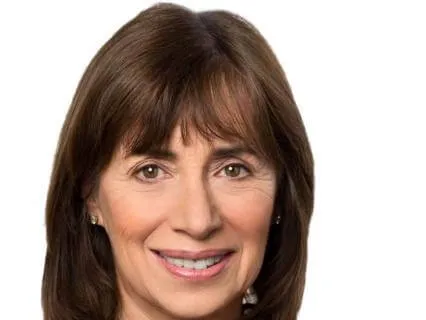
Hi,
I'm Ellen Bader,
And I'd like to welcome you to this course on the Introduction to the Developmental Model of Couples Therapy.
I am the co-founder of the Couples Institute.
And the developer of the developmental model,
A model that is designed to help you really deeply understand what goes on in couples' relationships,
And also a beginning look at what you can do about it.
So I'd like you to join me on this journey today.
And as we get started.
Take a minute,
If you would,
And think.
Do you remember that wonderful exhilarating feeling of falling in love?
And when you wished it would last and last and last.
And you may have wondered,
What happened to it?
Where did it go?
And can I bring it back?
We will touch on so many aspects related to that in this introductory session.
So take a minute,
Sit with yourself if you would,
And just remember,
Close your eyes and just take a minute to remember that exhilarating feeling.
OK,
And if you would,
Then come back.
And I'm really going to introduce you to the developmental model.
This is a model that is really designed to give you a way to lead,
A way to change couples,
And a way to inspire your couples to grow and become what it is they actually do dream about.
So you're going to learn a lot about how to think developmentally.
Because when you are able to think developmentally,
You can step back,
You can see what's going on,
And you can be a very skilled couples therapist or coach.
And the best part of all is that you are able to make an enormous difference in people's lives.
And when people seek out a therapist or a coach,
They're often depressed and demoralized and wonder,
Is this all there is?
Or do I have to get a divorce?
What,
Am I going to be stuck feeling this way forever?
Now for those of you who've actually worked with couples already.
You may have had difficult experiences.
Or you may have a lot of fear about working with your first couple.
Because couples work can be hard.
And some of the reasons that it's really hard is that there is so much pain and so much emotional dysregulation.
And you may be seeing your clients online,
Virtually,
Or you may be seeing them live in an office.
But either way,
The amount of emotional dysregulation that happens can be very,
Very hard on the practitioner.
You may have a deep fear of doing something wrong.
You're going to encounter people who believe that they just can't change or that their partners can't change and that they've tried everything.
And you also might have a fear.
That the people you work with will be stubborn.
They will be resistant.
They will be unmovable.
They will tell you things about how impossible it is or how they just can't change.
But when you know what to do and why.
You will be able to make an enormous difference in people's lives.
So first of all,
Let's look at what the developmental model is and isn't.
It is not a medical model.
We are not looking for pathology.
We're not looking for symptoms.
Instead,
We're really looking at.
.
.
The tremendous,
Tremendous growth potential that exists.
Within the couple's relationship.
And that you are the catalyst.
You are the one who can help bring forth what they've dreamed about,
What's possible.
And this is very much affected by the ways that you involve yourself with the partners.
So the developmental model is going to give you a way,
Again,
To step back.
And to view the struggles that people have.
As part of a journey for personal growth,
Of psychological development,
Its desire to become more fully themselves,
More whole.
And the problems that you're going to see most of the time are not a form of mental illness.
They're not a form of any illness.
But they can be very entrenched problems and very entrenched symptoms.
But couples that have these problems and symptoms are not actually damaged.
So when you use a developmental lens,
And we're going to show you how.
You will focus on growth.
And your movement will always be working to move people forward,
To help them take a risk,
To help them take a step where they may not have gone before.
And you may hear me repeat a number of concepts over this next period of time,
Because I want you to get the developmental model in your bones.
And as you get it more,
It takes a while,
But as you get it more and more inside of yourself,
You will become very growth focused.
So again,
Stepping back,
There's actually three main reasons.
That most loving relationships fail.
And a big one is that partners get stuck.
The relationship doesn't develop.
It becomes very stagnant.
Patterns get entrenched,
And the partners inside of a relationship are not growing,
And the relationship itself is not growing.
Another reason that relationships fail is you get the retriggering of emotional trauma without repair.
And that can be trauma from earlier in life that is being reenacted in the couple's relationship.
Or it can be a result of damage that they have done with each other and not known how to repair.
And also,
Most of us.
Have never learned or gotten the emotional capacities that it takes.
To be in a close,
Loving relationship that is actually growing.
We've learned how to be in hierarchies.
We've learned how to follow rules.
We've learned how to listen to our parents,
Our teachers,
But we haven't actually developed the emotional muscle to make our relationships grow.
So in a normal developmental process,
Relationships actually go through a series of stages.
And these stages are highly,
Highly predictable.
And we're going to spend some time dwelling into these actual stages.
So the first stage is what happens,
Like I said,
When people fall in love.
And when they fall in love,
They form a deep attachment.
Then usually they make a commitment.
And they usually decide either to live together or to get married.
And after this initial period goes on,
Differences and disillusionment start to evolve and emerge.
And again,
Most of us never learned how to cope with those differences and those disillusionments in such a close and such a very,
Very,
Very important relationship.
And we haven't learned how to build effective differentiation.
And in this course,
You're going to learn a lot more about what it means to build effective differentiation.
You're also going to receive some handouts.
That will help you look at the different stages that go on and written up in a way that you might actually want to share it with your clients.
And there's an interesting synergy that happens.
It's a synergy between individual development and couples development.
Because the more an individual actually develops,
They are going to become more and more able to support the healthy development of a couple's relationship.
And ironically,
When a couple is able to work together well.
That results in an increase in individual development.
So when you have a good flow going on back and forth between couples development and individual development,
You get both things actually growing and progressing.
And when these get stuck,
Then you get stagnation,
You get people falling out of love,
And you get a lot of frustration.
Now the stages of couples development actually parallel some of the stages of early childhood development.
And you will see that each stage has its challenges,
But also its opportunities.
The opportunities is where the juice is.
It's where your exciting work is going to take place when you know how to hold your clients.
Into working through that stage and developing new emotional muscles.