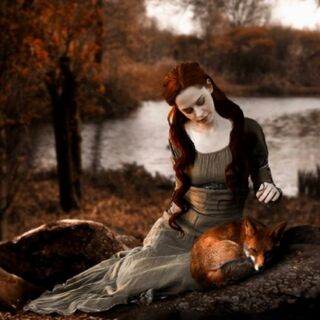
Eight Cousins by Louisa May Alcott Chapter One Two Girls Rose sat all alone in the big best parlor,
With her little handkerchief laid ready to catch the first tear,
For she was thinking of her troubles,
And a shower was expected.
She had retired to this room as a good place in which to be miserable,
For it was dark and still,
Full of ancient furniture,
Somber curtains that hung all around,
With portraits of solemn old gentlemen in wigs,
Severe-nosed ladies in top-heavy caps,
And staring children in little bob-tailed coats or short-waisted frocks.
It was an excellent place for woe,
And the fitful spring rain that pattered on the window pane seemed to sob,
Cry away,
I am with you.
Rose really did have some cause to be sad,
For she had no mother,
And had lately lost her father also,
Which left her no home but this with her great-aunts.
She had been with them only for a week,
And though the dear old ladies had tried their best to make her happy,
They had not succeeded very well,
For she was unlikely any child they had ever seen,
And they felt very much as if they had the care of a low-spirited butterfly.
They had given her the freedom of the house,
And for a day or two she had amused herself roaming all over it,
For it was a capital old mansion,
And was full of a manner of odd nooks,
Charming rooms,
And mysterious passages.
Windows broke out in unexpected places,
Little balconies overhung the garden most dramatically,
And there was a long upper hall full of curiosities from all parts of the world,
For the campels had been sea-captains for generations.
And Plenty had even allowed Rose to ramash,
In her great china-closet,
A spicy retreat,
Which in all the goodies that children love.
But Rose seemed to care little for these toothsome temptations,
And when that hope failed,
Aunt Plenty gave up in despair.
Little Aunt Peace had tried all sort of pretty needlework,
And planned a doll's wardrobe that would have won the heart of even an older child.
But Rose took little interest in pink satin hats and tiny hoes,
Though she sewed dutifully till her aunt caught her,
Wiping tears away with the train,
Of a wedding dress,
And that discovery put an end to the sewing society.
Then both old ladies put their heads together and picked out the model child of the neighborhood to come and play with their niece.
But Ariadne,
Blish,
Was the worst wailer of all,
For Rose could not bear the sight of her,
And said she was so like a wax doll she longed to give her a pinch and see if she would squeak.
So prim little Adrienne was sent home,
And the exhausted Aunt Peace left Rose to her own devices for a day or two.
Bad weather and cold kept her indoors,
And she spent most of her time in the library where her father's books were stored.
Here she read a great deal,
Cried a little,
And dreamed many of the innocent bright dreams in which imaginative children find such comfort and delight.
This suited her better than anything else,
But it was not good for her,
And she grew pale,
Heavy-eyed and listless,
Though Aunt Plenty gave her iron enough to make a cooking stove and Aunt Peace petted her like a poodle.
Seeing this,
The poor aunties racked their brains for new amusement and determined to venture a bold stroke,
Though not very hopeful of its success.
They said nothing to Rose about their plan for this Saturday afternoon,
But let her alone till the time came for the grand surprise,
Little dreaming that the old child would find pleasure for herself in a most unexpected quarter.
Before she had time to squeeze out a single tear,
A sound broke the stillness,
Making her prick up her ears.
It was only the soft twitter of a bird,
But it seemed to be a clear,
Gifted bird.
For a while she listened,
The soft twitter changed to a lively whistle,
Then a trill,
A coo,
A chirp,
And ended in a musical mixture of all the notes as if the bird burst out laughing.
Rose laughed also,
And forgetting her woes,
Jumped up,
Saying eagerly,
It is a mockingbird!
Where is it?
Running down the long hall,
She beeped out at both doors,
But saw nothing fettered except a trackle-tailed chicken under a bird-lock leaf.
She listened again,
And the sound seemed to be in the house.
Away she went,
Much excited by the chase,
And following the changeful song,
It led her to the china-closet door.
In there!
How funny!
She said.
But when she entered,
Not a bird appeared except the everlastingly kissing swallows on the canton china that lined the shelves.
All of a sudden Rose's face,
Brightened and softly opening the slide,
She peered into the kitchen,
But the music had stopped.
All she saw was a girl,
In blue apron,
Scrubbing the hurt.
Rose stared about her for a minute,
And then asked abruptly,
Did you hear that mockingbird?
I should call it the Phoebe-bird,
Answered the girl,
Looking up with a twinkle in her black eyes.
Where did it go?
It is here still.
Where?
In my throat.
Do you want to hear it?
Oh yes,
I'll come in,
And Rose prepped through the slide to the white shelf on the other side,
Being too hurried and puzzled to go around by the door.
The girl wiped her hands,
Crossed her feet,
On the little island of carpet where she was stranded in the sea of soap-suds,
And then,
Sure enough,
Out of her slender throat came the swallows' twitter,
The robin's whistle,
The blue jay's call,
The truss's song,
The wood dove's call,
And many other familiar notes,
All ending,
As before,
With the musical ecstasy of a bow-bowling,
Singing among the meadow grass on a bright June day.
Rose was so astonished that she nearly fell off the perch,
And when the little concert was over,
Clapped her hands delightfully,
''Oh,
That was so lovely!
Who taught you?
'' ''The birds,
'' answered the girl with a smile,
As she fell to work again,
''it is very wonderful.
I can sing but nothing half so fine as that.
What is your name,
Please?
'' ''Phoebe Moore.
'' ''I have heard of Phoebe Birds,
But I don't believe the real ones could do that,
'' laughed Rose,
Adding,
As she watched with interest the scattering of dabs of soap over the bricks,
''May I stay and see you work?
It is very lonely in the parlor.
'' ''Yes,
Indeed,
If you want to,
'' answered Phoebe,
Wringing out her cloth in a capable sort of way that impressed Rose very much,
''it must be fun to swash the water round and dig out the soap.
I would love to do it,
Only Aunt wouldn't like it,
I suppose,
'' said Rose,
Quite taken with the new employment.
''You would soon get tired,
So you'd better keep tidy and look on.
I suppose you help your mother a great deal?
'' ''I haven't got any folks.
'' ''Why?
Where do you live,
Then?
'' ''I am going to live here,
I hope.
Debbie wants someone to help around,
And I have come to try for a week.
I hope you will stay,
For it is very dull,
'' said Rose,
Who had taken a sudden fancy to this girl,
Who sung like a bird and worked like a woman.
''Hope I shall,
For I am fifteen now,
And old enough to earn my own living.
You have come to stay a spell,
Haven't you?
'' Asked Phoebe,
Looking up at her guest,
And wondering how life could be dull,
To a girl who wore a silk frock,
A daintily frilled apron,
A pretty locket,
And had her hair tied up with a velvet snout.
''Yes,
I shall stay till my uncle comes.
He is my guardian now,
And I don't know what he will do with me.
Have you a guardian?
'' ''My sakes,
No.
I was left on the poorhouse steps,
A little mite of a baby,
And Miss Rogers took a liking to me,
So I have been there ever since,
But she is dead now,
And I take care of myself.
How interesting!
It is like Arabella Montgomery in The Gypsy's Child.
Did you ever read that sweet story?
'' Asked Rose,
Who was fond of tales of foundlings and had read many.
''I don't have any books to read,
And all the spare time I get I run off into the woods.
But rest me better than stories,
'' answered Phoebe,
As she finished one job and began on another.
Rose watched her,
As she got out a great pan of beans to look over and wondered how it would seem to have life all work and no play.
Presently Phoebe seemed to think it was her turn to ask questions,
And said wistfully,
''You had lots of schooling,
I suppose?
'' ''Oh dear me,
Yes.
I have been at boarding school nearly a year,
And I am almost dead with lessons.
The more I got,
The more Miss Power gave me,
And I was so miserable that I almost cried my eyes out.
Papa never gave me hard things to do,
And he always taught me so pleasantly.
I loved to study.
Oh,
We were so happy and so fond of each other.
But now he is gone,
And I am left all alone,
'' the tear that would not come when Rose sat waiting for it,
Came now,
Of its own accord,
Two of them,
In fact,
And rolled down her cheeks,
Telling the tale of love and sorrow better than any words could do it.
For a minute there was no sound in the kitchen,
But the little daughter sobbing,
And the sympathetic patter of the rain.
Envy stopped rattling her beans from one pan to another,
And her eyes were full of pity as they rested on the curly head bent down on Rose's knee.
For she saw that the heart,
Under the pretty locket,
Ached with its loss,
And the dainty apron was used to dry sadder tears than any she had ever shed.
Somehow she felt more contented with her brown calico gown and blue checked pinafore.
Envy changed to compassion,
And if she had dared she would have gone and hugged her afflicted guest.
Fearing that might not be considered proper,
She said in her cheery voice,
''I am sure you ain't all alone with such a lot of folks belonging to you,
And all so rich and clever.
You will be pitted to pieces,
'' Debbie says,
''because you are the only girl in the family.
'' These last words made Rose smile in spite of her tears,
And she looked out from behind her apron with an April face,
Saying in a tone of comic distress,
''That is one of my troubles.
I've got six aunts,
And they all want me,
And I don't know any of them very well.
Papa named this place the Aunt Hill,
And now I see why.
'' Phoebe laughed with her,
As she said encouragingly,
''Everyone calls it so,
And it's a real good name,
For all the Mrs.
Campos leave hand by,
And keep coming up to see the old ladies.
I could stand the aunts,
But there are dozens of cousins,
Dreadful boys,
All of them,
And I detest boys.
Some of them came to see me last Wednesday,
But I was lying down,
And when auntie came to call me,
I went under the quilt and pretended to be asleep.
I shall have to see them sometime,
But I do dread it.
'' And Rose gave a shudder,
For having lived alone with her invalid father,
She knew nothing of boys,
And considered them a species of wild animal.
''Oh,
I guess you will like them.
I've seen them flying around when they come over the point,
Sometimes in their boats and sometimes on horseback.
If you like boats and horses,
You will enjoy yourself first rate.
'' ''But I don't.
I am afraid of horses,
And boats make me ill,
And I hate boys.
'' And poor Rose rang her hands at the awful prospects before her.
One of these horrors alone she could have borne,
But altogether were too much for her,
And she began to think of speedy return to the detested school.
Debbie laughed at her woe till the beans danced in the pan,
But tried to comfort her by suggesting a means of relief.
''Perhaps your uncle will take you away where there aren't any boys.
Debbie says he's a real kind man,
And always brings heaps of nice things when he comes.
'' ''Yes,
But you see that is another trouble,
For I don't know uncle Alec at all.
He hardly ever came to see us,
Though he sent me pretty things very often.
Now I belong to him,
And shall have to mind him till I am eighteen.
I may not like him a bit,
And I fret about it all the time.
'' ''Well,
I wouldn't borrow the trouble,
But have a real good time,
I'm sure.
I should think I was in clover.
If I had folks and money and nothing to do but enjoy myself,
'' began Phoebe,
But got no further,
For a sudden rush and tumble outside made them both jump.
''Is it thunder?
'' said Phoebe.
''It is a circus,
'' cried Rose,
Who from her elevated perch had caught glimpses of Gay Cart,
Of some sort,
And several ponies with flying manes and tails.
The sound died away,
And the girls were about to continue their confidences when old Debbie appeared,
Looking rather cross and sleepy,
After her nap.
''You are wanted in the parlour,
Miss Rose.
Has anybody come?
'' Little girls shouldn't ask questions,
But do as they are bid,
Was old Debbie's answer.
''I do hope it isn't Aunt Myra.
She always scares me out of my wits,
Asking how my cough is,
And groaning over me as if I was going to die,
'' said Rose,
Preparing to retire the way she came,
For the slide being cut for the admission of bouncing Christmas turkeys and puddings was plenty large enough for a slender girl.
''I guess you'll wish it was Aunt Myra,
When you see who has come.
Don't never let me catch you coming into my kitchen that way again,
Or I will shut you up in the big parlour,
'' growled Debbie,
Who thought it her duty to stop children on all occasions.