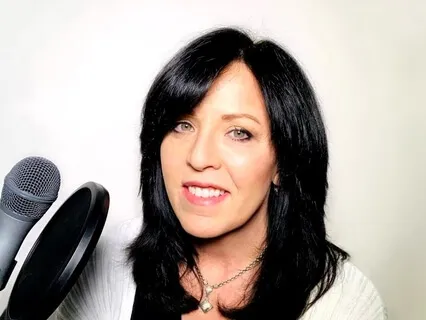
Welcome to the Breakdown to Breakthrough podcast.
My name is Lisa A.
Romano.
I am a life coach,
Bestselling author,
YouTube vlogger,
Meditation teacher,
And expert in the field of codependency and narcissistic abuse.
I am a believer in the power of an organized mind.
My aim is to help people learn what it means to live above the veil of consciousness rather than living a reactive life.
May your heart feel blessed,
Your mind feel expanded,
And your spirit find hope as you spend time with me here at the Breakdown to Breakthrough podcast.
Namaste,
Everybody.
So today we're going to be talking about how you can get over the narcissistic cheating spouse.
When you have been in a relationship with a narcissist,
Let's just set the ground rules so we understand what we're talking about.
So narcissism exists on a spectrum,
Just like codependency.
We all have narcissistic traits,
But we don't all tap into the pool of narcissism in which we have a grandiose inflated sense of self,
That we're entitled,
That we exploit other people.
Most of us do not lack empathy for other people,
Thank heaven.
So when we're talking about a narcissist,
We're talking about people who feel entitled to exploit you,
Who need to feel better than you.
This is a big one.
There is a big difference between being narcissistic and having NPD and being somebody who is self-confident and somebody who actually takes risks and goes after their dreams,
Which is what we're all supposed to be doing.
We all need a certain level of healthy self-love so that we can say,
This is what I think and this is what I feel and this is what I'd like to do.
We have to learn self-resiliency along the way.
We have to develop character.
So we develop character by facing the challenges that come along with life,
By moving out of victim mode and moving more into,
I think I can,
I think I can,
I think I can.
It's really difficult when you've been a victim of narcissistic abuse.
It's really,
Really difficult when you are a child of a narcissist or you come from a dysfunctional home and you've known nothing but chronic stress.
You've known nothing but unpredictability.
You know nothing but drama and trauma and you're an adult and you attract people who also abuse you.
So we have to recognize where we fit in all of this.
Are you the adult child of a narcissist or the adult child of an alcoholic?
Have you been abused your entire life?
Have your parents bullied you?
Have they gaslighted you?
Were they highly immature?
Where do you fit on this spectrum in terms of how you feel?
The more you feel like you are not enough,
The more of a target you are for someone who is a narcissist.
The less able you feel to take care of yourself,
The more of a target you will be for a narcissist.
So what I hope you're hearing is that the more you feel manipulated throughout your entire life,
The more you have been victimized.
And this is why I love working in this field because I don't think it's fair that,
But it is what it is.
I don't think it's fair that you can be born into a dysfunctional home and suffer all sorts of abuse and be born into a narcissistic paradigm,
Literally a family that is narcissistic,
That is about competition,
That is about exploitation,
That is about triangulation,
That is about gaining narcissistic supply from family members.
I do not think it's fair that you can be born into that situation and you can have your emotional set point jacked by dysfunction,
Live with complex PTSD and not know it,
Develop fawning behaviors,
People pleasing behaviors,
Develop a mindset of rescuing and enabling,
Fear abandonment,
Crave connection,
Feel unworthy,
And then become severely codependent and reliant upon people in society who mirror your narcissistic family's vibration or pattern.
This is what even well-renowned psychotherapists,
Psychologists,
Scientists,
And researchers are saying that there is this pattern thing happening.
We can't excuse it anymore.
If you're somebody who is into quantum physics,
The law of attraction,
Then you're someone who's going to be able to see the connection to that aspect of reality where it's the way that we feel,
The way that we think,
It's a resonance,
It's a vibration within every cell of our being,
It's a signal that we're giving off.
Gang members attract other bank robbers,
Right?
So gang members hang out with other gang members.
People who go to church on Sunday generally hang out with people who go to church on Sunday.
So a peacock is not attracted to a pigeon.
Peacocks are attracted to other peacocks.
We're talking about a resonance.
You hit the C chord of one piano across a large,
Large room.
The C chord on another piano begins to vibrate.
It's recognition.
It's a resonance.
I don't think it's fair to be born to narcissistic families and to have your mindset hijacked by dysfunction,
To develop complex PTSD symptoms and a way of coping is codependency,
Fawning,
Self-pleasing,
Acquiescing to other people,
Becoming subservient,
Becoming a passenger in life rather than the driver,
Becoming an extension of other people,
Becoming the cheerleader for other people,
Becoming the mop and the broom for other people while you take a back seat and you're unconscious.
You don't know that that's what you're doing.
I don't think that that's fair,
But that is actually what happens.
And so what happens to someone like this is very often times you manifest narcissistic people into your lives.
It's not your fault.
It happens automatically.
And I would also state,
And I am going to state,
That everybody and anyone is a target for a narcissist.
It's the people who have the lowest self-esteem in my opinion or the people who are the most codependent or the people who have high empathy.
So they are the salt of the earth.
They have high empathy.
They are people who want to help other people.
They are people who see the best in others.
They aren't the investigators.
They're not the people who are cynical.
They're the people like,
Give everybody else a chance.
Everybody deserves a second chance.
We need people like that on planet earth.
We need people with open hearts who are very trusting.
So if you are that person,
Then you are a target for somebody who is advantageous,
Who is an opportunist,
Who lacks a moral code or who blurs the line when it comes to doing ethical things and immoral things,
Or who just goes straight over the line.
A while back,
I heard about a story about a woman,
An older woman,
An elderly woman in fact,
Who took in this younger person and wanted to help him.
And he ended up murdering this old woman who was the salt of the earth,
Who just saw someone who needed help.
So this is what I'm talking about.
If you're somebody who,
This woman didn't have to be codependent.
She could have just been the salt of the earth.
She could have wanted to help this young person in need.
And she may have had high empathy and just wanted to help.
Was this amazing,
Altruistic human being perhaps someone who she met this young man at church.
So I'm assuming that she had a Christian background and do for others as she would do for yourself and this,
But she had a kind heart.
So we're all targets for narcissists,
But those of us with particular traits and those people in society with particular traits,
They tend to be the narcissist's magnet and they can smell it out.
So if you're somebody who has a kind heart,
If you're somebody who you're the one in the group who's like,
Oh,
Give her a second chance or don't be so hard on him.
Or he had a bad childhood.
You're making excuses for the behavior.
This is a telltale sign that you need to be careful.
When you marry somebody who ends up being a narcissist,
First of all,
It's hell.
It's hell as long as you don't,
It's always hell,
But it's really hell when you don't know what you're dealing with.
When you are somebody who is generally the person who is giving,
Who is rescuing,
Who is caretaking,
Who is always trying to understand.
You're the person who is always trying to figure out how can I say this differently so he or she could hear me?
How can I twist myself into a pretzel?
And you're willing to,
Like you'll do anything to figure out how to say what you need to say to get this person to hear you.
It is boggling your mind that the person that you love,
You can't connect with.
And you really think it's you're doing something wrong.
You don't recognize that this person that you're dealing with has high narcissistic traits,
May even be a narcissist or may even have NPD,
Antisocial.
You don't know.
You don't know that they're struggling with this or they have this disorder or they have these high traits or on their spectrum.
You don't know.
You're just trying to relate to this person who you're unable to connect with.
You don't know,
But the minute you begin to recognize,
Oh,
Wait a minute,
This person is wired to not hear me.
This person is arrogant.
This person is self-righteous.
This person is vindictive.
This person must be right.
This person is never wrong.
This person lies.
This person blame shifts.
It's always someone else's fault for why they did what they did or why they're in trouble.
This person needs me to see them as better than everybody else.
A narcissist is a giant two-year-old.
They want to suck up the most oxygen in the room.
If you give adoration or praise or validation to another two-year-old,
The narcissistic two-year-old,
I think probably all two-year-olds are a little narcissistic,
But my point is,
Let's say narcissist A is going to be triggered when you share your empathy for another person.
And so if you think about two two-year-olds,
They're jealous of each other.
They each want all the attention.
And when you don't give the one two-year-old all of your attention,
They melt down.
When you're dealing with a narcissist,
It could be very passive aggressive,
But they need to know that you know that they're the most intelligent person.
They need to know that you know everybody else is a clown compared to them.
They need to know that you know that they deserve accolades and everybody else is a jokester.
Nobody else has any value.
Nobody else can bring anything to the table except them.
Now you won't see this right away,
But you'll see it in time.
What you'll notice is you'll notice a pattern.
You'll notice that this person puts other people down condescendingly,
That they name drop.
I'm just like this person and I'm just like that person.
So they go for the top,
Right?
So if they're dancers,
They'll compare themselves to Beyonce.
I'm as good as Beyonce,
You know.
They may even lie and say that you know Beyonce gave me a couple of dance tips or I gave Beyonce a couple of dance tips.
You know it's you'll see this pattern of what's wrong with you?
Why are you not recognizing my genius?
And they will get angry and they will throw a tantrum when other people aren't recognizing their genius.
You marry this type of a person and life is absolutely hell.
How to get over when a narcissist actually cheats on you?
How do you get past this?
How do you get past the betrayal?
How do you get past the infidelity?
I think one of the things that helps people get past the infidelity is when you're able to sit down and recognize narcissistic traits and narcissism for what it is.
If you believe that you've married the love of your life,
If you believe that you've been on the same page with this person who has cheated on you,
If you believe that everything that he or she said was true,
If you believe that everything that you had up until this point was true and was built on truth,
Then finding out that this person that you've idealized that may have originally idealized you has actually betrayed you is devastating.
This person is a wonderful person so you think.
Or you think that this person is healthy.
Maybe not perfect,
No one's perfect,
But you believe that this person had your best interest at heart.
You did not recognize the narcissism for narcissism.
You've been excusing it.
You've been in denial of it.
Perhaps you're highly codependent.
And rather than sit in the space of,
And this is why I was stuck for so long,
I never knew how because I had been taught that my feelings were irrelevant as a child and I was also taught that love was conditional.
So I was like Pavlovian conditioning.
It was like ring a bell and I salivate.
It was like seek validation,
Validation line one,
Validation line two,
Love line three.
I was always seeking this sense of I am enough from the outside and I was built my paradigm.
My program was you're not good enough Lisa,
Unless you're doing,
Unless you're achieving,
Unless you're proving yourself worthy of someone.
I was looking for love.
I was looking for a connection.
I was looking for permission.
I was looking for an ability to connect with someone on a heart level,
Which I never was able to do as a child,
Which codependent seek.
They seek this connection with other people.
So when you are in a narcissistic relationship and you struggle with codependency,
You don't know how to sit in the space of how does this make me feel?
How does this nonsensical crazy making conversation word salad?
How does this triangulation between me and my kids and the narcissist?
How does the smear campaign?
How does the affair make me feel?
We don't know how to sit in that space.
And that's where a lot of our work has to come from.
We need to learn to sit in that space.
In that space is where we have to figure out what the consequences and what is the detriment to our mental health,
To our spiritual health.
What is this relationship costing us?
Because there is a price to pay.
You're stuck.
If you're in love with a narcissist and you're in a marriage with a narcissist and you're in a relationship with a narcissist,
You are stuck.
You're in a cycle of abuse.
And before long,
If you haven't been kicked out of it already,
It's going to start again.
And so getting kicked out of this cycle is very,
Very important.
By hook or by crook,
You want out of this cycle.
So when you don't know that you're dealing with narcissism,
You buy into this idea that what you had was beautiful.
And there's tremendous loss when you realize that this person has actually betrayed you.
One of the most terrible things about narcissistic abuse,
And only a victim of narcissistic abuse can understand this.
This is something that a narcissist is not able to understand.
That only a victim of narcissistic abuse could really understand,
And I'm not playing the victim card.
It just is a fact.
When your mind has been twisted deliberately by a manipulative person,
By someone with tremendous character flaws,
By someone who lacks empathy for what they say and what they do,
How that makes you feel,
The consequences of that to you.
A narcissist could never really wrap their mind around how debilitating it is to find yourself at the end of narcissistic abuse,
Questioning your reality,
The tremendous self-doubt,
The insecurities,
The shame.
How could I let this happen to me again?
I'm a smart person.
How could I stay in this relationship with this person for so long?
The signs were there.
How could I ignore these signs?
You feel so bad about yourself.
You feel raw,
And so many people you bump into say,
Well,
Why didn't you leave him?
Well,
Why didn't you leave her?
It was that bad.
Why didn't you leave?
Why did you stay?
It just adds to the confusion.
It adds to the extreme panic you feel,
The insecurities that you feel,
And how vulnerable you feel,
And the powerlessness you feel as a result of narcissistic abuse.
When you think that the person that has betrayed you is the person that you actually believed was real,
It's devastating.
So one of the things that I say to my clients who have discovered that their narcissistic spouse has cheated on them is I ask them to recognize the narcissism for what it is.
Identify the traits.
The other thing that's really important is to recognize that the cheating,
And it's going to sound a little nonsensical,
But bear with me.
The cheating really had nothing to do with you.
You might feel like you are not enough,
But the reality is no one will ever be enough for a narcissist.
There isn't enough narcissistic supply to heal a narcissist or to help a narcissist.
A narcissist would need to be able to look within themselves and really go deep into their inner child's wounds,
Into the shame,
And then they'd have to reconcile and be able to process how their actions have affected other people and to deal with that piece of the recovery process,
Which is really hard for anyone,
But specifically for a narcissist to take accountability would mean that they would have to expose their vulnerability,
Which is what a narcissist is designed not to do.
A narcissist is designed not to go and to be vulnerable.
They will exploit your vulnerabilities,
But they will not go to the land of vulnerability.
The only way to have an intimate relationship with another human being is to be able to go to the land of vulnerability.
That's where you share yourself with another human being who is worthy of you sharing yourself with them.
I love what Brene Brown says,
Like,
You really should only care about a few people when it comes to your vulnerabilities,
Right?
And what other people have to say,
You really have to slide it off the table because there are people out there that will just hurt your feelings for the sake of doing it.
They're more narcissistic.
So there's really no reason to hurt people or to lash out at people,
To be a troll.
There's no reason for it,
Except if you are narcissistic and you get off by putting other people down.
This is what happens,
But it does happen.
So when you're trying to heal from the betrayal of a narcissist cheating on you or having infidelity happen in your relationship,
One of the things that might help you shift is recognizing that the narcissist does this for supply,
That it's not about you being less than.
When people suffer betrayal and infidelity,
When people are cheated on,
One of the very natural feelings is,
What's wrong with me?
Why wasn't I enough?
And we don't always recognize that being cheated on is about the other person because it's always our responsibility,
Every individual's responsibility to be honest with yourself and ourselves and to be honest with a mate.
If your mate was not happy,
Then the healthy thing to do,
Somebody with intact character would tell you,
I'm unhappy and I would like to do X,
Y,
And Z.
And I would like to work on X,
Y,
And Z because I'm so unhappy.
There's something happening.
And partner B would hear this and have empathy and say,
Yes,
By all means,
Let's go try to take care of this and try to get some resolution.
So two people in a healthy relationship,
Even if the relationship is on rocky ground,
Want to find a common middle ground.
It's not about,
I'm unhappy.
I don't feel like you anticipate my needs enough or you gain a little bit of weight,
So I have a right to go cheat on you because of X,
Y,
And Z.
Narcissists justify immoral acts.
They justify their actions.
They justify their persecution and their abuse and their cheating and their infidelity,
Which by the way,
It's never their fault.
It's always your fault.
Right?
So you forgot to make the dentist appointment and the narcissist is angry.
So he went and he had an affair with his secretary.
Doesn't take much.
It's simple for somebody who has a sense of entitlement,
Who believes and who requires narcissistic supply to regulate their own emotions.
It's justification and rationalization is all part of that process.
So if you find yourself at the end of this,
If you find yourself in a relationship or out of a relationship with someone who you have realized or recognized,
You're recognizing the narcissistic traits over time,
Which is that's what you're looking for.
You're looking for a pattern of this behavior and you're recognizing that this behavior,
The sense of entitlement is pretty much all over the place.
They cut the line at the bank or they lie to the girl at Starbucks to get 50% off their coffee,
Or they are lying to their family members or they're cheating their sisters and brothers out of an inheritance or they're finding ways to finagle so that they come out on top.
If you're discovering that they are arrogant,
If you're discovering that they are rude,
That they are obnoxious,
That they are self-righteous,
That they persecute people that disagree with them,
If you find that they're generally not agreeable,
They have high conflict personalities and you're pulling away from this now,
You're looking at it very objectively,
You're no longer the person that's trying to make excuses and trying to figure out how you can say what you need to say to make this work.
You're not that person anymore.
And that's what coming out of betrayal and discovering that someone has cheated on you,
It offers you that space to peel back and be a little bit objective about what's going on.
Because before someone cheats,
There's always going to be an opportunity to not cheat,
Obviously,
But what we're looking for in life is we want to make sure that we're the kind of people and we're attracting the kind of people that feel like they can tell us if they're not happy in the relationship,
So that we have an opportunity to handle this in a mature,
Accountable,
Respectable way,
That we are not stepping on people's hearts and their spirits and their souls and we're not humiliating other people and we're not taking advantage of situations that should never have been exploited in the first place.
So we want to make sure that we're being honest with ourselves and that we're attracting people who are also honest with us.
So that's a really important part of the puzzle when we're thinking about long-term relationships.
When you find yourself being kicked out of the relationship due to an affair,
It's really important that you recognize narcissistic traits to what they are,
Because then you're able to realize this is not about you.
And so when you are struggling with why wasn't I enough,
You recognize that it wasn't a matter of you not being enough.
Narcissists cannot have stable,
Loving,
Balanced relationships.
They can't because in order to have a stable,
Balanced relationship that actually grows over time,
Doesn't devolve,
Actually evolves,
A narcissist needs to have empathy.
And not just a little bit,
Not just once in a while,
Not just when it suits them,
They need to have empathy.
Long-term relationships between partners,
There's empathy involved.
Partner A can have empathy for partner B and partner B can have empathy for partner A and it's consistent.
It's the fabric of the relationship.
It's like the foundation of a skyscraper without empathy,
Without respect.
You really can't build anything.
Everything's first floor and it's always rocky.
The storm comes and the windows break and the foundation cracks even more.
And that's what it feels like when you're in a relationship with someone who has high narcissistic traits.
You can't get from point A to point B.
And everything feels insecure.
You never know when the next shoe is going to drop and you're in this perpetual state of trying to figure out how to get this person to hear you.
It's infuriating.
It's frustrating.
And by the end of it,
You're quite angry,
Seething below the surface as well.
So my best advice to you,
Or part of my advice that I can offer you at this point is to recognize that if this person has high narcissistic traits,
It was never about you.
It's about them.
It's about a whole within them.
It's about needing to attract people and pull people in their life that are able to and are willing to,
And oftentimes through the idealization of this other person,
Hold up a mirror for them that tells them,
Reflects back to them this false self.
And when you're in a relationship with someone for an extended amount of time and you're seeing the idiosyncrasies that you don't like,
It gets really difficult to continue mirroring back this idea that this person's just amazing.
You want to get from point A to point B and that will frustrate someone with high narcissistic traits and that will cause them to have a narcissistic injury and then to bounce back,
They need another source of narcissistic supply.
Hence,
Sometimes,
Not always,
An affair.
I'm so sorry if you're going through something this painful and this difficult,
But I do hope that you see it as an opportunity to free yourself from this narcissistic paradigm,
From this codependent tango.
I do hope that you see it as an opportunity to free yourself from the addiction of a narcissist who may have idealized you in the beginning and may have even made you feel seen and then exploited you once you were in.
I really hope that you've learned a lot through this experience and you are wiser for it as you move forward.
It's time to take back your life.
It's time to love yourself in a healthy way.
It's time to let go of the dysfunction and to recognize the telltale signs of narcissism before you give your heart away to someone who may not be able to offer you any type of love,
Respect,
Or empathy in return.