Hello and welcome to the Harmonious Mind.
This is a space to slow down and gently reset your nervous system.
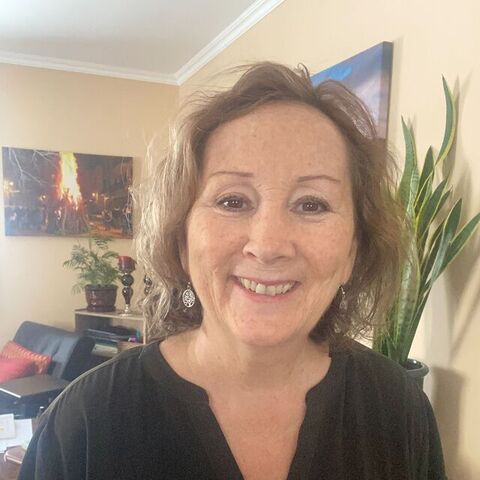
My name is Tanya McIntyre,
Your mindfulness mentor.
These short reflections are crafted to help you build steadiness,
Curiosity,
And a kinder relationship with your mind.
Let this reach you the way music does,
Without effort,
Without judgment,
Simply allowing yourself to be here in the present moment.
Today we'll explore how embracing self-acceptance can provide us with better mental health.
One of the many programs I use to maintain better mental health and also help me remain free from addictions is a program that is founded by doctors and the foundation of the program is based on Cognitive Behavioral Therapies.
And Cognitive Behavioral Therapies kind of sounds complicated.
I remember thinking when I first heard it,
Oh that sounds like a lot of work,
But when you break it down and think of cognition,
Cognition is just our thoughts and our perceptions.
Cognitive Behavioral Therapies have helped me immeasurably.
Just a few things that I can touch on today is how it has helped me learn how to love myself.
And that took a long time.
It took a long time for me to even like myself.
And then Cognitive Behavioral Therapies or CBT,
As it's commonly referred to,
CBT has helped me nurture my strength and my capabilities instead of downplaying them all the time.
I've also learned how to live in alignment with my values and my principles.
One thing that I have done specifically every day is stay aligned with my values and principles.
And I first had to learn how to even define them because at no time in my life did anyone ever invite me to sit down and define what I value and what principles do I live by.
Now that's not to say I wasn't indoctrinated by my religion.
Yes,
I was for the first couple of decades of my life.
And that may be why I had so many setbacks while trying to follow the 12-step programs of AA and NA.
I have to admit I carried a pretty strong bias from my own negative religious experiences into that program.
One of the more helpful concepts I have learned over the years is something called unconditional acceptance,
Not just for myself but also for others and for life.
It's a concept that helps me stay focused on what is within my control.
In practice,
Unconditional acceptance encourages us to look through the window and not just into the mirror.
It's helpful to look beyond our immediate reflections and consider the broader perspectives.
The idea of unconditional acceptance isn't new.
It was promoted through the Stoic wisdom from over 2,
000 years ago.
Philosopher Masonius Rufus observed that people's circumstances shape their habits and their character.
He said,
Some people are sharp and others are dull.
Some are raised in a better environment,
Others in worse.
Those who are raised in worse environments may have inferior habits and will require more by way of careful instruction in order to master better habits and be formed by them,
Much in the same way that bodies in a bad state must be given a great deal of care when better health is sought.
This perspective reminds us that everyone starts from a different place in life,
Being influenced by their environment,
Their upbringing,
And their experiences.
Embracing self-acceptance can allow us to let go of unrealistic comparisons and instead focus on our unique paths.
By nurturing a culture of compassion,
We can better support each other in overcoming life's challenges.
It's easy to get frustrated when others don't meet our expectations or when we fall short of our own standards and expectations.
Instead of asking,
Why can't they behave better?
Or,
Why can't I have the same success as that person?
We can instead recognize that we all don't have the same opportunities,
The same abilities,
Or the same challenges.
We can adopt a mindset of compassion to help us navigate these feelings and judgments.
We can learn to extend patience and understanding,
Not just to ourselves,
But to our fellow fallible humans.
Acknowledging our privileges and our limitations can be a vital part of self-acceptance.
Some of us may have had access to better education,
Supportive relationships,
Or a more stable upbringing,
And some of us may have struggled with fractured families,
Abusive relationships,
And mental health challenges.
The journey to self-acceptance isn't about diminishing our worth or downplaying our achievements,
Or using excuses for why we don't do better in life.
It's about acknowledging our strengths and our weaknesses with honesty and kindness.
It's about being aware of the societal and personal factors that have shaped our lives,
So we can use that awareness to foster a more compassionate and supportive environment for ourselves and for the other people in our lives.
Thank you for spending this time with me.
I hope you'll join me for future reflections of the Harmonious Mind,
Where mindfulness meets practical mental health skills.
Until then,
May your tea and your coffee be strong.
May your heart and your patience be strong.
My name is Tanya McIntyre,
Your mindfulness mentor,
And I'm grateful to walk this path with you.
May the force of mindfulness be with you always,
And remember,
You are the force.