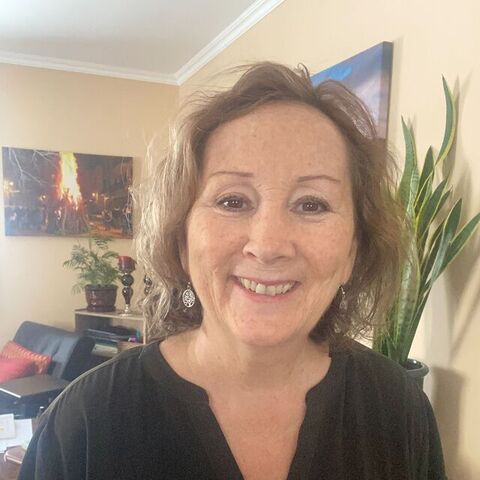
Welcome to The Harmonious Mind,
A time to slow down and calm your nervous system.
I'm Tanya McIntyre,
Your mindfulness mentor.
The Harmonious Mind offers a series of short vignettes to gently guide you to a more balanced life of peace and serenity.
Just listen to this the way you would listen to music,
With an open mind and curiosity.
There's nothing to do,
Nowhere to go,
Just relax.
Today we will explore better decisions for better mental health.
The 13th century scholar Rumi once said,
The desire to know your own soul will end all other desires.
I was alienated from my soul for a long time.
I spent more than two decades self-medicating my emotions away.
I was convinced that I needed my addictions to manage my life.
And there was no shortage of excuses for me either.
It was easier for me to justify my addictions to myself,
Rather than having to face the reasons why I just wasn't willing to help myself.
I think if I had been part of that marshmallow study that was done back in the 60s,
I probably would have eaten the marshmallow.
That study was done by Stanford University.
It tested four-year-olds who were put in a room with a hidden camera,
A table and a chair.
An adult entered the room and put one marshmallow on the table,
Explaining to the child that they could eat that marshmallow.
But if they decided to wait just a few minutes without eating that marshmallow,
They would get another marshmallow.
And during those few minutes alone,
You can imagine the children were seen to be touching the marshmallow and squeezing it and smelling it and licking it.
And sadly,
The result was that only a minority could actually resist that temptation.
The majority of the kids gave into their desire.
They ate the marshmallow.
That study followed those children into their future and found by the time they were just 10 years old,
The ones who had managed to delay gratification were less likely to be overweight and they had higher test scores.
And then by the time they were 20,
They had better overall positions in life,
Both mentally and physically.
Decisions around health and finances are good examples of how most people lack the skill of self-control.
We might start off feeling enthusiastic and motivated about the gym membership or the savings account,
But only a minority can actually stick to that with any consistency.
And that's why now many North Americans are holding more debt than savings.
We are also considered to be the most stressed,
Depressed,
Overweight,
Over-medicated population in history.
And I had spent my life feeding instant gratification.
I had never learned self-control as a child.
But once I decided to do the work to get clear and sober and achieve better mental health,
I had to learn to say no to everything that wasn't leading me to the kind of life I wanted.
But first I had to define the kind of life I wanted.
And that in itself was a lot of work,
Very difficult to do because how many of us are actually ever invited to think about what we want in our lives?
We're normally pushed by cultural and social conditioning to do what somebody else wants us to do,
Especially if you're a parent.
You're conditioned to believe that your only purpose in life is to provide and perform.
Resisting temptation can get easier.
It just takes practice,
Patience,
And persistence.
The key is one of my favorite acronyms,
K-E-Y.
The key is to keep educating yourself.
Knowledge teaches us what to do,
And practice shows us how to do it.
It's a journey that begins by building resilience with self-care.
And I had to learn to like myself enough to start taking care of myself.
Research has shown that we only have a fixed amount of energy to resist temptation.
So it's really important to keep our attention focused on people,
Places,
And things that don't tempt us into those unhealthy behaviors and substance consumptions.
And Rumi's advice is always relevant,
I think.
Learning how to resist temptation will really connect us to our soul.
Thank you so much for being here with me.
I hope these insights offer you some comfort and serenity.
Please join me for upcoming explorations of the harmonious mind.
Until then,
May your coffee,
Your heart,
And your patience be strong.
My name is Tanya McIntyre,
Your mindfulness mentor.
May the force of mindfulness be with you always.
And remember,
You are the force.