By Jane Austen This story set in the village of Highbury.
Follows Emma Woodhouse,
A privileged young woman.
Who fancies herself a matchmaker.
Meddling in the romantic lives of those around her.
Particularly her new friend Harriet Smith.
Emma finds her misguided interventions.
Lead to hurt feelings.
And unexpected revelations.
Happy listening!
Chapter 11 Mr Elton must now be left to himself.
It was no longer in Emma's power to superintend his happiness or quicken his measures.
The coming of her sister's family was so very near at hand,
That first in anticipation and then in reality,
It became henceforth her prime object of interest.
And during the next ten days of their stay at Hartfield,
It was not to be expected,
She did not herself expect,
That anything beyond occasional fortuitous assistance could be afforded by her to the lovers.
They might advance rapidly if they would,
However.
They must advance somehow or other whether they would or no.
She hardly wished to have more leisure for them.
There are people who,
The more you do for them,
The less they will do for themselves.
Mr and Mrs John Knightley,
From having been longer than usual absent from Surrey,
Were exciting of course,
Rather more than the usual interest.
Till this year,
Every long vacation since their marriage had been divided between Hartfield and Donald Abbey.
But all the holidays of this autumn had been given to seabathing for the children,
And it was therefore many months since they'd been seen at a regular way by their surrey connections,
Or seen at all by Mr.
Woodhouse,
Who could not be induced to get so far as London,
Even for poor Isabella's sake,
And who consequently was now,
Most nervously and apprehensively,
Happy in forestalling this too short visit.
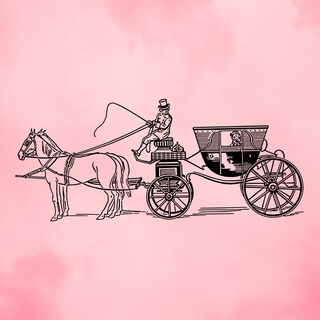
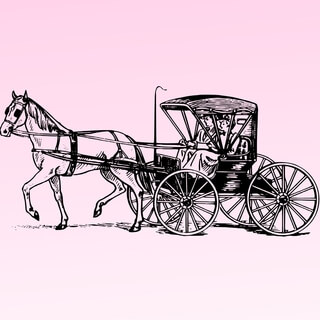
He thought much of the evils of the journey for her and not a little of the fatigues of his own horses and coachmen who were to bring some of the party the last half of the way.
But his alarms were needless.
The 16 miles being happily accomplished,
And Mr and Mrs John Knightley,
Their five children,
And a competent number of nursery maids,
All reaching Hartfield in safety.
The bustle and joy of such an arrival,
The many to be talked to,
Welcomed,
Encouraged,
And variously dispersed and disposed of,
Produced a noise and confusion which his nerves could not have borne under any other cause,
Nor have endured much longer even for this.
But the ways of Hartfield and the feelings of her father were so respected by Mrs John Knightley.
That in spite of maternal solicitude for the immediate enjoyment of her little ones,
And for their having instantly all the liberty in attendance,
All the eating and drinking and sleeping and playing which they could possibly wish for,
Without the smallest delay,
The children were never allowed to be long a disturbance to him,
Either in themselves or in any way restless.
Mrs John Knightley was a pretty,
Elegant little woman of gentle,
Quiet manners.
She was wrapped up in her family,
A devoted wife,
A doting mother,
And so tenderly attached to her father and sister that,
But for these higher ties,
A warmer love might have seemed impossible.
She could never seem a fault in either of them.
She was not a woman of strong understanding or quickness,
And with this resemblance of her father,
She inherited also much of his constitution.
She was delicate in her own health,
Over-careful of that of her children,
Had many fears and many nerves,
And was as fond of her own Mr Wingfield in town as her father could be of Mr Perry.
They were alike too in general benevolence of temper and a strong habit of regard for every old acquaintance.
Mr John Knightley was a tall,
Gentleman-like man.
Very clever.
Rising in his profession,
Domestic and respectable in his private character,
But with reserved manners which prevented his being generally pleasing and capable of being sometimes out of humour.
He was not an ill-tempered man,
Not so often unreasonably cross as to deserve such a reproach.
But his temper was not his great perfection.
And indeed,
With such a worshipping wife,
It was hardly possible any natural defects in it should not be increased.
He was not a great favourite with his fair sister-in-law.
Nothing wrong in him escaped her.
She was quick in feeling the little injuries to Isabella,
Which Isabella never felt herself.
Perhaps Emma might have passed over more hatted manners,
Been flattering to her,
But they were only those of a calmly kind brother and friend,
Without praise and without blindness.
Hardly any degree of personal compliment could have made Emma regardless of that greatest fault of all in her eyes,
Which she sometimes fell into,
The want of respectful forbearance towards her father.
There he had not always the patience that could have been wished.
Mr.
Woodhouse's peculiarities and fidgetiness were sometimes provoking him to irrational remonstrance on sharp retort equally unbestowed.
It did not often happen,
But Mr John Knightley had really a great regard for his father-in-law,
And generally a strong sense of what was due to him.
But it was too often for Emma's charity.
Especially as there was all the pain of apprehension frequently to be endured,
Though the offence came not.
The beginning,
However,
Of every visit displayed none but the properest feelings.
And this being of necessity so short might be hoped to pass away in unsullied cordiality.
They had not long been seated and composed when Mr.
Woodhouse,
With a melancholy shake of the head and a sigh,
Called his daughter's attention to the sad change at Hartfield,
Since she'd been there last.
"'Ah,
My dear,
' said he,
"'poor Miss Taylor!
' It is a grievous business.
Oh yes sir,
Cried she with ready sympathy.
How you must miss her,
And dear Emma too.
What a dreadful loss to you both.
I have been so grieved for you.
I could not imagine how you could possibly do without her.
It is a sad change indeed,
But I hope she's pretty well,
Sir.
Pretty well,
My dear,
I hope,
Pretty well.
I do not know but that the place agrees with her tolerably.
Mr John Knightley here asked Emma quietly whether there were any doubts of the heir of Randalls.
Oh no,
None in the least.
I never saw Mrs Weston better in my life.
Never looking so well.
Papa is only speaking his own regret.
Very much to the honour of both.
Was the handsome reply.
And do you see her?
Tolerably often.
Asked Isabella in the plaintive tone which suited her father.
Mr.
Woodhouse hesitated.
Not near so often,
My dear,
As I could wish.
We have missed seeing them but one entire day since they married.
Either in the morning or evening of every day except one,
Have we seen either Mr.
Weston or Mrs.
Weston?
If you speak in this melancholy way,
You will be giving Isabella a false idea of us all.
Everybody must be aware Miss Taylor must be missed,
But everybody ought to also be assured Mr and Mrs Weston do really prevent our missing her by any means to the extent we ourselves anticipated.
That is the exact truth.
Just as it should be,
" said Mr John Knightley.
And it was just as I hoped from your letters.
Her wish of showing you attention could not be doubted,
And his being a disengaged and social man makes it all easy.
I have always been telling you,
My love,
I had no idea of the change being so very material to Hartfield as you apprehended.
And now you have Emma's account,
I hope you will be satisfied.
Why,
To be sure,
" said Mr.
Woodhouse,
Certainly.
I cannot deny Mrs.
Weston,
Poor Mrs.
Weston,
Does come and see us pretty often,
But she is always obliged to go away again.
It would be very hard upon Mr.
Weston if she did not,
Papa.
You quite forget poor Mr.
Weston.
I think indeed,
" said Mr John Knightley after a time.
Mr.
Weston has some little claim.
You and I,
Emma,
Will venture to take the part of the poor husband.
I being a husband and you not being a wife,
The claims of the man may be very likely to strike us with equal force.
As for Isabella,
She's been married long enough to see the convenience of putting all the Mr Westons aside as much as she can.
Me my love?
" cried his wife,
Hearing and understanding only in part.
Are you talking about me?
I am sure nobody ought to be or can be a greater advocate for matrimony than I am.
And if it had not been for the misery of leaving Hartfield,
I should never have thought Miss Taylor but as the most fortunate woman in the world.
If anyone can deserve him,
It must be Miss Taylor.