Hello.
Welcome to Sleep Stories with Steph,
A romantic bedtime podcast guaranteed to help you drift off into a calm,
Relaxing sleep.
Come with me as we travel back to a time long ago where Helen Huntingdon is sacrificing everything she knows in order to protect her son.
But before we begin let us take a moment to focus on where we are now.
Take a deep breath in through your nose then let it out on a long sigh.
It is time to relax and really let go.
Feel your shoulders melt away from your ears as you sink into the support beneath you.
Feel the pressure seep away from your cheeks as your breath drops into a natural rhythm.
There is nothing you need to be doing right now and nowhere you need to go.
We are together and it is time for sleep.
The Tenant of Wildfelm Hall by Stephenie Poppins Read and abridged by Stephenie Poppins Chapter 38 Continued As I was talking to Lord Loberer,
Mr.
Hattersley burst into the room.
Hello,
Loberer,
He began.
Oh,
I beg your pardon,
He exclaimed on seeing me.
I didn't know it was a tete-a-tete.
Cheer up,
Man,
He continued,
Giving Lord Loberer a thump on the back which caused the latter to recoil from him with looks of ineffable disgust and irritation.
Come,
I want to speak with you a bit.
Speak then.
But I'm not sure it would be quite agreeable to the lady what I have to say.
Then it would not be agreeable to me,
Said his lordship,
Turning to leave the room.
Yes,
It would,
Cried the other,
Following him into the hall.
If you're the heart of a man,
It'll be the very ticket for you.
It's just this,
My lad,
He continued,
Rather lowering his voice,
But not enough to prevent me from hearing every word he said through the half-closed door stood between us.
I think you're an ill-used man,
Eh?
Now don't flare up,
I don't want to offend you.
It's only my rough way of talking.
I must speak right now,
You know,
Or else not at all.
And let me explain.
I've come to offer you my services,
For though Huntington's my friend,
He's a devilish scamp,
As we all know.
I'll be your friend for the nonce,
That's what I'll do.
I know what it is you want,
To make yourself feel all right again.
And if an accident happens,
Why,
That'll be all right too,
I dare say,
To a desperate fellow like you.
Come now,
Give me your hand,
Lober,
And don't look so black upon it.
Name the time and the place and I'll manage the rest.
That,
Answered the more low,
Deliberate voice of Lord Loberer,
Is just the remedy my own heart,
Or the devil within it,
Suggested.
To meet him and not to sever without blood.
Whether I or he should fall,
Or both,
It will be an inexpressible relief to me.
Just so?
Well,
Then.
No,
Exclaimed his lordship,
With deep,
Determined emphasis.
Though I fancy I hate him from my heart,
And should rejoice at any calamity that could befall him,
I'll leave him to God.
And though I abhor my own life,
I'll leave that too,
To him that gave it.
But you see,
In this case,
Pleaded hastily,
I'll not hear you,
Exclaimed his companion,
Hastily turning away.
Not another word.
I've enough to do against the fiend within me.
Then you're a white-livered fool and I'll wash my hands of you,
Grumbled the tempter as he swung himself round and departed.
Right,
Right,
Lord Loberer cried I,
Darting out and clasping his burning hand.
I begin to think the world is not worthy of you.
Not understanding this sudden abolition,
Lord Loberer turned upon me with a stare of gloomy,
Bewildered amazement that made me ashamed of the impulse to which I'd yielded.
But soon a more humanised expression dawned upon his countenance,
And before I could withdraw my hand,
He pressed it kindly,
While a gleam of genuine feeling flashed from his eyes as he murmured,
God help us both.
Amen,
Responded I,
And we parted.
I returned to the drawing-room,
Where doubtless my presence would be expected by most,
Desired by one or two.
In the ante-room was Mr Hattersley,
Railing against Lord Loberer's poltronary before a select audience,
Vis-à-vis Mr Huntingdon,
Who was lounging against the table,
Exulting in his own treacherous felony,
And laughing his victim to scorn,
And Mr Grimsby standing by,
Quietly rubbing his hands,
And chuckling with fiendish satisfaction.
At the glance I gave them in passing,
Hattersley stopped short in his aversions,
And stared like a bald calf.
Grimsby glowered upon me with a leer of malignant ferocity,
And my husband muttered a course of brutal malediction.
In the drawing-room I found Lady Loberer evidently in no very enviable state of mind,
And struggling hard to conceal her discomposure by an overstrained affectation of unusual cheerfulness and vivacity,
Very uncalled for under the circumstances,
For she had herself given the company to understand her husband had received unpleasant intelligence from home,
Which necessitated his immediate departure.
However,
She asserted,
It was only a business concern,
So she did not intend it should trouble her.
She was just saying this as I entered,
And she darted upon me such a glance of hardihood and defiance,
As at once astonished and revolted me.
But I am troubled,
Continued she,
And vexed too,
For I think it my duty to accompany his lordship,
And of course I am very sorry to part with all my kind friends so unexpectedly and so soon.
And yet,
Annabella,
Said a Esther who was sitting beside her,
I never saw you in better spirits in all my life.
Precisely so,
My love,
Because I wish to make the best of your society,
Since it appears thus to be the last night I am to enjoy it until heaven knows when.
And I wish to leave a good impression on you all.
She glanced round,
And seeing her aunt's eye fixed upon her,
Rather too scrutinisingly,
As she probably thought,
She started up and continued,
To which end I'll give you a song,
Shall I,
Aunt?
Shall I,
Mrs.
Huntington?
Shall I,
Ladies and gentlemen all?
Very well,
I'll do my best to amuse you.
She and Lord Lobra occupied the apartments next to mine.
I know not how she passed the night,
But I lay awake the greater part of it listening to his heavy step,
Pacing monotonously up and down his dressing room,
Which was nearest my chamber.
Once I heard him pause and throw something out of the window with a passionate ejaculation.
And in the morning after they were gone,
A keen,
Bladed clasp knife was found on the grass plopped below.
A raisin likewise was snapped in two and thrust deep into the cinders of the grate,
But partially corroded by the decaying embers.
So strong had been the temptation to end his misery,
His miserable life,
So determined his resolution to resist it.
My heart bled for him as I lay listening to that ceaseless tread.
Hitherto I thought too much of myself and too little of him.
Now I forgot my own afflictions and thought only of his,
Of the ardent affection so miserably wasted,
The fond faith so cruelly betrayed.
That man,
I thought,
Is an object of scorn to his friends and the nice judging world.
The false wife and the treacherous friend who have wronged him are not so despised and degraded as he,
And his refusal to avenge his wrongs has removed him yet further beyond the range of sympathy and blackened his name with a deeper disgrace.
He knows this,
And it doubles his sin.
He sees the injustice of it,
But he cannot bear up against it.
He lacks that sustaining power of self-esteem which leads a man,
Exalting in his own integrity,
To defy the malice of foes.
He knows that God is just,
But he cannot see his justice now.
He knows this life is short,
And yet death seems insufferably far away.
He believes there is a future state,
But so absorbing is the agony of this,
He cannot realise its rapturous repose.
He can but bow his head to the storm,
And cling blindly,
Despairingly,
To what he knows to be right.
Like the shipwrecked mariner cleaving to a raft,
Blinded,
Deaf,
And bewildered,
He feels the waves sweep over him,
And sees no prospect of escape.
And yet he knows he has no hope but this,
And still,
While life and sense remain,
Concentrates all his energies to keep it.
Oh,
That I had a friend's right to comfort him,
And tell him I never esteemed him so highly as I do this night.
They departed early in the morning before anyone else was down except myself,
And just as I was leaving the room,
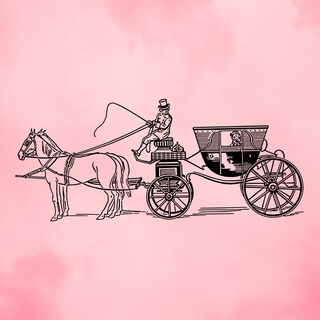
Lord Lobra was descending to take his place in the carriage,
Where his lady was already ensconced.
And Arthur,
Or Mr Huntington as I prefer calling him,
For the other is my child's name,
Had the gratuitous insolence to come out in his dressing gown to bid his friend farewell.
And goodbye.
What's going already,
Lord Lobra?
He said.
Well,
Good morning.
He smilingly offered his hand.
I think the other would have knocked him down had he not instinctively started back before that bony fist quivering with rage and clenching till the knuckles gleamed white and glistening through the skin.
Looking upon him with a countenance livid with furious hate,
Lord Lobra muttered between his closed teeth a deadly execration that he would not have uttered had he been calm enough to choose his words.
I call that an un-Christian spirit now,
Said the villain,
But I'd never give up an old friend for the sake of a wife.
You may have mine if you like,
And I'll call that handsome.
I can do no more than offer restitution,
Can I?
But Lobra had gained the bottom of the stairs and was now crossing the hall,
And Mr Huntington,
Leaning over the banisters,
Called out,
Give my love to Annabella,
And I wish you both a happy journey.
Then he withdrew,
Laughing to his chamber.
He subsequently expressed himself rather glad she was gone.
She was so juiced,
Imperious and exacting,
Said he.
Now I shall be my own man again and feel rather more at my ease.
I know nothing more of Lord Lobra's subsequent proceedings,
But what I have learned from Millicent,
Who,
Though she is ignorant of the cause of his separation from her cousin,
Has informed me such is the case.
They keep entirely separate establishments.
Lady Lobra leads a gay,
Dashing life in town and country,
Whilst Lord Lobra lives in strict seclusion at his old castle in the north.
There are two children,
Both of whom he keeps under his own protection.
The son and heir is a promising child,
Nearly the age of my Arthur,
And no doubt a source of some hope and comfort.
But the other,
A little girl between one and two,
With blue eyes and light auburn hair,
He probably keeps from conscientious motives alone,
Thinking it wrong to abandon her to the teaching and example of such a woman as her mother.
That mother never loved children and has so little natural affection for her own,
That I question whether she will not regard it as a relief to be thus entirely separated from them and delivered from the trouble and responsibility of their charge.
Not many days after the departure of Lord and Lady Lobra,
The rest of the ladies withdrew the light of their presence from Grassedale.
Perhaps they might have stayed longer,
But neither host nor hostess pressed them to prolong their visit.
In fact,
The former showed too plainly he should be glad to get rid of them,
And Mrs Hargrave retired with her daughters and grandchildren to the grove.
But the gentleman remained.
Mr Huntington,
As I intimated before,
Was determined to keep them as long as he could,
And being thus delivered from restraint,
They gave loose to all their innate madness,
Folly and brutality,
And made the house night after night one scene of riot,
Uproar and confusion.
Who among them behaved the worst,
Or who the best,
I cannot distinctly say.
From the moment I discovered how things would be,
I formed the resolution of retreating upstairs or locking myself into the library,
The instant I withdrew from the dining room,
And not coming near them again until breakfast.
But this I must say for Mr Hargrave,
That from all I could see of him,
He was the model of decency,
Sobriety and gentlemanly manners in comparison with the rest.
He did not join the party till a week or ten days after the arrival of the other guests,
For he was still on the continent when they came,
And I cherish the hope he would not accept the invitation.
Accepted he did,
However,
But his conduct towards me for the first few weeks was exactly what I should have wished it to be,
Perfectly civil and respectful,
Without any affectation or despondency or dejection.
And sufficiently distant without haughtiness,
Or any of such remarkable stiffness or iciness of demeanour as might be calculated to disturb or puzzle his sister,
Or call forth the investigation of his mother.