Hello.
Welcome to Sleep Stories with Steph,
Your go-to romantic podcast that guarantees you a calm and entertaining transition into a great night's sleep.
Come with me as we immerse ourselves in a romantic journey to a time long since forgotten.
But before we begin,
Let's take a moment to focus on where we are now.
Take a deep breath in through your nose and let it out with a long sigh.
Now close your eyes and feel yourself sink deeper into the support beneath you.
It is time to relax and fully let go.
There is nothing you need to be doing now and nowhere you need to go.
Enjoy the rest of your day.
Happy listening.
During an absence from home on Jane Austen's part,
It was settled,
Before she knew,
That her father,
Who at the age of 70 had resigned his living of Stevenson to his son James,
Should remove with his wife and daughters to Bath.
However much Jane may have felt the fascination of her girlish visits to Bath,
She did not approve it as a place of residence in her more mature womanhood.
We are reminded of a sentence in Persuasion where the author remarks dryly,
Anne Elliot did not like Bath.
She fancied it disagreed with her.
She would have preferred any other place.
Therefore to Bath,
As a matter of course,
The family went.
So much for the unpropitiousness of events.
The Austens went to Bath in 1801 when Jane was 26 years of age.
The family resided first at No.
4 Sydney Terrace and later at Green Park Buildings.
Jane was still young,
Pretty and cheerful enough to enter with a fair proportion of enjoyment into the gaieties of the place.
She had given up writing,
In a great measure,
Since she was 3 or 4 and 20,
Whether chilled by her lack of success or distracted by other engagements and amusements.
However,
It is thought that it was during her stay in Bath she wrote several chapters of an unfinished novel called The Watsons,
Which unlike the youthful performance Lady Susan,
Published along with these chapters in the same volume with a memoir,
Bear a strong flavour of Jane Austen in her sagacity and banter.
She may have been inspired to the effort by the sale,
Though not for so small a sum,
Of the Manuscript of Northanger Abbey.
Which happened two years after she came to Bath when she was 28 years of age.
We know the sale proved fruitless so far as speedy publication was concerned,
But the mortifying conclusion could not have been foreseen.
And the sale of one of her novels for £10 was Jane Austen's first faint gleam of good fortune in authorship,
The only one which visited her during her father's lifetime.
The Austens remained at Bath for about four years.
In their last autumn there,
The autumn of 1804,
Jane with her father and mother spent some weeks at the lovely sea-bathing place of Lyne.
Jane admired this so much and has immortalised it in persuasion.
We cannot avoid being struck by the small number of the opportunities which Jane Austen had of seeing the world,
And by the great use she made of them.
Her journeyings were not so very much more extensive than those of the vicar of Wakefield and his wife in the days of their prosperity,
But they were sufficient for her to avail herself of them for the information and delight of her fellow creatures.
It is not the amount of what we see,
But the eyes with which we see it that signifies.
In the following spring,
That of 1805,
The Reverend George Austen died at Bath.
His widow and daughters then removed to Southampton,
Drawn to its society very lightly by the sailor Austens,
And there they stayed for four more years.
Mrs.
Austen occupied a large old-fashioned house in a corner of Castle Square.
The house had a pleasant garden,
Bounded on one side by the old city wall.
A flight of steps led to the top of the wall,
Which formed a walk with an extensive view of sea and land.
Chapter 5 In 1809,
The Austens made their last removal.
It was back to the country of which Jane always makes her heroines fond,
Back to the old neighbourhood of Steventon,
Her birthplace.
Edward Knight offered his mother a choice of two houses,
The one on his estate in Kent,
The other on his estate in Hampshire.
She selected the house in Hampshire,
Chorlton Cottage,
Near the Squire's occasional home,
Chorlton House.
Chorlton Cottage in the village of the same name was not originally a farmhouse.
Like Uppercross Cottage in Persuasion,
It had been intended for an inn.
Indeed,
It stood so close to the high road,
On which the front door opened,
That a very narrow enclosure,
Paled in on each side,
Had been necessary to protect the building from the danger of collision with runaway vehicles.
In addition to the Gosport Road in front,
The Winchester Road skirted the house on one side,
So that it could not be regarded as secluded habitation.
But in those days,
Cheerfulness was more prized than seclusion.
There was a large pond close to Chorlton Cottage,
At the junction of the two public roads.
Happily,
The theory which connects insalubrity with such ponds had not yet been aired,
So that to the Austins,
No doubt,
Chorlton Pond was a very desirable sheet of water,
Tending still more to enhance the attractions of the scene.
They would not much mind the duckweed and other slimy vegetation.
Horses and donkeys,
Ducks and geese would despot themselves there in summer.
In winter,
Village sliders would bestow animation on the ice.
The square added to the house and contrived some judicious planting and screening.
A good-sized entrance and two sitting rooms were managed.
In the drawing room,
A window which looked to the Gosport Road,
Was blocked up and turned into a bookcase.
And another window was opened out and made to command only turf and trees,
For a high wooden fence and a hornbeam hedge shut out the Winchester Road.
Here was a little bit of genteel privacy.
A shrubbery was carried round the enclosure,
Which Mr Austin Lee tells us gave a sufficient space for ladies' exercise.
Although we cannot help thinking,
The exercise ground must have been rather limited for the middle-aged women.
However,
There was a pleasant irregular mixture of hedgerow,
Gravel walk and orchard,
With grass for mowing,
Made by two or three little enclosures having been thrown together.
As it happened,
Walking had to be relinquished before many years by the younger sister,
And Jane Austin,
As well as her mother,
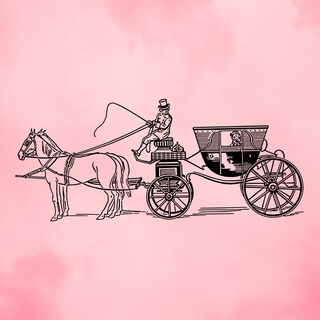
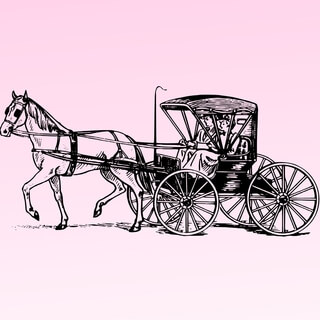
Who must resort to donkey carriage for exercise.
Altogether,
Chorlton Cottage was quite as good as the generality at Parsonage is,
And nearly in the same style.
It was capable of receiving other members of the family as frequent visitors.
In this respect,
It must have contrasted favourably in Jane's mind with a cottage in which she had established Eleanor and Marianne Dashwood with their mother in Sense and Sensibility.
Chorlton Cottage was sufficiently well furnished,
Although it formed a comfortable and ladylike establishment for a family of ladies whose means were not large.
To Jane Austin,
It was her own home among her own people,
Points which made a great deal to her.
Besides,
She was a woman possessed at once of too much self-respect and self-resource,
And of too serene a spirit and lively a temper to care much either for outward show or interior luxury.
Jane Austin was 34 years of age when she settled at Chorlton.
Her sister,
Cassandra,
Was 37,
And their mother,
70.
Their prospects were as clearly defined as earthly prospects could well be,
And they accepted the definition.
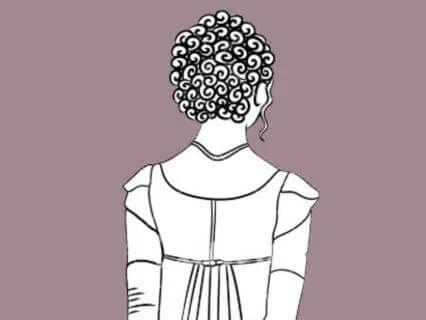
Jane was never seen without a cap,
Either in the morning or in the evening,
After she went to Chorlton.
The Austen sisters assumed early the caps which were then the mark of matronhood,
Or confirmed spencerhood.
Possibly Cassandra first adopted the badge as a quiet sign she wished to have nothing more to do with love and marriage,
And Jane bore her faithful company in this as in everything else.
Mr.
Austen Lee mentions also,
And every trifle is welcome which bears on the novelist's character and habits,
It was held that his aunts,
Though remarkably neat in their dress as in all their ways,
Were not sufficiently attentive to the fashionable or the becoming.
In short,
Jane and Cassandra Austen,
Although they'd been the young beauties of Steventon in their time,
Entertained no fear of being styled dowdies or frights in their middle age,
Whether by their young relatives or the dressy among their contemporaries.