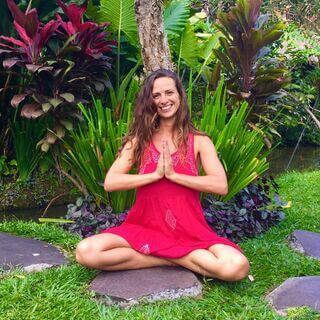
So welcome everyone,
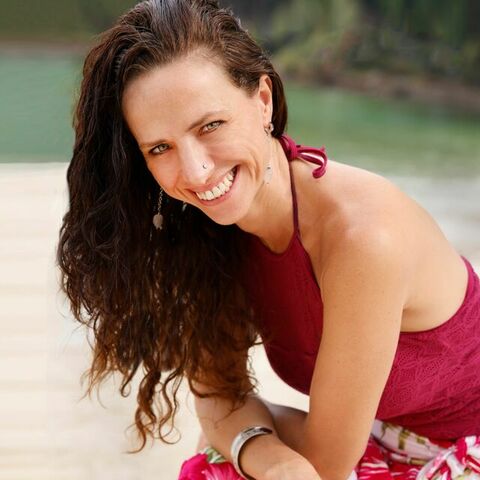
My name is Nola Bloom,
And this talk today is called The Quiet Strength of Saying No.
And this is a gentle reflection and a meditation,
And I'm going to share a little bit from my own experience and weave in some yogic teachings and guide you into a moment of presence with yourself.
And so if you've recently had to hold a boundary,
And if you're sitting in the aftermath of that,
Emotionally,
Mentally,
And sometimes even physically,
This space is for you.
And I'm sharing this today because I'm in it too.
And speaking out loud often can help soften the process.
And so if you are joining me today,
Then know that you are not alone.
And from my own experience,
I'll share first,
And I'm not always someone that could say no.
For a long time,
I was someone that just always stayed quiet,
And I let things slide.
And I allowed people to cross lines because it just felt easier than speaking up.
Sometimes it was fear.
Sometimes it was just wanting to be liked and wanting to be accepted.
And sometimes I didn't even realize that I was allowed to have boundaries.
And so this has definitely been a life process,
A life learning through different teachers,
And again,
Through my yoga practice,
Where I've learned a little bit more about speaking up.
And even now,
When I do speak up,
Or when I say no,
Or when I ask for space,
It can still feel really unnatural,
And it can feel messy,
Because I'm going up against old programming that says it's safer to stay silent and keep the peace and not rock the boat.
But somewhere,
The cycle has to break.
And when we break that cycle,
It can rarely feel graceful.
And the words don't always come out smoothly.
The conversation can feel clumsy.
Our voice can shake.
And afterwards,
There's this wave of questioning that arises.
Did I say too much?
Did I handle that right?
Is there a way that I could have done it better?
But still,
We speak.
Because when we stay silent for too long,
Something inside us begins to dim,
And we slowly lose touch with who we really are,
With what our true nature is.
And so even if it feels uncomfortable,
There's a moment when choosing discomfort becomes a doorway back to self-respect.
And over the years,
Especially through my yoga practice,
I have come to understand boundaries in a different way,
Because boundaries are not walls.
They're bridges back to ourselves and back to a way of saying that I'm here too.
And my needs matter too.
And this is something I am still practicing,
Actively and imperfectly.
So I want to share with you a few teachings that have supported me in learning about boundaries.
These are not separate ideas,
But as different ways of understanding the same experience.
Because boundaries aren't something that you set once and you're done.
They're a practice,
Just like breath,
Just like yoga,
And just like love.
The more that we practice,
The easier and more natural they become over time.
So let's just take a moment to arrive here.
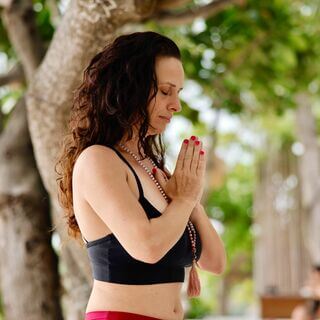
Close down your eyes if they aren't already closed and feel the warmth of your own presence.
And let your breath slow down just a little.
Know that we're not trying to fix anything and figure anything out.
In this moment,
We're just looking at boundaries through a different lens and through a different perspective,
Through the lens of yoga and some ancient philosophical teachings.
And so first I want to look at the practice of ahimsa,
Non-violence.
This is the fundamental core teaching of yoga.
And this is something we often think about what we offer others.
But what if we've been offering it so much outward that we've forgotten how to offer it inward?
And that sometimes holding a boundary is the deepest act of ahimsa.
Not against someone else,
But against ourselves.
It's like saying,
I will no longer abandon myself to keep the peace,
Even if it costs me comfort.
And that in itself is an act of love.
It's an act of non-violence to ourselves and to those around us.
And when we begin to act from this place of ahimsa,
Then another teaching will naturally arise.
And that is satya,
Truthfulness.
And once we stop abandoning ourselves,
We begin to feel what is true.
And that truth has a way of disrupting this version of you that learned to stay small.
And it can feel uncomfortable.
It can create tension.
But also,
It brings you back into alignment.
And when you speak your truth,
Even gently,
Even imperfectly,
You begin to reclaim parts of yourself that you have given away.
And if something that I'm sharing here is stirring something within you,
Discomfort,
Guilt,
Sadness,
And this is where another yogi teaching comes in,
The teachings of svadhyaya,
Self-study.
And this is a practice of turning inward,
Not to judge ourselves,
But to understand.
Why do boundaries feel so hard for me,
Specifically?
What am I learning about myself in this moment?
And what patterns are showing up as we look a little deeper?
And svadhyaya is about listening to what is in your heart and staying present with what is unfolding.
Let's take a few breaths together.
Inhale deeply.
And exhale completely.
We'll do a few breath retentions just to really anchor ourselves in this moment.
So inhale.
Hold the breath.
Exhale.
Hold the breath out.
And again,
Inhale.
Hold the breath.
Exhale.
Hold the breath out.
Good.
And relax.
Just allow the breath to return to its natural rhythm.
Now let's bring to mind a moment where you've had to hold a boundary,
A recent one or one that is still lingering,
That still keeps coming up.
And just visualize the scene for a moment.
Who's there?
What's happening?
How are you feeling as you reflect on this boundary?
And simply noticing what do you feel in your body?
What emotions are present?
Just awareness of what's there.
I'll offer you now a few gentle reflective questions.
So just focus all of your attention on the words and what is arising.
What part of me needed protection by this boundary?
And what was I afraid might happen if I didn't speak my truth?
And what does the tender part of me need right now in this moment?
And let whatever arises be welcome.
And as we sit with this,
There's one more teaching that can support us.
This is from the Bhagavad Gita.
And I often like to come back to this.
That sometimes we must act even when our heart feels heavy,
Even when the outcome is uncertain.
And even when others may not understand.
In the story,
Arjuna didn't want to act.
He was filled with doubt.
But Krishna reminded him,
This path is yours.
You don't have to love the moment.
You just have to trust the Dharma that brought you here.
And sometimes the action is simply saying no.
And so let's bring all of these teachings together.
Ahimsa,
Non-violence.
We stop abandoning ourselves.
Satya,
Truthfulness.
We feel and speak what is true.
Svidaya,
Self-study.
We stay present with what it brings up.
And Dharma,
We act anyways.
Even when it's messy.
Even when it's uncomfortable.
You are not wrong for saying no.
You are not wrong for needing space.
You are not wrong for choosing your peace.
And take another breath.
As you exhale,
Feel tension releasing from your body.
And I'll share with you now a few affirmations.
And you can repeat them silently or inwardly to yourself.
It is safe for me to honor my needs.
My boundaries are an expression of love.
I can hold my truth and still have compassion.
Even when others don't understand,
I can stand quietly in my strength.
And take another breath as you allow these affirmations to touch the body,
Mind and heart.
Feel the support beneath you.
Feel yourself here in this moment.
You are walking the path of yoga.
Through truth,
Compassion and self-awareness.
I hope this practice supported you today.
And may your boundaries be gentle bridges back to your own heart.
Thank you for joining me.
Namaste.