Hello everyone,
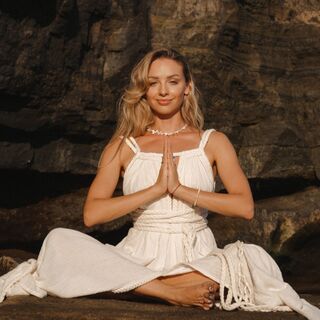
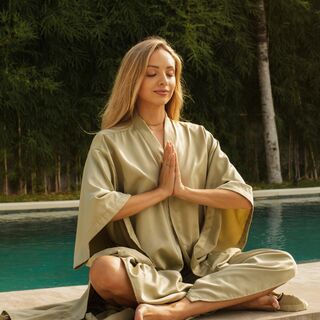
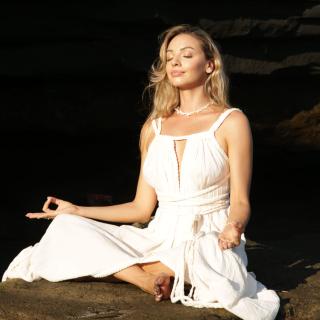
My name is Daria and this is your free practical all-in-one meditation course.
I've been meditating for more than 10 years now and I've been teaching for more than 7 years.
So I have my solid practice,
My own practice and also I'm experienced as a teacher so I know what exact problems students come across with when they start meditating.
Very practical very grounded advice with you so that when you start meditating you move faster you know how to overcome inner or outer obstacles and not stop just because you have too much thoughts or just because you fall asleep or just because you're agitated These are all common problems and they all have pretty simple solutions.
So I'm really willing to share with you all my knowledge,
All my inspiration and hopefully you will enjoy this course and you will get all the benefits from meditation and live a happier life.
Let's go.
So the topic of today's lesson is what is mindfulness?
And the plan is first to answer this question so that you get a clear understanding And do not confuse mindfulness with all.
Different things.
Then we will.
.
.
See what areas of application of mindfulness are in business in medicine in sports and i hope you will get inspiration and then we will look at the proven scientifically proven benefits of mindfulness because there are plenty and finally we will learn a very simple practice focusing on your breath it's the most popular practice but if you try and if you don't have a feeling that it fits you that's okay i will show modifications i will show other options because not everyone can focus on their breathing Some people have respiratory problems and it's fine so I will show you some different options how you can start meditating without focusing on your breath.
So what is mindfulness?
What do you think?
Please,
In your head,
Come with two or three simple definitions of what you think mindfulness is.
I'll wait.
Thank you.
So the problem with mindfulness is that people understand it so differently that sometimes someone who starts meditating thinks that he or she is doing mindfulness,
But.
.
.
Actually he or she is doing something else.
So we first need to understand what we are doing and why mindfulness is paying full attention to the present moment without judging it.
So paying your attention intentionally.
Non-judgmentally and in real time,
Moment by moment.
I pay my attention to what is happening.
Outside and inside me.
Without any judgment.
Without any labels.
And then I move to the next moment.
And I pay my.
.
.
Kind,
Non-judgmental attention to what I feel,
What I Here see in this very second and then I move to the next So this is like.
.
.
Moving from moment to moment with your kind and very clear attention.
This is mindfulness.
It's all about attention.
I'll give you a more scientific definition.
So mindfulness is the self-regulation of attention with an attitude of curiosity,
Openness and acceptance.
Similar to the previous one.
So the core things we need to understand here is that our attention is open.
With interest with curiosity and with acceptance so no judgment no resistance no labeling this is good or bad i like it i don't like it it's just seeing everything as it is very openly.
Very kindly so if you start doing this now you're already practicing mindfulness.
So congratulations.
So pick up any definition you like.
The core is to feel that your attention is becoming intentional.
So not automatic,
Not like when you look in.
In your screen on your screen and I don't know you're on Instagram.
Probably your attention is automatically drawn to what you see.
This is not mindfulness.
Mindfulness is when you choose an object of your attention and then you intentionally pay your attention to this object.
Right?
Then you get rid of any resistance like I don't want to do this,
This is bad,
This is ugly or This is pretty,
I like it,
So no judgment.
No aversion,
No attachment.
Just being an open field of attention.
And then.
.
.
You.
.
.
Stay with it.
And then you move to the next moment.
And then to the next moment.
You're not.
.
.
Staying in the past and not saying like,
Okay,
I get it.
I get it.
I'm not interested in this anymore.
No,
You stay curious to every moment so that.
.
.
You have this beginner's mind.
Like,
You see.
.
.
Or feeling your breath for the first time in your life.
And every second you need to sustain this kind of attention.
The beginner's line and this is your key to being interested in meditation in your practice not getting bored with it because many people have this obstacle when they start meditating they get bored quite fast.
Why?
Because they stick to the past.
And they are.
.
.
Analyzing what they're feeling or seeing.
And saying to themselves,
Okay,
I get it.
The next breath is going to be the same as it was a second ago.
But actually it's not.
Why?
Because you are new every second.
Every second your cells are getting rejuvenated,
Renewed.
So you are new every moment.
And your breath is a new breath.
So you have to.
.
.
Feel this freshness of experience.
You need to go into the details like oh what i haven't noticed yet Let me notice any new sensations from my breath.
And then you stay curious.
And that's the key.
To not getting bored in meditation and in life.
Now let's see how meditation is being applied in real life.
And look a little bit into the statistics.
So 58% of US employers offer mindfulness trainings.
61% of employers provide yoga and meditation sessions at work,
And 55% of companies plan to increase investments in mindfulness and meditation programs.
That was in 2024.
And why?
Why do they do this?
Why bother?
Why invest money into this?
Because it brings cognitive benefits,
Of course.
It brings higher job satisfaction and it prevents burnout.
So companies would not invest their money if they didn't see the benefits,
Right?
And such companies as Google,
Apple,
Nike,
Intel,
Salesforce,
LinkedIn,
SAP,
They've all been doing meditation at the workplace and providing mindfulness trainings.
And maybe you've heard of a very famous Google training called Search Inside Yourself.
Which was a huge success back when it was just introduced in the company.
And there is a cool book by the creator of this course,
Cheng Min Tan.
Called Joy On Demand.
And I highly recommend you to read this book.
It's very simple,
Very practical.
It might be a very good introduction to you into meditation.
Also,
Mindfulness has powerful and well-documented implications in sports and in athlete well-being.
Why?
Because it brings improved focus and attention.
Of course,
It reduces performance anxiety.
Helps better emotional regulation.
And when there is a competition,
The one with a better nervous system wins.
And then enhances flow states.
So I'm sure you've all heard about the flow state,
Right?
When we get into something and we're enjoying the task and we feel that everything just works together,
Your mind,
Your body,
Your heart.
You get into this flow state and who is using meditation in sports NBA with Michael Jordan Novak Djokovic in tennis he's been practicing mindfulness and also in Olympics many many mindfulness practices are being used to help sportsmen regulate their emotions sensory experience so It's really helpful in different areas of our life.
What's next?
Meditation and mindfulness has been profoundly used in medicine both for healthcare professionals and for patients.
For the same benefits for emotional resilience,
For preventing burnout,
For better focus,
But also for better recovery.
And for people with chronical pain,
It's a great solution because it helps people to stay happy.
Even with the chronical pain,
There is more than 1000 studies of successful implication of mindfulness in medical services and also mindfulness is being used more and more in education it's interesting that top three universities of the world which are university of massachusetts stanford and harvard have their own mindfulness centers so as we can see their popularity of mindfulness is really growing at the moment and it's not just you know,
A trend,
Something cool,
Or like a new toy,
An alternative to Netflix.
No,
It's bringing real benefits to your life and to life of your loved ones.
And I'm sure as soon as you start meditating regularly and doing it correctly,
And I will teach you how to do it correctly,
You will get these benefits too.
Your life will change.
The quality of your life will change.
Feel like you more you will do what you love more and you will feel that you're open to the world more,
And just life feels more,
You know,
Wholesome,
More complete.
So let's move on and see how to meditate correctly.
Hopefully you now understand what mindfulness is.
But what is meditation?
Meditation is practicing mindfulness.
Voila!
As simple as that.
So meditation is a psycho practice where you train your intentional,
Non-judgmental and continuous attention.
But I have to.
.
.
Tell you that there are so many types of meditations that I lost count.
Yes,
There are religious meditations like Hindu or Buddhist,
Tantric.
There are esoteric meditations.
There are meditations for everything.
But.
.
.
If we're talking about practical and secular meditation,
Mindfulness here is the core meditation because it's only focused on training,
Attention,
And you don't have to believe in any gods or spirits,
Etc.
You don't have to have any special attributes.
So I don't even have a meditation pillow.
I meditate on my couch with no music,
With no sense.
With no candles,
So I only have my body.
My attention,
That's it.
And this is the beautiful thing about meditation,
Because you can take it anywhere you want,
Anywhere you go.
It's free.
And you don't have to have any special equipment.
And I encourage you to start meditating without any music,
Without any aroma scents,
Etc.
Because then you're not conditioning yourself.
And the.
.
.
Goal of meditation is to free yourself and speaking about religion let's briefly discuss other myths about meditation first of all again meditation is not a religious thing The modern meditation is all about Training your mind like you're training it in a gym.
Or it's a mind hygiene,
We could say.
Washing off the impurities of your mind so that it's healthy,
Bright and fresh.
The other popular myth about meditation is that you have to stop your thoughts in order to meditate.
And I hear it all the time.
People saying,
Oh,
I have so many thoughts.
That means I failed in meditation or meditation is not for me.
Calm your mind and know how to not to be a slave of your mind of your thoughts right if you are a healthy human being you will have five or ten or even more thoughts a minute.
But what you do in meditation,
You learn how to.
.
.
Notice your thoughts.
And ciao!
Your mind,
Okay.
I see my thoughts,
But I'm not cooperating.
Let's say you have this text in your head saying something about sandwich or dinner with friends or work task.
And you just say,
Okay,
I get it,
Yeah.
But not now,
Not now.
And you gently return your attention to the object of your meditation.
Let's say it's your breathing.
Every time you do this,
This mental.
.
.
Act let's say You train your muscle of awareness,
Your mindfulness muscle.
And yes,
You can do it.
Every 20,
15,
10 seconds,
Sometimes even every second.
And it's fine,
That's fine.
That means that you are training your mind,
Noticing your thought,
Saying,
Okay,
I'm not cooperating,
And gently returning your attention back.
The other popular myth is that you need to meditate for hours to see the results.
This is not true because you will see the result after one minute of meditation.
And yes,
To have a learned term result There is a minimum amount,
A scientifically proven minimum amount of daily meditation is about 15 minutes a day.
I know what you're thinking,
That I don't have these 15 minutes.
But guys,
Come on,
Let's be honest.
How much time do I spend on social media?
We all have these 15 minutes.
The trick is to block this time in your calendar.
You're welcome.
That's maybe the best advice I will give you.
Kidding.
But yeah,
That's.
.
.
Actually,
A simple trick,
Just block this time on your calendar and you will have this 15 minutes a day.
Yes,
Of course,
The more you meditate,
The more results you get.
But for an average person with a family,
With work,
With hobbies,
With social activities,
15 minutes is enough to change the brain,
To change the mood over time.
And it's consistency that matters more than duration.
The other popular myth is that I'm better meditating because I get distracted.
But let's think about it.
If you were already a master of concentration.
Why would you need meditation?
You come to meditation in order to learn how to not to be distracted right you come to meditation to know how to treat these distractions and what you do is you learn to notice the distractions And to be in this,
Let's say,
Space of free will between the stimulus and the reaction.
Where you can actually choose your reaction.
You choose not to cooperate,
Not to follow this thought,
Not to listen to this sound,
Etc.
So you choose to stay where you are.
And yes,
This is just a training.
You train your mind how to do this.
So you're not failing if you get distracted.
You just need to continue to notice these distractions and to continue to tell your mind thank you but i'm not cooperating and the last myth is that meditation is just sitting still and doing nothing Yes,
There is an intentional practice of doing nothing,
But it's one of the most difficult practices.
And I'd say you should try it after five or maybe seven years of meditation.
Because it's really hard intentionally not to do nothing because your mind wants to be occupied.
So in the beginning,
Meditation is actually an active training in awareness,
In clarity and in emotional balance.
It's an active training.
You have so much stuff to do.
Believe me,
All these starts coming.
You have to notice them all.
You have to return your attention.
You have to regulate your bodily sensations because you will want to move,
Of course.
Believe me,
You will have so many things to do in meditation.
As soon as you come to the point that you are able to sit still and do nothing.
.
.
You might consider yourself a master of meditation.
And moreover,
There are dynamic meditations.
There is a walking meditation,
And you can ask me for instructions.
I will share them with you.
So if you are not able to sit for a minute,
You can start with a walking meditation and then continue with a sitting meditation.
There are movement meditations.
You will learn them all the way,
But please.
.
.
Do not think of meditation as of something boring or something that will make you suffer and make you tolerate physical pain.
No.
You can start from one minute of meditation and it has to be enjoyable.
Enjoyable.
Meditate.
For as much time.
As you enjoyed.
And then stop.
As simple as that.
And with practice you will start to enjoy more and more time in meditation so longer longer periods Just be gentle to yourself and you will be successful in meditation.
But we are meditating not to be successful in meditation.
We are learning how to meditate to be happy in life.
So the point of meditation is to train your mind and then bring those skills to your daily life so that your daily life becomes better,
That your relationship becomes better,
That you feel better about yourself,
That your health gets better,
That you are more resilient and at the same time compassionate and open.
That's the point.
Not to be a superhero.
The point is to be happier.
I hope I will help you to do that Is meditation hard?
Some people think that meditation is trying to stop your thoughts which is,
Of course,
Very hard and impossible.
And we just agreed with you,
Right,
That meditation is not about stopping thoughts.
Other people think that meditation is imagining something,
You know,
Very sophisticated or complex,
Like pictures,
Which is not also true,
Because in mindfulness meditations,
We rarely use visualization.
It's more about focusing on what is happening in the reality,
Rather than creating something in your head.
So it's not about fantasies.
It's not about pictures or imagination.
It's about absorbing.
With love and kindness and acceptance of what is really happening inside of you.
So let's try now three very simple meditations let's do a sound meditation You may gently close your eyes,
You may not.
It's up to you.
If you're not closing your eyes,
Just.
.
.
A look a little bit down.
And now please focus on any sounds you hear around you.
Any sounds?
That come into the field of your attention.
Please do not name the sound.
You don't need to know where the sound is coming from.
You just notice the sound itself.
And rather than chasing,
Any specific sound.
Allow yourself to be in the center.
Open your attention And let the sounds come to you.
Any sounds,
The distant sounds.
The closer sounds.
Pauses maybe between the sounds,
The silence And just be aware that you're here.
Just listen.
You don't need to label,
You don't need to judge.
Just notice.
.
.
And observe any sounds.
Okay.
Congratulations!
You were meditating on the sound.
Was it hard?
I'll let you decide.
But I guess it wasn't that hard,
Right?
If you felt some shift in your inner state maybe you felt a little bit calmer maybe it helped you to ground maybe it helped you to feel more at ease or maybe just to arrive here and now if you like it then 10-15 minutes a day,
You can just close your eyes or stay with your eyes open and just listen to the sound.
Now let's do a visual meditation.
And you can choose any object.
You want to focus your eyes on.
But please do not choose the screen because I'm moving there and you don't need something with what is moving.
Choose anything that is static.
Maybe it's a picture on the wall.
Maybe it's a vase or a flower.
So choose any visual object which is static.
And very softly gaze at this Your eyes are soft,
Relax your eyeballs.
Relax your head and your shoulders,
Relax your belly.
Your body is completely relaxed.
And also you don't need to judge or label what you see.
You don't need to describe it in your head.
Just be aware.
At you see Just be aware of this visual object.
Let it come to you.
Let it come to your field of attention.
And whenever your mind is wondering Gently return your attention.
To the act of seeing.
You're just aware that you're seeing this object.
So stay with it.
Observe.
What you think?
Your eyes are soft.
Your attention is open.
Your body is relaxed.
Okay,
Let's come back.
Congratulations!
You've just finished your second meditation.
If you enjoyed this one.
Go ahead,
Find any visual object,
Any flower or candle and do visual meditation.
Of course,
I will give you more tips on how to manage your emotions,
Your thoughts,
Your discomfort in the body,
But I will do it later.
I want us to try now just these simple techniques.
Now let's try something that we can feel.
And also you can close your eyes or you can gaze down.
And let your gaze be soft.
But I invite you to close your eyes if it's okay with you.
And now start touching.
Your clothes.
Any piece of your cloth.
And focus.
100% of your attention on this.
Physical sensations of touch.
Feel the texture.
Feel the temperature.
Feel the details.
Is it soft?
Is it smooth?
Maybe not.
Just observe any sensations.
Which come to you from your fingers,
From your skin.
And 100% of your attention is.
.
.
On this physical sensation.
Try not to imagine.
What you're touching.
Focus on the physical sensations.
Let your body be soft and relaxed.
Let your breathing be natural.
And just feel what you touch.
Okay,
Now you can come back.
How was that?
How was that for you?
It might be something new.
It might be something.
.
.
Even strange or unnatural or on the contrary,
It might feel very natural.
Just observe what's happening to you.
Your mind is just getting into something new.
And it's okay that.
.
.
You might feel awkward.
You might feel.
.
.
Uncertain of why you're doing this and how it's gonna make your life better but just continue observing and trying and The goal is to.
.
.
Teach your mind to choose just one object of attention.
And to return to it every time it wants to.
.
.
Fly away.
Because our attention is so fragmented at the moment.
We have so many triggers.
We are bombarded with visual messages,
With sounds,
With.
.
.
All kinds of information and our mind is just overloaded.
So it's our.
Goal to take care of our mind and let it rest.
On one object of attention.
Of course,
It would want to go and grasp like a monkey,
All other things.
It's like in Buddhism,
It's called the monkey mind.
So the monkey is jumping from one branch to another saying,
I want banana,
I want kiwi,
I want orange.
And you just,
No dear,
Here's your one banana,
Please stay with it.
And it's like,
No,
But I want a coconut.
And you're like,
No dear.
You can have coconut after,
But now,
Please sit and enjoy this wonderful banana.
It's enough.
You're gonna like it.
And you keep,
You know,
This bargain with your mind,
Which wants to go and do something else.
But you're.
.
.
Talking your mind into trying this banana and enjoying its flavor to its fullest.
And believe me,
At some point your mind will surrender and will finally enjoy this one banana and discover so many flavors and so much pleasure in just one banana that you won't need any other objects.
You will be satisfied with staying here and now Join your life.
Moment by moment,
Moment by moment.
Not having to run after 10,
000 things at the same time.
And this gives you this feeling that you're living your life to the fullest.
Because it's like having a high resolution picture in front of you.
Looking at this high quality picture with all these colors and all these details.
And you like it more than 10 pictures in low quality results.
Right so this gives you the sensation the feeling that oh my love is wholesome because You bring the whole attention.
To your life at this moment.
Okay,
And now let's move to a more formal practice because there are two types of practices,
Formal and informal.
The formal practice is when you set time and you create space for your practice.
You try to sit in a specific posture.
I will show you the three different postures for meditation.
Work out there.
But there is also informal practice,
Which is some,
You know,
Small things you can do on the go.
When you're eating,
When you're taking shower,
When you're talking to someone,
And we'll share with you these small practices too.
Both are important,
Because as I told you.
.
.
Your meditation does not finish on your couch.
On your meditation pillow.
The goal of meditation to make your life better.
So we need to continue practicing on the goal when we are surrounded by other people,
When we're doing our everyday stuff.
And the goal is to train your mind to stay calm and present and grounded when you're doing this ordinary stuff,
Right?
Not just this 15 minutes a day,
I'm okay.
And the rest of my day,
I'm still,
You know,
Anxious,
Hate people,
Hate life no we want to love our life and ourselves and other people the rest of the day right so informal practice is very important let's try the formal practice and let's see which postures are helpful for meditation.
It's very important that the postures are not just you know,
To make you suffer.
They were not invented to make you suffer.
They are actually helpful for your mind to stay alert and at the same time relax.
So the posture i am sitting now you don't have to do this you don't have to do the full orders uh it's not compulsory but if you're able to do this cool if you enjoy it so you can sit cross-legged and it's better if your hips a little bit higher than your knees so if you sit on the pillow right uh your bum is a little bit higher than your knees then your tailbone is pointed down and your the top of your head is pointing up this creates this straight spine but you don't have to keep it you know too straight and you don't have to keep any tension in your back let it relax let your spine create this natural curve but make sure that your tailbone is pointing down And this creates this very grounded foundation.
So your body feels stable when your tailbone is pointing down.
Your seat bones are also.
.
.
On the ground or on the pillow and if you need a little bit um lower than your hips then it also creates more stable foundation and it allows the blood flow here to flow more uh fluently that's the first posture and then your hands better on your hips you can Put them like this or like this.
Experiment and see for yourself which is better for you you can also put your hands like this here but please do not put them here or here or even if you sit on the chair don't put them like this better somewhere on your hips this is the first position the second position which is probably suitable for most of people you can sit on the chair actually and let your sit be on the floor And please make sure that your chair is high enough that you have 90 degrees here and 90 degrees here.
So then you have the most stable position.
Because if you sit like this,
Like me,
I don't feel stable really.
So I kind of need to be here.
So sit on the chair or couch so that there is 90 degree here,
90 degree here.
And same instruction for your hands.
You can put them on your lap.
Put them here but please do not put them so that your shoulders go up so your shoulders need to be relaxed and down so this is the second position and the third position you can sit kneeling like this but it might be hard for the knees so you can put a pillow here and sit like Like this.
Might be easier for your knees,
But still not sure.
Choose the position you like And then.
.
.
You.
Need to find the posture that helps you be at ease and at the same time helps you stay concentrated.
Say alert because if you're sitting on the couch like this On a chair.
And your back is curving this sends a signal to your brain that probably we're gonna sleep now or just you know chill or relax there will not be enough concentration in your brain.
So when we.
.
.
Straight in our back Our spine is straight.
It sends a signal to our brain that we are staying alert.
We're not going to sleep at the moment.
This is why.
You are asked to keep your back straight,
Not to make you suffer.
So keep this in mind when you choose your posture for meditation ask yourself which position will help me feel at ease and alert at the same time.
Relax and alert at the same time.
Believe me just listen to your body it will show you how it wants to position itself And then.
.
.
Don't try to look for a perfect position.
It's impossible.
Just be content with what is.
And even if you have some discomfort in your body,
I don't know,
The lower back pain,
The.
.
.
Shoulders,
Pain,
Whatever.
It's fine.
Leave it there.
Of course,
Help yourself.
But don't try to.
.
.
Look for a like you know perfect position when nothing is in pain when you feel oh awesome that's impossible just be okay with what is and Start meditating.
The point where you are of course there are some tips if you have lower back pain I recommend you put a pillow not to your lower back but a little bit higher like here you see and it allows you to keep your back straight Right.
Because if you put it here,
Then.
What do you do?
Like you need to lean back or it's not very comfortable.
But if you put it here,
It helps you to.
Stay with the straight back but then it gives you nice support for the back.
And please start meditating if you're just starting with the most comfortable position.
Uh do not put yourself into suffering.
Intentionally so put yourself in a most comfortable but yet suitable for meditation position yes you can use pillow here you can use pillow here uh you can sit near the wall so that you can lean your head on the wall that's fine so make yourself comfortable but not too comfortable that you fall asleep okay hope you get it if you have any questions of course i'm available you can ask me in the comments and i will try to help you in your certain situation okay now when we understand how to position our bodies what's next As I've already mentioned,
You don't really need any special attributes.
No music,
No special sense.
Just make sure that the air temperature is fine for you.
And maybe ask your family or other people who live with you to respect your space for this 10-15 minutes.
But of course it's not always possible and that's fine.
You don't have to be angry with other people making noise.
Out of your control,
Make it part of your practice.
Say to yourself,
Okay,
Whatever is happening outside,
The dog is barking,
There is construction,
There is,
I don't know,
A child is crying.
Just tell yourself,
That's the part of my practice.
That's fine.
So just start where you are.
Don't.
.
.
Try to create perfect conditions.
Just work with everything.
That is available.
To you at this moment.
Then what's next?
I really encourage you to prepare a little bit for meditation mentally So just a little bit of like tuning into the practice.
Maybe creating an intention.
For yourself why you're doing this practice for example i'm doing this to train my mind to become calmer to help myself feel better about my emotions whatever just explain to yourself why you're doing this because this creates a motivation and gives you more like force for your attention more power to last during the meditation this is how a mind works then the next thing i encourage you to do is just to think quickly about the list of things that potentially can distract you,
Disturb your peace.
Normally this is some to-do tasks,
To-do lists,
Right?
So probably your work stuff or what you're going to do next.
So just mentally like list these things and imagine that you're writing them down and putting them away.
So just tell yourself,
Okay,
This is important.
I will come back to these tasks,
But later,
After the meditation.
So you're preparing yourself for the potential distractions and already creating this.
.
.
Um attitude that I will not cooperate with them.
I encourage you to promise yourself to create this determination that you will be practicing diligently.
So just saying to yourself i will strive to return my attention to the object of meditation every time my mind gets distracted that's it so you promise yourself to Really stay in the practice.
And finally,
Please let go of any expectations you might have from yourself,
From the practice,
Because you are meditating.
Not to fight with yourself,
Not to fight with your mind.
Not to achieve something.
You're not meditating even to become a better version of yourself.
This is quite narcissistic.
We are here,
We are meditating to accept ourselves as we are at this very moment.
To accept everything,
To be okay with it.
And then maybe grow,
But out of love,
Out of interest,
Out of self-acceptance rather than,
You know,
Hating ourselves as we are.
That's why we need to become better.
No,
That's not the point.
So if you tend to be a high achiever.
.
.
And compete.
Please try to relax and let go of all these defense mechanisms just for this practice.
Just be as you are.
Yes,
You promise yourself to practice diligently,
But At the same time you let go of any expectations.
I know that's not.
Then,
When we start meditating,
As I've already mentioned,
You will have many thoughts.
And please remember what I've said already about it,
How you approach these thoughts.
You just notice them,
And then you say,
Okay,
Not now,
Not now.
I see you,
But not now.
And then you gently.
.
.
Make your attention come back.
So you return your attention.
To the focus of meditation.
If you experience and you will experience.
Any discomfort in your body.
In the beginning,
That's totally fine.
What you do with it.
Try to Observe these unpleasant sensations for at least five breaths.
So let's say something is itchy and you really want to scratch it.
Just tell yourself,
Okay.
I notice it,
Thank you my mind for letting me know.
But let me observe this unpleasant sensation.
For at least five seconds for at least five breaths and then you count these five breaths and then you see maybe and most often this sensation will disappear But if it stays,
And if it's more than,
Let's say,
7 out of 10.
You can scratch it,
But do it slowly and mindfully.
So observe.
How your hand is moving.
What's your.
.
.
So make this.
Movement.
Than object of your practice.
So the point is you are allowed to change your body.
Posture and to scratch or move a little bit that's fine but if you do make sure first that you observed.
The desire to move so don't react don't do this automatically first observe what is happening how your mind is telling you oh we need to change the position we need to change our position or we will die probably you will notice that mine have this tendency to panic.
So just observe this for at least five breaths.
If this sensation is so intense If it's more than seven out of 10,
You mindfully and slowly Help yourself.
But if you ask yourself,
Is this So.
.
.
Unpleasant.
Maybe it's less than 7 out of 10?
Then.
.
.
Try to just Leave it there.
Okay,
I see you,
Just as with the first.
You say,
Okay,
I see it,
I notice it,
But I choose not to cooperate.
And leave it there.
I'm telling you that after 20-30 seconds this pain or this unpleasant sensation might disappear or you might be okay with it.
So it also will become a part of your practice and it will not bother you.
So the point is that we try to notice everything that is happening with our mind.
And make sure that we do not react automatically it all our movements of our mind and our body are very mindful slow and we Do observe.
What we're doing and why let's try the basic the most popular meditation practice cold focus on your breath or mindfulness of your breath.
As I've told you before You might not be able to absorb your breath because you might have any respiratory problems or if you start absorbing your breath and start feeling too anxious,
Let's say more than 7 out of 10,
Then please discontinue the practice and.
.
.
After this meditation on breath i will show you the modifications what you can do instead of focusing your mind on the breath but for now let's please Start with a meditation.
With the object of our meditation,
Our breathing.
Because breathing is always available,
It's always here with us,
And we can use it as an anchor for our attention.
So choose any posture that helps you feel at ease.
And yet.
Helps you feel grounded.
Alert.
And stable.
You may.
.
.
Breathe in slowly.
A little bit deeper than usually.
And breathe out.
Little bit longer than you used to.
And with an in-breath,
Please invite your attention in words.
And with an out-breath And let go of any tension you might have in your body,
In your mind.
One more deeper breath in.
Inviting your attention in words.
And longer.
Exhale.
Relaxing your shoulders.
Relaxing your facial muscles.
Relaxing your back.
Relax your belly No,
Please.
Let go of any control over your breathing.
You may gently close your eyes if you haven't done so yet.
Or you might leave your eyes open but look a little bit down.
Make sure your eyes are soft,
Your gaze is soft.
And let your breathing become natural.
Start observing how your body is breathing.
How your body is breathing you are not breathing you are observing how your body is breathing from the inside Feel that your attention is fully inside of your body.
You are Attention now.
And you are inside of your body,
Observing how your body is breathing from the inside.
Your body is making this inhale.
And let's exhale.
And notice any physical sensations that come from breathing in.
And breathing out.
And again,
Just check if you hold any tension.
Are your shoulders relaxed?
Is your belly soft?
Eyeballs.
Even your tongue.
Relax your tongue.
Relax the back of your head.
And then come back to observing.
Your.
Physical sensations from breathing in and from breathing out.
And let's focus 100% of our attention.
Around the nose,
The tip of your nose,
Maybe a little bit inside of your nostrils.
Now 100% of your focus is in the small area.
Around the tip of your nose.
And now please start noticing.
How the air is touching your skin.
When your body is inhaling.
And exhaling just notice this.
Sensation.
The air touching.
Your skin.
Outside or inside your nostrils.
Every second.
You notice.
And you move your attention from second to second,
From moment to moment.
Watching your breath in the real time.
And when the thought comes.
.
.
You notice the thoughts and choose to return your attention to breathing.
You don't need to fight your thoughts,
But you don't need to cooperate with them.
If any discomfort arises in the body.
You may first observe this discomfort.
Five breaths.
And then.
.
.
If you choose to move your body to help to release this discomfort,
Do it mindfully and slowly.
And then.
.
.
Come back.
The tip of your nose.
Your attention is soft.
And yet.
.
.
Very alert.
Your body is relaxed.
You are resting your mind now.
You're not.
Working or Try it hard.
Let your attention be natural.
Just naturally observing these sensations of your breathing.
Now maybe notice the temperature of the air on the inhale and on the exhale.
The gelé.
The temperature of the air on the exhale is a little bit warmer.
What is that if you start feeling sleepy that's also totally fine just notice this sensation.
And maybe help yourself.
To become more alert by fixing your posture.
And then.
.
.
Collect 100% of your attention again on your breathing.
And now maybe notice if you have a pause between inhales and exhales or.
You're breathing just naturally.
Emerges between the stages.
Inhale gently.
Turning into exhale.
If you have a pause,
Notice this pause.
If you don't have a pause,
Notice how Exhale is turning into an inhale.
Etc.
If you start feeling bored,
That's also natural.
The antidote for boredom is a beginner's mind.
Think that every inhale is a fresh new.
Like you're breathing in for the first time in your life.
And ask yourself.
What details?
I haven't noticed yet in my sensations.
And start looking for more detail.
Relax your mind.
Relax your body.
And at the same time let your mind be Aware and alert.
Let's make three more cycles of breathing.
Observing all the sensations that come from the tip of your nose.
From your nostrils.
And after the last,
Exhale.
Broaden your attention to your whole body Now your whole body is inside your field of attention.
Just observe what changed.
Maybe you feel calm or maybe not.
Just observe what has changed.
Comparing to the beginning of the practice.
Subtle changes,
They are significant.
And now we will prepare to open our eyes.
Now please imagine that your eyes are like windows.
And you are inside of a house.
And when we will open the windows we will continue to stay inside the house and look at the outer world from behind our eyes.
So stay behind your eyes.
Okay,
Prepare and gently open your eyes.
But continue to look.
From behind of your eyes like you're looking for the windows.
You may look at your room.
Still staying behind your eyes.
Still staying inside yourself.
That's the trick.
If you manage to always stay behind your eyes.
Let's say 60% of your attention is inside.
And only 40 is outside.
That's more than enough.
You will always feel grounded.
You will always.
Be in contact with yourself what is your true feelings,
Emotions,
Thoughts and you will not feel lost.
In the outside world.
So thank you for the practice.
How was your meditation practice?
Hope you managed to stay with your breathing for at least 30 seconds.
And if you felt that your mind was racing and you had a lot of thoughts,
That's absolutely fine.
That's normal.
It doesn't mean that meditation is not for you.
It only shows the state of your mind.
Now at this given time and this means that you're at the right place because you came here to learn how to calm your mind and you will do so with patience with faith in yourself and just with practice with proper training i promise to show you an alternative to breathing meditation my favorite one is focusing on your feet actually this practice is good for everyone not just for people who are unable to do breathing meditation why because it's super super grounding and it helps to Put yourself together before important meetings,
Let's say,
During some hard topics,
Hard discussions,
Even in the middle of.
.
.
Let's say,
Fight with your partner,
You can do this meditation and you will find how it helps you to stay calm rather than losing yourself in your emotions and feeling scared maybe and unsafe.
So it really helps you to feel more safe,
More stable.
What you do you just focus on the sensations of of your feet so you need to put your feet for this practice to the ground and then make an in-breath then breathe out and feel how you're breathing is going down to your feet.
Yeah,
And how your tension is going down to your feet.
You just feel your right.
.
.
Good.
Left.
Both hit at the same time.
You feel the weight of your feet.
You feel the boundaries of your feet.
You feel the temperature.
And all the Subtle sensations like pulsing.
Tingling.
You continue like that you continue feeling your sheets.
Maybe relaxing,
Letting go of any tension that you hold there.
And feel its support underneath your feet.
Feel like you're really.
.
.
Connected to the ground.
Yeah,
You continue like that.
You gather more and more attention in your feet.
And finally,
You will feel like you're so stable,
So grounded that you can,
I don't know,
Conquer the world.
Although in meditation we do not conquer anything.
So.
Maybe try Even now,
While you're listening to me,
Continue to feel your feet.
And you can do it anywhere.
You can do it in public transport,
In your car,
In a queue.
So when I'm in a queue.
.
.
I don't waste time suffering.
About why do i have to stand here i do this meditation and it helps me a lot Before an important meeting or presentation or as I've told you before,
During the hard,
Hot discussions with your partner or with your.
.
.
Friends forever.
Just to help yourself to feel present,
Grounded,
Safe and confident.
Just Pay attention to the sensations in your feet.
So send your attention there.
And it will help you a lot.
This is a good alternative also for those who are not able to do the breathing meditation let me again highlight some crucial things.
So the first thing is the posture for meditation.
Please do not meditate lying down because that's a very,
Very advanced practice.
So please start meditating either sitting or walking.
I will not give you walking meditation in this course,
But you can ask me and I will give you instructions personally.
Then,
Please do not ignore the preparation.
The intent or resolve for your meditation that You are willing to do it.
And why you are willing to do it.
And then thinking about the list of the potential distractions.
And telling yourself in advance that yes.
I most probably will have these thoughts.
But I am already prepared.
And I will not cooperate with these thoughts.
Then please let go of any expectations from meditations from yourself.
You don't have to become enlightened from the first meditation.
You don't have to feel any certain way.
You just come here.
For a good training for a good practice and there is no bad practice every practice is better than zero practice Then I have to warn you about a couple of contraindications for meditation.
These are all the mental diseases,
Of course,
If you have.
Them or if you know someone who has them and they want to start meditating better they do it with a specialist with a therapist or doctor so you need to have another person who can help in case of some emergency also if you have a clinical depression if you have bipolar disorder it's also better to consult with your therapist with your doctor and do meditations in small doses and with them together Or if you're brave enough to start meditating on your own,
Please start with the smallest doses,
Probably one,
Two minutes.
And actually,
This is true for everyone.
So if you start meditating,
Start with small doses.
Also,
If you have panic attack,
Please do not sit into meditation.
It's better to help yourself with breathing,
With some other exercises,
Which help to change the state of your mind.
But not meditating,
Please.
Okay,
Then.
I hope you get it,
What we do with our thoughts and meditations,
Right?
We do not fight with them.
We do not judge them.
And we do not judge ourselves for having thoughts.
We just learn how to not to cooperate with them and how to.
.
.
Take our attention that is grasping this hurt and then returning to our breathing.
And we may do this 100 times during a meditation session,
Which is fine.
Then,
I hope you get it how we deal with the discomfort in the body,
Right?
And please remember that the goal of meditation is not to feel relaxed.
It is to feel relaxed and alert at the same time.
So this is a very special habit of relaxed alertness,
Which we do not learn at school or anywhere else.
Bye.
Become attentive to put our attention on something,
We kind of.
.
.
10 to 10th right and we do not know no one taught us how to stay relaxed in our body and very focused with our mind so we have to learn this new habit and meditation is training this habit that's why If you feel that you are becoming too relaxed,
That you start to fall asleep or spacing out.
Please notice that.
.
.
And tell yourself,
Okay,
I'm spacing out,
I need to recollect my attention.
And help yourself to become more alert again.
Probably your body will show that you are becoming too relaxed,
Right?
Then you need to straighten yourself.
Pine a little bit And then like mentally gather your attention again.
But if you feel that you are like sleeping and you cannot help.
Yourself then better go and sleep because if you Do not have enough sleep.
And if you start meditating.
Of course your brain will tell you.
Oh my god.
Finally I have some rest.
I have a pause.
I will do everything to compensate.
I will do everything now to get this sleep.
So your body will put you into sleep.
So it's better to first go and have a good sleep.
And then come back to meditation.
And again it's.
Fine and it's absolutely normal.
That you feel sleepy when you start meditating.
Because your mind has not been trained to stay with closed eyes and not being asleep,
Right?
Something strange.
So you have to train that.
After maybe a month,
You will.
.
.
Stop feeling sleepy maybe more so it's so depends on the person but gradually that happened to me you will stop feeling sleepy and you will manage to stay very focused very relaxed and not space out.
What else?
If you feel extremely bored,
That's also normal.
That's fine because now we are so used to dopamine stimulation with Instagram and all our social media.
So,
Of course,
Our mind tends to feel bored every minute,
Every second.
It's not being stimulated.
So that's also fine.
Just absorb your boredom.
And as I told you during the meditation session,
Maybe you remember that,
I told you the antidote to boredom is a beginner's mind.
Find this sense of curiosity inside like you're an alien and for the first time you're in a human body.
And you're breathing in for the first time.
So make every breath like you're breathing for the first time.
So turn on this curiosity,
This interest.
And look for more details.
So with time,
You will stop feeling bored.
And you will be so engaged into your practice.
Because there is a whole universe inside of you.
Which is extremely interesting and engaging.
Stage now how much time do you need to invest into meditation hope you remember the beginning of our lesson i've already told you that that 10-15 minutes a day is the minimum amount that has a long term effect.
So please block this time in your calendar and then you already have this time.
Is it better to meditate in the morning or in the evening?
It's all up to you and it's very individual.
I know some people for whom it's impossible to meditate in the evening because their mind is too tired and they tend to fall asleep right away.
But for some people it's even easier because in the morning their mind is too focused on the following days,
Already feeling anxious.
So try and see for yourself.
In the morning and before bedtime sometimes during the day too because in the morning I feel that it helps me to create this intention for the day to put myself in a proper mood to leave my house being you know grounded and present so it helps me during the day if I do not meditate in the morning I do feel it I feel how my mind is you know all over the place and before bedtime it helps me to you kind of do my mind hygiene to Feel the emotions that I've collected during the day and then just breathe out all the tension so that I don't bring this tension to my sleep and it affects my sleep.
When I do relax my body,
My mind before bedtime,
I feel that my sleep is extremely better.
During the day,
I do this,
Of course,
To focus,
To concentrate,
To breathe out and then just to think clearly.
About what I need to do and just work more effectively.
So try.
It's your body.
It's your mind.
Trust yourself.
And then.
.
.
Do what's best for you.
Do what works best for you.
And start with the simple practice like breathing.
And then we can move forward to other practices.
I will show you how to meditate on your body,
How to stay grounded and why body is so important for mind training.
Then in lesson three,
We will go deeper into emotions.
And I will show you meditation for emotional regulation,
Emotional release.
In lesson four,
We will observe our thoughts and speak about the nature of our thoughts.
And finally,
In the final lesson,
Which is my favorite topic,
We will talk about our feelings,
The hard feelings,
Kindness,
Gratitude,
Love,
Compassion,
Etc.
And why it is so important for our well-being.
Okay,
I think that's it for the first lesson.
Hope you enjoyed it.
To ask me anything in the comments please start your practice i wish you all the best luck and remember there is no bad meditation because in meditation we're not achieving anything we're just helping ourselves we're just giving ourselves this time our loving and kind attention And I'll see you in the second lesson.
Which will be about contact with our body,
Everything about this wonderful instrument we have.
Thank you for being here.
Please subscribe to this channel because I will post more about meditation and also post guided meditations for you.
And yeah,
Let me know what you think.
Good luck with your practice,
Guys.