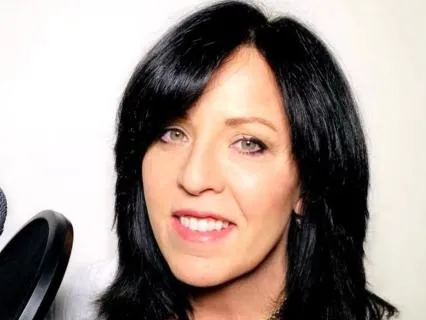
Welcome to Breakdown to Breakthrough,
The podcast that empowers you to transform your life by awakening to your true authentic self.
I'm Lisa A.
Romano,
Your host.
As an award-winning author and certified life coach,
I've dedicated my life to helping others understand the incredible power of an organized mind.
I believe that true empowerment begins with awakening to our false self.
My mission is to support you on your journey toward mental and emotional regeneration through conscious and deliberate awakening.
In this podcast,
I'll share insights,
Tools,
And transformative stories that illuminate the path to healing and self-discovery.
So it turns out that the number one relationship problem in 2026 is emotional unavailability.
And today we're going to unpack this.
So thank you so much for being here,
And I'm so glad that you are here today.
If this is something that resonates with you,
You,
Dear one,
Are not alone.
So I want to start today off with a couple of questions,
And it's important that we think about questions as an ability.
What it does is it opens up the brain,
It opens up the mind to think in different ways.
So it's actually a pattern interrupt.
Every time you ask yourself a self-inquiring question,
A different area of your brain opens up.
You're not in your pattern,
You're not operating from the amygdala,
And that's really cool.
And it's essential to increase your awareness of self,
To elevate metacognition.
Because if you stay in your loops and you don't question them,
Then you keep doing the same thing,
Expecting a different result.
That's known as codependency.
That's known as a lot of things.
So today we're going to ask you a bunch of questions first.
And hopefully this will signal a little bit of a self-reflection in you.
So have you ever felt like you're giving your all in a relationship only to be met with a wall?
Have you ever felt like you're speaking a different language from a spouse or a sibling or a parent?
Do you ever feel like you're speaking a language of emotional connection and the person that you care about just doesn't seem to understand it?
Or maybe if you're being really honest,
You're the one who gets uncomfortable when things get too deep.
So do you crave connection,
But when it gets really close,
Something inside of you pulls back and builds a wall?
These are really important questions to ask yourself because most of us will spend more time analyzing and pathologizing other people,
Which I think is a really bad thing to do if we want intimate relationships and very little time asking ourselves,
How are we showing up in relationships?
If any of this sounds familiar,
You are in exactly the right place because you're not alone.
In fact,
You are experiencing what has become the number one trending relationship struggle of 2026,
Emotional unavailability.
And this isn't just a feeling,
It's a documented cultural pattern that is emerging.
Recent studies are showing us a stark picture.
One 2026 study found that nearly one in four people have ended a relationship because of it and almost half of us,
Nearly 50% of us,
When asked to answer surveys,
Admit to hiding our own mental health struggles from the very people we're trying to build a life with.
So we're not being vulnerable and we're not being honest.
At least 50% of people surveyed.
So today we're going to pull back the curtain.
We're going to do it with compassion,
With psychological insight,
And most importantly,
Without blame.
We're just going to be curious.
So my promise to you is that over the next 40 minutes,
You will understand not just what emotional unavailability is,
But why it happens.
And you will leave with the first steps to breaking the cycle for good.
So let's begin.
So what do we actually mean by emotional unavailability?
At its core,
Emotional unavailability is a persistent difficulty in accessing,
Processing,
And sharing one's own emotions and a corresponding difficulty in receiving and connecting with the emotions of others.
So if you came from a childhood,
For example,
Where your parents were not emotionally attuned to you,
You're shut down.
If your emotions were punished,
If your emotions were ignored or devalued,
Then today as an adult,
You may have a persistent difficulty in accessing,
Processing,
And sharing those emotions because at a neurological level,
Your nervous system has associated pain with doing so.
So this is all now by default.
It's part of your default mode network.
And that's not bad news.
That's good news because that can be reprogrammed.
We want to understand that emotional unavailability.
It's a defensive posture.
So psychologically,
The ego is like,
No,
No,
No,
No.
Don't share that.
No,
No,
No,
No.
Don't do that.
It's not about being a bad person.
You're not a bad person.
It's simply an unconscious survival strategy that has outlived its usefulness in your life as an adult today who consciously wants to connect with other people in a healthy way,
Who needs to be vulnerable with other people in a healthy way.
What's wrong is what's subconscious.
It's not you.
It's your programming.
And it shows up in two main ways.
So we are either emotionally unavailable ourselves or we find consistently,
We find ourselves consistently attracted to people who are.
So let's make this real.
Here are some signs you might be dealing with an emotionally unavailable partner.
They deflect or shut down during deep conversations.
So this is the person that rolls their eyes,
Who huffs and puffs and who keeps cutting the onions at the kitchen counter and never looks up at you.
So they're deflecting or shutting down while you're trying to connect.
So they are doing things that absolutely make connection impossible.
So they're using this nonverbal communication to basically disconnect and let you know that they're not interested.
They minimize your feelings or tell you you're being too sensitive.
So now they're using verbal communication to shame you,
To make you afraid to talk and maybe question your reality.
They are,
They are inconsistent.
So think about a yo-yo,
They're hot and they're cold.
They pull you in one day and just when intimacy deepens,
They push you away.
So imagine on Monday,
Your partner says,
You know,
I,
Oh,
You're so wonderful.
Thank you so much for whatever,
Like,
You know,
Showing up for me over the weekend when we had that business meeting with my boss.
I know that you had other things to do and I really appreciate you.
I love you so much for showing up for me.
And then Friday,
As you want to go in,
Have a deeper conversation,
The,
Your partner pulls away and you're left questioning,
Like,
So what happened to all that mushy stuff on Monday?
They use intellectualizing humor or anger to avoid true vulnerability.
So imagine the partner that thinks they're super smart and they're pathologizing your desire for connection,
Or they're saying,
Oh,
You know what?
It's just,
You know,
You're just,
You're just super emotional.
It's no big deal.
You're a big baby,
Ha ha ha.
Or they're slamming their fist on the counter or they're getting a little bit aggressive with their,
With their body movements to let you know that I'm not interested in talking about anything that's deep.
So we're going to turn now inward.
Really important.
There's no healing without gentle accountability.
So here are some signs that you might be the one who's actually emotionally unavailable.
You feel a deep fear of being found out or truly seen.
So you're hiding yourself.
Okay.
This is a core issue that we have.
This idea that we have to break through the patterns,
The habits of thought and the feelings,
The neurological pathways that have you living in fear of being truly seen.
So you fear when you're talking to someone,
If they really knew who I was,
They'd leave me,
Or I'm in this relationship.
I have this wonderful house.
I have a wonderful partner,
But I really don't deserve it.
If people really knew who I was,
They'd know that this is all a sham,
That I'm a sham.
Or you feel overwhelmed or even annoyed by other people's emotions.
So you're kind of shut down emotionally.
So this is often the case with codependence.
We are hyper-focused on the needs of others.
We're barely holding it together.
We're running on empty.
We are over-functioning in every area of our life.
So when someone around us seems vulnerable,
We are just annoyed.
We're annoyed.
So we're the one like,
Get out of here,
Rolling our eyes,
Or we're like,
Gosh,
What's wrong with her?
Just suck it up.
So we say those things when it's us,
When we're the one who's emotionally unavailable or not as emotionally available as we think we are.
We are action oriented.
We do a lot,
But emotional attunement is really difficult.
Vulnerability is really difficult.
You pride yourself on being low maintenance and never needing anything from anyone.
Very typical of adult children of alcoholics,
Adult children of narcissistic parents,
Those of us who manifest as the lone wolf or the super achiever,
The perfectionist,
The super woman that has the really high stress job and who's taking care of a couple of kids and the house looks great and we're burning the candle on both ends.
We see ourselves as super responsible and low maintenance and not needing anyone,
Right?
Because needing is tied to vulnerability and that triggers our fear of rejection.
It triggers our fear of being shamed or abandoned.
Or you might use work,
Hobbies,
Or other distractions to avoid deep connection.
So if this is you,
You're the one who flutters around the kitchen like,
I'm so busy,
I'm so busy,
I'm so busy,
I'm so busy.
You know,
Mom,
Can we talk?
Oh,
Maybe later,
Sweetheart.
You know,
I got to go take care of grandma,
That type of thing.
And you'll know,
It'll land.
If this is you,
You'll know.
So I want for everybody to understand basically that these are two sides of the same coin.
It's a pattern of disconnection and it almost always involves two roles.
Initially,
You're disconnected.
Here's the master coach tip.
We're going to go deep right now.
I hope you have your pen out or you listen to this again and again,
Again.
The first disconnect is between you and your maternal figure.
There was no emotional attunement.
That disallows you or interrupts your ability to connect with,
Let's make it simple,
Your inner child or your emotional self.
Psychologically,
You have no mirror neurons for how to connect with self because no one has modeled connection for you.
This goes underground.
It becomes subconscious.
It is reinforced and bam,
You become someone who is either avoidant,
Right?
You're avoiding emotional connection.
You're doing your best,
You know,
In the physical world,
But you're avoiding,
You don't know it because you're disconnected from the self or you become someone who is now pursuing the emotions or their emotional connection of another person,
But you're attracting somebody who's emotionally avoidant.
You're just reenacting the past and not your fault.
This is something that we can break through.
I've done it myself and I've trained thousands of people on how to do it too.
So don't give up if this sounds like you.
In the world of psychology,
We often see this dynamic as a dance.
It's called the pursuer distancer dynamic and it takes two,
Dear one to tango.
If you've got trauma,
It's unhealed.
You're not breaking through the neurological loop.
So the subconscious beliefs you have by default,
No other choice,
But to act this out in your adult world.
Okay?
That's not bad news.
The good news is that this is a pattern and it can be interrupted.
On one side,
You have the distancer.
This person often aligns with what we call a dismissive avoidant attachment style.
For them,
Intimacy feels like a threat to their independence.
When their partner expresses a need or a strong emotion,
Their internal alarms go off.
Think nervous system,
Think tension.
And what do we want to do?
We want immediate relief.
So they retreat,
They shut down,
Or they dismiss.
This is all below the veil of consciousness.
Their internal subconscious mantra is,
I'm fine.
I've got this myself.
They learned somewhere along the line that vulnerability is painful and dangerous.
And what is governing your life below the veil?
Pain versus pleasure.
If it's painful,
I'm going to want to avoid it.
Now on the other side,
You have the pursuer.
This person often aligns with an anxious preoccupied attachment style.
For them,
Distance feels like a threat to their connection because every person who has anxious or preoccupied attachment style and insecure attachment style,
Their number one priority is to remain,
Is to gain a connection.
Think about a seesaw.
It has to be balanced.
Nobody can go up and nobody can go down.
So if you go down and you offer an anxious avoidant,
I'm sorry,
You offer an anxious insecure person space,
You just went down and that triggers them.
They have to scramble back into this connection and they will often edit themselves to do that.
So when their partner pulls away,
Their internal alarms bells go off too.
But instead of retreating,
They now pursue,
They try harder,
They ask more questions,
They seek reassurance.
They want to make sure that the person that is pulling away still sees value in them.
It's very sad.
Their mantra is,
If I just try harder,
If I try hard enough,
I can make them open up.
I can make them love me again.
I can get back on track.
They learn that they have to work very hard to get their emotional needs met and that any type of space is dangerous to their survival.
Abandonment trauma in childhood is akin to death.
You are not crazy if you're acting this out.
And here's the tragic genius of this pattern.
They are drawn to each other.
The pursuer is drawn to the distancer's seeming strength and independence.
The distancer is drawn to the pursuer's emotional vibrancy and warmth.
They're going to always come after you.
If you're the person who distances,
You want someone who is going to chase emotional intimacy with you because you want connection.
You just don't want to open up for the connection.
But what they're really drawn to is a familiar feeling,
A familiar pattern,
A familiar wound.
Now I want to talk about the childhood blueprint.
And this is where I've been talking about this for almost 30 years now.
Everything goes back to childhood.
This is the most important thing I will say to you today.
Emotional unavailability is not a character flaw,
Dear one.
It is an adaptation.
It is a brilliant strategy of a child's nervous system that developed to survive their emotional environment that left them feeling alone and abandoned.
It often begins with what we call emotional neglect.
Now this is different from physical abuse or neglect.
It's an invisible wound.
It's the pain of what didn't happen.
It's the parent who was physically present.
They made dinner.
They went to work.
They drove you to school,
Paid for your ballet lessons,
But they were never available to you emotionally.
There was a disconnect.
You felt like you were a fish outside the aquarium in their presence.
They were emotionally absent.
For me,
I always,
The way that I interpreted this as a little girl was there was always a pane of glass between me and my mom.
There was no connection.
So this parent couldn't attune to your feelings,
Maybe because no one ever attuned to theirs,
Which was the case of my mom.
She was just acting that out.
When a child is sad and the parent says,
You're fine,
Stop crying,
The child learns my sadness is wrong.
I am wrong because children can't separate the I,
The developing self-perception from what they're feeling.
Why aren't we learning this in therapy?
How enlightening is that?
How wonderful is it to understand that,
Wow,
Somewhere along the line,
As a child,
I interpreted this inability of my parents to validate my emotions to mean that I am invalid.
This is your psychology,
Your personality traits,
All goes back to how you were raised and how your parents perceived you and your perception of how they perceived you and blah,
Blah,
Blah,
Blah,
Blah.
There goes the pattern.
There goes the identity.
There goes this,
Think about a hologram or a pattern that just starts to take shape by the time you're a year old.
So when a child is excited,
For example,
And the parent is dismissive,
The child learns my joy is too much and I should be smaller.
So imagine what you're learning becomes your blueprint.
And until you break through and you do the necessary inner work to change this,
You stay on that blueprint.
Your life just manifests as that blueprint.
Another common route of emotional unavailability is parentification.
Now this is when a child out of necessity becomes the emotional caretaker for the parent.
They learn to be a little adult,
Sensing their parents' moods,
Managing the emotional temperature of the house.
They become an expert in other people's feelings,
But completely disconnected from their own.
Their needs were a luxury.
The family just system couldn't afford.
So no,
We don't have time for you.
Like we have other things going on,
Kiddo,
Suck it up,
Buttercup.
So the child adapts.
One child adapts by deciding my needs are a burden.
To be safe and loved,
I must not need anything from anyone.
And this is the blueprint for the future distancer or lone wolf.
Another child adapts by deciding my needs are only met if I am loud enough or perfect enough to get attention,
Or I do enough for other people,
Or I edit myself enough.
I must work for love.
This is the blueprint for the future pursuer,
And I just want to say that you could be codependent and manifest in one relationship as a pursuer,
And be codependent and manifest as the avoidant.
Until you really break through what is holding you back in these patterns,
You will go back and forth.
And after I got rid of my pursuer role in a relationship,
My way of being in a relationship,
Guess what I attracted?
I attracted pursuers.
I was more emotionally distant,
And then I attracted these people that were pursuing me.
And once I saw that pattern,
I was like,
Oh my God,
I am not healed enough.
I haven't done enough recovery work because all that's happened is the patterns flipped,
But I'm still in the pattern.
I'm still in the tango.
In psychology,
We call this an internal working model.
It's a set of assumptions that are subconscious about how relationships work that we all carry inside of us.
It's the lens through which we see love,
And for many of us,
That lens was grounded in a childhood where love was either distant or conditional.
If you are in coaching,
If you are in therapy,
This is what these people that you are investing in should be helping you flesh out.
Very important.
Know that.
You don't have to know what your assumptions are,
But if you are looking to people to help you,
You better be working with someone who understands this is what you need to work on.
So I just want to talk about attachment theory right now.
This brings us to the powerful framework of attachment theory.
This is pioneered by John Bowlby and Mary Ainsworth.
Just love them.
They show that the bond with a primary caregiver,
Now think about the bond's invisible,
Right?
It's not about physical,
It's invisible.
They show that the sacred bond with our primary caregivers is a fundamental survival system.
It goes awry,
You are going to have anxiety in relationships.
You're going to have an attachment issue that needs to be resolved later on in life.
So based on how our caregivers responded to our needs,
We develop a primary attachment style.
Think of this as your way of being in relationships.
It's not your fault.
So let's quickly map this to our conversation.
We have the dismissive avoidance style,
Which often develops from the emotionally neglectful or dismissive parent.
The child learns to suppress their needs and rely on themselves.
This becomes the adult distancer.
The anxious preoccupied style often develops from inconsistent parenting.
Sometimes the parent was available for a school play and sometimes they weren't.
Sometimes they were able to show up for your emotions and sometimes they weren't.
Sometimes they protected you and sometimes they didn't.
The child learns that they have to amplify their needs and protest or over-function to get a response.
This becomes the adult pursuer.
There is also the fearful avoidant or disorganized style,
Which often comes from a background of trauma or fear.
This person both craves and fears intimacy,
Leading to a come here,
Go away pattern.
They are both the pursuer and distancer in one.
And this person can attract somebody who wants a relationship and the person that they attract is completely confused.
They don't know what they want.
And then there is the secure attachment,
Which secure attachment you can learn how to become.
This is the child who learned that their needs are valid,
That they can express emotions and still be loved.
They can screw up and still be loved.
They can act out and still be loved and that they can go out and explore the world and they will always have a safe base to return to.
This is the type of parenting that says,
I love you for who you are.
You were not created to make me look good.
That's the narcissistic parent.
You are an extension of me.
If you act up,
It's a reflection of me.
Now I have to shame you so that you act good so I can feel like I'm good and I can imagine in my freaking head that everybody that is observing us now thinks that I'm good.
Get it?
That's a narcissistic parent.
So all right,
Here's the good news,
Because there's always good news.
This is the hope.
Your attachment style is not a life sentence.
Through conscious effort,
A new,
Healthier relationship experience,
Well,
One that we can call what we also call earned secure attachment,
You can heal this.
What my style is,
How can I connect to myself again and now earn a secure attachment with my inner being,
With my inner child?
Once that was done,
Clicked and loaded,
I knew that I was enough.
I worked through the limiting beliefs.
I worked on neuroplasticity,
Metacognition.
I earned a secure attachment within myself.
I developed what I call a stainless steel spine.
Now I can securely attach to other people because I have boundaries.
I am enough and I'm not going to put my inner being in harm's way just to stay in connection to another human being who may not be good for me.
So I want to talk about the codependency connection because there are so many myths about codependency.
It's not about spending too much time with another person or caring more about someone else's needs.
This is so deep.
So please hear me.
Many people think that codependency is just about being clingy or needy,
But it's much deeper than that.
As defined by pioneers just like Melody P.
Melody,
Codependency is a pattern of organizing your life,
Your identity,
And your self-worth around another person's emotional state.
Think about this.
So if my husband's good,
I'm good.
That means I'm pleasing him.
If my husband's upset,
That means I'm not good.
I'm displeasing them.
So I have no worth.
If my children are happy with me and they're never angry at me,
Okay,
Everything's good.
That means that I'm worthy because I please them.
This is how you become a doormat to people without even realizing it.
We have to break through these patterns.
The codependent person isn't just tolerating emotional unavailability.
They are subconsciously drawn to it.
Why?
Because it recreates the primary drama of their childhood.
If you grew up having to earn love from a parent who is distant or withholding,
An emotionally unavailable partner feels familiar.
You're going to organize your entire life and your identity and your sense of self-worth around another person's emotional state.
This is all subconscious.
It's all deeply rooted in your persona or who you think you are.
And again,
You're not aware of who you think you are.
But you're organizing your entire life and your identity and your self-worth around another person's emotional state,
Oftentimes seeking a connection,
Even if it means abandoning yourself.
The codependent person isn't just tolerating emotional unavailability.
They are subconsciously drawn to it.
Now here's why.
Because it creates the primary drama of their childhood.
For me,
I was codependent because my mother was withholding.
She pushed me away.
She didn't let me connect to her.
She was not interested.
She couldn't do it.
She had her own trauma.
She had children every 15 months,
Which meant that as the oldest,
There just wasn't a whole lot of time for me,
In addition to her cruelty as I aged.
So of course,
I became a codependent teenager,
A codependent friend,
And a codependent wife.
So if you grew up having to earn love,
Which meant that you didn't feel loved from a parent who was distant or withholding,
An emotionally unavailable partner is your norm.
Your nervous system says,
Oh,
I recognize this.
That's familiar.
What's familiar is what we interpret as attraction.
Think about it.
Birds of a feather flock together.
When you drop a peahen into a field of swans,
They find the one peacock amongst 1,
000 swans.
This is attraction at its most fundamental layer.
If you are a codependent whose mother or father withheld love,
Then you are not going to be attracted or be able to maintain healthy relationships with someone who is emotionally available.
The dynamic of if I just love them enough,
If I fix them,
If I rescue them,
If I am useful to them,
Then they will finally open up and give me the love I've always wanted and the love and the validation that I've always craved that can fill this hole in my heart that was never filled with love when I was a child.
This is the central engine of codependency.
It's not love.
It's a project.
And the unavailable person is the perfect candidate for that project.
The pursuer's codependency and the distancer's emotional unavailability are a perfect,
Painful lock and key.
Now,
Let's just talk about the reenactment cycle and why you keep attracting it.
So why do we do this?
Why do we keep choosing the same type of people or person or career experiences or friends ending up in the same painful dynamic even when we consciously know better?
This is what Freud called repetition compulsion.
He recognized that this was cyclical.
He recognized that the psyche has a profound unconscious drive to repeat what it has not yet healed.
But today,
This is where codependency is being turned on its head.
Mental health better pay attention.
It's not just psychological.
I've been saying it for nearly 30 years.
This is neurological.
This is your nervous system.
Pathways in your brain have wired together.
So that's why we're so confused.
We think,
Oh,
It's a psychological problem.
So if I have consciousness around it,
It should change.
Wrong.
Wrong.
It's neurological.
These are train tracks.
You have to learn through metacognition to actually act upon neuroplasticity,
The ability for your brain to change at a neurological level.
That's where we're going in mental health.
So we are not trying to torture ourselves when we repeat patterns.
This is why women will stay in a domestically abusive relationship,
And they won't leave for seven times.
It'll take the average woman seven times before she's actually able to leave.
The pain has to become so obscene and so consistent that her brain switches for her.
The brain switches tracks.
Too much pain here.
Now I can move.
But we can do that consciously,
Dear ones.
We can interrupt these patterns consciously.
And I really hope that's what you're taking from this.
So we're not trying to torture ourselves.
We're trying to get it right this time.
From a psychological perspective,
We are trying to go back to the scene of the original wound and create a different ending.
So says Freud.
Or could it be that we're just neurologically wired to repeat patterns and we're unconscious of it?
What if it's not repetition compulsion from the psychological viewpoint?
What if it's simply a neurology?
There's also,
We want to understand this neurological component,
This neurochemical component,
Very deeply.
The hot and the cold cycle of a relationship with an unavailable person is a form of intermittent reinforcement.
It's the most powerful form of reinforcement that there is.
The unpredictability of getting that hit of affection or validation creates a powerful chemical bond,
Much like a gambling addiction.
And this is why so many people say,
I'm just not attracted to the nice available ones.
It's not a preference.
It's a trauma response.
Your nervous system has been conditioned to equate the anxiety and drama of the chase with love and attraction.
And finally,
Maybe getting that hit at the end.
Healthy,
Stable connection can feel boring,
Or at least our nervous system interprets this as boring.
Or I would say our nervous system interprets the safety as anxiety.
We don't like not having drama,
Or at least our nervous system is like,
What is this?
This is peaceful.
Like,
We're used to the ocean,
A turbulent ocean.
We're not used to these calm streams and brooks,
Right?
So we have to understand this in the higher state of consciousness,
That our psyche will be more comfortable in the turbulent ocean than this calm brook,
Okay?
Very important.
The first step to breaking the cycle is recognizing that you're in a cycle.
It's that moment when you think,
Wait a minute,
I've been here before.
That's a breakthrough moment.
That's an awareness moment.
But it will shut like a window very quickly if you don't fan the flame of that awakening.
It will disappear.
So I'm going to give you a concrete way to start breaking this if you're interested.
So how do we get out of the cycle?
You got to understand it's a journey.
It took you decades possibly to be neurologically wired and become familiar with this crazy relationship.
And it's going to take a little bit of time.
The good news is that if you approach this consciously,
You will unwire and rewire faster than you think,
But you have to do this consciously.
It's not a quick fix,
But here are five foundational steps to get you going.
And I can tell you as someone who's done this work myself and who teaches it now to thousands and has taught it to thousands of people,
The people who say,
Okay,
I'm ready to do this now and I'm ready to commit to this metacognitive path now,
They report incredible results.
So for the sake of this session,
I'm just going to give you five steps that you can start practicing on your own.
So number one,
Name it to tame it.
You have to see the pattern clearly without shame.
You're just a detective now.
Say it out loud.
I am in a pursuer distancer dynamic.
I am drawn to emotionally unavailable,
Unavailable partners.
Awareness is the first crack of light.
You can say things like I am in the process of seeking approval.
I am trying to control their perception of me.
I don't want to do that.
I am starting to feel panicked because my husband didn't respond to me the way I wanted.
My best friend didn't text me right back.
I'm starting to feel anxious.
I'm not going to step into the old role,
The people pleaser,
The anxious person.
I'm safe right where I am.
So you have to figure out how you're showing up when people don't respond to you the way you want them to and just name it.
Now second thing is TIB,
Trace it back.
Once you acknowledge it,
Once you name it to tame it,
Gently connect the dots from your present day relationship pain to your childhood blueprint.
What familiar feeling is this relationship recreating?
Whose love did I have to work so hard for?
Whose emotions did I have to focus on more than focus on my own?
Who did I have to take care of emotionally to feel safe?
Just TIB,
Trace it back.
Now you're just observing.
No shame.
You're just a detective.
Regulate first.
You cannot heal a relational pattern from a state of high anxiety or shutdown.
This means learning to self-soothe.
You are no longer outsourcing your sense of safety.
You are learning to develop your own stainless steel spine.
Dear one,
You are reprogramming your brain,
Your sense of self,
And your identity from a higher state of consciousness.
And mark my word,
This is where mental health must be leading us.
Because talk therapy makes the brain worse unless you are approaching it from this angle,
From the teaching angle,
From opening up the hood of your mind and looking at the subconscious mind from a higher state of consciousness to understand your neurological patterns,
Your subconscious beliefs.
So you want to regulate first.
This means you must learn to self-soothe many times throughout the day.
Deep breathing,
Mindfulness,
Movement.
You have to learn to be your own secure base before you can ask it of another.
So what does this mean?
So throughout the day,
Well,
Actually,
When I first started doing this work,
Meditation was my medication.
I turned to meditation.
It was like,
OK,
Meditation is going to slow down my nervous system.
Then I can do this work more effectively.
When you slow down your thoughts,
Then you're able to catch those malignant butterflies.
It's like,
OK,
I caught a thought.
Wow,
I saw that.
I saw that pattern.
Once you see the pattern,
You can edit the pattern.
This is called synaptic brain pruning.
Your brain can prune itself,
But not without metacognition.
Neuroscience is now saying the highest form of intelligence is not emotional intelligence.
We are beyond that,
Dear ones.
It is metacognitive intelligence.
That is what's going to change the world.
Number four,
Build your window of tolerance for intimacy.
If you're the distancer,
This means practicing staying present for five minutes longer during a hard conversation.
So imagine your spouse is coming to you.
You're cutting the tomatoes.
And your wife or your husband wants to talk about how they responded,
How you responded to the kids last night.
And you can feel the tension mounting.
You put the knife down.
Good idea anyway.
You look at your spouse,
And you consciously,
Synaptically prune the neurological pathways that would cause you to emotionally distance.
You just tell yourself,
I'm going to be present five minutes longer.
Just tolerate this discomfort.
I'm going to build a window of tolerance for at least active listening.
I don't have to solve anything right now.
I don't have to even offer a solution.
My goal right now is to just be more anchored in the now with presence.
Very important.
Just try that.
The fifth thing is choose differently and tolerate this discomfort.
The next time you feel that intense,
Anxious pull towards someone who feels like a project,
Pause.
And the next time you feel like you are anxious because you know someone needs help,
And you normally just run in as the fixer because you're trying to control the connection,
You want to feel and believe,
Which is all subconscious,
It's all made up in your head,
That this person has favor with you.
Codependents are run by fear.
We are trying to avoid shame,
And we don't know that we're doing it.
So the next time you feel that pull to take care of something or stay connected to someone,
To manage how someone else sees you,
Just pause.
The next time you meet someone who is kind,
Who is consistent and emotionally available,
And it feels a little boring,
Lean into it.
Get curious,
Even for just five minutes.
Tolerate the discomfort of the unfamiliar.
This is how you rewire your brain for healthy love.
So healing our relational patterns is some of the most profound work that we can do.
And I just want to say this loud and clear.
It's not about blaming our parents,
Which I think is very niche today.
And it's not about blaming our partners,
Again,
Which I think is very niche today.
It's about taking radical responsibility for our own recovery,
For our own emotional regulation,
For our own ability to communicate and sustain intimacy and vulnerability,
And to rewire our brain from unhealthy patterns in childhood.
It's about recognizing that the brilliant strategies that help you survive your childhood may now be the very things preventing you from having the deep nourishing love that every human being deserves.
Thank you so much for sharing this time with me today.
Be gentle with yourselves.
Be gentle with others.
Be curious more than condemning.
This is a journey of 1,
000 small steps.
Trust me,
My journey is 1,
000 small steps.
One new radical self-awareness moment,
One new breakthrough,
One new change,
One new stretching my nervous system beyond what used to cause me to recoil at a time.
Namaste,
Everybody.
Until next time,
We got this.