Welcome to the Mindfulness Meditation podcast.
I'm your host,
Dawn Eshelman.
Every Wednesday at the Rubin Museum of Art in Chelsea,
We present a meditation session led by a prominent meditation teacher from the New York area.
This podcast is a recording of our weekly practice.
If you would like to join us in person,
Please visit our website at rubinmuseum.
Org slash meditation.
We are proud to be partnering with Sharon Salzberg and teachers from the New York Insight Meditation Center.
In the description for each episode,
You will find information about the theme for that week's session,
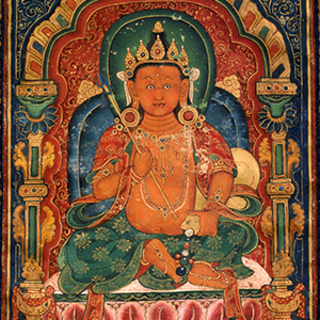
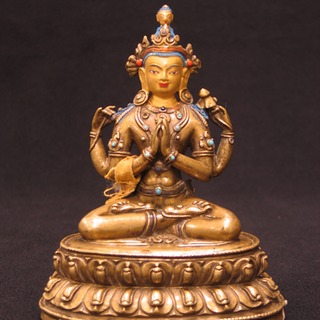
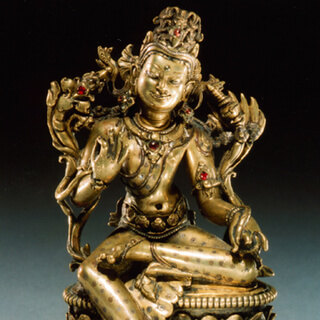
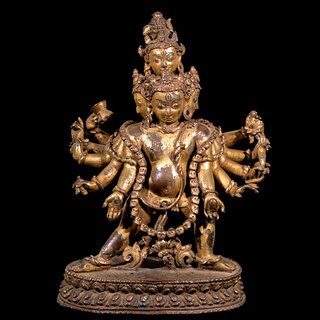
Including an image of a related artwork chosen from the Rubin Museum's permanent collection.
And now,
Please enjoy your practice.
Good afternoon.
You made it in the snow.
Thank you for being here.
There's something nice about meditating on a snowy afternoon.
What a luxury.
So glad we get to do that together today and with our teacher,
Rebecca Lee.
So nice to have Rebecca back.
So we're looking,
We're talking today and all of this month about power.
And here at the museum,
As you may know,
We're having a year-long conversation about power,
The power within us,
The power between us,
And really trying to understand a true nature of power.
And in relationship to that,
We're talking about power sharing.
And if you saw on your way in today,
You will have passed by a table in the middle of the lobby there.
This is a new installation called the Long Table.
And it's an open source project by artist Lois Weaver.
And it is meant to be a space for people to come together and have unmoderated conversations,
Perhaps about difficult things,
Perhaps about when they felt the most powerful or least powerful or how they share power in their lives.
So I just wanted to point that out.
It's something that we'll be using throughout the year in different ways.
And you're also just welcome to use it yourselves.
So it's nice to have a place to actually have a conversation that is dedicated to that and that is a place where people who know each other can meet or people who are just looking for conversation and to engage with someone they might not know is also pretty cool.
So as part of this exploration of power,
We are looking at a work of art that is from the exhibition up on the sixth floor called Faith and Empire.
And this is all about how people used religion and art to become powerful in different ways,
Right?
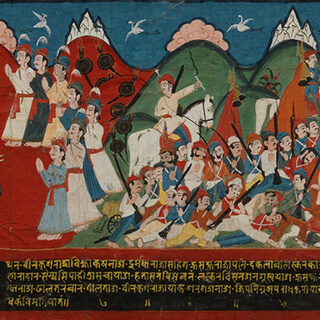
So what's so interesting about the figure that we're looking at today is this is a warrior.
This is,
As you know,
Many of you who have been here before,
Often in Tibetan and other art of the region,
There are figures that are wrathful,
That are fierce,
Who are known as protectors.
This is slightly different,
But it's along the same lines.
And what's I think is interesting about this warrior figure,
Kuan Yu,
He was a general in the Chinese army and he became enlightened.
He became a deity.
So imagine that.
Seems like maybe,
I don't know,
Are there contradictory elements in there?
Perhaps?
I don't know.
But we are full of contradictions,
Aren't we?
That's something we bump up against in our meditation practice all the time.
So it's,
I think,
Interesting to consider this prospect of this enlightened general.
Also I think what's really interesting about this particular work of art in which we see these kind of very verdant green landscapes and rolling hills and these pink and white clouds,
This tells us about the region.
But this is from the Qing dynasty,
1644 to 1911 in China.
And in fact,
The Tibetan spiritual leader who was a part of this dynasty created a prayer in Tibetan,
Manchu,
And Mongolian languages,
Which was inspired by a vision he had of Kuan Yu,
This protector,
Who was protecting the dynasty.
So it's just an interesting confluence of several different cultures coming together and to embrace this complex figure.
So Rebecca Lee is back with us today.
Great to have you back.
She is a Dharma heir in the lineage of Chum,
Master Sheng Yan.
She started practicing meditation in 1995.
And she began her teacher's training with Master Sheng Yan in 99 to become a Dharma meditation instructor.
She's also trained with Simon Child.
And she currently teaches meditation and Dharma classes,
Gives public lectures,
And leads retreats in North America and the UK.
And she's the founder and guiding teacher of Chum Dharma Community and a sociology professor at the College of New Jersey,
Where she also serves as a faculty director of the Alan Dolly Center for the Study of Social Justice.
Please welcome her back,
Rebecca Lee.
Thank you.
Thank you,
Don,
For your lovely introduction.
I always enjoy listening to your introduction.
I also want to thank everyone for coming out on a slightly snowy day.
I travel from New Jersey,
Whose state governor declared state of emergency.
So I felt I will brave the element to come,
Like all of you.
Today's theme,
This month's theme,
Power,
And in Don's introduction of the key character of today's artwork,
She talked about a general entertaining enlightenment.
How surprising.
If you felt it was surprising,
Maybe perhaps because you felt a general,
A soldier,
He probably killed a lot of people,
Did a lot of these,
What we consider very bad things,
And how can this person be enlightened as well.
And this reminds me of this very important saying in Chinese Buddhist tradition,
That if you put down the weapon of killing that you've been using this moment,
Immediately you can be a Buddha.
What that means is that it doesn't matter what we have done in the past.
Yes,
We have done,
We have made mistakes in the past,
But this moment,
What are we doing?
This moment,
Are we still giving rise to vexations,
The cause of suffering,
Or are we choosing not to do that?
If this moment we can not give rise to cause of suffering at all,
Then we can be fully at peace in accordance with wisdom and compassion fully,
Then that is no different from Buddha.
That's what that means.
Of course the trick is we are so habituated to doing that,
Maybe a moment we can be at peace,
But next moment,
How about that?
I don't know if I can get home,
There's snowing,
I wonder how much snow,
Is this going to be slippery?
Worry,
Worry,
Worry.
Then we suffer,
Suffer,
Suffer.
And then,
But this moment,
When we catch ourselves doing that,
We can choose.
We can choose to put down,
Put down that weapon,
Put down what we do to cause ourselves and other suffering in that moment.
We are at peace,
No different from Buddha in that moment.
And as I'm thinking about this theme of power,
In our spiritual path,
Many of us had learned to rely on others,
Maybe some kind of guru or deity,
Or anyone we believe is more accomplished spiritually to save us,
To deliver us from our misery or from our suffering.
And underlying this belief is that we can't possibly do it.
I am too weak,
I am too defective.
Whatever it is that we believe about ourselves,
That is the belief that we must rely on some other,
Power to save or deliver us.
In Chinese Chan Buddhist practice,
It is a path of not relying on other power,
Meaning that in this practice,
We believe we all have the Buddha nature within us.
Every single one of us,
That it is entirely possible for every one of us to find freedom from suffering with our own practice.
We can use the guidance following the experience of teachers,
Gurus,
Or masters who have tread this path,
And we can learn from their experience through following their teaching,
Their guidance.
But it is up to us to do it,
To walk the path.
And also,
We are the only one who can actually stop giving rise to suffering ourselves.
The story of Buddha's attendant left a deep impression on me when I first studied the Dharma.
Some of you might have heard this story,
Ananda,
Who was the Buddha's cousin,
Who was his attendant who was by the Buddha's side all the time.
And it was believed that he remembered all of his sermons.
And then after the Buddha entered Parinirvana,
He was not admitted to the big gathering of great arhats because he had not attained arhats.
And he was like,
I don't know because I was waiting for the Buddha to deliver me this whole time.
He thought like I'm gonna spend all this FaceTime with Buddha,
Surely something would have rubbed off.
And he realized then that,
Oh,
I actually have to practice myself.
And he did because he had all the teachings memorized and he attained arhatship.
So this spirit of not relying on other power in our practice is very much part of what Chan Buddhist practice is about.
Every moment,
This moment,
When we settle our mind and cultivate this clarity of what is going on in our mind,
What we are experiencing,
We can see clearly for ourselves,
Are we about to react in our habitual ways of aversion or craving and cause suffering for ourselves and others?
And when we see that,
Can we see that we don't have to do this?
We have a choice.
We don't have to follow this habit,
However entrenched it is.
Knowing this conceptually is one thing,
But we may feel at the emotive level that I can't,
I can't,
I can't help it.
It might be this feeling of fear that we have conditioned in ourselves.
Maybe we realize that we have cultivated this belief through our experience,
Through our conditioning in our life.
How we believe that I can't,
I can't,
I have to rely on others.
Or really we deeply believe that I'm so deeply flawed I can't change.
I have met practitioners who truly believe that and was shocked to hear that,
No,
You really can do it.
You can change.
And you might have met people like that.
I have met one of my neighbors who was a little older than my mom.
She told me that I can't,
I can't go to the restaurant myself.
She really believed that she can't.
I can't.
And it's like she told me I can't go to the movie myself.
She had to wait for her daughter to visit to go to see a movie.
She can't.
And sometimes we hear the things that we say we can't or someone else says it,
We think,
Wow,
I can't believe it.
Surely you can.
Do we have something like that in us that we say I can't?
That this underlying fear that leads us to believe that I can't change,
I don't have the power.
In that way of thinking,
We are giving power to others.
I remember,
I want to share this story with you,
Many years ago I was assisting in a retreat and I discovered that in that retreat I would be responsible for the sound equipment.
And along the way I had developed this phobia of machines.
So any machines that had like buttons,
A lot of buttons on there,
I was like,
I can't deal with this.
And I was looking at that thing with lots of buttons.
I look at that and I saw myself feeling,
Seeing this in my mind.
I can't.
And I saw that thought.
And I see that like,
That is ridiculous.
It's like,
These are just buttons.
Surely I can ask someone to tell me which one to turn on and then I would get this figured out.
And I had someone write me a very detailed instruction and I overcome my fear of those buttons and machines.
And I used to tell myself that I can't switch onto my new iPhone myself because I will screw it up.
And I listened to what I should do and I googled it and I just did it.
I can't.
It's a thought that we have learned to believe in.
We can unlearn it.
But we don't even know what kind of I can't we have come to believe in deeply in ourselves that has sort of restricted us in our lives.
And so this is what we can do in our practice.
In our meditation practice,
We can use meditation method to settle down our mind.
When we settle down our mind,
We are afforded an opportunity to see clearly into our mind.
What that means is that we are able to see the subtle thoughts and feelings that lurks around that operate a lot,
So much that we may not even notice that.
When the mind is settled,
We can actually notice them.
And then we can have an opportunity to see for ourselves the validity of these thoughts.
I can't.
Surely,
Like really?
Why?
I can walk into that restaurant and they will serve me food.
Like what is the basis of the I can't?
And we can see the deep-seated fear that we have developed around certain belief.
But it's not that easy.
Some things are more difficult to overcome than others.
So we learn to work with ourselves step by step.
So when we learn to cultivate this stability and clarity of mind,
We carry it with us in our daily life.
And in our daily life,
We can notice moments when we say,
I can't.
I can't do this.
I can't say this.
Whatever it is,
I can't think this.
Whatever it is that we have come to believe,
And we can notice this thought that I can't,
Underlying it is this belief about ourselves,
About our powerlessness.
We can poke a hole in this belief.
And we can practice doing that in our meditation.
We're meditating,
And it's like,
I can't do this.
I can't keep doing this.
This moment,
The thought arises that really bothers us.
Can I just sit here with this thought and feeling and allow it to be in the mind and then allow it to come through?
We might notice the mind saying,
No,
I can't.
I get upset.
I can't help to suffer.
It's like,
Let me try.
And you notice,
Ah,
I try that.
I sit with it,
Maybe with this physical discomfort,
And it goes.
That's the chance we poke a hole in the belief that I can't.
And we see that it's just like a cotton candy,
Full of holes.
It is not solid.
And so we can make use of the practice to allow us to see the habit we have developed to cause ourselves suffering.
One way is the conditioning of our mind in believing that there are all kinds of I can't that is compelling us to build walls and blocks on our path in our life,
Believing that we have to rely on other power that blocks us from believing that we can actually make a choice right here,
Right now,
In this moment to stop giving rise to suffering.
We don't have to wait.
We don't have to wait for someone else to come deliver us.
So let's practice together.
And in this practice session,
We learn,
We practice to see into our mind in those moments when we are about to give rise to habits of suffering,
In that moment,
Whether we can practice remembering that we can choose not to follow that habit.
You might like to take off your glasses.
They will help you relax your facial muscles,
Take you through the whole body relaxation.
Feel the relaxation of the top of our head like melting butter.
And feel the relaxation spread to the forehead.
Like to see if we're holding tension in these muscles,
Perhaps from habits of worrying.
And allow the tension to melt away.
And feel the relaxation spread to the eyeballs and eye muscles.
We hold a lot of tension in these muscles from all the judging,
Analyzing,
Comparing.
Right here,
Right now,
We can give them a vacation.
Allow the tension to melt away.
And feel the relaxation spread to the facial muscles.
Like to see if we're holding tension in some part of our face,
Maybe to put up a facial expression for the world to see.
Right here,
Right now,
You can give these muscles a vacation and allow the tension to melt away.
And feel the relaxation spread to the entire head.
Feel the relaxation spread down the neck muscles,
Allowing the tension we hold in these muscles by habit to melt away like melting butter.
We directly experience the subtle changes in the sensations of these muscles as we allow the tension to melt away.
And feel the relaxation spread down to the shoulder muscles,
Allowing the tension to melt away.
And feel the relaxation spread down the arms,
Directly experience the changing sensations in our arms as we allow the tension to melt away,
Spreading down to the forearms and all the way to the fingertips.
Check to see if we're holding tension there by habit.
Maybe from anxiety or fear.
Right here,
Right now,
We can give this anxiety a rest,
Allow the tension to melt away.
Feel the relaxation spread down the torso and all the way down to the lower abdomen,
Trusting that the skeletal structure can hold up the body.
These muscles can take a vacation,
Allowing the tension to melt away.
And feel the relaxation spread to the upper back,
Between the shoulder blades,
Allowing the tension we hold here habitually to melt away.
And feel the relaxation spread down the back to the lower back,
All the way down to the buttocks,
Where we feel the sensations of the body sitting in this chair.
Feel the relaxation spread down the thigh muscles and all the way down to the toes.
Feel the relaxation of the entire body sitting right here,
Right now.
So today,
This wakeful mind is relaxed,
Yet wakeful,
Clearly aware in this gentle,
Relaxed way,
This present moment experience of our body and mind sitting right here,
Right now.
Moment after moment,
We notice subtle changes in the body sensations as the body breathes.
We can maintain this clear awareness of the changing sensations as the body breathes,
As a way to anchor our attention to the present moment.
And sitting here,
We may notice thoughts and feelings coming and going.
We cultivate this clarity of the thoughts and feelings we're experiencing,
Allowing it to be here,
Allowing ourselves to be fully present with it.
And when it's time,
Allowing these thoughts and feelings to move on,
On their own.
Moment after moment,
We practice cultivating this clarity.
Practice our habit of allowing the mind to become dull or tense.
Practice relaxing into the present moment with this wakefulness,
Moment after moment,
And allowing ourselves the space to see that every moment we have a choice,
We have a choice to react and create suffering,
Or we can choose not to follow that habit.
What is it?
.
.
.
.
.
.
.
.
.
.