Welcome and thanks for listening to Truth Wisdom Freedom Conversations.
Each week I'm joined by various conscious leaders as we discover more pathways in becoming heart-centered human beings.
This is your host,
Author,
And spiritual coach,
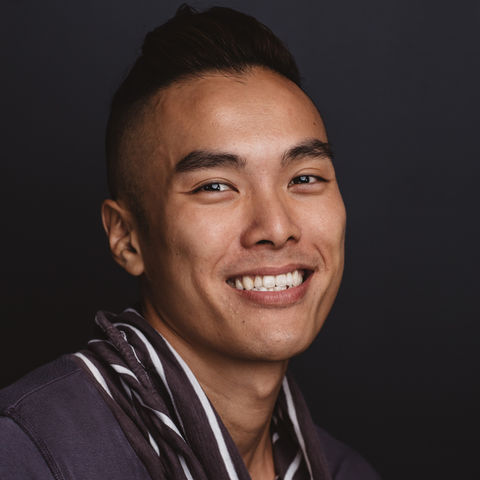
Johnson Chung.
Good morning,
Everyone.
Hello,
This is Johnson and I am live here with Zoe Martinson for another episode.
Hi,
Zoe,
For another episode of Truth Wisdom Freedom Conversations.
We are here this morning to talk about art and storytelling and its purpose and how it plays a role in helping to change the world,
Which is a very big topic.
Zoe,
I actually know Zoe from back in Akin' Conservatory days and we've kept in touch since.
She's just had a baby and now she's a new mother.
So congratulations on that,
Zoe.
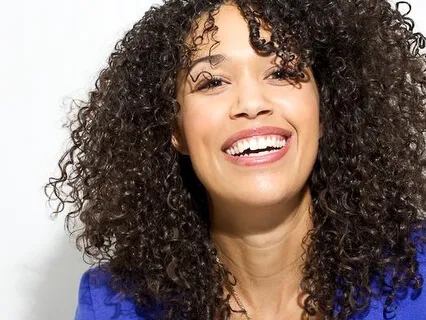
And Zoe is an award-winning writer,
Actor,
And director.
She actually had a play.
I knew it as Endebele Funeral,
But now the name has changed.
So I don't know if I'm going to say it right.
Olet Yellweh?
Olet Yellweh.
Oh,
I got it right on the first try.
Okay,
So and that toured off-Broadway in South Africa,
Edinburgh.
It was the Time Out New York critics pick and she's also done a lot of work with humanitarian aid in refugee camps in West Africa.
She was the founder and executive director of NGO Bright Future Arts International in Ghana.
And she's done a lot of documentary work and she's directed and produced and created all of this art around the world for the purpose of really telling stories.
And also,
I think you were nominated as one of 18 Black women in America who's changing the world through storytelling and through art.
Isn't that right?
It was like a PopSugar article.
They were like,
You're one of these people.
I was like,
Okay.
Yeah,
No,
That's pretty amazing.
Yeah,
And you know,
Zoe's won so many different awards for performing arts and creative change at Sundance and freedom of expression.
I mean,
There's just so many,
Right?
And so I love talking to Zoe and I love having interactions with Zoe because she's so passionate about what she does.
And so that is Zoe Martinson.
So I'm really happy to talk with Zoe today and I guess to start the conversation about art and its purpose.
I have a quote that I'd like to start with and I think it was Pablo Picasso who said that the purpose of art is to wash and dust the daily life off of our souls,
Which is pretty cool.
So what do you see the purpose of you as a modern Black woman in America as an actor,
Writer,
And producer in relationships to the art that you're creating?
I think as far as like what pronoun I have at what different time kind of gets punctuated depending on what room I'm in.
So sometimes it's like I'm a woman first.
Sometimes I'm a Black woman first.
Sometimes I'm Black first,
You know,
Like and sometimes I'm just human first.
And sometimes I'm other depending on foreign if I'm in a different country,
You know,
So those experiences kind of shape the outlook in which I create characters from or I am drawn.
It kind of pushes me towards the stories that I'm drawn to tell and those tend to be ones of marginalized voices,
Just voices that we haven't heard.
And I think kind of that comes from the lack of those voices and just myself and as a curious person wanting to see those stories and being curious enough to delve into the place where I feel comfortable to tell them.
I really resonate with the whole aspect of the marginalized voices.
Where do you feel that the underrepresented stories,
Where do they have a place and how do they actually make a difference in the world?
Because theater more so than film is so momentary.
It happens in the moment and then it's gone.
And the actual effect of creating a change in perspective on the viewer or the participant,
The audience member,
Is very uncontrollable.
For sure,
I remember back in school,
There was this this whole noble notion of wow,
I'm going to tell stories to change the world for social injustice and all of these things.
And of course the other bits that came along with being an actor as well.
And of course that changed for me,
But it hasn't for you.
And so I wonder what motivates you and what inspires you to keep going to tell these stories,
Especially now.
Yeah,
I think theater is kind of ephemeral in a way and that makes it precious.
And whether people know it or not,
There's this feeling of this is precious,
This is only going to exist in real time in which I'm present.
And I am in change looking at another human being going through a set of human emotions and they're right in front of me.
And that exchange of breath between two people,
The energy that gets exchanged between two people,
Is something powerful and magnetic.
And that is,
That's what makes that art form so alluring and why it hasn't died as time has gone on.
And we've introduced cinematic storytelling,
Right?
Cinematic storytelling is,
You can just go anywhere,
You know?
And you can show people a world that they have never seen.
You can actually physically go and see,
You know,
Like in my film,
You can go to a fishing village in China,
In Ghana.
Sorry,
You can go to a fishing village in China too.
But you can go anywhere,
Like,
You know,
And you can actually see it and you get these windows into a world that you just have no access to.
And so both,
Because of both mediums,
It offers the power to,
Depending on the stories that you're telling,
It gives you the power to introduce new narratives.
And so that people can no longer separate themselves and see someone as an other.
They see,
Oh,
I have those emotions.
I feel the same way.
I would feel that same exact way in that situation,
Or I have been in that situation and suddenly the world gets smaller and it's not as easy for us to separate each other and point fingers.
And the other thing it does is that,
You know,
There's something about being on a stage and being on a pedestal and what we put up as the things that we look up to.
And in some way,
Film and theater and storytelling does that.
Like what stories we tell,
Whose story we tell,
Gives weight and importance to that story.
And so if you have a group of people that have never really gotten their stories to be told,
And we're always telling one type of story,
It's always giving weight and credence to that story,
It's saying it's complex and nuanced.
And these other stories,
They just kind of live on the peripheral.
I think that's where it's important to have just diversity,
Because on all these points,
You know,
You're going to just see,
People are going to have to force themselves to empathize with other people.
And that's kind of the gift of storytelling and where it can live in social justice.
One kind of example I think of that is like where,
You know,
The movement here of like taking down all the statues,
Right?
It's another space where people are like,
Well,
Who cares?
It's a statue.
But it isn't just a statue.
It's like what we put up,
What we give credence to,
What we say is important.
Are that person's values,
Are that person's outlook?
And if that person is problematic or that person is actually not who we've kind of,
The shibboleth and the lie of who we've created,
Then it becomes problematic to put that person up.
And so the same thing with stories.
You talk a little bit more about the statues so that people who are perhaps overseas,
Who are not living in America,
Are not as familiar.
Yeah,
That's true.
Well,
The statue movement here is that there's a lot of really problematic statues.
One of which actually I just went for a park walk into the park with my daughter.
And here in Hoboken,
There's a park named Christopher Columbus Park.
And in the middle of Christopher Columbus Park is this Christopher Columbus who's standing there like he looks like He-Man.
And he's got like bulging muscles and he's looking ahead and he's huge.
You know,
This guy and the Italian Americans had kind of needed a hero.
And so they had kind of made Christopher Columbus this hero being the person who discovered America.
Cut to the reality of it.
You know,
Christopher Columbus was an alcoholic.
He was an incredibly problematic person.
He had multiple infractions against domestic violence and alcoholism.
He thought he was trying to go to India and actually was just so drunk.
He was sailing across the sea to America and not knowing and then called the people Indian.
Still not knowing because he was that wasted.
So I mean,
He's obviously a problematic person.
And in getting rid of all of the reality of who he was and just kind of creating this lie and a superhero version,
It's problematic because then we suddenly say,
Oh,
It's okay for people to go in and colonize in the way in which he did or we just don't know how he actually treated human beings.
And when we lose history,
We repeat it.
How do we have these people that are incredibly problematic?
Why are we hosting them up as a false prophet?
And and how do we change that?
And who should we put there?
Like who is worthy of that space?
And also like maybe it just needs to come down and we need to be live in 2020 and stop ignoring our history.
And that's kind of the movement with the statues.
No,
I think that's really important to change the narrative of these unquestioned belief systems that have been seemingly harmless.
We've been taught these little poems and rhymes when we were growing up.
Christopher Columbus.
What was it?
Set the world something blue?
Stale the ocean blue.
And it was a rhyme to teach us history so that we could always remember that it was 1492.
It was some sort of rhyme.
I remember 1492,
But because of this rhyme.
Oh 1492,
Sail the ocean blue.
Yes.
Right.
So we learned these rhymes that are seemingly harmless,
That are these stories that we grow up with as kids.
And that really sets the tone for how we view things like Thanksgiving in America,
Which Yeah,
It's a history of erasure.
You're erasing a Native perspective,
Right?
The perspective of the Native American is,
You know,
Oh,
This drunk person came in and they led to colonization.
And then it led to kind of like a Holocaust basically for Native Americans.
And that all kind of gets like,
Oh look,
Da da da,
Oregon Trail just shoved under the rug.
That was bad.
Bye.
Now we're going to talk about the greatness of America.
And then things repeat itself.
And I think from a healing perspective,
It's all about looking at the subconscious and the unconscious.
All of that which is hidden in the shadow.
And if we suppress that which we can't see,
Which is the ugly underbelly of America,
Or any other country or any other nation that has been colonized or oppressed.
If we don't deal with the trauma in a confronting way,
Then that eats at us as people.
And I know that there is a grassroots organization in New York City that works with augmented reality and storytelling.
I was just watching a TED Talk about them and they go around to these statues like in front of Trump's Tower.
And they have augmented reality shows,
Experiences so that people can literally see it.
And you can't really stop it because it's their holographic images.
And so you have to engage with it.
And I think oftentimes people want to live in ignorance because ignorance is false bliss,
Right?
And it's easier to shield their eyes and not see than to actually engage with it.
And so something that Zoe had been working on previously with something called the Alien Nation,
Which is pretty cool and it had to do with the US immigration system.
And do you want to talk a little bit about that since we're on the theme of social justice?
The Alien Nation kind of came all of my work kind of comes out of more of a documentarian type of approach.
So I kind of go and I immerse myself in these areas like the immigration courts here,
Or I was in a humanitarian aid camp on the border of the US and Arizona border where migrants would cross in the desert.
And there was an aid camp because a lot of people were dying in that stretch of the desert because it was pretty treacherous path and it didn't have a lot of border control,
But then people were finding bodies and so they wanted to put this International aid camp.
So it was agreed that while people were on the aid camp in the aid camp,
They were on international territory and they couldn't be picked up and it gave you know,
Just sustenance and provided medical care.
And then,
You know,
Sitting through countless court hearings going to detention centers and then out of that creating kind of this play that has been so hard because right now our immigration system is continuously in flux.
So I'm always having to rewrite the black pieces of the play.
I'm like,
Okay,
That's not real anymore or that changed.
So whatever gets done it will finally who knows.
And then I also just did Black History Museum according to United States of America.
And that was an immersive play where you walked through and you kind of got America's relationship to blackness from its creation through now modern day and how the cycle of kind of oppression is always met with a pushback or and then met with protests and that men then met with like this much change and then that cycle kind of continues generation through generation until now.
And so both of those started in the communities talking to community members bringing in artists that were willing to kind of explore in those realms and then creating work off of that.
What was it like being in this situation in the desert having to witness all that was going on because you actually you find yourself in Africa,
You find yourself in the desert in Arizona in these places,
You know,
Sometimes when I follow you on Facebook or Instagram and where is she?
What is she doing and you're literally in the thick of it and witnessing the suffering happening in the moment and it's in real time.
So how do you take that to create and still stay motivated and still stay alive,
Right?
There's all these different things are happening from a personal level to a larger social level.
What's going on in your mind during these times?
I think I'm just there as a conduit like I'm there to just absorb and be a conduit and not get in the way of it and not judge it and just be open.
And I think because looking back,
I mean,
I didn't really realize it but looking back at my life because I go into situations in that space.
People are very comfortable to talk to me and bring me into spaces that other people haven't.
I think there's also a benefit to being a marginalized person in America,
Like right to be Native and Black and you know people look at you.
They're like you're going to understand my story.
You're going to see my story.
You're not going to see whatever opportunity that you have in front of you.
You are me in a weird way.
And so it's actually allowed me more access into areas that and a more connection to people in a deeper way.
And then sometimes you have to just understand that it's not just there to be put up on Broadway or to get critical claim or to succeed tremendously.
Sometimes art is there to be a space of healing.
And so you're also there to kind of just facilitate someone's healing or to just listen or to say I hear you and I think what you have to say is incredibly valid.
I think your story is valid and I'm I want to bring that story into and show it to other people because I think their mind,
You know,
Some people are just like I didn't think my story was special.
I don't think anyone saw me.
There's that space too.
And so I think when you go in with all that people are very open to welcoming you into their their spaces.
And but when you mentioned it,
It's true.
I was like,
Oh my gosh,
I've been so many spaces like I was in my informal settlements in South Africa,
And we did kind of art advocacy workshops there.
Ghana the camp in Arizona that one.
I was more just there to receive and listen and everyone wanted to talk to me.
Everyone that was in there wanted to sit down because they wanted me to hear their story.
They wanted their story to mean something and to live past this moment the detention center,
You know,
Same thing.
Everyone wanted to talk to me.
They're like,
I want you to not understand.
I want you to bring my voice out here,
Even if it's in a character and the character part of it makes it safe because it's not them,
You know,
It's not like a news reporter.
It's actually a space where people can't get to feel a bit more free.
I think that's such a beautiful testament to the power of story and narrative and healing and how it's so important for people who don't have they don't have the courage to share in a way that,
You know,
You have the articulateness to be able to express yourself and not everyone has that ability,
But it is important for everyone in order to heal to have their story heard in some way in some form.
And I think that that really is the power of the work that you're doing and also going back to what you were saying about the benefits of being a marginalized person right now in America and other parts of the world.
What is the benefit of that so that it can you know for your perspective,
So it might help shed some light on people who are in a place of self-pity or self self-marginalization.
I think that is you know me especially being a gay Asian person growing up in New York City with very conservative parents.
The external marginalization of that led to an inner marginalization where it became it became myself harming myself over time.
And until I saw that there were other voices like my own first gay and then Asian and then having to reconcile the both that became very healing for me.
So I know the power in seeing other people because it gives you courage to recognize yourself within yourself as someone in America who is feeling alone an island on their own.
What what words of wisdom might you shed right now?
Everyone feels alone because we're on stay at home stay home stay inside be isolated from people.
So it is it is tricky.
I think I've always been told it's a bad thing,
Right because again of what we've put on pedestals has hasn't really been people like me,
You know traditionally growing up the thing that was beautiful was like the blonde hair blue-eyed.
I was never that and I didn't care that I wasn't that and I didn't think that I should be that or I wanted to be that.
I thought I had validity in who I was in my spaces where I see as I've gotten older where I see like real benefit is that I understand humanity in a deeper way.
Maybe I don't I don't know how to trick that I don't want to say don't want to take away other people's experiences or their relationship to pain,
But I understand the nuance of oppression.
I've lived in it.
It ends up forcing you to find joy in spaces that are dark,
You know or dim if you if you go to Ghana or you go into African-American communities in America,
You're going to laugh a lot.
Everyone's always making a joke out of something,
You know,
The taking a name subverting it making a hashtag,
You know,
Whatever black Twitter is funny,
But it's because of the fact that you're going to take something dark and find joy out of it because you can't just live there you go into some of the more impoverished areas and you actually find a lot of laughter because people don't it's like the poverty is the given circumstance,
But in the end they have to live their daily lives and those they want to fill them with joy and things that make them feel whole.
I think it's given a window and access into those in a different way.
I think it gives me an ability to see everyone kind of equally that's a gift because some people really don't they just don't know they can't recognize that they're not or that they're putting themselves a step above someone else or they're putting themselves a step below other people,
You know,
Wherever you fall in it.
And so I think you find that that's happening that's transcendent of race of gender of where you are social status or does that change depending on what groups you meet with you put on different roles and different aspects of yourself depending because you're such a chameleon in the spaces that you go to and I think that people who are very dedicated to certain movements,
Let's say Black Lives Matters and other movements around America that there's such a hard and fast identity that people put on.
But for you you're in many different spaces.
So how does one take the curiosity?
I think this is what one of your mentors taught you or told you let your curiosity outweigh your fear.
Yeah,
How do you take that curiosity and go beyond the fear the anger the rage of a certain injustice so that you can gain the insights from these different spaces and understand and connect with humanity and different groups of people that are marginalized in a more transcendent way.
I get the luxury of being kind of the conduit.
I'm not the face of a movement.
I'm not the that's a whole thing in itself.
Now you have responsibilities you have people looking to you for guidance,
You know,
I'm the person telling that person story.
So my my position is just humility and understanding and coming in with empathy,
Right but I also allow for what I found is most effective for me that I have to allow for the thing to affect me like when I'm affected.
I have to allow for it to I would say I have to move through it.
It has to move through me.
I can't just try and carborate and put it into a box somewhere that exists.
I'll just have tension and I'll be sad and I won't have dealt with the trauma that I'm witnessing because in the end seeing other people's pain and all these different spaces.
There is a trauma to it as well.
Like I do bring it with me.
So I just try and let it flow when I'm sad.
I'm sad,
You know,
I let it out.
I don't just sit there trying to be stoic.
This is moving,
You know,
That person's story is moving me.
I let myself be moved and they appreciate it because it means I'm human.
They're talking to a human being and they're not talking to a robot.
That's kind of how I do it.
I just and then because I'm not holding it,
You know the sadness when it comes it comes in and it and it moves out and when the joy comes the joy comes,
You know,
And I found kind of a ying and yang with my life in that way,
But that wasn't really always the way I was.
I mean,
I think I purchased I didn't know how to handle any of it.
I just Harvard and put it in little boxes and would go kind of numb to things over injustice or I get so mad that I didn't really know how to handle my anger and or my secondary emotion sadness or hurt.
You know,
I wasn't a violent person,
But I just like,
You know,
I didn't it was more chaotic.
I think I'm just older purchase was the conservatory that we went to in New York.
Yeah.
Well,
It was a four-year acting Conservatory program.
And yeah,
There was a level of repression or denial and irony was that we were actors to open.
Yeah to be open and to express ourselves,
But also it was an incubator and experiment of how you can compete and become a better person with other people because there was a cut system right that that kind of created a whole different energy to the theater space of just being open and authentic and expressing and finding yourself.
There was a judgment to it.
There was a cut you could be cut or just kicked out eliminated from the program.
Yeah,
You could be your art could just be not validated.
Though that doesn't put you in a position of openness.
That's a it puts you in a position of holding your foot to the fire,
But it doesn't always for everybody create a space where people give themselves permission to just be full.
And so for me,
I only felt like I could be full through in reality of white gaze.
So when it came to all the other stuff that didn't fall into like that white Wonder Bread gaze in America.
I kind of would just keep all that stuff in and I was like,
How can I be the best because that's what would succeed and all the little nuanced stuff the stuff that makes you quirky or weird or actually interesting and then the end the stuff that's made me a better artist.
I kind of just kept it close to home because it wasn't received well.
Yeah,
I totally agree because I told that I was too gay too Asian.
And you're just like I can't do anything about that.
But at the time you're so eager because you're young.
Yeah,
You won't you know,
So you're like,
Okay.
Well,
Let me repress let me hide.
Let me let me put all those things away and it's like those are just the things that make you so unique and so beautiful and that actually are your artistic gifts,
But because that institution didn't see them as that and that's just an issue with education across America in general.
It's told through one lens and even in an artistic Forum like theater and film there's even that that paradigm of what you were saying the old way of looking at theater.
This is how Shakespeare is done.
This is how theater is done.
This is how it looks it must look like this.
So when you talk about validation,
How do you do you look for validation anymore in the work that you do?
No,
I just got rid of it.
I get rid of it.
I don't care.
I don't care.
I think the hardest thing was I have to care when I'm pretty when I'm working in a producer role because you're trying to get press in you're trying to like promote the show.
You want as many people to see it.
I just want as many people that don't see theater that don't feel like this is a space that they can access at least with the last show in the fall Black History Museum.
I want as many people to feel permission to come into this space.
I want them to be able to afford the tickets.
I want people to this not I don't care whether the reviewers come.
I don't care whether it's their critical acclaim claim.
This wasn't created for them.
I don't even know what their experience is going to be going through this because they're going to have a lot of feelings and depending on where they grew up and how they grew up those feelings might manifest in something nasty.
It might manifest in a self-reflection.
They're not ready to have you know,
Because America is charged it's built on race and when you're suddenly throwing people to actually because in the show everyone's given a black card.
So they're everyone's going through this experience as they're as the protagonist so you can't escape it and people are having real emotions in front of each other.
It's interactive,
You know,
You signed up for it.
So and then in the end there's a healing.
There's a debt I had to put a healing and right at the end.
I was like,
How do we heal without it being corny?
Like how do I heal a space that just went through this whole thing and we had this beautiful poem and then people could yell out their words just a word on how they felt or a sentence or whatever came to them.
It would live right around the walls as they would go and that gave people just some ability to deprovest before we open the doors and send them into crazy-ass New York.
That show needed a healing that show needed that space.
But at the same time I didn't especially with that show.
I just didn't care.
I didn't want whatever person's review or whatever person's point of view to taint the next person's point of view.
I love how similar that is the end of that the healing circle that you did where people were shouting out their words and then you live writing it onto a board.
It makes them feel heard and I do something similar at the end of a workshop or retreat after we come out of a really deep investigation of a certain trauma or old story or belief system within someone's own personal story.
What's really important is sitting around the metaphorical fire.
Everyone is sitting around and telling their story and without that you become the voyeur and you're just watching the experience,
But it's not quite complete.
That itself and what you were doing is a wonderful beautiful example of a healing circle and you're doing it in the traditional theater space,
Which is beautiful.
Yeah.
Tell me a little bit about your HBO film The Fisherman and why you decided to write that story and to tell that story.
Well,
That one was funny.
I was in a fishing so I had lived in Ghana previously and I lived in a fishing community like but it was a rural fishing community and then I was in Ghana just for I forgot why but I was working on something else on the side and my friends were all in the film and they're like we should tell a story because the fishing village in Jamestown which had been there since the 1800s.
I mean,
It's old.
They were getting rid of it to make a modern seaport and people were still fishing in the same way,
Which is really unique.
So we're like,
Oh,
Let's maybe we could just film some coverage and I'll give it maybe to the university and Ghana to have an archive or and then suddenly this little fishing story came to me based on my experience having to pull in the net and always wanting something exciting to be in the net when I was back in the day.
So we just I just wrote this little thing and then again the whole thing was mainly about activating community more than it was about executing a decent product.
And so we wanted to use people from the area and every we had to go we talked to the chief the chief got behind it and gave him those little stops in his little thing and then everyone was having so much fun.
We used actors.
We made sure we gave them a little food and you know some money and like the woman who runs the market in Jamestown fishing community and she plays the wife.
Well,
They're not actors a lot of them most of them and we just had a lot of fun and tried to again amplify their voice and then it came back and it was really good.
And then I submitted it and people just really started to like it.
It won an award at Pan African Film Festival and went into so many Academy Award qualifying festivals in the States.
It just got official selection of diversity at Cannes this year,
But now Cannes is cancelled.
So it's just it got a little star.
Cannes got cancelled.
I know and I was like,
Oh and then it's running on HBO HBO bought it.
I didn't go in to sell it to HBO.
I just went in to again do the same thing that I usually do with my work.
But the nice thing I learned about that about its exposure is that so many people have gotten to relate to this fishing village in Ghana and people are like I see my grandpa.
I see my ditta and they're blown away that they can actually relate to this really remote thing.
They've never seen it's mind-boggling to people and it's funny and they're laughing and they get the comedy.
It's been really cool.
That's beautiful.
And yeah,
If you are interested in catching that show for those of you who are watching The Fisherman HBO.
There's my little insert there.
That's that's pretty awesome.
Unexpected surprises of not expecting not seeking validation and just creating being the pure conduit and things are just unfolding and happening creating healing being of service.
I mean,
It's really inspiring Zoe.
I love everything that you're doing.
I have one last question before we close.
This is going back to myths and stories,
Right?
We know how how toxic some of the bedtime stories or the little poems in school can be and I know that you know,
We hear your daughter in the background right now.
And so as a new mother,
What kind of bedtime stories are you going to tell young Zuri and which ones are you going to rewrite and not tell?
I am just recently learned a lot of the kids songs were actually really racist songs.
They've now made two new stuff like versions of the song.
So I'm singing these songs and someone's like,
You know,
That used to be the go get a nigger and I'm like,
No,
What what about the nigger on ahead?
What?
No,
It's funny.
So for you about the rabbit on the they're like,
No,
It was about the nigger and I was like,
Oh great.
So I don't know.
I just I tell her stories right now,
But I'm just making them up.
I just talked to her.
She doesn't know really what I'm saying,
But she likes when I smile my husband's funny because he'll tell her medical lectures.
Like he gives her he's like you're going to get your shots and this is why a shot was created and this is all the technical medical stuff that is in the shot.
And this is why you're going to feel this after and I'm just like she just watches him talk and I'm like you're going to be so smart.
Or you're going to hate this.
We're going to hate us.
But one of the I'll be interested in see in 10 15 years what stories stick.
Yeah,
I don't know who Christopher Columbus is,
But I know what this shot is.
Yeah,
I know what happens to your body when you receive pain.
Oh,
He was talking about pain threshold once or sleep from sleep and it's like going into a sleep sleep medicine lecture on poor Zuri.
Well,
I think that's that's the best way to make up stories as they're relevant in the present moment,
Right because you know,
These stories will stick and affecting the development of any human being and if we're told stories of love from a loving place,
Even if it is a medical journal great,
You write if it's and then the same goes for stories of fear and of hate.
It's really important for people to reevaluate what kind of stories they're telling their children if they're conscious of those stories or unconscious.
We were sponges as kids.
That's the kind of trippy thing.
She's right now mainly learning.
I think emotional can she can't she doesn't know words at all.
She just thinks everything's on her but she looked like there was a storm and it was huge huge lightning.
There was totally unfazed to her because in her world that could be normal.
She looks to me and if I jump and I'm afraid and she's suddenly like,
Oh,
This is something to be afraid of right.
But if I'm just like,
Oh just rocking here and smiling means nothing.
It's all safe.
The world is okay.
So she looks to us mainly I think right now she's learning emotional cues.
What is safe?
What is not?
What is love?
What is you know,
I think that's what she's absorbing right now.
Yeah,
I love how that's a mirror of what people are looking to you for for your art looking to you for.
Yeah,
It's like yeah,
Look at me.
I'm always putting things full circle,
But but it's true.
It's it's putting safety to the words that at first glance don't seem safe to express and I think that is your whole mo your mission is enabling people to be curious to activate their imagination so that it outweighs their fear and I think that's a beautiful mission and all it is that you do.
So I'm so glad that you had this time to to chat and to share your insights.
Thank you so much.
And for those of you who are tuning into this,
If you want to check out more of Zoe's work,
It's Zoe Martinson.
You can just Google her.
She's all over the internet.
And if you want to check out the Fisherman on HBO,
Since there's no live theater coming anytime near you in New York City,
Go watch that and she she's also done quite a few other film based projects.
So,
You know,
You can look up that thank you so much for spending your evening.
My morning in Australia you and Hoboken,
New Jersey.
Amazing.
All right.
Thanks so much Zoe.
Bye bye.