Have you ever had something small happen and then found yourself thinking about it for the rest of the day?
Maybe you made a mistake.
Someone said something irritating.
A plan didn't work out.
The moment itself lasted only seconds.
But the suffering lasted much longer.
Why does this happen?
An ancient Buddhist teaching offers a powerful explanation.
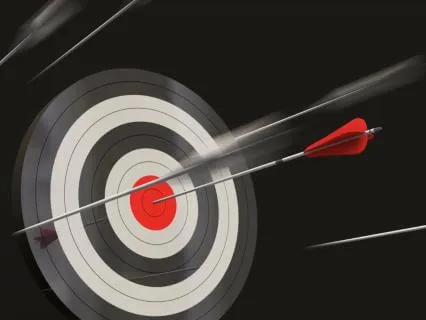
It's called the parable of the second arrow.
So imagine this.
You are walking through the woods and suddenly an arrow strikes you.
It hurts.
Of course it does.
That arrow represents the pain that life brings.
Loss,
Illness,
Mistakes,
Disappointment,
A harsh word from someone you love,
A plan that falls apart.
These are what the teaching calls the first arrow.
The first arrow is part of being human.
No one escapes it.
But then the story asks a surprising question.
After being struck by the first arrow,
What if someone picked up another arrow and shocked themselves again?
That second arrow is optional.
And yet we do it all the time.
The second arrow is the suffering we create with our reaction.
It's the voice that says,
Why does this always happen to me?
I'm so stupid.
This shouldn't be happening.
They shouldn't have done that.
The first arrow might be a mistake.
The second arrow is the story we tell about the mistake.
The first arrow might be disappointment.
The second arrow is ruminating about it for hours or days or even years.
The first arrow is pain.
The second arrow is resistance to the pain.
And resistance is where suffering grows.
This is why the teaching matters so much.
Because while we cannot control the first arrow,
We have far more control than we think over whether we shoot the second.
Most of the time we don't shoot it intentionally.
It happens automatically.
Our mind tries to protect us.
It analyzes.
It judges.
It replays the event again and again.
But instead of protecting us,
It traps us.
And we turn one moment of pain into hours of suffering.
Or sometimes years.
You drop your phone and the cracked phone becomes,
I ruin everything.
The awkward conversation becomes,
I'm terrible with people.
The mistake becomes,
I'll never get this right.
One arrow becomes many.
Well,
What do we do instead?
Well,
The teaching is surprisingly simple.
When the first arrow lands,
Pause.
Feel the pain of the moment without immediately creating a story about it.
And then notice what happens.
Name it.
This hurts.
That was disappointing.
I feel embarrassed.
No judgment.
No dramatic conclusions.
Just,
Just acknowledge.
Acknowledge what is.
Because pain that is felt often passes more quickly than pain that is fought.
And this is the heart of acceptance.
Allowing reality to be what it already is.
Not because we like it,
But because in this moment it already is what it is.
And when we stop arguing with reality,
We stop adding arrows.
Of course,
Sometimes you won't notice right away that you have shot that second arrow.
Maybe it's hours later.
Maybe it's after a spiral of frustration or self-criticism.
And when that happens,
There's often one more arrow we shoot.
The arrow of self-judgment.
Why am I like this?
I should know better.
Or maybe even I teach this stuff.
But here's the thing.
The practice is not perfection.
The practice is awareness.
The moment you notice the second arrow,
You can put down the bow.
Ah,
Ah,
There it is.
And with compassion,
You get to step out of the cycle.
And every moment of noticing becomes a moment of freedom.
Let's take a few moments now to practice stepping away from your second arrow.
Find a comfortable position.
Allow your shoulders to soften.
Take a slow breath in through your nose.
And gently exhale.
Again,
Breathing in and out.
Now,
Imagine a moment recently when something difficult happened.
Not the most painful thing in your life.
Maybe just a small moment.
Maybe a mistake,
A frustration,
A disappointment.
That was the first arrow.
Notice how your mind reacted.
Did it replay the moment?
Criticize you?
Create a story?
Those reactions are the second arrow.
Now,
Imagine gently placing the bow down.
Now,
No more arrows.
Just breathing.
Feel the breath moving in.
Allow the moment to be what it was.
No fixing,
No analyzing,
Just letting it rest.
If criticism appears,
Beat it with kindness.
You might say to yourself,
This is a moment of being human.
Breathing in,
Breathing out.
And notice what happens when you stop shooting arrows.
Rest here for a few breaths.
And when you're ready,
Slowly bring your attention back to the room around you.
Life.
Life will continue to send the first arrows.
That's part of the human experience.
But we can learn.
Slowly and gently to stop sending the second.
And when we do,
Something remarkable happens.
Pain may still visit,
But suffering doesn't have to stay.
Because between what happens to us and how we respond,
There is a space.
And in that space is our freedom.
If this teaching resonated with you,
You might also enjoy my talk and course,
It Is What It Is,
Where we explore the practice of accepting reality.
As it is.