Hello and welcome to our nervous system practice today.
My name is Bec and I'm so happy for you to be joining me for this practice today.
So our nervous system is definitely something that we all need support with from time to time,
Or some of us need a little bit of extra support quite a lot of the time.
And so this practice is a go-to practice anytime that you.
.
.
Feel like maybe you're a little bit frazzled,
A little bit stressed,
Overwhelmed,
You're experiencing anxiety.
Or if you just want to maintain that health and wellness of your nervous system.
So today all you're going to need is your yoga mat.
I've also got a bolster here as well.
If you don't own a bolster at home,
That's okay.
You can just grab a hold of some cushions or some pillows or a rolled up towel or a rolled up blanket.
You will also need the wall space.
So I'm going to use the wall here.
But otherwise,
If you're,
Say,
Practicing in your bedroom,
You can use the side of your bed or the side of the couch if you're in your lounge room.
So we can always improvise with our yin yoga practice.
So let's get started.
So we are going to start in a comfortable seated position.
It's quite nice to sit up on a prop.
So I'm sitting up on the bolster here,
Just having those hips a little bit higher than the knees just makes it feel a little bit more comfortable.
So come into whatever seated position feels good for you to start.
And then we're going to gently close down those eyes.
Anchoring the sitting bones down towards the earth.
Rising up tall through the spine so the crown of the head is reaching skyward.
Starting to drop into your body first and foremost,
Just observing how is your body feeling today?
No judgment,
Just.
.
.
Awareness and observation.
If you do come across any points of tension.
.
.
Or even pain in the body,
Can you allow this tension or this pain to begin to dissolve?
Moving your awareness now to your emotional body.
So noticing how you're feeling emotionally today.
Again,
Just observing.
What's present for you in this moment?
If there is anything that's causing you stress,
Anxiety or overwhelm,
Just observing that,
Gathering that feedback.
Now let's bring our awareness to the breath.
Noticing the natural rhythm of your breath.
Feel the breath as it glides in and out of the nostrils.
Feel the rise and fall of your chest and your belly with the breath.
Notice if your breath is feeling quite full and expansive.
Or maybe you notice there's some parts of the body that the breath isn't quite reaching.
Let's see if we can start to breathe a little bit deeper.
We're drawing a deep breath in through the nose and feeling the entire torso swell.
With a long,
Smooth exhale out through the nose,
Feel the torso gently contract.
Moving through that again,
Deep inhale through the nose.
Long,
Smooth exhale.
As we inhale,
We're drawing in prana,
Life force energy.
Exhaling to release and let go of anything that's no longer serving you.
I'm going to switch it up a little bit here so we're still breathing deeply,
Taking a big beautiful inhale through the nose.
But now as you exhale,
See if you can lengthen out the exhale a little bit.
So maybe one or two counts longer than the inhale.
Breathing in.
And out.
A long steady exhale.
Inhale again.
Exhaling.
Let's keep breathing in this way the next few moments.
And breathing in this way where the exhale is slightly longer than the inhale helps us to activate the parasympathetic nervous system,
Which is our rest and digest state.
This is where we can.
.
.
Calm the body,
Calm the nervous system.
This is where we can activate our innate healing capabilities that are always within.
Still breathing here.
Let's do three more of those beautiful breaths together.
One more breath.
And once you finish that exhale,
Just allowing the breath to settle back into its natural rhythm and notice any shifts in the body,
In the breath or in your nervous system.
Hopefully you're already starting to feel a little bit more calm and grounded and centered here.
When you feel ready,
We can gently blink open the eyes,
Coming back into the space.
And we're going to come into our first yin pose,
Which is balasana,
Child's pose.
So let's come over onto hands and knees.
We've got the knees wide,
Toes touching,
Hips to heels or working towards the heels.
If you can't get your hips to heels,
You can always pop a cushion or something under there to give you a little bit of extra height.
I'm using my bolsa here.
You can grab a hold of your bolster or your cushions if you'd like extra support here as well.
And you can come to fold forward,
Drape the arms alongside the bolster,
Turn the head to one side.
If you would prefer not to use the prop,
That's okay.
You can come forward.
Arms rest out in front third eye to the mat that's an option here you could also pop one hand on top of the other propping the third eye here,
Or you could swing those arms alongside the body.
For your full child's pose.
So lots of different ways we can set up here.
So maybe try a few out and see how you go.
Have a wriggle around,
Find where you need to be.
And then once we're there,
We're closing the eyes down and.
.
.
We resolve to remain still here.
That's one of the main principles.
In this style of yoga,
Yin yoga,
Where we are finding stillness in the body and finding stillness in the body helps us to cultivate stillness of mind because we're not distracted by the movement of the physical body.
We've also got the eyes closed.
In yoga,
We call this pratehara,
Which is withdrawing the senses.
And again,
This helps us to turn our awareness deeper within.
And throughout this whole practice,
We want to maintain a deep,
Even and rhythmic breath.
Inhaling.
Long,
Smooth and deep and long,
Smooth,
Gentle exhales as well using our breath as the anchor.
So here in our child's pose,
You want to anchor and ground down through all of the parts of your body in contact with the mat as a representation of the earth.
So really grounding yourself here and connecting to the earth.
Soften your neck shoulders and jaw.
Soften your belly so you can start to breathe deeply into the belly,
Breathing out into the back and side ribs as you feel the rib cage expand and contract.
And just softening through the lower back and the hips as well.
Child's pose is a pose that we use in all styles of yoga for its restorative quality.
So take this opportunity now to allow yourself to be held,
To allow yourself to be restored.
To allow your nervous system to be soothed here as you hold and you breathe and you.
.
.
Step into a greater sense of presence here.
If you've got your head turned over to one side,
Just very gently with as little disturbance as possible,
Can you lift your head up and.
.
.
Turn your head over to the other side and then soften back down into the pose and just notice how that feels for you,
That little subtle shift of the head.
Can you soften just that little bit more?
Can you surrender just that little bit more and allow yourself to be held?
Allow any unnecessary thoughts.
Any stresses or worries to float away.
We can return to them later on should we choose,
But right now we're choosing presence.
Stay present.
Keep the breath flowing.
I'm just going to leave you here for the next few moments just to be here in your own energy and I'll bring you back out of the pose very soon.
Let's take another five of those big,
Beautiful breaths here.
Deep inhale through the nose.
Exhaling either through the nose or the mouth.
As we inhale,
Let's slowly start to uncoil the spine,
Lifting the head,
Walking the fingertips back.
Keep the eyes closed.
Find a comfortable seated position.
We're going to take a moment to integrate after that first yin pose.
So take some time now to notice and absorb the effects from that child's pose.
One more breath here.
Okay,
Just blinking open those eyes for a moment.
So from here,
We are going to come into Badukonasana,
Which is butterfly pose.
But before we do,
We're going to do an acupressure point.
So.
.
.
If you want to come into any sort of cross leg position or even come into butterfly What we're going to do is take the kidney one point.
So if you have.
Have a feel around on the sole of your foot.
It's kind of like right in the center.
Of the ball of your foot if you have a play around you'll be able to find it Find that space on the soles of both of your feet and you want to grab your thumbs.
And we're just applying gentle pressure there at the kidney one point.
You might choose to close your eyes down for a few breaths here.
Gentle pressure here at the kidney one point.
This point is very grounding,
Very calming.
Which is a really good one to add into the theme of this class.
And you can even just.
.
.
Hold this one for a few moments before butterfly like what we are doing now So gentle pressure,
Eyes closed.
Let's take a few breaths here.
And see if you can notice just this sense of calm and groundedness washing over you here as we hold and we breathe.
Let's take three more breaths here at the kidney one point.
If you're feeling comfortable where you are here in butterfly,
You could stay here.
So you could stay with the spine long,
Eyes closed.
I'm going to give you some other options as well.
So option two is to come to fold forward with this one.
So we've got knees wide.
The closer that your feet are to the body,
The stronger it's going to feel.
So if it feels a bit too much,
Press the feet away and make like a nice wide diamond shape.
So option two here is to fold forward.
So you could fold if you've got quite open hips and flexibility through the spine,
You could fold all the way down.
Maybe using your prop like your bolster or your cushions to fold all the way down.
Another nice option if you do have a bolster is to just pop it up on its side.
And you can.
.
.
Rest your third eye at the end of the bolster so you're still.
Folding but not as deep and you're supported so this is a really nice one here as well And I'm going to give you one more option just because I'm feeling generous today.
If this.
.
.
Seated variation isn't really working for you today.
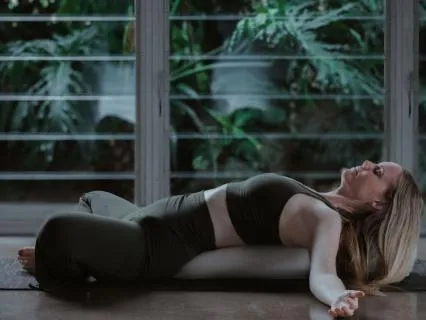
You can come into a supine variation.
So this is where you'd lay down.
So you can either lay flat on the mat or if you want some heart opening,
Lay over your prop that you're using.
Here again,
Soles of the feet together,
Knees wide.
And then just find wherever you want to be with the arms,
Whatever feels comfortable for you.
So lots and lots of different options.
Maybe try a few of them out and see.
What you feel called to,
See what your body needs.
Today.
And once you've found your spot,
Again,
We're going to close the eyes down.
Fall into stillness here again.
I'd say most of us are probably coming into this folded variation.
And so any poses,
Any forward bends where we're folding like this are always really calming and cooling for the nervous system.
So that's something to keep in mind as well if you're practicing at home.
Let's bring our awareness down to the hips.
So you'll likely feel this in the hips as we hold here.
You'll feel it both in the inner and the outer hip space.
If you can sense that you're holding on to some tension here in the hips,
Can you.
.
.
Start to direct your awareness and direct your breath down into the hip space.
And soften here,
Soften that groin area,
The inner hips.
The thighs allow the knees to fall wider with the exhale.
If you're folding forward,
Feel that energy up through the back of the body,
Through the bladder,
Meridian.
If you're reclining over the prop,
Feel that.
.
.
Spaciousness.
Openness and energy through the front of the body.
So tune into your experience of this pose.
Keep the breath flowing.
Keep drawing your awareness deeper and deeper within.
Notice what your mind is doing here.
If you find the mind.
Starting to wander,
You can gently draw it back and anchor your awareness back to the breath.
Maybe back to your third eye between the brows.
Let's spend another five of those big,
Beautiful breaths here together.
Deep inhale through the nose.
Long,
Smooth exhale.
As we inhale,
Let's very slowly roll up through the spine if you'd come to.
Fold forward if you're reclining roll up gently into a seated position where we'll all meet together.
Keep the eyes closed.
Again we're going to take some integration time here so observing how that's feeling for you.
One more breath here inhale to gently blink open the eyes coming back We're going to come and lay down onto our mat now.
So keep your props handy,
Whatever you're using.
And lay down onto your back.
And let's just take a moment to.
.
.
Just pause here and let the body settle into the mat.
Whatever position feels good for you.
You might have the knees bent.
You might stretch those legs out long.
Let your body have some rest here for a few breaths.
Let's prepare to come into our next pose now.
So you will need your prop,
Whatever you're using.
I'm going to use my bolster.
You can also use a yoga block if you have one or some cushions.
We're going to come into a supported bridge pose,
Sedu bandhasana.
So bending the knees,
Walking the feet backwards towards the body.
You want to lift your hips up enough to slide the prop that you're using underneath the sacrum at the base of the spine,
So at the lower back there.
So we've got the pelvis elevated here.
You can have the arms either beside you,
Overhead,
Clasping opposite elbows.
So this is option one.
I'm going to show you another option just in case you would like to take it.
It's a little bit deeper.
So the other option is to come into canoe and this is where we stretch the legs long out in front.
So you could maybe try that one out,
See how you go,
See how it feels.
If it's too much,
Come back to bridge because you don't want to feel too uncomfortable.
There is a level of discomfort in this style of yoga,
But you want to be able to hold and not have to move around too much.
So see which one resonates with you.
Find where you need to be with the arms and the legs.
And then once you're there,
Closing those eyes down,
Falling into stillness once again.
So here as we hold either bridge pose or.
.
.
Canoe you want to feel like the back of the body is heavy so let the back of the body sink down towards the earth And then the front of your body is light and open and receptive.
This pose is really beautiful for giving those kidneys some love.
And the kidneys,
In Chinese medicine,
The kidneys are what store our jing,
Which is our vital essence.
And so giving the kidneys some love is always a really lovely thing to do.
The adrenals that sit above the kidneys.
Also need some support particularly with the theme of this class which is supporting the nervous system.
We want to give.
Those adrenals,
Some love here as well.
So you can feel that we're placing some gentle pressure here at the lower back.
Where those organs and glands are stored in the body.
Stimulating those digestive organs there at the lower abdominal region as well as the reproductive organs as well.
We've got that gentle elevation here of the pelvis.
And that's going to help us to get that blood flowing a bit more freely back towards the heart as well.
Keep breathing here.
Stay present.
Keep drawing your awareness deeper within.
Keep invoking.
This deepest sense of calm,
Of groundedness,
Of relaxation,
Of healing.
I'm going to leave you here for a few moments just to be in that energy within yourself and I'll invite you back out of the pose very soon.
Let's take five more breaths here together.
Deep inhale through the nose.
Long,
Smooth exhale.
Now,
If you are in canoe with the legs extended long,
Let's start to walk the feet backwards towards the body,
Drawing the arms beside the body as well.
Gently press through the feet,
Lift the hips up enough to just remove that prop out of the way.
Placing the feet back down to the earth.
Maybe knock the knees together.
Take some time to.
.
.
Integrate as always here in our yin practice.
Allow that lower back some time to settle.
Noticing and absorbing the effects from that beautiful bridge pose.
When you feel ready,
We're going to hug the knees into the chest.
Let's just take a sway.
Here from side to side feel that beautiful massage for the lower back a nice little release here should feel quite nice Beautiful.
We are going to do a little twist here now.
So we're not going to hold for too long.
I just want to release out through that lower back after that bridge pose.
So you can drop the knees to one side.
It doesn't really matter how you stack the legs so you could keep the knees quite wide.
Like so.
You could stack one knee on top of the other and then drop the knees to the side.
You could also cross one.
Leg over the other that's kind of a deeper expression there You can also use the prop as well.
So if you want a little bit of extra support,
You could grab that bolster.
Pop it in between the knees there and that can give you a little bit of extra support for the twist.
So you want to have the shoulders anchored to the mat.
Your head is either centered or falling in the opposite direction to where your knees are facing if you want that full spinal twist.
Eyes closed.
We're just going to be here for the next couple of minutes.
So this should feel quite nice,
Like a nice release here through the lower back.
Twisting here through the body,
So cleansing out those digestive organs.
We're encouraging that energy to flow up through the spinal column.
Allowing yourself to soften and deepen into the twist a little bit more each and every breath.
Let's take five more beautiful breaths here.
Deep inhale through the nose.
Exhaling through the nose or the mouth.
Using that next inhale,
Let's roll back to center.
Pause in the center,
Realign the spine.
Let's take a few breaths here before we change sides.
A little mini integration.
And then when you feel ready,
Drop the knees over to the opposite side now.
Take the props over with you if you felt like that was helpful for you on the first side.
Stack the legs however feels comfortable for you on this second side.
Shoulders anchored to the mat,
Eyes closed.
And again,
Just allowing yourself to soften and deepen your pose here with every breath.
Notice if this side feels any different than the first.
Let's take five more breaths here together.
Using that next inhale,
Let's roll back to center.
Just come into whatever position feels comfortable for you to rest here for a few breaths.
Then when you feel ready let's hug the knees into the chest here again just take a little sway from side to side Gently releasing that.
We're going to come into our final pose now.
So very slowly and gently roll yourself.
Out to the side and then come on up into a seated position we're going to come and find the wall space now so either Move your mat into the wall space or the side of the couch or the side of your bed.
We're coming into legs up the wall.
So just springing your hips as close to the wall as you can.
And then however you can,
You're going to swing those legs.
Up the wall so you'll just have a little play around here to find the comfortable position for the legs to rest.
It should feel quite effortless once you find the position.
So just keep moving around until you find where you need to be.
Arms might rest beside you or overhead.
You might feel called to bring your hands to rest somewhere over your belly or the heart to see what you intuitively feel called to.
Eyes are closed if they aren't already.
This pose,
Legs up the wall,
Such a beautiful pose.
For you to do each and every day if possible.
It's very calming and grounding for the nervous system.
So it's a beautiful one to do.
In the evening before bed if you can.
After we've been here for a little while,
You might start to feel some sensation through the legs,
Like a vibration,
Or you might start to feel the energy moving through the legs.
So just allow that to happen.
So as I mentioned,
Very calming and grounding for the nervous system.
It's also great for the lymphatic system as well.
It's also great for getting that blood flow back towards the heart as well.
Just giving our heart a little bit of extra support.
As we come more towards the end of the practice now,
Just start to drop even deeper.
Into your pose,
Into your practice,
Into yourself.
Really invoking this sense of calm.
Calm and grounded.
Nervous system,
Which we can really all.
.
.
Need support with from time to time.
We're going to take five more breaths here together.
Big,
Beautiful,
Deep,
Even breath.
If you feel quite comfortable here and legs up the wall,
You could actually stay here for your final relaxation.
That's totally fine as well.
If you're coming with me,
We're going to bend the knees.
Just roll out to the side and pause there for a moment.
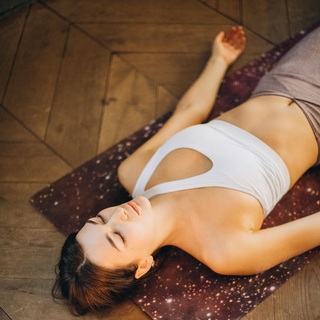
And then we're preparing now for our final relaxation pose,
Which is Shavasana.
So you want to come and lay flat on your back.
Grab a hold of any props that you might like to use.
So it's quite nice to put something underneath your knees.
If it's cold,
You might grab a blanket or some socks.
If you've got an eye pillow or something to cover the eyes,
That's quite nice as well.
So whatever you need to do to get really comfortable and supported here.
So coming to lay flat on our back,
We've got the legs out long.
Just allowing the feet to flop out to the side.
Arms rest beside you,
Palms facing up.
Spine nice and long.
Eyes are gently closed.
Just do a little bit of a scan here.
From head to toe.
And just noticing.
How the body's feeling.
If there's any residual tension in the body,
Can you allow this tension to begin to dissolve?
Allow the breath to become soft and free flowing.
Allow the weight of your body to begin to melt down towards the earth.
This is our time to rest.
To restore,
To integrate everything that we've moved through throughout the practice.
I'm going to leave you here for the next few moments just to be in your own energy,
Have your own experience in Shavasana and I'll bring you back out very soon.
If you have time to stay here in your Shavasana for a little bit longer,
I welcome you to do so.
If you're coming with me,
We're starting to deepen the breath a little bit here as we bring our awareness back into the space,
Back into the body.
Bringing some gentle movement back into the body,
Wriggling out through fingers and toes.
Inviting a nice deep breath into the body,
Stretching out through arms and legs.
Bending the knees roll on out to the right hand side and pause here for a moment And when you feel ready keeping the eyes closed bring yourself up into a comfortable seated position.
Drawing the hands into Anjali Mudra,
Prayer position at the heart,
Bowing the head down.
As we close together,
We give thanks for the blessings in our life.
Thank you so much for sharing your practice with me today and I hope you enjoy the rest of your day.
Namaste.