Hello and welcome.
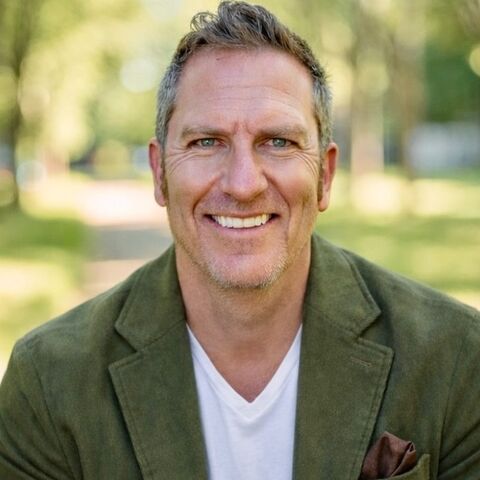
My name is John McCaskill.
I'm here to talk to you about meditation and mindfulness.
I'm an active duty Navy SEAL and I've been practicing meditation for a few years now.
I've been coaching for just shy of a year.
You may be asking,
What is mindfulness?
Well,
Let's start with a simple experiment.
If you tap your thumb with your pointing finger,
What do you feel?
Can you feel that sensation in both your thumb and your pointing finger?
What are you thinking about right now?
You're thinking about your thumb and your pointing finger.
Well,
That is being mindful.
That is mindfulness.
Mindfulness is being kind of like your dog.
How does your dog take on the day?
Does he wake up depressed because he messed something up yesterday?
Is she anxious about not getting to the end of her task list or concerned that she won't reach her life goals?
No,
Of course not.
Your dog lives in the moment.
And that's what mindfulness is.
Mindfulness is being present in the here and now,
Not dwelling on the past or not worrying about the future.
It's focusing on the sensations you're experiencing right now.
Good and bad,
The smells,
Sounds,
Feelings,
Sights and tastes,
Pain or joy.
Just being aware of those sensations and those feelings.
This can be done formally in the form of meditation or informally throughout your day.
Just focusing on being present in the here and now and experiencing these sensations.
Maybe feeling the cool air of an air conditioner or the warmth of the sun on your skin or noticing a smile or hearing your loved one's laugh.
You'll become more fully aware of all your senses and that can make for a much richer life if you practice mindfulness.
I've struggled with stress and depression due to work and personal reasons and I've been on a series of various antidepressants and anti-anxiety medications and nothing has helped me like mindfulness and meditation.
So that brought me to this moment,
Right here,
Right now,
To talk to you about these life-changing practices.
I was skeptical myself to start.
I thought meditation was made up and didn't really do anything.
That it was a practice that some believed in and was just another snake oil.
I kind of felt like it was just too flowery,
Too touchy-feely for me and what was being mindful?
What did that even mean?
Once somebody explained the science behind it all to me,
I figured I'd give it a try and after practicing for just over two months,
I started to see differences in who I was and how I handled things,
How I handled relationships.
So that all said,
Let's get into the science behind this.
Our brain,
It's an incredible organ and I know we all already know this,
But just bear with me for a second.
Every thought,
Feeling or new thing learned creates pathways in our brain and these pathways are called neural pathways.
As we think these same things or feel these same ways over and over,
These neural pathways become stronger and stronger and those neural pathways actually become habits.
Think of these pathways as superhighways versus country roads.
Now if you think of your thoughts as a supercar,
Which path do you think that supercar is going to take?
It's going to take the superhighway.
The inverse is also true.
If you don't use certain pathways,
These connections essentially turn into those old abandoned country roads with cracks and weeds growing through the asphalt and eventually they completely disappear.
An example of this is exercise.
If you exercise every day,
It becomes easier and easier to do that as a habit.
You've developed that neural superhighway.
However,
If you haven't worked out or exercised in months,
It's not only physically harder to start again,
But you have to reopen that mental road and then do some major construction on it to get back to that highway status.
So with all that in mind,
Think about your behaviors.
They're essentially those superhighways that have been getting further and further built up throughout your life.
So if you worry or get angry easily,
It becomes kind of a reaction,
A reaction that you develop physiologically over time.
These reactions are so strong and happen so subconsciously that they actually become a part of our personality.
So that makes it impossible to change.
Wrong.
Again,
If you don't use the pathways,
They become less and less traveled and shrink to those small country roads and eventually disappear.
So we can physiologically change our brains through mindfulness and meditation,
Change them to learn faster,
React more rationally,
Be more creative,
More empathetic and more resilient.
The list is really endless.
There's an interesting video on YouTube that shows this in a very entertaining way,
Kind of how the brain can be rewired and the new neural pathways can be created.
A mechanical engineer is given a bicycle that has been altered by some welders to operate opposite from the normal way.
So as the rider steers to the right,
The wheel turns left and vice versa.
The welders bet the engineer that he couldn't ride the bike,
Which sounded simple enough,
Just steer the opposite way.
Well,
He couldn't do it.
And I can tell you,
I've tried to ride a bike like this in a course that I took,
And nobody who's ever learned to ride a regular bike can ride this backward bike,
Or at least not at first.
This engineer took it upon himself to learn how to ride it.
It took him months,
But he eventually got it.
So he had developed a new highway.
In the meantime,
However,
He hadn't ridden a regular bike.
And lo and behold,
Once he learned how to ride this backward bike,
He couldn't ride a regular bike anymore.
It eventually came back to him.
But in the video,
There's a crowd that is watching this guy relearn how to ride a regular bike.
And it looks like he's riding a bike for the first time,
Or at least trying to.
Another interesting example can be shown right here.
So fold your arms.
Now unfold them and fold them the opposite way.
Feels weird,
Right?
Unfold them and then fold them that same way.
Do that three times.
I'll wait.
Now,
Unfold them and go back to the original way.
Feels weird,
Right?
That was your brain being rewired,
A neural pathway being changed.
Meditation can help us to create those new super highways.
Specifically,
Mindfulness meditation helps us to focus on the here and now,
Which helps to reduce stress.
In a given day,
We have on the order of 50,
000 thoughts.
95% of these are the same thoughts as the day before.
And 80% of these are negative.
These negative thoughts cause stress,
Anxiety,
And depression.
And the majority of these are regrets about what could or should have been the past or what could and should be the future,
Neither of which we can change.
The more we do this,
The better we get at it.
We have become professional warriors.
Okay,
So that's a little about the pathways.
Physiologically,
The part of our brain that worries and is responsible for our fight or flight response is the amygdala.
Meditation can actually shrink the size of the amygdala and thicken the lining of the prefrontal cortex,
Which is associated with higher order brain functions.
Connections between the amygdala and the rest of the brain get weaker,
While connections between areas associated with attention and concentration get stronger.
And the more you do it,
The better.
There's a direct correlation.
Now that should be enough to convince you,
But there's more.
Since mindfulness and meditation reduces stress response,
It reduces the stress hormone cortisol,
Which in turn reduces our stress levels even more.
And cortisol has been shown to be responsible for increase in body fat.
So reducing it could reduce your body fat.
Mindfulness and meditation have been shown to reduce blood pressure,
Which reduces our chance of having heart attacks or strokes.
And it increases our sinus arrhythmia,
Increasing our chances of surviving a heart attack if we were to have one.
We talked about reduction in stress in the brain,
But mindfulness and meditation has also been shown to reduce memory loss,
Decrease effects of Alzheimer's,
And increase attention processing and executive functioning.
Mindfulness and meditation can help with addiction,
Since addiction is nothing more than an extreme habit.
They've also been shown to increase sex drive and improve sleep.
They can help the immune system as it increases the level of disease fighting cells and decreases inflammation and even leads to faster wound healing.
They help with pain management,
But also helps with the actual experience of pain by greatly increasing your pain threshold.
And they can reduce aging or the signs of aging by protecting our telomeres,
Which are proteins that serve to protect the chromosomes from aging.
So that's a little of the science and the benefits.
So now I'm sure you're saying,
But how do I put meditation or mindfulness into my daily routine?
I'm too busy for that.
Well,
I personally do meditation first thing in the morning and I practice mindfulness throughout my day.
When I do this,
I actually find I have more time in the day because I am more productive and efficient.
Also,
You can literally do many mindfulness exercises anywhere at any time.
On the drive to work,
Notice the sounds of the wheels of your car and the feeling of the steering wheel in your hand or maybe the seat against your back and the backs of your thighs.
At work,
Take a few deep breaths,
Stand up,
Stretch,
Know how you're feeling,
Concentrating on the sensation of stretching while you eat.
Focus on each bite.
Mindful eating is a whole new experience that'll make each bite taste so much better.
Okay,
So now you're probably asking,
How do you do it?
Well,
What I did was I started with just the basic meditation apps and then I started doing it on my own.
Started with five minutes,
Moved up to 10,
15.
It gets easier with time and there's really no wrong way to do it.
That's how I started and that's still how I practice on some days.
Very basic,
Very short,
Whatever I can get in.
In summary,
Meditation and mindfulness have scientifically been shown to help with stress,
Anxiety and depression.
Along with that,
There are physical benefits to practicing.
So if you're a skeptic,
I urge you to try it out for one month.
Establish a new habit,
A new habit that will change your life.
Thanks for listening and have a wonderful day.