Welcome to the Mindfulness Meditation Podcast.
I'm your host,
Dawn Eshelman.
Every Wednesday at the Rubin Museum of Art in Chelsea,
We present a meditation session led by a prominent meditation teacher from the New York area.
This podcast is a recording of our weekly practice.
If you would like to join us in person,
Please visit our website at rubinmuseum.
Org slash meditation.
We are proud to be partnering with Sharon Salzberg and teachers from the Interdependence Project.
The series is supported in part by the Hemera Foundation.
In the description for each episode,
You will find information about the theme for that week's session,
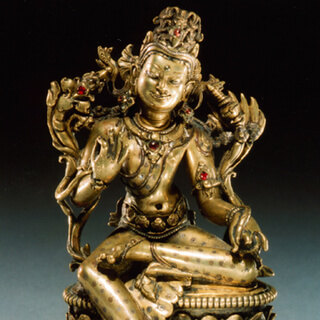
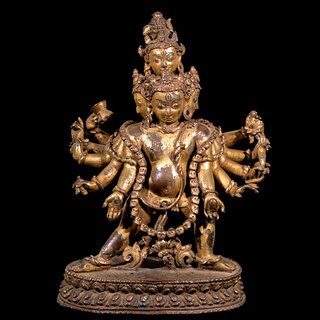
Including an image of a related artwork chosen from the Rubin Museum's permanent collection.
And now,
Please enjoy your practice.
Good afternoon,
Everybody.
Welcome to the Rubin and to our weekly mindfulness meditation practice.
My name is Dawn Eshelman.
It's great to be back here with you.
How are you feeling about the future?
Cheers from the front row.
All right.
I am asking because as you may know,
Here at the museum,
Our future is looking bright.
We are just about to engage on a year-long conversation about the future.
Here at the museum,
All of our galleries and programs will be exploring this idea,
And we're looking at the future as something that is fluid.
That is something that we can come to through a lot of different perspectives.
And you may notice or you may have heard that on the sixth floor,
We've just opened a brand new exhibition,
The Second Buddha Master of Time.
This is all about Padmasambhava,
Known as the second Buddha,
Who brought Buddhism to Tibet and was a kind of a pretty magical guy.
He could plant teachings in the future that were then revealed to the right person at the right place at the right time and really was a master of time in that way.
Also,
You may have noticed that on the ground floor in the spiral lobby as you walked in,
We are installing a new exhibition there,
And that is going to be called Monument to the Anxious and the Hopeful.
This is Candy Chang.
I thought this might be interest,
This crowd,
Those of us who sit with our anxieties and hopes and make friends with them.
But this is all about anticipation and what we're sensing is coming and how we're approaching that,
What we're thinking,
What our hopes and our fears are and sharing those with each other.
So this is a work by Candy Chang and that will open pretty soon as well.
So by late February,
We're going to be in full swing talking all about the future with you.
And we're starting here today in mindfulness practice with the theme this month,
Which is aspiration.
And aspiration is a term that if you're familiar with Tibetan Buddhism,
You may have heard before within this context of meditation and of practice.
It's different than the idea of clinging and grasping and fixating on the future.
Aspiration is a whole other ballgame.
And I will let our teacher today,
Kimberly Brown,
Talk with you about it in detail.
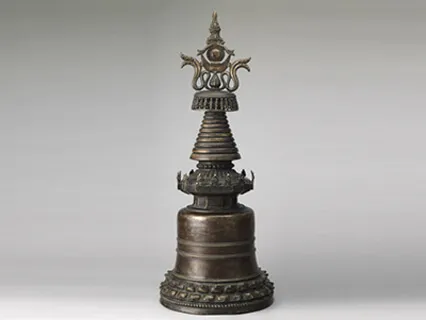
But I'll turn your attention right now to this beautiful stupa,
Which we've looked at before together,
But not through this lens.
So a stupa is,
Of course,
A reliquary chamber.
It is a monument that often holds the remains and possessions of a beloved teacher.
This dates back,
The symbol,
To the earliest stages of Buddhism.
And stupas were known to be as tall as a few inches or a really tall building.
And stupas are often the focal point of a pilgrimage,
A destination.
And traditionally,
Buddhist practitioners,
When they arrive at a stupa,
They will circumambulate that stupa.
They walk around it in a clockwise direction as a way of communing with that stupa.
And this is also a process for them of gaining merit.
And merit,
I think,
Is an interesting kind of outcome,
In a way,
Of aspiration.
The greatest aspiration for practicing Tibetan Buddhists is,
Of course,
Enlightenment.
That's the goal.
And it is through these kind of smaller aspirations that the larger aspiration is ultimately attained.
Kimberly Brown is back with us today,
And it's such a pleasure to have her back.
She is the executive director of the Interdependence Project,
One of our partners for this program,
And a graduate of its meditation teacher training program.
She leads mindfulness and compassion classes for groups and individuals in New York City.
She studies American and Tibetan Buddhism and practices loving kindness meditation.
And her teaching methods integrate depth psychology,
Compassion training,
And Buddhist techniques as a means to help everyone reconnect to their inherent clarity and openness.
Please welcome her back,
Kimberly Brown.
Hello,
Everyone.
It is very nice to be back here,
And it's great to see all of you.
Dawn mentioned these stupas.
You know,
I've seen small ones,
But they're familiar to me because many Tibetan Buddhist monasteries will have these very large ones built on the property.
Several that I know of upstate Tibetan centers have big stupas.
The one that I'm familiar with,
It's,
I think,
Three stories high.
And when you visit,
It's a tradition to go and,
You know,
Walk around it.
It says that it will,
I put it,
Generate merit.
Now,
Merit is also translated as virtue.
It's also translated,
I've heard it translated as luck.
And it's said to be what arises from wise effort.
And probably,
I've heard a lot of modern Tibetan teachers call it potential.
So it makes more sense,
Something that we can share with each other and offer as an act of generosity because we know that all of our actions have outcomes,
And these outcomes can ripple into the future.
So we were just talking about.
So generating merit,
The outcome of beneficial effort.
Effort begins with aspiration.
Aspiration is said to be one of the four supports for wise effort,
Skillful endeavor.
Now,
I was last week reading somebody's biography,
Not a Buddhist teacher,
But a different type of teacher,
And they said that their aspiration is,
May all beings be happy.
Okay.
And reading that,
I had to pause because that is not an aspiration.
That would be a wish.
And the reason being,
In this wisdom tradition,
An aspiration has a sense of I will do it,
A sense of personal responsibility.
So to make that wish an aspiration would be something like,
May all beings be happy through my efforts.
Through my wisdom and compassion,
May all beings know peace of mind and not suffer.
Okay.
Those are aspirations.
Now,
This sense of personal responsibility,
I will do it,
Is part of the aspiration.
But also,
The aspiration is for something beneficial.
So I could say,
I aspire to eat more Doritos this year.
That would not be considered an aspiration in this system,
Right?
Because it's really supporting an action that's probably neutral,
Possibly not beneficial.
So an aspiration supports something that's beneficial,
Toward the good,
Skillful.
And it's said that one of the reasons we can have an aspiration is because we know that cause and effect are real.
Okay.
Cause and effect being every word that I speak,
Every behavior,
Every thought has an outcome.
It actually has so many outcomes.
I can't even know that,
Numberless.
Right?
And in knowing that,
It allows me to make these great aspirations,
Right?
Through my effort,
May all beings wake up to our interdependence.
Now what I'm really saying is,
I'm going to orient my actions in a way toward that.
And I might not personally see that goal met,
But I know that my efforts are not lost.
They ripple out into the world.
One thing for sure,
This is science.
The outcome of each of our actions will survive us.
That's very important because that means each of our lives are very valuable,
Right?
And we can start to claim that.
So we make these great aspirations.
The Karmapa says,
We make aspirations that are both possible and impossible.
And again,
This is pointing to our understanding of cause and effect.
So the four supports are,
First is aspiration,
Right?
The four supports for wise,
Skillful,
Generous action,
Benefits ourselves and each other.
The four supports are aspiration.
And then the next one is confidence.
Confidence is knowing that you can do it,
Right?
Is knowing that,
And how do you know you can do it?
Well,
You know because you've done it before,
Okay?
That's where mindfulness starts to come in.
You start to really start to see and understand that even though it feels like the critical voice in your head is telling you everything you're doing might be wrong,
That that's not true.
You can start to be mindful and have this balance.
And you start to develop confidence.
I was mentioning to Dawn before the program.
The mark of a Buddhist teacher is that they know you can do this work.
They know you can wake up.
They know everybody can.
And they know it not in some sort of abstract way.
They just have a deep recognition of it through their own practice,
Right?
So if you sit with most of these masterful teachers,
Your ability to wake up is as clear to them as the fact that they are breathing.
So you can tap into that confidence too.
The third support for at-wise effort is joy.
Because it's said that through these great aspirations,
Right,
The all beings benefit through my efforts.
And having confidence that I can do that,
That joy arises,
Rejoicing in my own wholesome aspiration,
Right?
And Shanti Deva,
A great teacher,
Indian teacher,
He writes that this joy is like an elephant who is so hot and weary in the sun and plunges into a cool,
Refreshing lake.
That's the sort of joy that one feels through their aspirations,
Confidence.
And the fourth is something we always forget,
I think my students do,
Rest.
Now feels funny to rest because there is so much to do.
Our aspirations are so great,
Right?
But rest is part of wisdom,
Part of understanding that we need to take care of ourselves.
When we can do no more,
It's no good,
It's no use to anyone if we are too tired or too discouraged.
So we have this great aspiration.
We have confidence.
We take joy in this endeavor,
Our wise actions,
And then we rest,
Okay?
And rest can take many forms,
And one form it can take is meditation.
So let's meditate.
Now if you're someone who usually keeps your eyes closed,
I invite you today to keep your eyes open,
Okay?
Stare at the seat in front of you or at the floor.
Just find one point and rest your eyes there,
Okay?
You're someone who usually keeps your eyes open,
You can maybe close them today.
Finding a posture that's not too tight and not too loose.
It's really finding this balance of energy between relaxation and alertness.
Starting to come into your body,
Feeling your feet,
Noticing your seat and your belly.
Bringing your attention to your shoulder blades and the back of your head.
Feeling your forehead and your cheeks and your jaw and allowing sound to enter your ears.
Noticing your feet,
Noticing your seat and your belly,
Bringing your attention to the center of your chest and taking a moment to recognize your intention for being here.
What brought you here to the Reuben today?
What leads you to want to work on your heart and your mind?
Feeling joy in that,
Really appreciating that.
Feeling your feet,
Noticing your seat and your belly,
Bringing your attention to the center of your chest.
Feeling the back of your head and gently bringing your attention to your forehead and your cheeks and your jaw.
Allowing sound to enter your ear.
Choosing a place in your body where you can feel your breath.
You can choose the rise and fall of your abdomen.
You can choose the tip of your nose.
Just gathering your attention at this spot,
Being with the breath.
Whatever your ability is.
Noticing where your mind is.
If you have strayed from your breath,
Gently coming back.
Resting your attention on your breath.
Resting your attention on your breath.
Resting your attention on your breath.
Noticing where your mind is.
Noticing where your mind is.
Resting your attention on your breath.
Resting your attention on your breath.
Resting your attention on your breath.
Resting your attention on your breath.
Resting your attention on your breath.
Resting your attention on your breath.
Resting your attention on your breath.
Resting your attention on your breath.
Resting your attention on your breath.
Gently choosing to come back to this one breath.
Resting your attention on your breath.
Resting your attention on your breath.
Resting your attention on your breath.
Resting your attention on your breath.
Resting your attention on your breath.
Resting your attention on your breath.
Resting your attention on your breath.
Taking a moment to reconnect with your intention.
Considering perhaps an aspiration for yourself.
Considering how an aspiration could arise in your heart.
Considering how an aspiration could arise in your heart.
Feeling your feet,
Your feet,
Your belly.
Bringing your attention to your heart center,
Your shoulder blades,
The back of your head.
Allowing sound to enter your ear.
Allowing sound to enter your ear.
Feeling your feet,
Your seat,
Your belly,
Center of your chest.
Take a moment to keep your seat and stop meditating.
Resting in this moment.
Just a second,
I'm going to ring a bell.
Please stay still until you can no longer hear it.
When it stops,
If you'd like,
You can join me in offering a bow to seal our aspiration.
You can open your eyes if not.
Thank you all so much.
That concludes this week's practice.
If you'd like to attend in person,
Please check out our website,
Rubinmuseum.
Org slash meditation to learn more.
Sessions are free to Rubin Museum members,
Just one of the many benefits of membership.
Thank you for listening.
Have a mindful day.