Shifting from this white saviorism to being in relationship,
Lessons from the apple tree is that there's so much abundance in nature.
All of our needs can be met.
Spend time sitting in front of the fire,
Acknowledging the darkness.
Human conflict and strife is like just so unnecessary and just strength to breathe into the now and then do the next right thing.
Welcome to the Spacious Unknown.
I'm your host Kat Bucciantini.
This podcast is a place where stories of spiritual lives can be shared,
Especially those that don't follow a straight line.
Stories shaped by curiosity and doubt,
Tenderness and intuition,
Grief and joy,
And the quiet practice of inner listening.
Before we begin,
A gentle note.
Spirituality is alive and always unfolding.
What you hear here is one moment in time,
One expression of someone's path.
I invite you to listen with grace,
Curiosity,
And a tenderness that leaves room for nuance rather than neat conclusions.
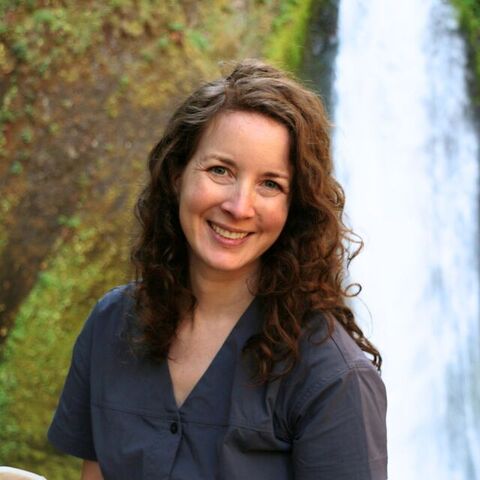
Today I'm joined by Sheena,
And I invite you to settle in as we explore the shape of her journey.
I'm going to just start us off with a little centering and grounding.
And I'll have you,
During this,
Describe the space that you're in as we go through each of the senses.
That's good.
Yeah.
So close your eyes,
Or you can let them rest open somewhere if that's more comfortable for you.
I'm going to have you start by noticing the places where your body touches the space around you.
So I'm noticing how I'm sitting in this chair and how my feet are resting on the blanket underneath the desk.
My hands are holding a cup of warm tea.
I'm imagining roots stretching to the ground,
Extending from my toes through the floor to the soil beneath the house.
It's been very dry and cold these last few winter weeks,
But I'm hearing and feeling the heat from the floor heater or the forced air heater in the house.
I'm hearing the hum of the furnace many rooms away,
And the warmth that brings,
But also the dryness of the air,
Which is unusual for this time of year.
I'll take a sip of your tea.
Just notice what tastes are lingering in your mouth from that.
Well,
It is a decaffeinated earl grey with oat milk.
So the citrus and the tannins of the tea mingles with the earthiness and the texture of the oat milk.
And as you follow your breath down into your lungs,
Just noticing the way your body shifts to accommodate it.
Yes,
Your listeners should know that there's another being occupying my body as I'm very close to having a baby,
And so my lungs are very compressed.
I cannot breathe as deeply as I normally could.
My breath is short and shallow.
Someone else is taking up space.
I'm going to invite you to see if you can find a place of stillness within your body.
It can be really small,
Like a speck.
Just notice where it is,
Where you're holding it.
Probably in my forehead.
My body is not entirely my own,
So this small person keeps moving.
Don't feel a lot of stillness unless there's a thing.
I'm just going to invite you to kind of breathe into that place of stillness in your forehead.
Just being there as long as you need.
Whenever you're ready,
You can open your eyes and rejoin me.
Okay.
Welcome.
Why don't you tell our listeners who you are,
What your current life situation is?
My name is Sheena.
I go by she,
Her pronoun.
My life situation,
Um,
That's a big question.
Yeah.
Life situation is that I'm on the precipice of becoming a mother for the first time.
Um,
I'm a small business owner in partnership with my partner and husband,
Brian.
I live in the Pacific Northwest and we're having an unusually dry and sunny winter.
Oh yeah.
I can't,
I cannot neglect that I am also a dog mother.
She would be upset if I left her out.
Great.
Thank you.
Let's start a little bit with,
Uh,
What your spiritual background is.
What's your story?
Um,
Where does it start?
Start at the beginning.
So in terms of spiritual background,
My grandfather always said that your father gives you three gifts,
Your,
Your name,
Your faith,
And your education.
So,
Um,
Faith was one of those three gifts that my family,
Um,
Gave to me as a young person.
Uh,
Both my maternal and paternal grandparents retired from their respected military branches in Southern California.
My parents met in Southern California and they both come from very,
Uh,
Strong,
Large,
Conservative Catholic backgrounds.
And that was my upbringing.
I went to school at,
At a Catholic school.
I went to church at the,
Um,
Parish up the road.
My uncle was a priest.
He recently passed away.
But yeah,
So it was just sort of a given that you would be Roman Catholic and all that that entails,
Including,
Uh,
Confirmation of the sacraments,
The expectation that I would get married in the Catholic church.
As a young person,
I was involved in the youth group.
I actually,
It was funny that they allowed,
They didn't have an adult leader at one point.
So they allowed us as 18 year olds to run the youth group.
So I was running the Catholic youth group in that parish while I was attending a Catholic university after going to a Catholic elementary school and a Catholic all girls high school.
So if that doesn't paint the picture,
I don't have one also.
Um,
I mean,
Uniform and everything.
So yeah,
That is,
That is the beginning.
You mentioned sacraments and confirmation.
Can you just explain what confirmation is for people?
Oh,
That is just sort of a rite of passion passage that one undergoes to say,
You know,
In,
In the Catholic tradition,
Um,
They believe in mostly infant baptism,
Which is not a choice of an infant rather it is,
Um,
Again,
A gift to family provides a welcoming from the very onset of one's life.
So confirmation is,
Um,
An opportunity as more of an adult to declare that this is the faith that you have chosen and a path that you choose to walk.
Are there any sacraments that were important for you growing up or any other practices or,
Um,
Experiences that remain?
Um,
I think I really liked Holy Week.
Um,
It was a week leading up to Easter.
So starting with,
You know,
Getting ashes on your forehead and the remembering that from dust to dust,
Um,
You know,
And I,
And I went to Catholic school too.
So not only did we go to,
It spent a lot of time in church,
So,
Um,
Church at school,
But also at church with the family,
Um,
It was sort of that Easter Holy Week you'd spend from like Wednesday through Sunday at church every day.
Um,
I thought that was important and significant growing up.
What else?
I think I also remember having this like deep sense that if you prayed for some,
Someone,
My understanding is that like you could influence the outcome.
I think that was of how,
How things went first seemed to be attached to outcomes.
You know,
If,
If someone was sick,
You prayed for them to get better.
A lot of petitioning God for the wellbeing of others.
But I think,
Um,
As I got a little bit older again,
Out of the elementary school years and into college,
What was definitely more important to me was the Catholic social teaching,
Especially working for,
But also with folks on the margins of society.
I met a priest at,
While I was attending the University of Portland who,
Um,
Lived downtown,
Um,
In Old Town,
Portland,
Where there was a lot of poverty and a lot of homelessness and a lot of addiction.
And he really had a different approach than other priests that I had interacted with.
And in terms of,
Uh,
Shifting the,
The service work that that parish did,
My brain isn't working.
So I guess like I had in high school or even elementary school,
There were lots of like missionary projects that we helped raise money for or donations we did.
And it definitely was this like,
Based in this idea that we could help people and that they needed our help.
And it was,
It,
It was really very like a shallow,
It was very much based on like charity where work that was being done at the downtown chapel,
Now St.
Andre Bessette in downtown Portland was being in community with people,
All sorts of people.
And again,
This priest was Ron,
Ron Rabb.
And yeah,
It just was eyeopening to just be in this place where,
You know,
As a young person,
I was choosing to spend my Friday nights,
You know,
Busing in the rain from the,
From the University of Portland campus down downtown and spending my Friday nights or even Friday mornings,
Like whatever worked with my schedule to like be in community with,
Um,
I even had a relative like visit me while I was in Portland.
And we had this interesting interaction where he,
My,
He,
He's,
Um,
He's more of a cousin of my mother,
But kind of an uncle figure.
So uncle Mark tried to put,
You know,
As we were walking in downtown Portland,
He tried to put himself as we were approaching this gentleman on the street who was,
You know,
Sort of waking up from whatever nap he was taking.
Mark tried to position himself between me and this other,
Um,
Gentleman living on the street,
Obviously homeless.
And he was just floored because it was like,
Oh,
Hey,
Richard,
How's it going?
And we,
I don't even remember the conversation,
But,
Um,
Mark,
Mark had to report back to my mom and my Nana that,
Did you know that Sheena's like on first term,
You know,
First name basis with all the homeless men downtown,
Like that really threw him as a New Yorker culturally.
But it's just like,
I had relationships with people and I knew their stories and that was way more meaningful than a new ritual or charity fundraiser or what have you.
Yeah.
Just witnessing people's stories and sharing my own.
Is there,
Well,
You mentioned Catholic social teaching.
So I'm wondering if there's something more that you wanted to share about what that is and.
Not specifically like it's,
I wouldn't remember all of the tenants now,
But I will say that like,
In terms of like where I butted heads with,
And again,
Like,
It was funny that the university of Portland was one of the first places where I sort of outside of my Catholic bubble,
Where I went to school with lots of different people from different Christian faith backgrounds at the university of Portland,
Some of whom were more evangelical Protestant and had this idea of like,
Faith alone will save you.
Where my upbringing was like,
No,
Faith without works is dead.
And that was sort of a difference,
You know,
And then I don't want to like devolve into like all the different flavors of Christianity,
But that also always struck me as something quite odd that folks were,
That I was meeting and friends with,
Or even dating,
Like,
We're just much more preoccupied with reading a book and memorizing verses and this perception of being holy,
But they were,
Yeah,
More interested in those pursuits than fighting for economic and social changes.
That effect affected people,
Not only within their faith circles,
But,
You know,
In our immediate community.
So yeah,
It was just sort of interesting,
Like,
Oh,
Like,
It kind of this awakening to like,
Oh,
Like,
I thought we were all on the same team and we all had this shared values and just kind of teasing out,
But it plays out a little bit differently based on the emphasis of one's upbringing,
I suppose,
Or the focus.
Because again,
In my own family or in my own faith communities,
Things were very focused on doing the work of faith in terms of meeting the needs of people around us.
As I was moving,
You know,
Becoming an adult,
Shifting from this white saviorism to being in relationship with all members of my community and being willing to accept lessons and learning and teachings from even the people who were unsheltered or unhoused.
So it sounds like your spirituality was pretty intricately tied to your faith during that time of your life.
And I'm just curious if there were aspects that felt spiritual to you that weren't supported by your faith or weren't,
Like,
Necessarily tied directly into your faith or if it felt pretty holistic,
Like everything was kind of tied together.
I think,
Like I said,
Like,
That's a good thing to tease out.
I think as I was realizing that different veins of Christian churches had different beliefs or different focuses,
It's like,
You know,
When you're in college,
You get to vote for the first time.
And I had always voted a certain way based on my faith.
But,
You know,
When things like marriage equality,
Like,
Hit the ballot,
Like,
Again,
I ran into this moral injury of like,
Oh,
Like,
I don't understand how my faith or my background would say that marriage equality isn't in alignment.
Like,
If God is love,
Then,
You know,
Or even like the separation of church and state,
Like as from a democratic perspective,
Like,
You know,
As an American,
I should be protecting the rights of all people regardless,
Irregardless of what they believe.
So I kept finding little spaces where I met these moral injuries of like,
I thought we had shared values,
But I found that not to be true.
And I think that's an important part of growing up,
Like moving beyond being an adolescent at home and being immersed in a community where everyone is sort of homogenous.
You don't question anything,
But when you get to start making your own decisions,
You start questioning and realizing that there are sharper edges or divisions that you were just wholly unaware of.
I noticed it for the first time,
Like my mom referring to,
Like,
The women who lived across the street as roommates.
Like,
No,
They're definitely a couple.
And,
You know,
Just things that got glossed over.
So that that was really challenging.
Yeah.
So that was the beginning of the divergence,
If you will.
I want to go back a little bit and talk about this thing we call God.
You know,
It's it's a lot of people call it God.
There's a lot of other names that people use to refer to a presence or force or maybe even something that is simply there and doesn't have any sort of interaction with us.
And I'm curious what that looked like for you growing up.
And you mentioned God is love.
And so was that always the case for you growing up?
What was your first concept of like this idea of a divinity?
Is that still part of the way that you interact with your spirituality?
Yeah.
So I would consider myself like someone who's like recovering Catholic and not even necessarily Catholic in the traditional sense.
But as I mentioned before,
The idea of God was very prescriptive.
It was something that was given to me in the Catholic church.
Only priests are male.
It was very much steeped in patriarchy and male language and male imagery where I have this sense of like,
Oh,
I want to be a priest when I grow up.
They only work on Sundays.
That sounds great.
I get to like help people all the time and like hang out.
Sounds like a great career.
Oh,
Women aren't priests.
So yeah,
The shifting of that idea again started in college.
Sue Monk Kid's Dance of the Dissonant Daughter.
Have you read that book by chance?
That's a great one.
She grew up Southern Baptist and was steeped in that community and reading her process of falling in love or under like shifting her perspective to the divine feminine was really helpful.
The Female Face of God.
I also had a really wonderful mentor who on the University of Portland campus who was in the,
What do they call it?
Like the faith ministry or whatever.
She was like a ministry person on campus.
She's actually now a Roman Catholic priest.
There's actually a,
A break off group of,
Um,
Rogue women,
Catholic priests.
Yeah.
Like,
Um,
Cause she was working,
This is a tangent,
But yeah,
She,
She's awesome.
Like she recently got ordained last year and I went to her ordination.
Her community was a Lutheran and Catholic community that had been,
I think over 40 years.
I'm going to miss,
Miss the,
Cause I don't know their history,
But you know,
They had been worshipping together for 40 years and it was this ecumenical idea and movement.
However,
The Catholic Bishop in Portland shut it down and wouldn't allow an increase to go and serve and do mass at their community.
So there is an option for women to,
Um,
Become a priest and,
Um,
Her community asked Lindsay to step up and get ordained and she did.
I mean,
She had the training and experience of any,
Um,
Priest and masters in divinity and yeah.
So it was just interesting to see how spirituality is like held back by all these silly rules when we're just trying to,
Uh,
Again,
Be in community together.
So I don't want my focus to be on like this misunderstanding of rules or regulations or things that are more,
More right for people than others.
Like,
Cause that's not where I find myself at all anymore.
I think again,
The moral,
And I'm using this word more or the term moral injury over and over again,
But I think that's just what it was.
It just was like,
I really thought I grew up with people with shared values and focus on community and the community's wellbeing.
Um,
And that makes more sense than priests can only be male or can only do this a certain way or,
Um,
Marriage is only defined in this way.
Like I don't think God is limited in any way.
So why are we putting these limits on people?
They are made in the image of God.
So things just stopped making sense.
And,
Uh,
My partner is not religious at all.
He actually has a lot of trauma in his background around religion.
That's not a place that he spends any of his time.
Like his spirit is nurtured by being out in nature.
And I,
You know,
Since leaving university,
You know,
I have found that is very similar for myself.
Again,
Kind of following that,
That pattern of like trying to find community and faith.
Like I did,
Um,
Well in college,
I was part of like a faith and leadership house kind of modeled after,
Um,
The Jesuit volunteer corps.
And I did the Jesuit volunteer corps for a year and committed to a year of service.
It's kind of like an AmeriCorps program.
And it was part AmeriCorps,
Part GVC.
The details don't matter,
But,
Um,
I spent a year after,
Uh,
My time at the university of Portland working in the women's domestic violence shelter here in town.
Um,
And that really shifted my,
Uh,
Career away from pursuing education to be,
Um,
You know,
A high school English teacher.
And,
You know,
I just jumped two feet into social work here in Portland instead based on that experience.
But getting back to like the idea of God,
I think as I moved further away from my nuclear family and where I grew up,
My sense of God really expanded here in the Northwest.
And I currently find spiritual nourishment in nature or the unlimited face of the divine.
So we haven't even like touched on that,
But the background is like having to let go of so much and do a lot of unlearning of really unhealthy and like really toxic.
Yeah.
Just letting that all,
Well,
Like the things that no longer serve me,
Like I'm grateful I had a happy childhood,
You know,
Like means you felt very secure and the tradition,
Like there's many traditions and rituals that are really lovely that were nurturing growing up.
And I don't find them helpful as an adult living my own life.
Now I'm more in tuned with what's growing in my garden or the seasons,
I guess they shift here in the Northwest.
Um,
That feels far more nourishing than what I found in any church.
You mentioned the unlimited face of God.
And I was wondering if you could talk a little bit more about,
About who God is to you now or what God is to you now,
Um,
What names you use.
What does that look like for you?
Yeah.
I think we,
Um,
I grew up with a God that was created in the image of a man and I have no interest in that image anymore.
Yeah.
It was this like progressive like shift from seeing God as with,
As a man with a face to potentially a woman to not even human,
Like to see,
To just see the natural order in nature.
So like,
I know that's a big leap,
But to get rid of like the humanoid image,
Like when I think of God,
Like I don't,
God is no longer embodied or even the word God,
Like sometimes that gets a little tripped up and kind of these old constructs for me.
Yeah.
I see more of the wonder of the divine and just the manifestation of the,
If I can skip all the way to the present,
The manifestation of God and,
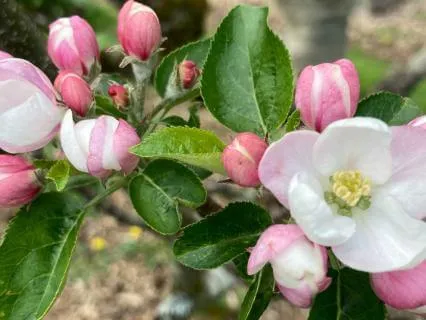
Or the divine or the natural order and the apple tree in the backyard.
We have this older apple tree and it is so life-giving and abundant.
And just,
I learned so many spiritual lessons just watching that apple tree after season to season,
How it,
You know,
It comes to life in the spring and it buds out and it provides fruit.
And then it goes dormant and takes a rest period.
And I think that is a better teacher for how my spirit moves through the years and how there are some years where it doesn't produce apples at all.
And that's like a really hard lesson for me as someone who's like raised to be productive and to contribute to society to realize like,
I need a fallow period too.
Like every,
Every creature does.
Yeah,
That's beautiful.
I love that.
And it's,
It's so hard as,
As humans where we've created these comforts that make it possible for us to do things well beyond after night falls,
You know,
Well beyond when the winter comes and we should be resting.
There's still this expectation of the same amount of productivity regardless of season.
Yeah.
Or just how there's so like,
Again,
Like we're talking just narrowly about religion,
But I think I'm more preoccupied with just the inequality in society economically right now.
And just realizing again,
The lessons from the apple tree is that there's so much abundance in nature.
Like all of our needs can be met.
Seeing how the apple tree meets the needs of the squirrels and the birds and how it's connected to the mycelium and the soil and it provides food nourishment,
Not just for me,
But all of the insect and wildlife produces more apples.
My God,
Like I,
I'm filling up like three or four bins to just throw away of like apples that hit the ground that are less,
Less edible.
I mean,
You could still like,
I don't have the capacity to even process everything that comes through and I'm giving bags away to the neighbors and I'm putting bags out on the fence for the kids that are walking to school to take.
Like,
People are coming to harvest them.
Like it's just so many apples.
Again,
It's just one tree.
Yeah.
Yeah.
It's this philosophy of abundance in a world that has.
Yeah.
So I spent a lot of time meditating on the lessons of the apple tree,
Just realizing like how much,
Yeah,
How all of our needs as humans or it just could be met by just being more in tune with the natural systems.
And yet we've come up with all these structures and rules and we don't live with generosity in our abundance.
And so some people have so much less.
And then that gets me back to thinking about where this all started for me,
Being in relationship with people living in downtown Portland on the streets who had so little.
So it doesn't have to be that way.
Yeah.
You mentioned the spirituality of the apple tree or those lessons you learned from that and the natural order of nature,
I guess,
Of the world and the way that things happen and the natural world.
And I'm curious if there is,
Are there any other definitions of what spirituality means for you?
When you think of the term spirituality,
What is that?
I think,
Yeah,
I think it's paying attention to what is and what's in front of you.
That apple tree is next to the garden beds that I tend,
Which are also surrounded by pollinator habitat that I've built and hedgerows of native plants.
Yeah.
I spend a lot of time in the garden just noticing what is happening and my place in all of it as,
In some ways,
A caretaker to the garden space.
That is a place where I'm interacting and tending to land,
But it also helps me shift to when I'm out and about in the world,
Not necessarily in the city,
But out on trails or whatever to pay attention to what's in front of me.
And I think those are the most beautiful moments to be in nature and to feel like such a small part,
A speck,
In this really intricate web of life.
But then I'm able to breathe easier out there and then come back to the city and pay more attention to the people in my life and to slow down and to connect and not make assumptions about what people want or need,
But to meet them where they're at.
It just helps me be more intentional.
Are there any practices or rituals or routines that you have that help nourish your spirit and soul?
The simplest one is just taking the coffee or the tea out to the chair in the garden whenever I get out there first thing and to sit quietly and wait for the bees to wake up,
Especially in the summer.
We call it bee coffee.
My husband and I will sit out there together.
The birds will sometimes join us,
But just watching all of the native bees wake up,
Not necessarily the European honeybees,
But the very sleepy bumblebees,
It's quite sweet.
So I think that's the most accessible thing.
Not everyone can run off.
At least I have not been well enough or physically able to run off to summit a mountain to have some sort of big experience in nature.
I just pay attention to what's happening in my neighborhood on walks with a dog or what's happening in my backyard in the garden.
Very simple things.
I try to notice,
Like I've been mentioning,
It's been so dry and sunny and bulbs that normally don't poke up till March are already breaking through.
So just paying attention to the timing of things.
Do you have anything that you do to mark the changing seasons?
My partner and I really love celebrating the winter and the summer solstices.
That's tied to our personal story and relationship.
But yeah,
The light really impacts our sense of mood and well-being.
So celebrating the height of summer is always a little bit bittersweet as the days start growing shorter and shorter until winter solstice.
And really celebrating on winter solstice the return of the sun or about mid-January after you've made it through 10 darkest weeks of the year.
What are the things you do to celebrate the solstices?
At this point,
We don't have a specific family tradition around winter solstice,
Although that is our wedding date.
So it isn't a time of anniversary,
But we often spend time sitting in front of the fire,
Acknowledging the darkness and trying to hold on to the things that buoy our spirits until the full return of the sun.
Winter solstice is hard,
But it's hopeful.
The family tradition in the summer is we take an annual campaign trip with friends and try to invite as many people to the coast,
Have a big bonfire on the beach to welcome the height of summer,
Those longer days.
So yeah,
Winter is very much focused on just our family community and summer is focused on our larger extended circle.
Are there any presences or beings or energies that you feel connected to right now?
Not necessarily.
I feel an affinity with the birds in my backyard.
They bring me the most delight.
It's kind of challenging to talk about my childhood image of God because I've really sort of abandoned that.
I don't have a being or deity or anything that is attractive at all right now.
Does that feel good for you?
Yeah,
It feels very freeing.
With the sad state of the world,
Like so much of our human conflict and strife is just so unnecessary and just incomprehensible to myself.
If you're an American,
You should be promoting the freedoms of other people around you,
Whether it's to play sports or to marry who they want or the right to migrate.
When we embrace a spirituality that is free,
It helps us just be more comfortable with who we are in our own identity,
But then hopefully,
Hopefully being more accepting of people and all of their identities and however they show up and just meeting them where they're at and trying to help them live the most authentic versions of their lives,
If that makes sense.
Yeah,
It does.
It's this sense of when you're grounded in your own spirituality,
You don't need others to agree with you.
You don't need everything to be the same and you can celebrate the way that people make it.
That's the proof.
Yeah,
And it's just,
I explained this to my neighbor the other day because he was really confused to meet me and then understand that I had grown up in such a strict Catholic household.
And I was like,
You know,
Jessie,
My perspective on it now is that your religion is for you.
It's to guide and inform your own personal morality and inform your spirituality.
I see religion and spirituality as being different,
But your religion is for you.
It's not there to impose on other people.
And if you want to get super Christian about it,
It's just bad theology to force your beliefs on other people,
Specifically from the Judeo-Christian culture.
The call and response to Christianity should be an invitation.
Jesus invited his apostles to follow them.
He didn't say,
Hey,
Go murder all of those Samaritans.
They don't know what they're doing or they're doing it wrong.
It was an invitation to come follow me and then to share that good news.
It was never about domination or coercion.
And it's just so sickening to me that that's where so much of our struggle in society is just much really coerce and force people to think and do like us or we need control over them and their bodies and their beliefs.
Yeah.
That's why religion can be super problematic.
If it's something that we force on other people or every time we force it on it,
Religion should be for you to inform your spirituality in your relationship with the divine,
However you define that for yourself.
And that's it.
Yeah.
Yeah.
I mean,
You talked about Jesus saying,
Jesus saying,
Come and follow me.
Like he didn't say,
Come and follow me or you're going to hell.
You know,
That wasn't part of it.
You mentioned,
You know,
Religion being a way for people to guide their spirituality and the way they live their life.
And I'm curious if there are truths that you live by that guide you.
Are there truths that I live by that guide me,
Right?
Inner truths,
Values.
Yeah.
I believe that everyone should get to live their own authentic lives like fully and completely and however they identify.
So I feel like that is part of like our journey here in this walk in life is to like really understand and know ourselves and what can we do as a human community,
Not only interacting with other humans,
But also with all these other living beings to allow them their full expression in life.
So yeah,
I think it comes back to like freedom and the pursuit of identity and questions around meaning and connectiveness.
Yeah.
I feel like all people in this world like want dignity and respect and love and have some capacity to share that with others around them.
Yeah.
And there are some those big questions that that religion provides answers for.
Are there any that you are sitting with right now?
From religion?
Just the big questions that humans often,
You know,
Like where do we come from?
What's our purpose?
What is it like after death?
Those kinds of things that religion provides an answer for.
Yeah.
And it's funny,
Like that doesn't matter to me anymore.
Where do we come from?
Where are we going?
No one knows.
But what we have is now.
I don't,
I don't understand how a spider patches from an egg and understands this complex engineering of how to spin a web between the front post,
You know,
On my porch and the tree across the yard.
And yet they do.
Like,
I don't need to understand where the spider comes from or how it knows how to weave a web.
I don't need to know where humans come from or where we're going.
You know,
We and my family are preparing for the death of a matriarch in our family in my Nana's 94.
I know physically where her body will be buried.
But the memory of her is something I get to carry beyond death and her story.
So I think it,
For me,
It's like what,
What's more important is like the now and our stories and the stories we tell ourselves both about the past and how we share those stories going forward to the next generation.
You can think of all those ancient civilizations and we're just trying,
You know,
They,
They exist in some ways because there's some physical evidence left behind,
But we try to piece together their stories.
And if we have those stories,
We,
We share those and preserve those and honor those.
And at least culturally,
That's what we do as humans.
But now,
Like,
As I've freed myself from the restraints of religion,
My spirituality doesn't feel like those questions are as important as what,
You know,
How am I spending my time today?
Who am I interacting with?
Am I of service to my community today?
How can I be of service to them tomorrow?
Yeah.
That's lovely.
I don't get to control my story when I'm gone.
Yeah,
This is true.
So I'm sort of letting that,
Letting that go.
I think I've thought,
You know,
As I'm becoming a mother that like my mothering will be my legacy,
Right?
Like in how this child enters the world and hopefully lives a longer life than me and how they interact with the world beyond what I'm,
You know,
There to witness.
But yeah,
That's,
And I don't have control over that.
So letting go of like,
Maybe that's not an important question,
At least not for me personally.
Yeah,
No,
It may not be.
It was,
When I looked that up,
Because I was like,
Oh yeah,
There's these big questions about what it means to be human or origin,
Purpose,
Values,
Afterlife,
Suffering,
Healing,
Belonging,
And the unknown.
I was like,
Yeah,
A lot of those,
Like some,
I don't have the question of like,
Why do we suffer?
Why don't we suffer?
It's just something that is.
And so,
Yeah,
We've just been told that that's important in our various religious faiths because that,
You know,
Was questioned.
Maybe it were questions that people had,
But.
Yeah.
Well,
And I think,
I think Heraclitus was like,
You can never step in the same river twice.
You know,
There's just this constant change in life and it will never be what it is in this moment.
And,
You know,
I conceptualize that even with just my emotions,
Like my emotions,
I try to picture them as clouds sometimes or as dark storms that are passing through and they will pass,
You know,
Relationships in my lives.
Like my grandmother has always been a part of my life.
It may be a more distant part because I live over a thousand miles away,
But she will pass in the next few weeks and she will no longer physically be here,
But I will have her story.
So not that she's a cloud moving through,
But she is an entity in my life that is physically here.
And then I will cherish her memory as a blessing and her stories.
And they will inform me as I hopefully get to be a matriarch of my own family someday long into the future.
But yeah,
It's just like the apple tree,
Like each season,
Again,
It's cyclical,
But it's also each season is temporary.
And they're different.
And they're always different.
They're always different every year.
There's some shifts.
Or sometimes there's too many apples and sometimes there's none at all.
I don't know.
Yeah.
Yeah.
And the apple tree just stays as it is.
Doesn't feel like it needs to change anything.
Where do you find community,
Spiritual support?
I initially,
Again,
Found it in that like religious structure.
So like the family,
The nuclear family and extended family structure.
So again,
That's where like religion is a great scaffold,
Right?
But then as you branch out,
I found community with when I was more involved in like working outside the home with coworkers,
With people I played soccer with,
With in a more deep way with different circles,
Specifically of like women identifying people who have had similar upbringings as me in terms of religion,
But found that that was limiting,
Especially as,
You know,
Female identifying bodies and have sought out some sort of spirituality.
I found it,
You know,
With hiking partners and to mountaineering,
Like,
I guess it's relationship.
That's the answer to your question.
That's where you get your spiritual nourishment is through relationship.
And so what shape do you see your spirituality taking now and going forward?
Are there things that you're exploring or new places that you're finding nourishment?
Well,
I think this is interesting to have this conversation five weeks out from like potentially,
Well,
I know it's going to happen in some way.
I don't know when,
But I'm giving birth to this small human.
I'm sort of like,
I'm in the place of just like shedding everything that doesn't serve me right now and preparing that my big world is going to be very small.
It might be in the walls of my home for a little while as I nourish and protect this very fragile life that's,
You know,
Entering the world and our family.
So I anticipate that I'm letting go of like even having coffee with the bees in the morning.
Like,
I don't know if they'll have the energy for that,
But,
You know,
Bathing and nursing and washing up and cleaning up after a child may be my future spiritual practice for the next several years.
You will see,
Like,
It's very much,
Again,
I'm just trying to relinquish my need to have control out of a certain outcome or it's going to look a certain way.
I'm just trying to stay in a place of curiosity and openness to see what unfolds.
Yeah.
I like the idea of that idea,
Like a sacred act of caring for someone after birth and before death as well and throughout life,
Really.
Yeah.
So one outgoing and one incoming.
Yeah.
Well,
Is there anything else that you want to share?
No,
I think just in reflecting on my own journey,
The more I let go,
The more comfortable and grounded I am.
I'm trying to remember what Ron said.
I'm going to misquote him.
I wish I could give you some like elegant,
Beautiful thing,
But Father Ron,
The one who introduced me to that deeper sense of spirituality as being in true community rather than engaging in just charity work,
He often talked about being with people in a way where we could,
We're going to unravel at some point.
Like if we were like a strung up like ball of yarn,
But it's better to be with people that can help us unwind and loosen,
If that makes sense.
So instead of just unraveling and falling apart,
Being with community members that can help us release those unnecessary tensions within our own hearts,
Minds or souls and unwind rather than unravel.
The difference being that a little bit of intentionality and being held and being unwound rather than either getting more knotted up or just unraveling.
And when you say unraveling,
I mean,
I immediately think of like emotionally unraveling.
And it sounds like you're talking about like that spiritual unraveling or?
Yeah.
First of all,
It could be emotional,
Physical,
Like maybe less so,
But yeah.
As what I'm trying in the most inarticulate way to say is as I have just let go of like expectations and this is how I need it to be and just accepting what is,
Things just make more and more sense.
Yeah.
Yeah.
That makes sense.
Is there anything you want to leave with our listeners to savor?
Anything that has been a mantra for yourself or an important piece of wisdom that you've carried with you?
I mean,
The mantra that I'm sitting with recently is how we spend our days is how we spend our life.
And you can narrow it down to how we spend our moments is how we spend our lives.
And just trying to be really intentional with this moment is all I have.
I don't have control over what is happening in the world or next or for my partner or this child that I'm in the world.
All I have is now.
Just trying to breathe into the now and then do the next straight thing.
If something in today's conversation stirred recognition,
Curiosity,
Or a quiet yes within you,
I want you to know that the spacious unknown is always open to new voices.
If you feel called to share your own unfolding spiritual story,
You can apply to be a guest by clicking the link in the show notes.
The Spacious Unknown is part of Unfurl,
My publication on Substack,
And is produced by Embodied Conversations,
LLC.
Thank you for listening with care and presence.
Until next time,
May you continue to listen for what is true in the wide and spacious unknown.