
The world’s largest free audio library for everyday wellbeing
Real people. Real life. Real time.
Retreat categories
All RetreatsYoga RetreatsWellness RetreatsMeditation RetreatsYoga Teacher TrainingWomen's RetreatsYoga Retreats in BaliYoga Retreats in United KingdomYoga Retreats in AustraliaYoga Retreats in ItalyFind Your Perfect Retreat
Discover transformative Retreats led by Insight Timer's best teachers.Reconnect, recharge, and return renewed.
The world’s largest free audio library for everyday wellbeing
Blog categories
Mental Health and WellbeingTips and GuidesScience and ResearchTraditionSpiritualityAt WorkTop Articles
How to Meditate
Meditation is something everyone can do. Practicing can help improve your health and wellbeing.
Explore MeditationMeditation Timer
Free meditation timer with customizable intervals, bells, and ambient sounds.
Meditation Timer Online
COURSE
Personality & The Brain: Why You Feel What You Feel
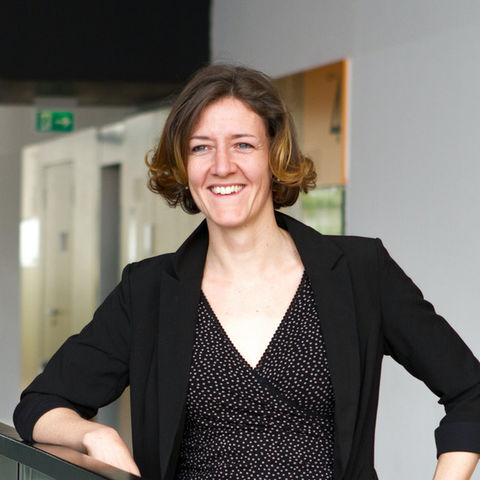
With Karolien Notebaert
The question of who we are is one of the most frequently posed questions of human kind. This is the focus of this course. This course will focus on gaining a deeper understanding about who you are by shedding light on why we feel what we feel – and why we do what we do. This question will be addressed from a neuroscientific point of view. In the first part of this course, you will gain insight into the processes that drive our decisions. Each decision we take is driven by a fast decision process, which is often called the more emotional part of our decision. Besides this fast process, our decisions are also influenced by a slower process, often referred to as the more rational part of our decision. Based on theory and practice, you will learn about the different brain structures that are related to these different processes. As these brain structures all operate in a particular manner, it will be explained which factors influence these structures and how we can actively steer our own decisions. Our decision process is closely related to our personality, which is the topic of the second part of this course. In this part, we will focus on the emotional part of our decision process and how this is related to our unique personality. The emotions that drive us are a result of our unique personality. You will be introduced into one of the most widely accepted and researched biopsychological personality theories. Insights will be given into how our personality traits are anchored in the brain and how they influence our motivations, decisions, and behaviors. These insights will be used to take it one step further: How you can deal with unwanted emotions that block you in reaching your own life goals. In this context, practice and mindfulness will play a central role. It will be shown how mindfulness can help you flourish in your uniqueness and walk your own life path. I believe in learning by interacting with the content. Please feel free to interact and share your ideas in the classroom. The intro and meditation music was designed by the talented Ranghild Maria Mao. The background music for the meditation is called "We are one". Ranghild is a teacher here on Insight Timer and I highly recommend her. I look forward to meeting you in the classroom.
Meet your Teacher
read more
10 Days
6.2k students
4.8 stars
16 min / day
Wisdom
English
Ask your teacher
This course includes 100 community questions and 99 audio replies from Karolien Notebaert. The community classroom and teacher audio replies are only available via the app.
4.8 (353)
Recent Reviews
Alexander

August 27, 2026
The concepts presented in this course provide valueable insides and are useable in the real life. Thank you!
Diana
August 26, 2025
Thank you . I am gonne practise the self regulation 🙏
Anne
August 16, 2025
Super interesting and thought provoking!! I loved this course!
Laura
August 6, 2025
I really liked the explanations of the neural systems that drive us and the great examples. I took away a lot of new information from this course and highly recommend it.
tina
May 20, 2025
This is not like other courses I've taken on I.T., but it appeased my analytical mind, and I've learned a few new things! Thank you!
Lucy
December 1, 2024
Very interesting
Abbie
November 26, 2024
Very insightful, I felt like your were reading a page out of my journal when you described Jim's day. I loved hearing your thoughts on bridging the island so we can better understand others emotions. Thank you so much!
Karen
November 24, 2024
Very informative and helpful! Thank you for helping me wrangle my brain 💕
Silke
July 6, 2024
Karolien brings the neurophysiological based explaination of the theory of personality to life and into practical use in a wonderful easy way. A pleasure!
Tim
April 26, 2024
Some pretty useful information but the format was odd. Meditations felt very “tacked on”
T'Doo
November 30, 2023
Thank you. Worth repeating to gain more insight. Namaste
Gillian
October 4, 2023
I did not want this course to end so luckily I can return to it repeatedly. The information shared and manner of presenting it has made such a profound impact on me - both in understanding the past and looking forward to the future. Thank you 🙏
Helen
September 24, 2023
Fantastic detailed course thank you:)
Kimberly
September 21, 2023
I loved your voice teaching these concepts. I will enjoy being more aware of my motivations.
Jeff
September 21, 2023
Really interesting to understand how these various systems interact and compete to drive our thoughts and actions and how mindfulness can break the impulsive responses and allow more thoughtful and confident consideration.
Denice
August 24, 2023
Very interesting, and thank you so much. I understand more about myself now.
Patricia
August 21, 2023
Excellent mix of science and meditation
Bill
June 29, 2023
Well done
Curt
June 3, 2023
Great Course!
Jane
May 27, 2023
This course was very helpful in my understanding of how the brain functions and how that affects my personality.

Trusted by 37 million people. It's free.

Get the app


