Welcome to Life Unedited Sanctuary,
Where reality happens.
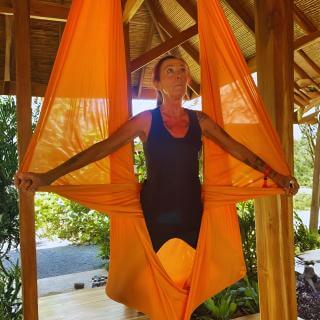
I'm Tiffany,
And I've been a reality therapist for over 20 years.
I walk my talk.
And I relish opportunities the universe gives me to practice breathing out then and there.
And breathing in here and now.
I invite you,
Gentle listener.
To cultivate the practice as well.
This is a reality theory on validation and self-trust.
The other day on a podcast,
In which I participate,
A listener wrote in the comments that she was there for validation.
The host directed the statement to me.
I took a deep breath and dove in.
Seeking outside validation is at epidemic proportions and a sure sign of a serious lack of self-trust.
And I shared as much.
The topic has been on my mind since then and has come up in a number of conversations.
So I sat down to further explore the reality radical acceptance theories on validation.
This is a culmination of that exploration.
Over the last however many years,
It has become more common for people in conversations to either validate one another or demand validation.
Statements like,
That's valid.
Your feelings are valid.
Or you never validate me.
Are regularly said and heard.
As a reality therapist,
I have the burning desire to know why.
When and why did we need to start validating people and or seeking validation from others?
Are we that unstable,
Uncertain,
Unsure as a society?
The other side of that is why do we deem anyone outside of ourselves worthy of validating us more than we can validate ourselves?
I believe whether you are a doctor,
Astrophysicist,
Grocery store clerk,
Or fast food employee,
We all put our pants on the same way.
We are all human beings.
No one is better than anyone else.
So how is validation related to self-trust?
If we trust ourselves,
We are confident in ourselves,
Our choices,
Our behaviors,
Our decisions.
If we trust ourselves,
We don't feel a need for someone outside of us to validate us.
If we lack self-trust,
Then we are not confident in ourselves,
Our choices,
Our behaviors,
And our decisions,
And seek approval or even permission by way of validation externally.
A follow-up question arose on the podcast from my statement that seeking validation is a sign of lack of self-trust.
Another co-host asked.
Do you have any tips or tricks for building trust in ourselves?
Interestingly enough,
We can begin to regrow trust in ourselves by not seeking outside validation.
By doing the opposite of what we might already be doing.
We are born trusting ourselves because at birth we don't know any different.
That's why earlier I said regrow our trust.
We are born with it and regardless of what happens and what we experience in life,
It's still there.
It's a practice of remembering that and building upon what is already there.
It's through the process of domestication that we learn to doubt and begin to second-guess ourselves.
That's how our trust begins to erode.
Like I've said before,
It's not anyone's fault.
And by anyone,
I mean our parents or our caregivers.
Whoever raised us did so with the information they had on board at the time,
Which probably came mainly from how they were raised.
Parenting is difficult at best,
And there is no one correct way to parent.
Some of the doubt and second-guessing kind of comes naturally.
What I mean by that is when our caregivers tell us no.
And our young,
Formative minds think they are wrong.
Sometimes parents have to say no for safety reasons.
And as children,
We don't understand their thinking.
So that can cause us to second guess our own thinking.
When we doubt our thinking,
We also doubt the thinking of those around us.
In this case,
That could be our parents or caregivers.
This is an important part of growth for us,
Cognitively,
Because this is when our critical thinking skills begin to emerge.
Other times doubt and second guessing in what we are thinking and feeling is more obvious.
Like when we are upset and crying and our parent tells us not to be upset and to stop crying.
Chances are they don't mean anything malicious by it and at the same time it is confusing because inside of us in that moment we are upset and crying is a way of expressing that.
So how can both of those things be true?
The adult we trust is telling us not to be upset and our body is upset.
Super confusing and there are many more examples of this cognitive dissonance in our domestication.
So it's no doubt that our quote-unquote trust issues are planted young and deep-rooted.
As a counselor,
People say,
That's how I was raised.
That's just how I am.
To me,
That feels like a scenario where people believe life is happening to them rather than through them.
It also feels like people are not taking responsibility for themselves,
Their feelings,
Choices,
Responses,
Reactions,
And behaviors.
We are responsible for us.
If we don't trust ourselves and validate ourselves,
It is no one else's responsibility to do either of those things for us.
At some point in our lives,
It is healthy to explore our lack of trust,
Doubt,
And second guessing.
Peel back those layers and radically accept that much of that came from how we were raised.
Under those proverbial layers of life experience is our innate self-trust.
Through the process of self-exploration,
Turning the spotlight on us,
It is important to keep that light on ourselves and resist the urge to shine it on people outside of us in blame.
Our first step towards rebuilding or regrowing our self-trust is to remember that it is in us.
It is innate.
Upon remembering,
The next step is to notice when,
Where,
And why we seek external validation and stop.
This is a conscious choice.
As we practice not asking for approval from others,
We lean into approving and validating ourselves.
We grow trust and confidence in us.
Another important factor is follow-through,
Doing what we say we're going to do.
The more we follow through and keep our word,
The more balanced we feel energetically.
When we are balanced,
We feel comfortable in our skin.
We are grounded.
And we own our energy rather than give our energy away to an external source.
Follow-through reinforces our experience of being trustworthy to ourselves.
We can count on us.
Thus,
Other people can also count on us.
A final portion of this self-trust development program is setting and maintaining boundaries.
Boundaries are about what we accept and don't accept.
When we either don't have them or have them and don't enforce them,
We are energetically letting ourselves down,
Which chips away at our trust.
By not enforcing them,
We are projecting our lack of self-worth onto a person or relationship.
We are saying that I'm not good enough and or worthy and I will accept words and behaviors from others that confirm my not good enough and or lack of self-worth.
Boundaries are not mean or unkind.
They are not selfish.
In fact,
They are an act of self-care.
We do not need validation or approval from anyone other than ourselves.
If someone willingly shares validation with us,
We can treat it as the proverbial icing on the cake of our own trust in ourselves.
We are in choice and can choose to allow the experiences of our past reside in the then and there of the past.
And we can choose to trust what we feel in our bodies,
Our hearts,
In the here and now.