Hi,
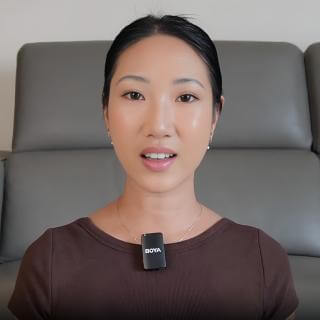
I'm Dr.
Kim.
I help people heal chronic pain and stress using somatic movement and meditation.
Today we're talking about a pattern that so many people experience.
That feeling of being so tired but also wired.
You feel completely exhausted during the day but when it's finally time to sleep your body refuses to switch off.
You lie in bed with thoughts racing through your mind and just as you start drifting off your body suddenly jerks you awake again.
During the day you might be yawning constantly.
You feel so tired that you rely on caffeine just to function.
Your body might feel tense and alert all the time especially through your neck,
Shoulders and lower back.
You might also notice that you're very sensitive to light or noise.
Loud sounds make you jump and bright light can feel overwhelming.
If any of that sounds familiar this class is for you.
Please take notes.
I have personally lived like this for many years dealing with constant fatigue,
Chronic insomnia,
Pain and a serious caffeine addiction.
At the time I thought that it was just me and my body and that I was going to live like this for the rest of my life but what I soon came to realize is that this is actually a very common nervous system pattern and once you start to understand what's happening in your body everything starts to make a lot more sense.
Let me explain what is happening in this tired but wired state.
Your nervous system has two main modes.
The first is your sympathetic nervous system which is the fight or flight survival mode.
This is the system that mobilizes energy when you need to respond to danger.
Imagine you need to run away from a tiger.
Your heart speeds up,
Your muscles activate and your body prepares to move.
This system is incredibly helpful but it's designed to come in short bursts.
The second mode is the parasympathetic nervous system which is your rest and digest state.
This is where your body can relax,
Sleep,
Digest food,
Repair tissues,
Balance your hormones and restore your energy.
Ideally we should be spending about 70 to 80 percent of our lives in this parasympathetic state.
In a healthy rhythm we move between these two modes.
We activate when we need energy and then we come back down into rest and recovery.
But for many people especially in modern life the rhythm gets completely disrupted.
We're not running away from tigers anymore but our stress comes from things like an email from your boss,
Constant notifications on your screen,
Negative news and media or long hours working on screens.
All of these things keep the nervous system slightly activated during the day.
When the nervous system runs in survival mode for too long it can start to get stuck there.
Even when you're exhausted your body still thinks it needs to stay alert.
Part of you wants to rest but another part of your nervous system is still scanning the environment,
Still holding tension,
Still preparing for something to happen.
This is why certain symptoms begin to show up.
You might jump out of your skin when there's a loud noise.
You might lie in bed at night with your heart pounding in your ears.
Bright sunlight feels overwhelming and you need sunglasses.
Your body feels tight,
Stiff and sore all the time.
So the big question becomes how do we change this pattern?
So the nervous system needs signals of safety before it can shift back into parasympathetic repair.
The good news is that we can start giving the body these signals.
One of the simplest places to start is by reducing stimulants especially caffeine and sugar.
Caffeine works by stimulating your nervous system and increasing alertness.
If your nervous system is already running in this fight-or-flight survival mode the last thing it needs is more stimulation.
I used to drink four coffees a day because I was so exhausted but for many sensitive nervous systems even one coffee in the morning can still affect your sleep at night.
That is absolutely the case for me.
I quit coffee a couple of years ago and now I know my body's limit and that is one cup of earl grey tea in the mornings.
If I have any more than that,
Another tea,
Matcha or a coffee,
My sleep will be affected that night.
For my caffeine addicted clients I usually recommend reducing slowly over a few weeks to avoid withdrawal symptoms.
Eventually most of them switch to decaf coffee or tea.
It's not always a fun process but the results on the sleep are absolutely incredible.
I went from chronic insomnia to sleeping eight to nine hours a night and it completely changed my health.
Another powerful shift is reducing light stimulation in the evenings.
Our nervous systems are deeply connected to light.
Bright overhead lights at night time tell the brain that it is still daytime which delays the release of melatonin,
The hormone that helps us go to sleep.
Something so simple can make a huge difference.
Switch off the overhead lights at night and use soft lamps or warm lighting instead.
I personally never ever touch the overhead lights in my apartment.
You can also do things like switch your phone to night mode.
My night mode is on all the time and my glasses also have a blue light filter in them which gives everything in my vision a nice warm cast.
These are small and easy changes to make but they send powerful signals to the nervous system that it is safe to wind down.
Another powerful tool is vagus nerve regulation and this is my absolute favorite.
The vagus nerve is one of the main pathways that helps shift the body from survival mode to rest and digest.
You can think of it as a communication highway between the brain and the body.
It runs from the brain down through the neck into the heart,
Lungs,
Through the diaphragm and down into your gut.
When the vagus nerve is gently activated,
The body moves into rest and digest.
Your breathing slows,
Your muscles soften,
Digestion improves and the body finally gets permission to recover.
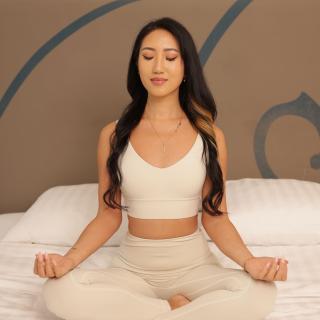
Slow somatic movements,
Diaphragmatic breathing and loving and gentle self-touch all send signals through the vagus nerve that the body is safe.
Over time,
These practices can retrain the nervous system so it stops getting stuck in that wired state.
Many of somatic practices I create are designed specifically for this purpose.
Last but not least,
You can do everything I just mentioned but if you are not living life in alignment with who you truly are,
Your nervous system will continue to resist.
I had to learn this the hard way.
When I was living in Australia working as a chiropractor,
Everything looked perfect on the outside.
I had a well-paying job,
Great bosses,
Good friends and family but deep inside I knew that I was not supposed to be there.
Every day I felt a little voice in my head telling me to leave.
So what did I do?
I ignored it.
And what happened?
The resistance inside my body kept growing.
My stress increased,
My sleep got worse and every relationship I had simply fell apart.
Eventually,
I realized that I needed to listen to this inner voice.
I quit my job,
I sold all of my belongings and I traveled the world solo for one year.
Since then,
I have settled down in Chiang Mai which is my favorite city in the world.
My life and health completely transformed.
Instead of feeling like I'm constantly swimming upstream against resistance like I felt in Australia,
I now feel like I am floating downstream with the river.
I'm not telling you to do something as drastic as what I did but I would suggest to start listening to your body.
Notice when something feels heavy or restrictive and notice when you have a thought that feels exciting and when you feel that excitement,
Follow it.
That listening to your inner guidance has proved to be extremely powerful in turning my life around and regulating my nervous system for the long term.
I hope you found all of these tips helpful.
I have many more where they came from.
Please drop a comment below if anything I said resonated with you.
Thank you so much for being here.