Hi everyone,
Welcome to Spiritual Sobriety.
I'm your host Chris McDuffie.
Today we will discuss how to build spirituality while maintaining abstinence.
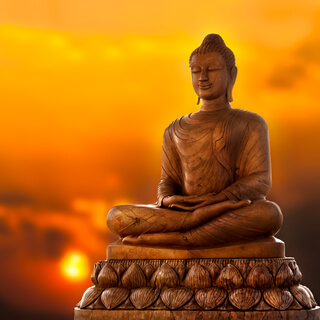
We have been discussing Buddha's four noble truths,
Which is his introduction to teaching the end of suffering.
As a reminder,
The Buddha's four noble truths are generally reported as follows.
The first noble truth is that the nature of our human existence includes suffering,
Pain,
Anxiety,
And dissatisfaction.
The second noble truth explores the origin of our human suffering.
In short,
He teaches us that we are always trying to escape from or think we can avoid the pain and discomfort that the anxiety and fear of dissatisfaction breeds.
In the Third Noble Truth,
The Buddha reports that there is a path to ending our self-generated suffering,
Which he outlines in the Fourth Noble Truth.
The Fourth Noble Truth is Buddha's presentation of the specific actions to follow which will bring the cessation of our suffering and finally lead us to joy and happiness.
Our discussions thus far on spiritual sobriety have explored the following.
Spirituality,
Defining suffering,
Identifying the cause of suffering,
How to balance our suffering with gratitude and the eight worldly preoccupations,
Or the emotions that breed our suffering.
So from a Buddhist perspective,
We have been looking only at the first three of the Four Noble Truths,
And from a 12-step approach,
We've been looking chiefly at steps one through nine.
Both of these powerful spiritual pathways offer suggestions and practices to identifying the cause of our suffering and how to end our suffering.
Let's keep reminding ourselves throughout each day of the definition of spirituality for our purpose.
On spiritual sobriety,
Spirituality is defined as bonding in love or simply love.
When we are suffering,
We are not loving ourselves.
We are at war with ourselves.
When we are suffering,
We turn against those who love us and want the best for us.
So how do we build spiritual sobriety so that we may love ourselves,
Especially when we are in pain and suffering?
Sobriety.
You'll want to read the book by Dr.
Paul Oh called You Can't Make Me Angry.
Dr.
Paul Oh is an original co-founder of Alcoholics Anonymous and was a psychotherapist.
His wife Max was a therapist also and co-founder of Al-Anon.
And You Can't Make Me Angry,
Which is technically a couple's communication guide to create a spiritual union in marriage and all relationships.
In short,
The book follows the premise that no external force,
Event,
Or person makes one angry.
Rather,
It is our internal perspective and reactions to these situations that drives our feelings of mad,
Sad,
Glad,
Or happy.
Do you remember all eight of the Buddhist Eight Worldly Preoccupations that we discussed earlier?
As a reminder,
They are generally referred to as happiness and suffering,
Fame and insignificance,
Praise and blame,
Gain and loss.
Buddha suggested that our anger and our suffering comes from the wanting and not wanting of these eight emotions.
Dr.
Paul and his wife's teachings in You Can't Make Me Angry the actions that one must take to build spiritual sobriety within oneself to cultivate a loving connection with others.
For our purpose,
He identifies the stages or bases to work towards achieving spiritual sobriety.
Dr.
O uses a baseball diamond or diagram to illustrate his point.
To be clear,
All religious and secular spiritual pathways have the same or very similar building blocks that you may enjoy as much as I do,
Seeing how all these spiritual exercises Texts,
Religions,
And philosophies all have so much in common.
Consider drawing a baseball diagram on your piece of paper or if you have a spiritual sobriety notebook.
We will label the bases as follows.
First base physical sobriety,
Second base mental sobriety,
Third base emotional sobriety,
And home base as spiritual sobriety.
I think I'm going to first base,
But somehow I end up in right field.
Jerry just celebrated 38 years of continuously running the spiritual bases of sobriety,
One day at a time,
With progress,
Not perfection.
Now consider who is on the opposing team trying to tag you out.
Is your bartender playing right field?
Is anger playing third base?
Is your ego playing shortstop position?
I invite you to take a few minutes and consider ascribing the names and emotions to each of these opposing team and who is on your team.
Who is the opposing manager?
Is it fear?
Is it trauma?
You may wish to pause and rejoin us in a few minutes after thinking.
Remember that we begin today's discussion with the premise that our emotions begin within ourselves.
This means quite literally that you can't make me angry.
Our suffering begins with us and the Buddha and the 12 steps remind us that our solution to ending our suffering also lies within us.
Let's return to our baseball diamond to be clear.
Let's return to our baseball diagram.
To be clear,
We are not trying to round the bases and arrive at home plate only once.
We are not trying to win this game of spiritual sobriety only one to zero.
Consider this illustration as a guide to long-term sobriety.
We want to remain at bat,
Playing the offensive,
Working on the upward maturation of physical,
Mental,
And emotional health as we consistently continue to round the bases again and again.
And from grabbing and aversions.
These help us run the basis of spiritual sobriety more effectively,
Efficiently,
And with more awareness,
And we don't get tagged out.
Let's now explore each base a bit more.
First base,
Physical sobriety,
Includes all the actions of loving and healing our physical self.
Are we eating,
Sleeping,
Hydrating,
And exercising?
And more importantly,
Are our efforts imbalanced and practiced with the intention of cultivating love for ourselves?
Are we getting healthier day by day?
Are we helping others get healthier?
For those of you in early recovery,
Physical sobriety may include a medically supervised detox and careful monitoring of the symptoms of pause.
Post-acute withdrawal symptoms that occur for the first two years.
We know that,
On average,
Individuals suffer for about 10 years in their attachments and their addictions and trauma before ever trying to get healthy with self-care or mental health.
Consider how long it must take for the body to heal itself from these devastating effects of alcohol,
Heroin,
Crystal meth,
Cocaine,
Fentanyl,
Sex addiction,
Gambling addiction,
Eating disorders,
And body dysmorphia.
The first base is itself,
Is its own germ.
Journey,
Not a destination.
The second base is mental sobriety.
Here we're exploring the devastating effect of trauma and use on our thinking mind.
Remember,
We like to call addiction a thinking disease since our fear,
Our trauma,
And our negative impacted thinking makes us see things poorly.
We literally thought it was a good solution to end our suffering or avoid our suffering by putting a needle in our arm or spending the family savings on internet addictions or sex or gambling.
We actually thought that we were not worthy of help or joy or love.
Or we thought we were deserving of the suffering.
We thought that the solution to our suffering and the cause of our suffering was outside of us.
You make me angry,
Is what we thought.
The third base is emotional sobriety.
Are we using our practices to be able to identify,
Feel,
And respond in a loving and kind way that honors our core values?
Or are we angry too often,
Anxious too often,
Or in a state of prolonged depression too often?
Steps one through nine help us identify how our suffering cycle of addiction created emotional imbalance and a lot of suffering and home base is spiritual sobriety.
Are we choosing to learn how to love ourselves again and forgive ourselves and those who harmed us?
Do we look forward and choose to see the similarities,
The better,
The good in ourselves and in others?
Do we see that the Buddha within or the Christ within everyone we meet,
Including ourselves?
Are we choosing to look down our path by looking only at imperfections and the imperfections of others?
Or as poet W.
H.
Auden writes in his poem,
As I Walked Out One Evening,
Quote,
Continue your sober life.
Have a great day.
Thanks.