Blessings and welcome to the path to freedom.
This path that is all about us awakening to the truth and the essence of who and what we are.
That is all about us allowing for greater and grander,
Forever,
Allowing for greater and grander expressions of that who and what to emerge.
And that is about us allowing for the peace and the love and the joy and the harmony and the wholeness and the abundance and the prosperity and the beauty and the creativity that is inherently within each and every single one of us.
For all of that to emerge,
To come forth with ever expanding ease and grace.
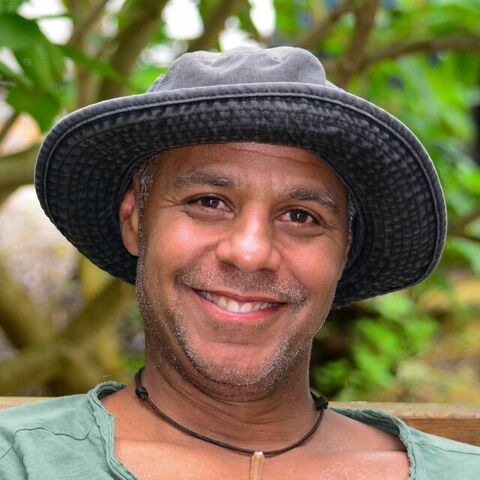
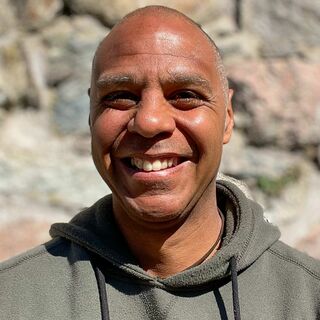
My name is Daniel Roqueo and I'm deeply grateful and I'm deeply honored and I feel deeply privileged to have you join me.
I'm so grateful that you're choosing to participate in the unfolding of your soul,
In the allowing for greater and grander expressions of who and what you are to emerge in your own conscious awakening.
I'm so grateful.
The theme for this particular message is using the breath to come back to the nowness of this moment.
And if you ever joined me in the wave meditation message,
You perhaps remember and know that coming back to the breath is one of my favorite tools.
No.
I need to reiterate because it is my number one favorite tool to bring me back to the nowness of this moment,
To bring me back to the holy now,
To bring me out of time,
To help me step out of time,
To anchor me in that which is right now,
Right here.
The breath is my number one tool.
However,
We do not need to be in meditation to come back to the nowness of this moment.
Or actually,
We do not need to be in formal meditation because meditation is not only when we're sitting on a cushion,
It is not only when we're sitting silent with our thumb and middle finger touching,
But meditation is any moment,
And every moment,
Where we're fully present,
When we're fully here and now.
That is meditation.
When we are fully present in the nowness of this moment,
Then we are in meditation.
This is regardless of whether we're sitting in formal meditation for 20 minutes or 30 minutes or 10 minutes or 5 minutes or 2 minutes,
Or if we're walking down the street,
Or if we're listening to someone speaking,
Or if we're watching TV,
Or if we're watching a flower,
Or if we're sitting on the bus with our eyes wide open.
Whenever we come back to the nowness of this moment,
Then we are in meditation.
And the beautiful thing about the breath,
As an anchor,
Or as a portal into the nowness of this moment,
Is that actually there are two things about the breath that are so beautiful,
And both that makes the breath so powerful a tool.
The one thing is that we always have the breath with us.
Wherever we go,
We're always breathing until the moment where we leave this place,
Where we move on to the next level,
To the next dimension.
But as long as we're alive here on this planet,
We have the breath with us.
No one can take it away from us.
It does not vanish,
It does not go away in any shape,
Way,
Or form,
But it's always with us.
So that's the one thing that is so beautiful and powerful about the breath.
And the other thing that is so powerful about the breath is that the breath cannot.
.
.
Let me rephrase.
The breath is.
.
.
And I'll circle back to what I was about to say,
But let me begin in this end.
The breath is always now.
The breath is always now.
We cannot breathe in the future.
We cannot breathe in the past,
But the breath happens now.
And so whenever we come back to the breath,
It is now.
We're coming back to now.
And so there are a couple of things.
.
.
And this,
The breath,
We can come back to the breath in any given moment.
And I would invite you to set an intention to remember to remember to come back to the breath as often as you can.
There is nothing that you can do that keeps you from being present with your breath.
There's nothing you can do.
In fact,
Whatever it is that you do do,
When you come back to the breath while doing it,
You make yourself open and available for much more power.
You infuse whatever you're doing with much more presence,
With a higher level of excellence,
A higher level of productivity,
If you're present with it.
And so there is no moment when and where it is inappropriate to come back to the breath.
But any given moment,
In any given moment,
We are wise to be present with our breaths.
Now,
I know from personal experience that of course I forget.
I'm not present with my breath all of the time.
I'm increasingly present with my breath,
But I'm not present all of the time.
My mind wanders,
I catch myself daydreaming,
I catch myself being attached or identified with thought forms and opinions and judgments and all these things.
Planning the future,
Reminiscing the past,
And all these things that the mind does.
But more and more,
I am present with my breath.
More and more,
I come back to the breath,
Using it as a portal,
A doorway,
An anchor into the nowness of this moment.
And so if you've been tuning into a way of meditation with me,
You perhaps remember that when we're using the breath to come back to the nowness of this moment,
There are two things we need to be aware of.
First of all,
We need to be aware that the breath happens by itself.
In other words,
We do not need to make the breathing happen.
But ours to do is to observe,
Allow,
And let the breathing happen as it does.
Because the body is divinely intelligent.
It knows fully well when to breathe,
How much air to breathe,
When to breathe out,
When to breathe in.
It does not need,
The body does not need us interfering with the breathing.
It is very normal for individuals to sort of take over the breath.
And so many individuals have very shallow breaths.
But normally,
If given to itself,
The breathing happens very slowly and rhythmically.
So if we want to use the breath as an anchor,
All we need to do is to observe it,
To allow it to happen.
And the other thing we need to be aware of is that the breath has four stages to it.
Most individuals are aware of the in-breath and out-breath.
These are two stages.
But then,
In between the in-breath and the out-breath,
There's a space.
A space of tranquility,
A space of no movement.
And likewise,
In between the out-breath and the in-breath,
There's a space of no movement.
And so,
We want to be aware of these four stages and we want to seek to keep our attention on the breath through all these four stages.
This allows us to sustain our attention on the breath.
It allows us to observe the breath with greater ease and for a longer period.
Not being pulled into a thought form or an opinion or a judgment or fantasy.
And so,
That's my invitation to you.
As often as you can remember during the day,
Come back to the breath.
Two seconds for two breaths in the beginning.
And then,
As your attention muscles strengthens,
You perhaps are able to be present with your breath for five breaths,
Ten breaths,
For a minute,
For two minutes,
Or even longer.
How long you are able to stay with the breath is of no importance.
It does not matter.
What is important is that you're willing to practice.
It's that you're willing to come back and do it over and over and over again.
When we fall,
We get right back up and begin again.
We come back to the breath and we begin again.
We come back to the breath and we begin again.
And the intervals in between us coming back to the breath,
They decrease as we're able to stay with the breath for a longer period of time.
And what you will find is that when you are present,
Your life takes on a whole new dimension.
Much less drama,
Much less fear,
Much less worry,
Much less anxiety,
Much less stress,
Much more peace,
Much more love,
Much more joy,
Much more harmony and wholeness.
That's what's in this.
That's the gift.
That's the blessing contained in coming back to the breath,
Of using the breath as an anchor to the nowness of this moment.
All right,
So until the next time,
I'm grateful for your having tuned in.
Thank you so much for listening.
Until the next time,
I bless,
Bless,
Bless your day and I bless,
Bless,
Bless your way.
You beautiful,
Magnificent,
Wonderful,
Powerful being.
Namaste.