Welcome,
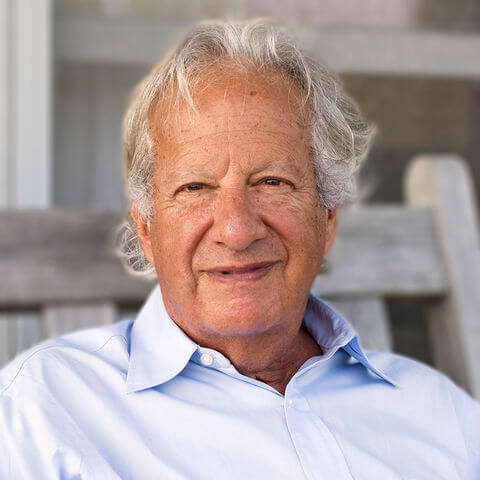
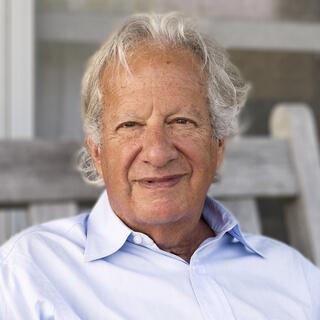
My name is Elliot Dasher.
I'm a physician and a meditation teacher and I appreciate spending the next few minutes with you.
What we will do is progress slowly through the three stages of meditation,
Calming the mind,
Resting in stillness and experiencing the nature of mind.
So let's get going.
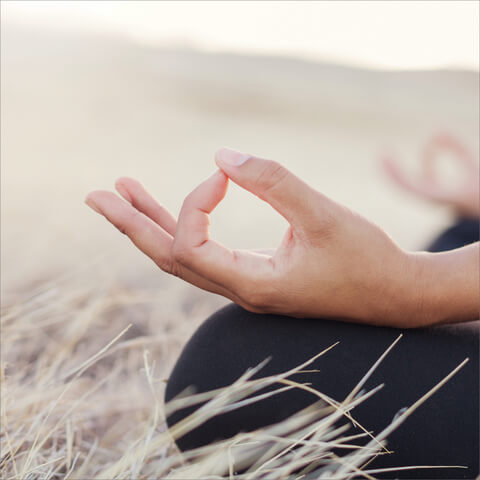
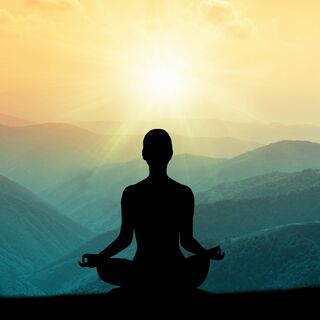
Just find a comfortable meditation spot,
Sit on a cushion or a chair with your back straight,
Your hands on your thighs,
Looking forward,
Your eyes open or your eyes closed,
As ever is best for you.
We begin with a very simple but potent breathing exercise that physiologically calms the mind without very much mental effort because there is a relationship between the respiratory centers in the brain and the consciousness centers.
We actually can use the respirations,
The breathing cycle,
As a way of calming the mind without any active mental intervention.
So we begin the following.
We focus on an in-breath,
Big in-breath,
Full out-breath.
We let everything out and then we hold the breathing.
It's during this hold that there is a place of stillness and silence that opens up because the mind cannot be active when the breathing is suspended.
So again,
Deep breath in,
Blow everything out of the mind,
Hold for a count of six to eight and rest in the stillness.
Deep breath in,
Everything out,
Rest in the stillness,
Hold for six to eight,
Just experiencing it.
And begin the next breathing cycle on your own and I will be silent for about a minute or two so you can do 10 or 15 of these on your own.
Again,
Deep breath in,
Blowing everything out,
Spending and holding the breath for a count of six to eight and resting in the stillness that will be there at that time.
Completely resting mind and body,
Just experiencing the stillness that's there in the breath hold and then carrying that through the next breathing cycle.
Just continue this breathing practice even when your mind intervenes,
Tries to take you away from it.
If you do 10 or 15 of these your mind will quiet,
You can as well do these during the day in your normal activity,
Maybe just one or two at a time and extend the hold.
Now we can do this part of the exercise calming the mind for as long as you need to do it.
But let's move to the next part of the process which is resting in stillness,
Resting in the calmness.
You continue the breathing but with less emphasis on the deep inhalation,
The deep exhalation and the hold although continue to do some of the hold and what we do is focus on now on our relationship to the thoughts,
Feelings and images that naturally and spontaneously appear in the mind.
The way to work with these and stabilize the still mind is to acknowledge their presence when they arise.
Aha,
There's a thought,
There's a feeling,
There's an image.
How are you?
Okay,
Goodbye.
We don't attach to them,
We don't grasp on to them,
We don't make a story about them,
We don't react or give them any attention.
The normal spontaneous movements of the mind will dissipate unless we fix them in place and expand them through our attention.
So we stay in the stillness when there's an actual spontaneous arising of a thought,
Feeling or image,
We simply let it go on its way.
Acknowledge it,
Let it go on its way.
Practice that for several more cycles.
This is how we stabilize still in the mind.
You see the thought,
Feeling or image is not what distracts us,
It's when we give it attention and fix it in place and expand it and elaborate it and react to it that makes it distracting.
So if we withdraw that from the thought,
Feeling or image,
It'll no longer bother us,
It'll come and go.
Now that the mind is even calmer and you know how to deal with the appearances,
The mental activity that arises,
We're going to move on to even a more subtle approach to still and resting the mind.
So we're going to continue the breathing as we're doing it,
Basically normal breathing but maybe some hold at the end of exhalation.
We're going to be able to do now is to empty the mind by dissolving away the ordinary content.
We begin by letting dissolve,
As we've spoken of,
Any thoughts,
Feelings or images that may arise,
Just letting them dissolve like early morning mist in the Sun or the waves that dissolve back into the ocean.
We let any identities that we have that arise dissolve,
Father,
Mother,
Teacher,
Sister,
Brother,
Worker,
Just let them dissolve these mental acquisitions over the years,
Let them dissolve away.
Let all ideas or judgments or beliefs dissolve away.
Let your eye,
Your normal ordinary eye,
Your personality that has a name,
Let that dissolve away as well.
And all the contents will dissolve with it as we empty out our mind.
Let our notions of birth and death dissolve.
Let our sense of the body dissolve,
My body,
This body,
Let that dissolve.
There is a vehicle there for consciousness to work through but the labeling in a body and all that comes with it,
Let that go.
Let all notions of time go,
Past,
Present,
Future.
And now look at what's left,
Just experience the sense of emptiness that's there.
It's not like a half glass empty because that emptiness is also spacious and aware.
There's a sense of it,
Feel what it's like to rest in the emptiness.
In the mind that's free of its constant chatter and influences of all its mental acquisitions over a lifetime.
Rest in that emptiness,
That spaciousness.
That's also aware.
Notice there's an awareness there,
You know that it's spacious,
You know that it's empty,
You know that you're aware.
So there's an empty awareness.
There may also be the spontaneous arising of thoughts,
Feelings and images that come and go out of consciousness.
Out of this face of emptiness and awareness and openness,
There arises forms,
Thoughts,
Feelings,
Images,
Couches,
Chairs,
They come from mind,
They dissolve back into the emptiness and awareness which is their nature.
So these are the form,
The formlessness of the emptiness,
The awareness and the forms that arise.
All of these are part of who you are,
Your natural self.
Just rest in that peace,
Rest in that serenity.
Anything else that arises,
Let it dissolve.
We take one final step now.
Let go of even your idea of emptiness,
Your sense of emptiness,
Of awareness,
Of mental appearances,
Of mind itself.
Let all of those concepts dissolve into all that's left is an is-ness,
A that-ness,
A such-ness,
A being-ness,
A presence,
And that's who you are and rest in that.
This authentic self,
This natural self is whole,
It's fully connected,
It's not separated.
If you look you'll see there's no place that anxiety or fear or depression or loneliness can develop.
There's no place that suffering can develop in this natural self,
It's not possible.
What can evolve is the seamlessly interwoven serenity,
Natural happiness,
Wisdom,
Compassion,
And complete freedom.
That is your nature.
Rest in that mystery,
Rest in that sense of self,
Rest in that peace.
Whatever arises is okay,
Just let it go.
Everything is intact,
Your intellect,
Your senses are working,
And you can take this into your daily life as a background.
So it's always there,
Never goes away,
And doing normal activities with this background.
Of course your ordinary mind will pull you back to your ordinary self and all that comes with it.
So it takes time to stabilize this meditation practice,
Coming back in that stillness with breath holding during the day,
Dropping into this place for a few minutes when you take a break in your normal activities.
In the time you'll know this place as who you are,
As what is given to you as your birthright,
What is the divine space that is shared with everything else.
So this guidance will cease in a moment,
But I suggest you repeat this as many times as you can,
And you can extend it for a longer period of time when the guidance is over.
So I'll leave but you don't have to stop here.
Thank you for sharing your time with me.
Thank you.