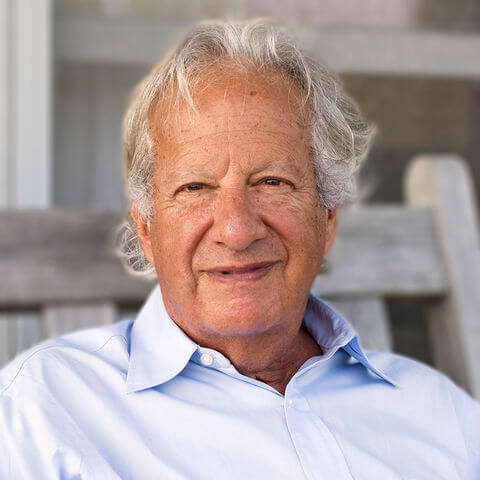
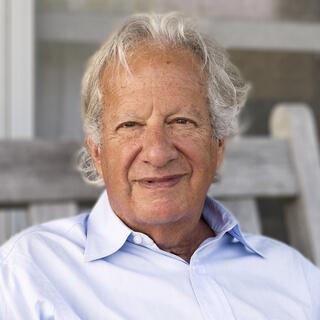
My name is Elliot Dasher.
I'm a physician and meditation teacher.
All great traditions and their essential philosophies,
Ceremonies,
And rituals have as their central aim the dissolving of the usual sense of our ordinary I with its identities,
Past history,
And habituated patterns.
As a prelude to directly experiencing the essence of self,
The unity and interconnectedness of all life,
And the sacred nature of existence.
This direct experience provides a foundation of the first aim of meditation,
A healthy and expansive life,
And the second and final aim,
A direct experience of what lies beyond in an expanded awareness and consciousness.
Let's begin with the specific time tested practices that enable us to suspend the usual I,
That is our ordinary mind,
And reveal the nature,
The authentic nature of our being.
So let's begin.
Find a comfortable space,
Eyes closed,
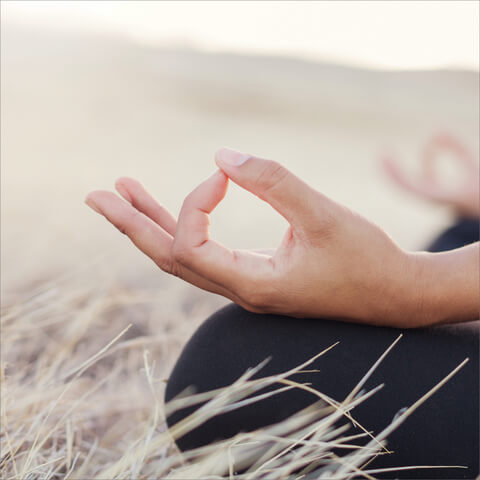
Hands on your lap,
Straight a bit back,
Place where you'll not be interrupted.
Also a setting if you can,
That already brings you into a place of harmony because the nature of the situation or the space that you choose.
The first method we're going to use is called drop and suspend.
This focuses on using the breathing because the breath has a relationship to consciousness that likely has to do with the interconnections within the brain or perhaps for other reasons.
We control our breath,
We control how our mind works.
Drop and suspend is the following.
Just listen to my instructions now and then I'll let you go through it yourself.
Take a deep breath in,
Hold,
Suspend your breath for a few moments,
Maybe a count of seven or eight or nine.
When you suspend your breath you'll find that thinking stops,
The cognitive mind stops,
And there is a dissolving of the ordinary eye.
You just rest in the stillness and the quiet of that breath holding.
So breath in,
Hold and rest in stillness.
Forcibly blow out all the retained parts of your personality that are still there,
Any thoughts,
Feelings,
Images,
Identities,
Judgments,
Beliefs.
At the end of expiration hold again and rest in the stillness of the suspension of your breath.
So it's in,
Hold,
Drop everything on the way out,
Hold.
That's the sequence and I'm going to allow you two minutes to work with that.
Deep breath in,
Hold the breath,
Rest in the cessation of the thinking mind,
Fill the stillness and spaciousness there,
Blow out any remaining metal activity,
Hold again,
Resting in the stillness and spaciousness of the hold.
Now we'd like to add to this another physiological activity and that is to relax all your muscles.
When we relax our muscles it's another way in addition to holding the breath to quiet the mind,
To create a state of non-thinking.
So continue with the breathing as we've been doing.
Deep breath in,
Hold,
Force breath out,
Hold as long as you can and meanwhile relax all the muscles,
The neck,
The shoulders,
The arms and the hands.
I feel how this supports the quieting.
You're now going to drop the deep breathing and shift it to normal breathing.
Do what we call meditation with support.
Support will be your awareness of the breath.
You're going to maintain an awareness of the normal breathing.
Although you won't be taking a sustained hold at the end of inspiration or expiration,
You'll notice that there is a gap when at the peak of inspiration,
Inspiration stops,
Expiration starts.
You're going to catch that gap and feel the stillness and silence there,
The same as the gap when you make the transition from expiration to inspiration.
So we're going to normal breathing.
Notice the gap at each place.
Just rest in it for a moment.
Keep the awareness on the breath.
You want to be in the awareness,
No commentary,
Just observing the natural breath,
Relaxing the muscles and doing the slight holds.
Relaxing all the muscles,
Refreshing the stillness by just resting in that gap between inspiration and expiration.
Now we're going to open up that awareness to do a meditation without support,
That is without the support of focusing on the breath.
This is an open awareness.
Anything that appears in awareness is fine.
Maybe a thought,
Feeling,
An image,
A sensation.
These things naturally rise in the mind.
But now,
Having experienced and resting to some extent in stillness,
You're going to maintain that sense of awareness.
And anything that rises or falls in consciousness,
It's okay.
You're going to let it happen.
Say hello,
How are you?
It's okay and let it come and go.
Thoughts,
Feelings and images have a life cycle untouched by us,
About 200 milliseconds,
Very brief.
What we do is we turn them into distractions by giving them attention,
By reacting,
By liking,
By making a story out of it,
By adding history to it.
So we take what is a brief movement of the mind,
The form of a thought,
Feeling or image,
And we turn it into an extended experience that distracts us.
So the instruction here is to learn how to relate in this open awareness to whatever comes up by you staying in the awareness as the observer,
As the perceiver,
Allowing whatever rises to come and go.
Breathing is normal,
Awareness is open,
You can still catch those gaps.
And if you need to,
Here and there,
Take a deeper breath and along the whole,
Which will help with keeping the stillness.
We can do that for a minute or two.
Relaxing all your muscles,
Open,
Still,
Using breath holding when you need it.
Now I want you to notice something about this space of open awareness,
Of stillness,
That there's a spaciousness in it,
An expansiveness in it.
Clarity,
You can see things as they actually are,
Uncolored by past experience.
And there is the intermittent display of thoughts,
Feelings,
Images and so on that come and go.
You remain in observing mode,
You're aware as a witness,
You're there as being aware.
Drop any ideas that you have about this space,
About the meditation,
About the meditator,
About even openness,
Expansiveness,
Awareness.
Drop everything.
Just be as is in the moment.
That awareness,
That presence,
That beingness,
Which is absent of personhood,
Which is already dissolved,
Which is absent the past history,
Is free and contaminated by history,
A place of well-being.
So when we dissolve the ordinary I in the ego like this,
We end up in the true sense of who we are,
Place of being,
Place of awareness,
Place of well-being,
Absent any separating personhood or any contamination of past history.
Just experience the freedom and the beauty of this space and the grace that it confers.
Your intellect is still working,
Your senses are still working and this can be the background of your day-to-day life rather than the ego structure.
And when you need to focus on an activity,
You come from here,
You focus on an activity,
Your attention is on the activity and in the background is still silent natural sense of self.
And when you want to return and identify with this,
Then this will be your foreground.
Now this requires continued practice during your daily activity.
You can take a few moments here and there and drop in.
And through regular daily practice you begin to make this part of who you are.
So whenever you dissolve the ordinary I,
The ordinary ego,
You lose the constructed acquired self and you discover who and what you really are.
And that is peace,
Well-being,
Compassion and wisdom.
My voice will stop if you can continue this meditation as long as you wish.
Thank you for sharing this precious time with me and blessings to you.