Hello America,
And the rest of the world.
Happy Independence Day weekend.
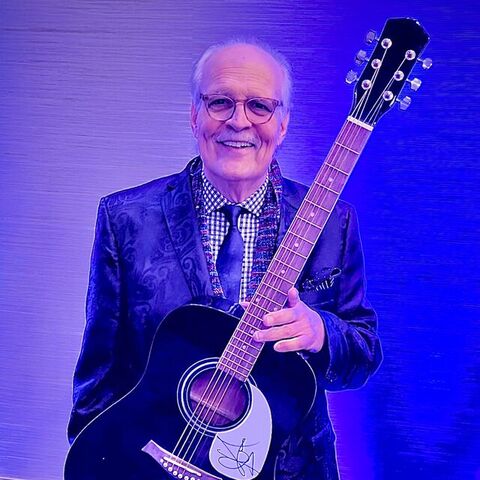
My name is Richard,
And I'll be your reader this evening.
And again,
Happy Independence Day to the United States of America,
And to all my listeners all around the world,
And ironically the country that is second in listenership is the Netherlands.
So whoever's out there in the Netherlands,
If you want to let me know who you are and why you're listening and what I'm saying that resonates with you to have you keep coming back,
Hey,
Keep doing it.
We appreciate that.
And we've got folks now listening to you in about 30 different countries,
From Vietnam to Uruguay to Holland to Canada to the United States of course,
Mexico,
Australia,
All the English-speaking world I guess,
Or people who speak English.
So thank you very much for that.
And again,
It's Independence Day,
And as you know,
I am a mid-Centurion,
Hence the title of this podcast,
Confessions of a Mid-Centurion.
I was born mid-century,
Last century,
And so I've lived about one out of every three days that the United States has been an independent and sovereign nation.
So I've seen some stuff,
Which is a good thing.
And part of my pledge to all my listeners,
And to myself,
So that I can continue to learn and absorb,
Is to bring to you the words,
Thoughts,
And ideas,
Concepts of people who had brains far superior to mine as far as I can tell,
Who were very accomplished and did great work.
And one of those famous people,
Brilliant people in my mind,
Is Walt Whitman,
Great American poet.
So to honor the Independence Day weekend,
I am going to read to you a short poem that he wrote in 1860,
By my reckoning 165 years or so ago.
And it is published in his,
I believe,
His Leaves of Grass collection,
Of which there's several editions.
I go by what they call his deathbed edition,
Which had everything in it that he wanted just before he passed away,
God bless him.
And he lived a long,
Fruitful life,
And you know,
Confederate,
In the Civil War,
And all kinds of great things that he did,
Charities as well as otherwise,
And being a non-combative field nurse,
If you will,
During the Civil War,
And very patriotic.
He felt America's emerging powers and strengths,
And personality,
And maturity,
And all of its challenges,
He felt them intuitively.
And he was a hard-working man,
And he celebrated the hard work that's gone into making the United States,
The United States,
A lot of sweat and toil to create this country,
Any country.
And while the title of the poem is,
I Hear America Singing,
Any of you listening around the world can really substitute the name of your own beloved nation,
I Hear America Singing.
Could be whatever country you want it to be,
Because all of us in this world,
Beyond our national borders and the artificial lines that have been drawn over time on the geography of the beloved planet Earth,
All of us do hard work.
And we all do hard work for ourselves,
For the people we love,
For our lifestyle,
For our community,
For our sense of organization,
For our religion,
For the religions,
Social groups,
Political groups,
Take your pick.
We all do hard work,
Whether we know it or not.
Some people do hard work at doing no hard work,
But that's not them,
And I'm not them,
And you're not them.
So without further ado,
To end the Independence Day long weekend here in the U.
S.
,
And to commend,
And applaud,
And praise all hard-working people all around my listenership,
And all around this great big planet,
And any other planets that might be listening,
What the hell do I know?
Here is my reading of Walt Whitman's poem from 1860,
I Hear America Singing.
I hear America singing,
The varied carols I hear,
Those of mechanics,
Each one singing his as it should be blithe and strong,
The carpenter singing his as he measures his plank or beam,
The mason singing his as he makes ready for work or leaves off work,
The boatman singing what belongs to him in his boat,
The deckhand singing on the steamboat deck,
The shoemaker singing as he sits on his bench,
The hatter singing as he stands,
The woodcutter's song,
The plowboy's on his way in the morning or at noon intermission or at sundown,
The delicious singing of the mother or of the young wife at work,
Or of the girl sewing or washing,
Each singing what belongs to him or her and to none else,
The day what belongs to the day,
At night the party of young fellows robust,
Friendly,
Singing with open mouths their strong melodious songs.
Thank you Mr.
Whitman.
And notice even back in 1860 he had sensitivity to gender and gender inclusion without trying to be offensive to anybody and he recognized again the connectivity of individual work.
The shoemaker makes shoes for the community to be able to move around and do their work.
The carpenters building the structures to house the development of our towns and villages and our four corners and our communities.
The mechanics are keeping the industrial revolution humming along and inventing new and improved ways to supposedly free human beings to do other things and to do more with the time they had.
The boatman and the deckhand on the steamboats and on the fishing boats mastering the great rivers and lakes of the United States.
The woodcutter and the plowboy working in the fields and the delicious singing of the mother.
And I love that Mr.
Whitman uses the word delicious for the singing of the mother because there is no sound more delicious or melodious or harmonious to a child than the voice of his or her own mother.
And there's no word sweeter heard or spoken than a mother saying the name of their child to their child.
Those are the joys in the verbal embraces.
The young wife at work with a girl sewing or washing.
And he says girl because this was before child labor laws and kids worked at the ages of seven,
Eight,
Nine,
You know,
That kind of a thing.
And each was singing what belongs to him or her and to none else.
So when you do good work,
Whether it's banging a nail or making an omelet or helping somebody cross the street or whatever it is you're doing,
When you do good work,
It applauds you and it applauds all the community that will touch that work.
If you plant a flower,
The birds will like it,
The bees will like it,
The wind will like it.
It'll give you scent.
It'll pollinate itself.
So our good work echoes throughout our lifetimes.
Don't ever think something you do,
Even if you're just dusting something solitarily in a private room in your private home,
That very act of dusting is an act of human maintenance,
Acceptance of the fact that time passes,
Dust falls on us from wherever what meteorites that are pulverized to make dust.
I've always been fascinated by what causes dust,
But there's a lot of that.
I'm not going to talk about that any further.
So without any further ado,
I hear America singing.
Mr.
Walt Whitman is the greater mind than mine that I bring to you today as we end the Independence Day holiday.
I know I'm a couple of days late,
But I was making merry with family and friends,
Having a grand old time here on the prairie,
Celebrating Independence Day as the way we're supposed to do it.
I don't work on Independence Day.
I don't work on Good Friday.
There's several days where I don't do anything other than celebrate the day,
Christmas,
New Year's,
Easter,
Things like that.
That's just my way.
You do it your way.
That's the great thing about all this.
Anyhow,
We're going to play out,
And there's a new recorded version of my theme song that I will play for you.
It's the same theme song,
A new arrangement,
And here it comes.
Next episode will drop on Monday.
Have yourselves a wonderful end of the Independence Day weekend,
America.
All around the world,
Be safe,
And more to come.
Be well now.
I'm taking some risks to connect with you,
Hip.
We don't know how we got on this ship.
I hear America singing.
This juggernaut of excess seems a soggy lip joint.
There is no final landing field.
This journey is the point.
There's no grand finale,
Don't you understand?
This ain't no opening number,
And I ain't no headline band.
So go slow,
Slow enough to know that the smallest things are the biggest things,
And this is still not,
This is still not everything.
Oh,
No.
Oh,
No.
Thank you,
Mr.
Women.
The smallest things are the biggest things,
So go on.
You lapped angels and flapped,
Flapped,
Flapped your dusty wings.
The key is not in being held.
It's in the holding.
It's not in being done.
It's in the molding,
So go slow,
Slow enough to know that the smallest things are the biggest things,
And this is still not,
This is still not everything.
Thank you,
World,
For listening.
See you soon.
Next episode on Monday.