Good morning,
Good afternoon,
Good evening,
Wherever it is that you are,
I'm glad to have you here.
We show up together,
Ultimately for our own selves.
We show up here to transform,
To shift,
Shape shift,
Shift a little bit,
Whatever is no longer serving us,
Shift into a way of being that serves us a little bit better.
So I'm grateful for your showing up,
For yourself,
As we know when we show up for ourselves we're really actually showing up for the world,
We're showing up for each other,
So I appreciate your being here,
Welcome,
If it's your first time I welcome you,
If it's not your first time I welcome you,
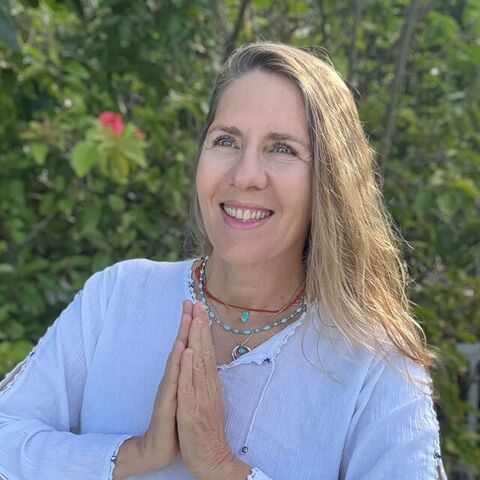
I'm Dr.
Tami,
Soul surgeon,
Used to be a surgeon-surgeon with a scalpel for nearly 25 years,
And I shifted from plastic and reconstructive surgeon and micro-surgeon into soul surgeon,
And I'm very grateful to be here with you.
So all of my talks here that I show up here are as Dharma talks,
So they are rooted in the Buddha's teachings from almost 2600 years ago,
And it's a way of merging the ancient wisdom teachings with modern day life,
Real life of today,
And that's the incredible thing about the Buddha's teachings is that they're applicable today almost 2600 years later,
Which is quite remarkable if you think about how many things have actually sustained thousands of years,
Passed down from generation to generation,
Well these teachings are part of that,
So the topic is self-love and the Dharma,
And as always the topic is really a doorway,
It's an opening for us,
So it's not a rigid topic,
It is a topic that we're going to explore together,
And yet other things may come up,
So whatever ends up coming up we're going to dive into,
And that's the beauty of flowing.
Flowing like water,
We'll flow with the energy of our group today,
Of our soul family,
And we'll just simply meet the needs of the moment.
This is a phrase that I love,
Can I meet the needs of the moment in life?
Simply whatever shows up.
So we're going to do a little talk where I'm going to open up this topic of self-love and the Dharma,
And then we'll do some meditation,
Little guided meditation to help these teachings land more deeply,
And in between we'll also do some pauses to connect with our breath so that we can really engage in real time,
Right here,
Keep coming back to yourself,
To this moment,
To this life,
The only time we're ever alive,
Now.
So we'll do a little bit of all of that,
It's going to be a beautiful potpourri.
So today our talk is titled Self-Love and the Dharma.
Our culture talks so much about self-love,
And it has a very unique take on self-love,
And I thought why don't we open up a space to look at self-love from the western perspective,
Meaning our lives here in this country and in the western world,
In other countries too,
And also shine the Dharmic lens onto self-love as another offering,
Another way to look at how do I take care of myself,
How do I appreciate myself,
Because many of us don't take care of ourselves and don't appreciate ourselves.
So let's open up with how do you define self-love?
Think about it,
What does self-love mean to you?
Most of us are in the western world,
Living in modern age,
And the way self-love is looked at is from a space of a positive self-regard,
A way of valuing ourselves or building self-esteem,
A lot of boundary setting,
To love myself I need to create certain boundaries,
Self-protection,
I need to protect myself,
Take care of myself,
If I'm going to love myself.
So self-esteem,
Self-worth and value,
Personal fulfillment,
Boundary setting,
These are all ways that this culture looks at self-love.
And so as I'm speaking,
Just check it out for yourselves,
Take a note,
Yeah,
How do I define self-love and then how do I live from a space of self-love?
So the implicit assumption when we look at self-love from this perspective,
That I need to value myself and take care of myself and feel like I'm worthy and like I'm enough,
There is this implicit assumption that this self that I believe myself to be has to become stronger and healthier and more self-affirmed.
So often when we're talking about self-love,
We're talking about I want to feel that I am enough,
That I am worthy,
That I deserve happiness,
Right?
That I get to protect my needs by creating appropriate boundaries for myself,
That I get to defend myself and this identity that I develop around who I am.
Maybe I'm the smart one in my circle,
Maybe I'm the pretty one,
Maybe I'm the doer,
Maybe I'm the perfectionist.
However it is that you hold yourself,
Maybe I'm the mother who takes care of everybody.
However it is that you hold yourself with all these identities,
You create beliefs,
Right?
We create belief systems around am I enough,
Am I not enough,
Do I deserve happiness,
Do I not deserve happiness?
And then our lives,
Our words,
Thoughts,
Actions,
Speech,
All are born from these beliefs.
So it's really important to slow down and take a look at what do I think,
Get to know your mind.
I love to say befriend your mind.
How do I look at self-love?
How do I look at the identities that I create around myself about feeling unworthy or deserving of a good life?
How do I feel about that?
So this is the opening my friends,
The opening of this is how we look at and define self-love in this modern day and age.
If you go on the different social media platforms,
You're going to see all the cute memes,
Right?
Self-love,
Love yourself,
Pour yourself a hot tea,
Say no to going out at night if you're too tired,
Right?
Creating boundaries,
Take a bubble bath,
Buy yourself flowers.
This is all the stuff that self-love presents as in our culture.
Make sense?
Yeah.
So now I'd like to offer you maybe a slightly different angle to look at self-love and it's the angle that comes from the Dharma.
The Dharma means teachings,
The Buddhist teachings and the Buddha was a man,
Flesh and bones like you and I.
Well,
I happen to be a woman but I am flesh and bones too and he lived almost 2600 years ago and he had a question that he wanted to get the answer to and he was,
You could kind of say obsessed in a good way.
He wanted to figure out why do we suffer in this life and then he wanted to figure out if there's a reason why we suffer,
Is there a way to not suffer?
That was it.
That was what his whole life was about when he began his journey to enlightenment and the beauty is he's left 45 years of teachings so that we modern day lay people,
We're not monks,
We're not nuns,
We're not living in a cave,
We're not sitting on top of the Himalayas meditating 24-7.
We're simply in our mundane ordinary lives and we are privy to hearing these teachings that thousands of years ago were not available to lay people as readily and now we can sit on a beautiful,
Beautiful platform like this on Insight Timer and share and hear a Dharma talk.
So the Buddha wanted to know why do we suffer and how do we not suffer?
I mean pretty straightforward,
Pretty simple and the wonderful thing for us is that he figured it out.
Now if you have another way that works for you,
By all means,
That's wonderful.
I'm not telling you to drop your ways.
The beautiful thing about the Dharma,
All of these teachings,
Is that this is not religion.
This is not dogma.
This is not my way or the highway.
That's not at all what the Buddha offered.
If anything he offered,
Check it out for yourself.
Question everything.
He invited everyone who hears his teachings to question him and to question the teachings and check them out for your own self.
So let's dive into it.
Did the Buddha talk about self-love is the first question and the answer is not exactly but he did address the self and taking care of the self.
So that's the angle from which I'm going to speak and I'll explain.
So from the Buddha's perspective there are several things that we can do to support loving or caring for this being that is here in a physical body.
So you can in a way define that as self-love.
You're taking care of yourself.
The little glitch is that if you know a bit about the Buddha's teachings,
One of the main foundations of Buddhist practice is anatta,
Which means no self.
So how can you self-love a self when there is no self?
So what does it mean that there's no self?
A lot of people get very tripped up about this.
You know,
What do you mean Dr.
Tammy Soul Surgeon,
There's no self.
There is a self right here.
I'm listening to you.
I am myself and you're talking so you are yourself.
So it gets a little bit trippy.
So let me see if I can support you and certainly if you have questions you can you can put them out.
So the no self concept simply means that there is no fixed self.
There is no fixed identity here called Dr.
Tammy Soul Surgeon.
The me that I believe myself to be is just a bunch of processes.
What processes?
The processes of our senses.
Hearing,
Seeing,
Smelling,
Tasting,
Touching and even thinking.
Thinking is one of our senses.
Consciousness and thinking is a sense because we assess and analyze and take in the world through our minds.
Our minds are what makes it possible to engage in listening,
Seeing,
Smelling,
Tasting and touching.
So what the buddha said is not that there is no body here.
There is a body although you could argue that in more deeper buddhist teachings but we're not we're going to stay a little bit more concrete and simple here so that we can all be on the same page.
There is this body in this moment and there is this person yet there is no self that calls itself self.
Does that make sense?
There is no fixed entity.
Why is there no fixed entity?
Because everything changes all the time and that's the second foundation of the buddha's teachings which is impermanence.
Impermanence simply means everything changes all the time.
We are here together for a few minutes now on this love stream.
You're not the same person you were when you started the love stream.
Neither am I.
We are made of billions and trillions of cells that are undergoing processes as we're speaking.
Our digestive system,
Our lymphatic system,
Our skin is sloughing off,
Everything is in motion.
So there is no fixed entity here called Dr.
Tammy Soul Surgeon.
There is a presentation of a conglomeration of processes that I call me.
Make sense?
So when I say the buddha didn't directly speak of self-love it's because there is no self to love and yet that's the paradox that there is someone here speaking to you and I call this someone me.
But he did address ways to take care of ourselves which in modern day terminology we call self-love.
So let's dive into how the dharma speaks of self-love which is a little bit different or a lot different from how I presented the western culture concept of self-love which is telling ourselves I am enough,
I am worthy,
I create boundaries,
I defend these identities of who I am,
I look at myself in a positive self-regard,
I value myself,
I build self-esteem,
Right?
Those are all the ways that I presented our modern day view of self-love.
So let's get into it my friends.
There are three main ways that the dharma speaks of self-love and I want to offer these to you.
Of course there are many more but I thought I would keep it a little more focused and succinct for us today.
And here's the first way,
Ahimsa.
Ahimsa means non-harm,
No violence.
The Buddha speaks a lot in his teachings over 45 years.
He speaks a lot about ahimsa,
No harm.
And of course no harm means not harming others,
Not harming the environment,
People,
Pets,
Plants,
Animals,
But it also refers to not harming our own selves.
So let's look at how do we harm ourselves.
So many ways my friends and you can look at which one resonates for you.
We harm ourselves with harsh inner dialogues,
With harsh self-judgment.
We harm ourselves by overworking.
We harm ourselves with perfectionism.
It's all gotta be just this way.
We harm ourselves by trying to control in an uncontrollable world,
Try and control life,
Experiences,
Other people,
Ourselves.
We harm ourselves by ruminating.
That's a subtle form of self-harm.
By going back and sitting in the old situations that we went through,
Life experiences.
And this rumination is harmful.
It creates suffering.
This is self-perpetuated suffering.
So you can see that with ahimsa,
Non-violence,
Non-harm,
When we turn that onto ourselves,
We can free ourselves of lots of suffering.
And this is a way to care for ourselves,
To love ourselves.
It's not an indulgence.
It's not an extra.
It's just a basic,
Basic way of showing up in this life.
So do you have a commitment to stop harming yourself in all these ways that I just described and more?
Because each of us has our own unique way.
Sometimes we harm ourselves instead of ruminating about the past,
We harm ourselves by overthinking about the future.
And then we rob ourselves of this moment,
This breath,
This life,
Our one wild and precious life.
If we're constantly in the stories in our mind,
And we're thinking of future and past,
We're not here,
My friends.
If we're constantly judging ourselves harshly for doing things this way or that way,
Or not perfectly,
Or,
Oh,
I should have done it the other way.
We're shooting all over ourselves.
This is a way of self-harm.
If we live in our thoughts,
Thinking and overthinking,
I call it regurgitating the cud because it's such a visual image.
You know how the cows have a few stomachs and they regurgitate,
They go up and down with the food,
Kind of a yucky analogy,
But it hits the point because do I want to regurgitate the cud of my thoughts and my mind?
Is that the space I want to live from?
Not for me,
My friends,
Not for me.
So beautiful offering that the Buddha gave us,
And I have some of this in my other talks,
You can look at the recordings,
In order to free ourself from self-perpetuated harm,
Is to begin practice asking,
Is this thought kind?
Is this thought necessary?
Is this thought true in this moment?
And is this timely?
Is this the right time to be doing this thinking that I'm doing,
Or this harsh self-judgment,
Or the perfectionism?
So that's the first of the three self-love concepts,
Which begins as a concept when we hear it,
But then it needs to land,
It needs to dive down,
To become embodied so that we're living from this space,
Rather than just thinking,
Oh yeah,
That's a good idea,
I need to stop,
I don't want to have this nasty person living in my mind.
And yet,
How many of us actually commit to befriending our mind,
To putting an end to the inner war?
We're all speaking of peace,
Peace,
Peace,
Peace,
Well,
Where is the peace within?
Where is your peace,
My friend?
How do you cultivate your peace?
How do you support yourself in living a life of non-harm?
Not harming yourself first,
And then others?
Let's take our one-breath,
Micro-pause meditation,
Do it with me.
Just notice how you feel after taking that breath.
I can feel that my voice,
My cadence,
Kind of slows down a little bit.
It's an immediate reset of our nervous system.
You can take more than one breath,
But when you practice this often,
You'll see that even a one-breath meditation is enough to re-regulate your nervous system.
We are an incredible conglomeration of processes.
Yes,
We are.
So let's move to our second self-love from the Dharma,
And you won't be surprised to see it.
I just put it in the chat,
Which is compassion towards our own lived experience.
Self-compassion,
Or as it's called,
Karuna,
Is a way that the Buddha offers us to not abandon ourselves,
To not leave ourselves in moments of difficulty.
And the beautiful thing,
I don't know if any of you know this,
But the origins of the word compassion,
Kom,
Passion,
Kom means with in Latin,
Passion means suffering.
So the word compassion means to be with suffering without turning away.
So are you able to offer yourself,
Being with yourself through a compassionate offering and not turning away when things are tough and rough,
As life often is?
As the Dalai Lama says,
You can't offer genuine compassion to others while abandoning yourself.
He said,
If you don't know self-compassion,
You don't know compassion.
So many of us,
Especially those of us that are mothers,
I'm a mother to five kids,
Not so kids anymore,
Young adults,
Many of us say,
Oh,
I'm deeply compassionate.
I'm compassionate for everyone.
I have compassion for everyone,
But not for myself.
Well,
The Dalai Lama would tell you that,
So sorry,
Sweetheart.
You don't truly know compassion unless you know it for your own self,
Unless you know how to not self-abandon.
The Buddha was very explicit.
He said,
Hear this,
My friends.
He said,
A mind at war with itself cannot offer genuine compassion.
Wow.
A mind at war with itself cannot offer genuine compassion.
How does that land with you?
Is your mind often at war with itself,
Or is your mind at peace?
Have you called a truce?
A mind at war with itself cannot offer genuine compassion.
If you look back on my page,
I have a recording on self-compassion.
A big exploration there was another love stream that we did.
So I'm not going to go deeply into it,
But I will offer you little tidbits,
The three components of self-compassion,
Because you could start this right now.
These Dharma talks have the intention of immediacy,
Right now.
We can shift and change right now.
If we hold the belief that change takes a long time,
Or change is somewhere over there,
When I have time to go sit in a silent retreat,
When my kids grow up,
When I retire,
When I have enough money in the bank,
When I lose 10 pounds,
When I find my love partner,
If we believe that life is over there,
Oh,
My friends,
We miss it.
We miss it.
And so these Dharma talks are intended to spark a little fire,
To begin with a commitment to transforming,
To shape-shifting now,
Today,
Here,
Now,
Ahora,
Maintenant.
That was Spanish and French,
By the way,
For those of you who don't speak.
Right now,
If you'd like,
You can put the word now in any language you speak.
Achshav,
That's in Hebrew.
Adesso,
In Italian.
I forgot the German.
Okay,
Maybe one of you will give me the German word for now.
These Dharma talks are so powerful,
And this energy that's transmitted through these talks is intended to wake us up in the here and now,
Which is the only time we are ever alive.
We are not alive yesterday,
And we're not alive tomorrow.
We're not even alive in the next breath,
Because we don't know that the next breath is going to come.
We're assuming it does,
But we don't know.
So we are only,
And always,
And ever alive in the here and now.
And so back to our second offering of self-love from the Dharma,
Which is self-compassion.
And there are three components of self-compassion.
The first is mindfulness,
Which is meeting this moment without judgment,
Simply noticing what is here.
So if sadness is here,
We call a thing a thing.
I put on my best southern accent,
And I say,
We call a thang a thang.
Sadness is here.
If anger is here,
Anger is here.
That's mindfulness,
My friends.
Meeting whatever is here in this moment without judgment.
We're not judging the anger.
Oh,
How could you be angry again?
You always get angry at the same thing over and over.
We're not doing that.
We're letting go of that narrative.
We're simply naming it.
Just label it.
Oh,
Wow.
Look at that.
Anger is here.
Or sadness is here.
Or loneliness is here.
Whatever your emotion is.
The second component of self-compassion is self-kindness,
Which is the opposite of self-judgment.
So self-kindness might look like offering yourself,
Oh,
Sweetie,
This is rough.
Anybody in this situation would feel sad.
Or anybody in your situation would get angry.
Offering yourself a kind word.
Yeah,
You're going through a tough time right now.
Things are difficult.
Things are not easy for you right now.
Life is lifing,
As we say.
So that's the second component of inviting self-compassion to ourselves.
Self-kindness.
Removing the judgment.
Calling a thang a thang.
Noticing what is here in this moment.
And offering some kindness,
Like you would to a good friend or to a child.
You wouldn't beat them up for being frustrated again.
You would say,
Hey,
It's okay.
This frustrating thing is really hard for you.
It's okay.
You're facing it.
You're dealing with it.
And the third component of self-compassion is a common humanity.
Reminding ourselves that we're not alone in this experience.
So it moves us out of self-isolation,
Which can be very painful,
To the space of common humanity.
So we might say to ourselves,
If sadness is here over some situation,
We might say to ourselves,
Yeah,
Sadness is here for you.
And everyone has felt some sadness in their lives.
It's part of the human experience.
If frustration is here,
You bring that common humanity.
Every human has felt frustration.
And you can just plug in your emotion of the moment,
Your flavor of the moment.
If you have an emotion of sadness,
Jealousy,
Resentment,
Exacerbation,
Exasperation,
Whatever your emotion is,
Remind yourself,
Oh,
Yes,
This is just the full rainbow of human experience.
How beautiful.
I want to see the full rainbow of colors in my human experience.
I don't want to live in black and white.
So these are the three components of self-compassion that we can practice.
And these are spoken of deeply in the Dharma.
Self-compassion,
Karuna,
Is a very,
Very big topic,
So to speak,
In the Dharma,
In how to support ourselves when we're suffering or struggling.
Many,
Many people,
Practitioners,
People who meditate or are on a spiritual path,
And people who are not on a spiritual path,
Often offer compassion outwardly,
What they believe is to everybody else,
And they exclude themselves.
And when we exclude ourselves,
We suffer.
So,
Right now,
In this moment,
We get to begin anew in this new next breath.
How can I bring in self-compassion?
And why does self-compassion often feel so uncomfortable for me?
Why am I so comfortable giving it out there,
But not to myself?
Well,
Tune into the recording that I have on my page about self-compassion.
We dive deeply into this.
One of the reasons that it's difficult for some of us,
Or feels uncomfortable,
Is because our nervous system learns to be comfortable in the uncomfortable.
It learns to be comfortable with the punishment-reward system,
Where only when I'm beating myself up,
Do I feel a certain level of safety.
Like,
Yeah,
Now I'm going to get up and do my work.
Now I'm going to be a productive human.
Punishment and reward.
And we need to notice that.
We do that.
Acknowledge that we do that,
Without judgment.
Remember,
The first step of self-compassion is mindfulness.
So,
We're not judging ourselves.
We just notice,
Oh yeah,
Wow,
I'm really stuck in this loop of punishing myself and then rewarding myself.
That's how I believe I'm most functional.
And these are learned behaviors,
My friends.
This is not to blame anybody.
Most likely,
This is how we grew up.
The people that raised us,
Our community,
The close people that raised us,
Parents,
Family,
School system,
Has conditioned us into this punishment-reward system.
So we get to simply notice it.
Then be kind to ourselves.
Remember that everybody has experienced this.
And then,
And only then,
Can we shift.
And when we shift through self-compassion,
We begin to re-regulate our nervous system to create a new norm.
And this new norm now is the space we return to to feel safe.
Through kindness.
Through ahimsa,
Non-harm.
And this brings the third offering from the Dharma on how to offer self-love to ourselves.
And that is loving-kindness,
Or metta,
As it's called.
So the loving-kindness practice that the Buddha taught us,
Teaches us,
Is that we possess,
All of us,
I think we're somewhere around 8 billion people now,
We possess a boundless,
Non-possessive,
Unconditional love within.
And this love is not directed at one person,
Or one thing.
This is a loving,
Relational stance towards life.
So it means that this is a way to relate with love.
And it takes practice.
And there's a gradual training of living from loving-kindness.
And there's even a beautiful meditation,
Which we will do in a little bit,
A guided meditation,
Which is called metta meditation.
Sharon Salzberg is a big proponent of it.
She's a spiritual teacher,
You can find her.
And the way we offer this loving-kindness is in five stages.
Stages.
And I will guide you through the meditation in a few moments.
But the first stage is offering it to ourselves first.
So we don't jip out on ourselves,
We first meet ourselves with loving-kindness.
Because if we don't take care of ourselves,
Nothing else can come out.
Right?
How can I show love if I don't have love within?
Then my cup is empty.
How can I offer patience if my own cup is empty and I'm impatient with my own self?
So with this metta practice,
This loving-kindness practice,
We first offer the loving-kindness to ourselves.
Then we offer it to a loved one.
Then we offer it to a neutral person,
Like somebody at the supermarket or somebody you see on the street or in traffic,
Someone you don't necessarily know well.
They're neutral.
Then we offer it to a difficult person.
I call this the porcupines,
The people that are spiky and difficult to love in our lives.
And then the fifth one is we offer it to all sentient beings.
So this is the third way that the Buddha offers us to care for ourselves,
To love ourselves through his teachings.
Are you hearing how different this is from the western culture way of defining self-love?
So in the western culture model,
We speak of self-love as how do I become a better self?
How do I heal this version of me so that I can be worthy of this life?
So this western model of self-love is all about comforting the self,
Making myself feel like I'm enough,
Like I'm worthy.
But the Dharma,
Actually what it does,
With these three components,
Non-harm,
Ahimsa,
No self-harm,
Offering self-compassion and offering loving-kindness,
The self-love takes a different form.
It takes the form of liberating ourselves from suffering.
And that is the intention rather than creating a worthy self or a self that feels like they're enough.
The Dharma tells us you already are that.
You already are perfect and whole.
And the self that you are doesn't need any fixing.
And the self that you are is not a fixed entity called you.
It's a fluid and ever-changing conglomeration of processes that is constantly meeting life through our senses,
Sound,
Sight,
Smell,
Taste,
Touch and thought.
These Dharma teachings,
What they do is they shift our nervous system from threat to calm.
And this creates less suffering.
So in essence,
What the Buddha taught was not self-love per se.
What he taught was non-resistance,
Non-opposition to the what-is-ness of life.
Just what is here.
And that's why mindfulness is mentioned so many times in the suttas.
The suttas are the teachings that the Buddha gave.
Mindfulness is mentioned probably the most number of times in terms of any tools.
Because through mindfulness we get to meet life as it is.
And remember the definition of mindfulness is meeting this moment without judgment.
Noticing what is here without judgment.
Jealousy is here.
Irritability is here.
Impatience is here.
Frustration is here.
So we get to meet life over and over and over again in awareness.
What's the opposite of awareness?
Autopilot or the conditioned mind.
The mind that lives in all the belief systems.
That tell us it should be this way or that way.
And so this my friends is the journey of self-discovery.
This is the journey of waking up.
Waking up from the conditioned mind.
The autopilot mind that just regurgitates the cud as we said earlier.
Waking up into the awakened mind.
The flexible mind.
The one that takes in the sensory input through our five senses plus the mind plus thinking and meets life in every moment.
So this is a new definition of self-love.
It's self-love defined as beginning to relate to our own suffering first just like you would with a dear friend.
So let me pause here for a moment my friends and jump into the chat and open up these conversations to see how all of this is landing with you and make note of what's one thing that you can take from this Dharma talk that you can begin right now to incorporate in your life.
Maybe it's mindfulness.
A mindfulness practice.
Maybe it's ahimsa.
No harm.
So that you begin to notice when harmful thoughts start to come into play.
You notice you pick them up mindfully and then you bring in a practice of self-compassion.
So let me know what what's landed with you.
And so going back in the chat Harmony says,
I learned very early on that doing anything for myself was selfish.
That I should do all for others around me.
Yes,
Like family.
So I've actually been trying to teach my adult self that I too matter and I have started to appreciate just having me time.
Self-care time.
Yes Harmony,
I'm so glad that you are bringing this up.
So many of us,
Me included,
Was taught that taking care of ourselves is selfish.
And there's a real rewiring,
A reframing that needs to happen for us to absorb and embody these teachings.
That first we take care of ourselves.
Maybe you know the famous saying by Rabbi Hillel who says,
Imein anili mili.
That's in Hebrew.
He says,
If I am not for myself who will be?
And then he says,
If not now,
When?
This is a very famous saying.
You can google it.
If I am not for myself,
If I do not do for myself,
Who will?
So yes Harmony,
This is the deep conditioning I'm speaking of.
These are the belief systems that are so ingrained that they feel like truth.
And yet they're not truth.
Because what is a belief?
A belief is simply a thought I keep thinking over and over again.
It's not necessarily truth with a capital T.
It's just a thought.
And I've made an agreement with myself to keep thinking this thought and then I live my life honoring this thought.
Right?
We make agreements with ourselves.
We just finished doing the five agreements.
We did the four agreements plus the fifth agreement.
All of that is recorded on my page.
And the five agreements are extremely powerful,
Positive,
Supportive agreements in shifting out of our self-sabotaging,
Self-harming ways.
So if you want helpful agreements,
Dive into the five agreements.
And you can see them on my page.
And they also have,
How do you call it,
The meditations.
I have the guided meditations separately for each one of agreements.
So you can enjoy that.
Yeah.
And Harmony says she's doing the work to extend that to herself.
Learning how to take care of oneself.
And that's why I thought this Dharma talk was so timely.
And I love the shift of looking at self-love and self-care through the Dharma lens.
Because it's not an ego lens of reinforcing I am enough and I am worthy and I love myself and I like myself.
It's not that.
It's through freedom from suffering using ahimsa,
Non-violence,
Non-self-harm,
Self-compassion with mindfulness of what is here in this moment.
And loving kindness.
As we would offer it to a friend,
We offer it first to our selves.
I have three daughters and two sons.
And I have these conversations with both of them.
Because my daughters need to shift their own narratives,
Knowing how to take care of themselves before outsourcing that to somebody else.
That's old school.
We don't do that anymore.
Think that when we have the right partner,
They will complete me.
They will help take care of my needs.
Heck no!
I will take care of me so I can be responsible for me and my own suffering.
And then I will offer this non-suffering,
More aligned,
Authentic version of myself to the world,
To others.
Those are the conversations I have with my 20-something-year-old daughters.
And then with my sons,
I have these conversations too,
Because the men,
As noted here in the chat,
The men also need to have a shift in narrative and to understand that not only do they need to continue taking care of themselves,
But they need to hold space for the women to take care of themselves.
And I'm not just speaking about male-female relationships.
I'm speaking about in any gendered relationship.
We need to show up whole and complete and offer ourselves from that space.
And it can take a lifetime.
The poet Mary Oliver asks us,
What will you do with your one wild and precious life?
There's no time to waste,
My friend.
So even though the world may be upside down and challenging and difficult,
And the news are hard to watch,
And politics are out there,
We still get to end the war within.
We get to end the war with ourselves by embracing this new way of being.
This new way of showing up in our lives,
First to our own selves,
And then to everyone,
Everyone else in our lives.
The guided meditation that I'm going to hold in the next couple of minutes is going to be posted separately from this Dharma talk.
So that way,
If you just wanted to go to the self-love and the Dharma meditation,
You can just do that,
And that will be a shorter recording.
Thank you for being here.
Thank you for holding space.
Thank you for co-creating these beautiful love streams together.
Thank you for sharing yourselves,
Your energy.
I can feel your embodied presence.
And I invite you to come back.
There's so much more.
See what you can take away from our love stream and bring it as an energy into your life.
And come back and tell me about it.
You're always welcome to send a DM.
You can write to me directly,
If you'd like.
And you can find me in my bio.
I hold other spaces,
Workshops,
Etc.
,
And hope to be bringing more to all of you here.
And if you'd like to join me on our next love stream,
Here is the little invite.
And if you follow my page,
You'll get the information.
We're going to explore,
Who are you without your stories?
It's a good question.
Think about it until we meet.
Thank you,
Everyone.
Thank you for all the hearts going into my day as well,
Feeling all the love.
Okay,
My friends,
I'll see you next time.
And remember what our beloved Rumi says,
Don't go back to sleep.
Bye for now.