This is S.
D.
Hudson Magic.
Jane Eyre.
Chapter 36,
Further continued.
Then Mr.
Rochester was at home when the fire broke out,
I continued.
Yes,
Indeed was he,
And he went up to the attics when all was burning above and below,
And got the servants out of their beds and helped them down himself,
And went back to get his mad wife out of her cell.
And then when they called out to him she was on the roof,
Where she was standing,
Waving her arms above the battlements,
And shouting out till they could hear her a mile off.
I saw her and heard her with my own eyes.
She was a big woman and had long black hair.
We could see it streaming against the flames as she stood.
I witnessed,
And several more witnessed,
Mr.
Rochester ascend through the skylight onto the roof.
We heard him call Bertha.
We saw him approach her and then,
Ma'am,
She yelled and gave a spring.
And the next minute she lay smashed on the pavement.
Dead?
Dead?
Aye,
Dead as the stones on which her brains and blood were scattered.
Good Lord!
You may well say so,
Ma'am.
It was frightful,
Said the host of the inn,
And he shuddered.
And afterwards?
I urged.
Well,
Ma'am,
Afterwards the house was burnt to the ground.
There's only some bits of wall standing now.
Were there any other lives lost?
No.
Perhaps it would be better if they had.
What do you mean?
Poor Mr.
Edward,
He ejaculated.
Our little thought ever to have seen it.
Some say it was a just judgment on him for keeping his first marriage secret and wanting to take another wife while he had one living.
But I pity him for my part.
You said he was alive?
I exclaimed.
Yes,
Yes,
He's alive.
But many think he'd better be dead.
Why?
How?
My blood was again running cold.
Where is he?
I demanded.
Is he in England?
Aye,
Aye,
He's in England.
He can't get out of England,
I fancy.
He's a fixture now.
What agony was this?
And the man seemed resolved to protract it.
He is stone blind,
He said at last.
Yes,
He is stone blind,
Is Mr.
Edward.
I had dreaded worse.
I had dreaded he was mad.
I summoned strength to ask what had caused this calamity.
It was all his own courage and a body might say his kindness in a way,
Mum.
He wouldn't leave the house till everyone else was out before him.
As he came down the great staircase at last,
After Mrs.
Rochester had flung herself from the battlements,
There was a great crash.
All fell.
He was taken out from under the ruins alive but sadly hurt.
A beam had fallen in such a way as to protect him partly,
But one eye was knocked out and one hand so crushed that Mr.
Carter,
The surgeon,
Had to amputate it directly.
The other eye inflamed.
He lost the sight of that also.
He is now helpless indeed,
A blind and a cripple.
Where is he?
Where does he now live?
At Fern Dean,
A manor house on a farm he has about 30 miles off.
Quite a desolate spot.
Who is with him?
Old John and his wife.
He would have had no one else.
He's quite broken down,
They say.
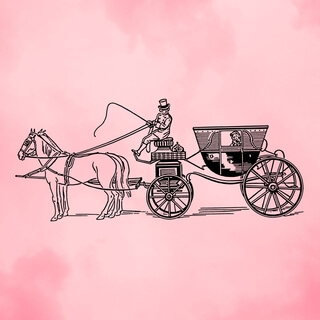
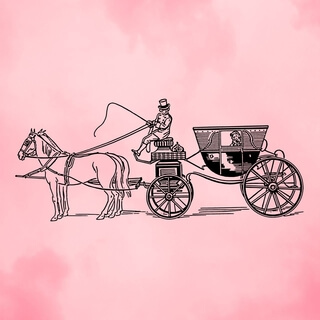
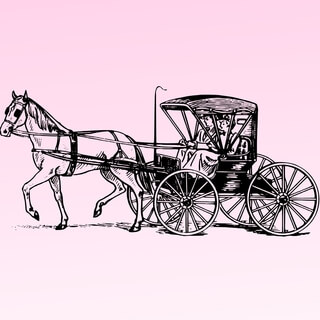
Have you any sort of conveyance?
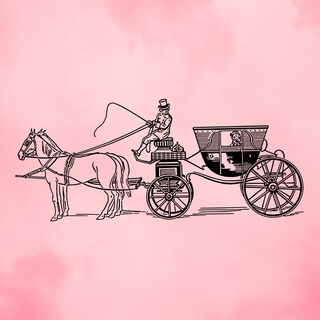
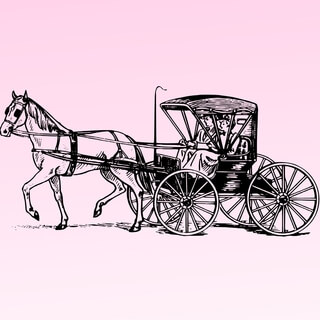
You have a chaise,
Ma'am.
A very handsome chaise.
Let it be got ready instantly and if your post boy can drive me to Fern Dean before dark this day,
I'll pay both you and him twice the hire you usually demand.
The manor house of Fern Dean was a building of considerable antiquity,
Moderate size and no architectural pretensions,
Deep buried in a wood.
I had heard of it before.
Mr.
Rochester often spoke of it and sometimes went there.
His father had purchased the estate for the sake of the gain covers.
He would have let the house but could find no tenant in consequence of its ineligible and insalubrious site.
Fern Dean then remained uninhabited and unfurnished with the exception of some two or three rooms fitted up for the accommodation of the squire when he went there in the season to shoot.
To this house I came,
Just ere dark,
On an evening marked by the characteristics of sad sky,
Cold gale and continued small penetrating rain.
The last mile I had performed on foot,
Having dismissed the chaise and driver with a double remuneration I had promised.
Even when within a very short distance of the manor house,
You could see nothing of it,
So thick and dark grew the timber of the gloomy wood about it.
Iron gates between granite pillows showed me where to enter and passing through them I found myself at once in the twilight of close-ranked trees.
There was a grass-grown track descending the forest aisle between hoar and knotty shafts and under-branched arches.
I followed it,
Expecting soon to reach the dwelling,
But it stretched on and on and wound further and further,
No sign of habitation or grounds was visible.
I thought I had taken the wrong direction and lost my way.
The darkness of natural as well as sylvan dusk gathered over me and I looked around in search of another road.
There was none,
All was interwoven stem,
Columnar trunk,
Dense summer foliage,
No opening anywhere.
I proceeded.
At last my way opened,
The trees thinned a little,
And presently I beheld a railing,
Then the house.
Scarce by this dim light distinguishable from the trees,
So dank and green were its decaying walls.
Entering a portal fastened only by a latch,
I stood amidst a space of enclosed ground from which the wood swept away in a semi-circle.
There were no flowers,
No garden beds,
Only a broad gravel walk girdling a grass plat,
And this set in the heavy frame of the forest.
The house presented two pointed gables in its front.
The windows were latticed and narrow.
The front door was narrow too.
One step led up to it.
The whole looked,
As the host of the Rochester alms had said,
Quite a desolate spot.
It was as still as a church on a week day.
The pattering rain on the forest leaves was the only sound audible in its vicinage.
Can there be life here?
I asked.
Yes,
Life of some kind there was,
For I heard a movement.
That narrow front door was unclosing,
And some shape was about to issue from the grange.
It opened slowly.
A figure came out into the twilight and stood on the step.
A man without a hat.
He stretched forth his hand as if to feel whether it rained.
Dusk as it was,
I had recognised him.
It was my master Edward Fairfax Rochester,
And no other.
I stayed my step,
Almost my breath,
And stood to watch him,
To examine him,
Myself unseen,
And alas to him invisible.
It was a sudden meeting,
And one in which rapture was kept well in check by pain.
I had no difficulty in restraining my voice from exclamation,
My step from hasty advance.
His form was of the same strong and stalwart contour as ever.
His port was still erect.
His hair was still raven black.
Nor were his features altered or sunk.
Not in one year's space by any sorrow could his athletic strength be quelled,
Or his vigorous prime blighted.
But in his countenance I saw a change,
That looked desperate and brooding,
That reminded me of some wronged and fettered wild beast or bird,
Dangerous to approach in his sullen woe.
The caged eagle,
Whose gold-ringed eyes cruelty has extinguished,
Might look as looked that sightless Samson.
And reader,
Do you think I feared him in his blind ferocity?
If you do,
You little know me.
A soft hope blent with my sorrow that soon I should dare to drop a kiss on that brow of rock and on those lips so sternly sealed beneath it.
But not yet.
I would not accost him yet.
He descended the one step and advanced slowly and gropingly towards the grass plat.
Where was his daring stride now?
Then he paused as if he knew not which way to turn.
He lifted his hand and opened his eyelids,
Gazed blank,
And with a straining effort,
On the sky and towards the amphitheatre of trees,
One saw that all to him was void darkness.
He stretched his right hand,
The left arm the mutilated one he kept hidden in his bosom.
He seemed to wish by touch to gain an idea of what lay around him.
He met with vacancy still,
For the trees were some yards off where he stood.
He relinquished the endeavour,
Folded his arms and stood quiet and mute in the rain,
Now falling fast on his uncovered head.
At this moment John approached him from some quarter.
You take my arm,
Sir,
He said.
There's a heavy shower coming on.
Had you not better go in?
Let me alone,
Was the answer.
John withdrew without having observed me.
Mr Rochester now tried to walk about,
Vainly,
All was too uncertain.
He groped his way back to the house and re-entering,
He closed the door.
I now drew near and knocked.
John's wife opened for me.
Mary?
I said.
How are you?
She started as if she'd seen a ghost.
I calmed her.
To her hurried,
Is it really you miss?
Come at this late hour to this only place?
I answered by taking her hand.
Then I followed her into the kitchen where John now sat by a good fire.
I explained to them in a few words I had heard all which had happened since I left Thornfield and that I was come to see Mr Rochester.
I asked John to go to the Turnpike house where I had dismissed the chaise and bring my trunk,
Which I had left there.
And then,
While I removed my bonnet and shawl,
I questioned Mary as to whether I could be accommodated at the manor house for the night and finding that arrangements to that effect,
Though difficult,
Would not be impossible.
I informed her I should stay.