Hello and welcome to Vibrant Life's podcast five minute food facts series.
These are short podcast episodes about nutrition related topics where I'll talk to you about why we need a certain food or nutrient,
How much to consume,
If there are any risks associated with it and other useful information to help you make healthy food choices.
I'm Amanda Hayes,
Your host.
I'm a lawyer turned nutritionist with a passion for learning about how to live a vibrant life through practising mindfulness and meditation,
Eating a nourishing healthy diet and moving my body and sharing what I learn with you here on this podcast.
The health and nutrition space can be a confusing one where identifying trustworthy sources of information is not always straightforward.
My aim is to help you do that and present you with reliable information in a concise and easy to understand way.
The content of my five minute food facts series is for information purposes only and it's not intended to replace the advice of your health professional.
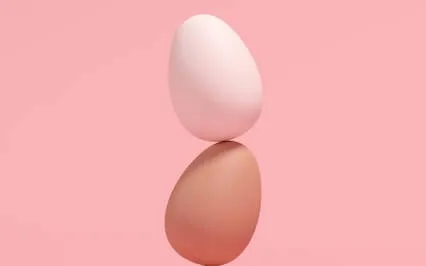
Today I will be talking about eggs from hens.
I wanted to look at eggs because they've been in and out of favour and have variously been referred to as archery clogging villains and as a superfood.
The confusion over whether eggs are healthy or not stems from their high cholesterol content which I'll outline in a moment.
Let's take a look at what the science says but first I'll just note that Australians love eggs.
We eat around 17 million eggs per day or approximately 247 eggs per person every year.
So what's in an egg?
Well obviously energy,
Protein,
Various sources of fat and cholesterol.
Eggs contain 215 milligrams of cholesterol which is all contained in the yolk and this accounts for about two thirds of the recommended daily limit.
They contain lots of vitamins like A,
B vitamins,
Folate,
Vitamin D,
Minerals like selenium and zinc and antioxidants like lutein and zeaxanthin which is important for eye health.
So when you consider that eggs are a source of new life it makes sense that they're like a little nutrient bomb.
For about 50 years from the 1970s dietary cholesterol,
So cholesterol that you eat,
Had been thought to contribute to high levels of blood cholesterol and therefore to an increased risk of heart disease and type 2 diabetes.
Because eggs are high in cholesterol they were pretty much off the menu according to many government health bodies.
Science now understands that dietary cholesterol only has a small impact on blood cholesterol and the main contributors to raising blood cholesterol are in fact trans fats,
Eggs contain virtually none,
And saturated fats of which eggs contain only a small to moderate amount.
Of late scientific studies looking at egg consumption have not confirmed a causal relationship between egg intake,
Dietary cholesterol and mortality so that means that eggs do not cause heart disease or death.
A recent meta analysis showed that the consumption of one egg per day is not associated with overall heart disease risk factors.
Another study showed that for most healthy people eating up to two to three eggs per day it didn't change their bad or total cholesterol.
In fact one study in China published this year found that moderate egg consumption which they defined as one egg per day was associated with protection against heart disease.
So that's an example of why nutrition can be confusing because as we gain more scientific knowledge and evidence and we have better techniques to analyse data we learn more and advice changes to reflect new knowledge.
Despite what I just said for a small number of people who are cholesterol hyper absorbers that means that they absorb cholesterol really easily.
Foods containing high level of cholesterol like eggs are not advised and this comes down to genes.
So as always in nutrition what is more important is the overall quality of your diet,
Your physical activity levels and your unique genetic makeup.
So let's talk about some of the good stuff about eggs.
So eggs contain protein and they contain a complete protein which means that they have all nine essential amino acids.
They're also a relatively cheap source of protein and they've been found to help a person feel full for longer and reduce hunger.
They're very versatile they can obviously be used in sweet and savoury dishes and in baking they're little powerhouses.
They provide structure,
Leavening,
Colour and more.
Because eggs become firm when they're cooked they help to set the structure and shape of baked items like cakes and when they're whipped they trap little air pockets which expand on cooking and leavens in other words makes lighter and fluffier the baked items.
They also contain choline in fact they're one of the richest sources of choline and choline is an essential nutrient.
That means we need to obtain it from our diet as our bodies cannot make enough of it on their own.
Choline is a water soluble compound it's neither a vitamin nor a mineral but it's important in fat and cholesterol metabolism,
In DNA synthesis,
In maintaining a healthy nervous system and it's associated with improved memory.
It also plays an important role in fetal brain development.
And I could go on however let's have a look at the different types of eggs you can buy in the supermarket so there are four main egg farming systems in Australia at least and I assume it's similar over in the US and other countries.
Free range eggs make up 47% of the market,
Caged eggs 40%,
Barn laid eggs 11% and specialty eggs that's where our hens are fed with special feed to change the character of the eggs so for example they might have more omega-3 in them or they might be organic.
Most of us don't like the thought of our egg laying hens cooped up in tiny cages in inhumane conditions and free range sounds like a much better idea.
We picture hens gleefully roaming around on grass pastures pecking at feed.
In reality though free range just means a hen has to have access to an outdoor range.
Probably the most important factor is stocking density and that means how many hens there are per hectare.
The CSIRO and RSPCA say 1500 birds per hectare is appropriate for free range however legally it's been set at 10,
000 per hectare.
Hens that forage and are happy actually produce higher quality eggs that's ones with more nutrients like more omega-3 and vitamin E.
If you want to know more about the living conditions of laying hens and the best brands to buy many consumer groups like Choice in Australia publish information on this.
In conclusion it's important to remember that genetics,
Dietary pattern and physical activity levels affect a person's predisposition to heart disease and type 2 diabetes more than how much of one single food item they consume like eggs.
So recent scientific studies I've reviewed say up to 7 eggs per week and some say more can be safely consumed as part of an overall balanced diet and healthy lifestyle.
However if you do have or are at risk for heart disease or type 2 diabetes I recommend that you consult with your clinical nutritionist or GP for personalised advice.
So the humble egg gives us a lot more than merely cholesterol.
I'll just finish with this handy little tip.
If you want to know whether your egg is fresh a fresh egg will sink and a stale egg will float so just pop it in some water and you'll find out.
Thank you so much for listening today.
Eat well,
Move well,
Think well,
Live well.