Hello and welcome to Vibrant Lives podcast,
Formerly Amanda's wellbeing podcast,
Five minute food facts series.
I'm Amanda Hayes,
Your host,
A lawyer turned nutritionist with a passion for learning about how to live a vibrant life through practising mindfulness and meditation,
Eating a nourishing healthy diet and moving my body and sharing what I learned with you on this podcast.
Please note that any information or advice provided in Vibrant Lives podcast is not intended to be used to treat,
Cure or prevent injuries,
Disease or medical conditions and it is never a substitute for advice from your own health professionals.
This is the final episode in my four part series about protein.
Today I will explain why the need for protein increases as we age.
In the previous episodes I have looked at what protein is and why we need to eat it as an overview.
I then looked at protein intake for athletes and then I discussed protein intake for people following plant based diets.
The story of protein is a really good one to illustrate how dietary advice has changed with the accumulation of nutritional knowledge.
Previously it was believed that high protein intake put a strain on the kidneys and caused bone loss and so it was potentially a risky strategy for older people.
Today it is recognised that protein benefits bone health and that it is important to have adequate protein intake as you age.
However a caveat to this is that people with kidney disease need to consult with their health professionals about that.
As outlined in episode one,
According to the National Health and Medical Research Council the recommended dietary intake for men ages 19 to 70 is 0.
84 grams per kilogram of body weight and for women it is 0.
75 grams per kilogram of body weight.
Under those recommendations our protein requirements do not increase per kilogram of body weight until we reach 70 and then for men over 70 it increases from 0.
84 to 1.
07 grams per kilogram per day and for women over 70 from 0.
75 to 0.
94 grams.
To illustrate that for a 70 kilogram male that would be 58.
8 grams per day until they reach age 70 and it would increase to 74.
9 grams per day from 70 onwards.
However there is some query whether protein requirements increase before the age of 70.
Muscle loss begins from around the beginning of the fourth decade and muscle strength declines rapidly from 50 which is not great news.
Some small studies have shown that protein requirements increase from the mid 50s in order to mitigate the muscle ageing process.
However it is noted that data supporting this is limited and it is most certainly an area for ongoing research.
Ageing causes a progressive decline in functioning of all organs and systems.
We progressively lose muscle and the ability to build more muscle diminishes.
Many elderly people experience sarcopenia.
This is a generalized loss of skeletal muscle mass and strength.
It is directly correlated with physical disability and reduced quality of life.
It is a bit of a vicious cycle I think.
If you are weaker and have less stamina your ability to engage in physical activity is compromised which can cause a further loss of muscle mass.
This is actually one of the reasons why exercise including resistance exercise is so important as we age as it can help attenuate muscle loss.
As many of you know a lower muscle mass reduces our basal metabolic rate so our energy requirements fall as we age.
In addition many elderly people experience a reduction in appetite.
We need less food,
We eat less food but we need more protein and certain other nutrients such as vitamin B6,
B12 and D.
And herein lies the conundrum how to eat enough or more protein with an overall reduced food intake.
In practical terms it means eating a nutritionally dense diet.
In the case of protein this means choosing proteins with a high biological value and I spoke about this in episode 1 such as meat,
Milk and eggs.
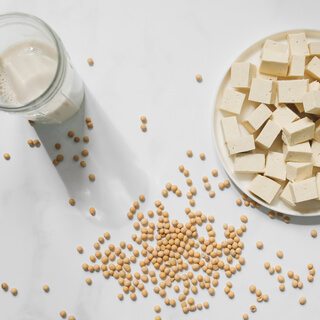
It is also possible to meet higher protein needs on a vegetarian diet but it does require good planning and you can check out my episode 3 for information on vegetarian sources of protein.
Another issue to consider is protein distribution.
Some research shows that including high quality protein at each meal,
That is around 25 to 30 grams as opposed to say one big dose at dinner time,
Is an important contributor to preserving muscle mass and function.
There are of course a lot of factors that need to be considered like dietary preferences,
Cooking facilities,
Social support,
The environmental impact of eating more protein,
The source of protein,
For example processed meats are classified as carcinogens but I won't go into that here other than to mention that everyone is different so an individual approach is needed with the broad goal of eating enough protein kept in mind.
The reason this matters from a public health perspective is because as most people are aware our population in Australia and similarly in many other countries is ageing.
Over the past two decades the proportion of the population aged 65 and over increased from 12.
3 to 15.
9%.
The number of people aged 85 and over increased by 117.
1% so that's huge compared with a total population growth of 34.
8 over the same period.
Therefore it is important to ensure as many people as possible age well and diet can certainly contribute to healthy ageing.
So that is my brief overview of the importance of protein intake as we age.
It's also the final episode in my four part series on protein.
I hope you found some of the information useful or interesting.
Thank you very much for listening today.
Eat well,
Move well,
Think well.