Okay Cindy,
Cindy,
Amira we're on.
We're sitting in your farm and you're about to take me on your regenerative journey as we sip your homemade licorice tea.
Well it's licorice,
It's a caffeline leaf,
Some lemongrass and some apple mint.
Because I arrived here at Mullaney,
We're just west of Mullaney,
About five minutes,
Ten minutes.
And I turned up and Cindy gave me a little rundown on the farm and had a look around and then I asked her for a cup of tea and she said what do you want and I said just give me something you think I need.
So what is this that you thought I needed?
It'll spark you up.
Did I look a bit exhausted when I turned up?
Without caffeine but it'll just give you that spark,
Licorice will help clean the liver and then.
.
.
That's delicious.
Can you say that again,
Licorice?
So it's licorice,
The main thing is the licorice and the caffeline leaves,
That's what gives it the taste and then I looked at my herb garden and I went a little bit of lemongrass and a bit of apple mint.
And there's no,
Is there honey in there?
Nope.
That's really sweet.
Yeah.
Apple mint,
Is that what makes it sweet?
No it's the licorice.
Bloody hell,
That's delicious.
Hey we can talk all day about recipes which everyone can find online,
Maybe not that recipe,
Can they find that one or they'll have to listen to these?
Probably not.
No.
No that's my.
.
.
That's what I do every time somebody comes up I brew my tea.
It's a bit like my wife Angelica's father who used to look at people and just look at them and go to the fridge and cook something and say,
Eat this.
Italian,
Sicilian,
Newy stuff.
Cindy,
Welcome to the Regenerative Journey and we are sitting here for the people who,
Actually even for the viewers they can't see the view can they,
They're looking at a shed.
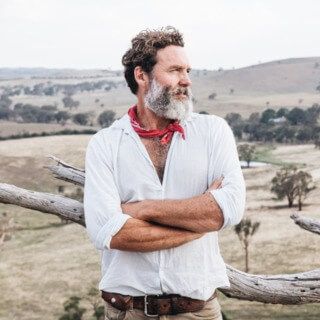
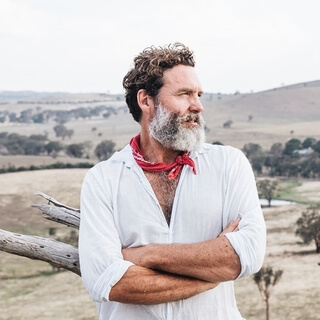
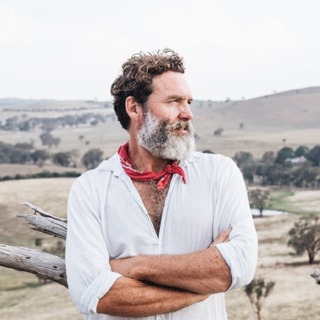
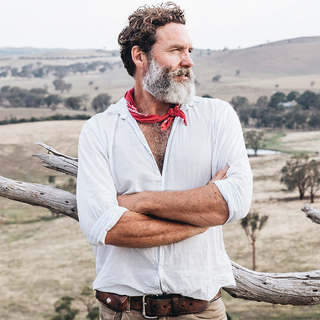
As is always the way I try and set my interviewees up on their land,
Well not their land,
The land that they are stewarding at this point in time,
That hopefully inspires them and we're looking at a very inspiring view there of the beautiful Moreton Bay figs,
Some way down the paddock we've got some.
.
.
Well why don't you explain,
Can you explain what we're looking at and why,
Why are you here really and what have you done and what's all that about?
Well since I was 21 I've wanted a farm.
If you'd asked me as a teenager.
.
.
That was only a couple of years ago.
If you'd asked me as a teenager what did you want to do with your life I'd say I want to marry a farmer and have 12 kids,
That was just what I wanted.
And then I married a chiropractor and had three.
So I didn't quite make that goal but I always had that goal and I wrote it down at 21 that I was going to have a farm and I was going to grow all my own food and have cows and chickens and goats and pigs and ducks and all sorts of things.
So you know I had three kids,
Busy,
Nutritionist,
Wrote books,
Wrote for articles for magazines and newspapers and I never got my farm.
And then one day my husband and I had the biggest tax bill of our life and I just said to him it's time for my farm.
And he said go out and look for it.
So I found this,
I remember standing up at the corner over there on the corner of my land,
It wasn't my land and I saw the full sale sign and I looked at the view and I could see the Conandale Ranges and I love hiking in the Conandale Ranges.
Witter was in front of me,
The Witter Range and then Malaney to the right.
There was a spring fed creek,
There was three wonderful dams on it and grass.
And this behind us was actually a dairy,
An old dairy that then became a saw mill that we then did up as a little cottage so that we could have somewhere to come up to.
And I showed my husband,
I was really sneaky.
Well you'd already bought it and said I'm looking at this place.
He gave me a budget and I showed him a two and a half million dollar place.
Nice one,
Yeah,
See where this is going.
So I showed him that and then I showed him this and it was way under budget of the two and a half million dollars and I go,
It's between these two,
I just don't know but it's between these two and he says to me.
I know which one.
He goes,
You know how we like to do things from scratch?
I really like this block,
We can start from scratch because the other one had a Ted bedroom house on it because I wanted a retreat,
I wanted a health retreat,
I wanted people to come and learn how to grow their own food,
I also wanted them to be able to get well from little babies that were needing special care right through to older people,
Right through every range,
I wanted people to be able to come here and get well.
And then we bought it and my husband just said to me,
Because he's in his 60s and he said,
You know what,
I don't want to spend the millions that we're going to have to spend to do this.
He said,
Let's just do something different.
So I watched it become Jurassic Park.
Not retreat as such,
But just farm,
Farming.
Just farming.
Production.
Yeah.
And I watched it turn into Jurassic Park.
That was really interesting and thought,
What have I done?
Because there were no cattle on here or no management,
Just went bananas.
Just went crazy.
And there's so much rain up here and like what you see in front of you,
That's like a week's growth.
And that was very short just recently.
And the cows have been all through here.
We do it through,
My son is the farmer here and he does it all through cells.
And so that's all been cut down,
Believe it or not,
By the cattle.
It just grows like,
You watch it grow.
So I met a lady by the name of Marag Gamble.
She lives down in the Cottondale Ranges.
She's a permaculture lady.
And I walked her around and I just said,
What am I going to do?
I have no idea.
And she came up with three solutions and I took it home to my husband and I said,
What do you think?
And he goes,
Let's go with the consultant,
The farmer,
And let's get him to get this going.
So we rented cattle or just did cattle,
I should say.
And we did the whole regenerative journey I guess for a couple of years and then we planted fruit trees.
And then from there we've gone into centropic farming.
We're breeding cattle.
We've got chickens that give us eggs.
We're going to do meat chickens this year,
Just for the family,
By the way.
I'm not prepared to do it commercially yet,
But for the family.
Yeah,
A few hurdles there.
Yeah,
There is.
So everything we do is for my family.
So I can feed them with vegetables,
Fruit.
We have fruit abundant.
My apple tree just finished.
My summer apple tree just finished.
We have about 100 apples on there.
Is that you over there?
See those big trees?
No,
That's somebody else's property.
That's our neighbour's property.
Not bad though.
Not bad view.
Yeah,
Amazing.
Amazing.
How many years have you been here then,
Remind me?
I bought it on the 6th of April 2015 at 2pm.
And then told Howard six months later.
You know what I'm going to do,
Can we grab that tea cozy?
Can we put it on your mic?
Yeah,
I can hear it clicking too.
Let's have a cat on there.
How's that?
Better?
I reckon that's the gold.
And I've got one over here.
I can hear it doing it too and I'm thinking,
What is happening?
Yeah,
You just need a dead cat on it.
Dead cat.
Have you got another tea cozy?
No,
I don't.
I've done plenty of interviews with tea coasters.
I've got this sort of silly thing here.
I'm just going to excuse my.
.
.
Look what it looks like,
The tea cozy.
See,
I think I can turn that.
Yeah,
That's it.
I can slip that on there.
Turn the mic off.
How good is that tea?
That is unreal.
It's one of my favourite.
I'm not sure how well that's going to go.
There we are.
Let's give that a crack.
Cindy,
I want to,
Because there's lots in that and I got here,
We had a look at some of the syntropic farming,
Syntropic area sort of strip there and it was just amazing.
I want to go back and do the video and talk more about that.
I want to go back to,
I guess where a couple of things like where.
.
.
So you always want to have a farm,
But what.
.
.
You're not known for farming.
No.
What I'd love to know is understand is how did you.
.
.
What were you doing before,
I dare say,
Some turning points or epiphanies or tension events or catalyst for change to do what you're doing now?
What were you doing before that?
Just to sort of set the scene.
What did you do before your regenerative journey,
As it were?
Well,
If I can go back in my history,
You might understand why I love farming.
So I had a grandfather who was a corn farmer in the USA.
So he was in the 40s when the chemical revolution started.
He was really against the chemicals.
He said,
It's going to be the ruin of farming.
And all of the neighbours would say to him,
Vince,
You're an idiot.
This is the new way to farming.
But he never,
Ever changed.
He remained organic.
He had 11 children and my mother was the oldest of 11.
We are the largest hemophilia family in the world.
So six of my uncles have hemophilia and I have three cousins with hemophilia.
So he lost the farm because the boys couldn't work on the farm.
In those days,
That was about working the farm.
So the boys couldn't work on the farm.
So he lost the farm.
So they couldn't work on the farm because of the hemophilia.
Because they would bleed if they got,
If you just hit them,
They could bleed.
Or if they injure themselves,
They can bleed for three weeks.
So he had seven boys,
Six had hemophilia.
So he had one boy and the rest were girls.
And so he lost the farm.
They ended up in town.
He had two acres and he fed that family on two acres.
And my mother from the age of 12 was the,
Basically the mother of the young children.
At 13,
She got her license and she would drive the kids to school,
Into town.
So this was,
I saw this life and I wanted that life.
And I had uncles who were pig farmers,
But pig farmers that were very much,
You know,
What you don't want to see today.
You know,
I was terrible,
But I didn't know any different and I didn't cringe or anything.
I just used to go in there and play with piglets.
And so I look back now and I just think,
Oh my gosh,
How could I have been so blind to that?
But I was 15 and I didn't really understand it.
So that's kind of where it was.
I'm from a farming family.
My other grandfather lived in Kaikoura,
New Zealand,
And he also fed the family on a very small plot of land.
He would bring the seaweed over from the ocean,
Fertilise the land and yeah.
And that's,
I've always seen that gardening and,
You know,
And my mum was an amazing cook and my dad was an adventurer,
Skiing,
Hiking,
You know,
We did adventures around Australia when no one else was doing.
We had a bus,
You know,
Back in the 1960s we had a bus and we would travel Australia because mum didn't like to camp.
So we would,
We travelled.
So dad built her a bus with a bed and he called it the Bedford.
It was Ford that was called the Bedford.
So I'm,
Because of the adventure and everything,
I went to the University of Colorado in Boulder from Australia because I wanted to ski,
No other reason,
But I wanted to ski.
And that was the closest university to a ski resort,
Which was about 20 minutes away.
And it was there I had an amazing professor and his name was Professor Dennis Van Goven.
And I did a year of anthropology.
I was doing pre-med and I could have an elective and I did anthropology and it was cultural anthropology as well as anthropology and I thought,
Wow,
This is all about what people did to survive.
This is how man survived and it was all around food,
Food and culture.
So I thought I'm going to be a dietitian.
So I came back to Australia,
Went and did my Bachelor of Science,
Majoring in nutrition to do dietetics at Deakin University in Warne Ponds.
And at the end of my degree,
I went,
This is,
This has got nothing to do with what I've just learned about,
Nothing to do with it.
So this is 1983 and they were talking margarine and low fat and they were talking high carbs and grains and,
And the whole thing just seemed twisted to me.
And so I thought,
How can I tell people this is what they've got to do?
And I don't even agree with any of it.
One of my lecturers,
He would sit on a stool and his stomach fell to his knees.
I looked at my lecturers and they weren't even healthy in any way.
And yet here I was wanting to learn,
You know,
Do nutrition.
I had a grandfather who was all about organic farming,
A grandmother who cooked everything from scratch,
A mother that cooked everything from scratch and a father that had been a pharmacist that became a chiropractor.
So he went from mechanism,
Which is very much agriculture today,
To vitalism,
Which is what regenerative journey of agriculture is about today.
So I just pushed all of my vitalistic knowledge into nutrition.
And with the historical perspective and understanding and the culture,
I figured what people needed.
So at 23 you're not thinking you can do it.
So I went back to uni,
Did two more years of human anatomy.
I cut up cadavers.
I learned every ology you could learn.
And then at the end I went,
I know exactly what the human needs to be healthy and it's just real food.
But that was it.
Back to butter,
Back to real milk,
Raw milks.
But we might get sued for that.
So I didn't say that.
Oh no,
We bathe in raw milk.
Yes,
That's right.
We only bathe in it.
You know,
Back to real foods,
No breakfast cereals,
No low fat,
No margarine,
No vegetable oils.
And,
And I had a voice.
I had a mouth.
As my mother would say,
You have a mouth Cindy,
Use it.
You have a voice.
And that's what I did.
I just decided.
Is that,
We are on a road,
Not a busy road,
But we are sitting here on just outside of,
Jesus,
It's a V8.
Yeah,
There's a few of them that go past.
So yeah,
So it was,
It was about,
I just,
I'm going to consult and that's what I did for four years and then got married and started to have babies and realised I wanted to be at home more than I wanted to be outside the home.
And so I started writing for a paper I wrote for the Sunshine Coast Daily.
And so this is at Loolabar.
In Loolabar,
We moved to Loolabar.
So you have been there for a little while.
31 years we've been there.
Yeah.
31 years in this area.
And so.
So we're in Queensland for those not familiar with Australia.
We are in South East Queensland,
Sub tropics,
South East Queensland on the east coast of Australia.
It's beautiful.
It is,
It's stunning.
And yeah,
And basically I started writing for a paper.
It was very controversial.
I'd have people saying she's a witch,
She's a charlatan,
She has no idea what she's talking about.
And then I'd have people go,
Wow,
That makes a lot of common sense.
And then I wrote a book called Changing Habits,
Changing Lives.
It went to,
It became a bestseller.
When did that come out?
That came out in 98.
98.
1998.
And then 10 years ago,
After writing a book and a cookbook,
Rewriting the book again because the food industry isn't getting better,
It's getting worse.
And so I had to keep adding chapters to what's happening.
The latest version has just come out last year,
So 2020.
And I've called it Lab to Table because that's where we're at at the moment with the food industry is it is going from lab to table,
Not farm to plate.
I laugh,
But it's bloody sad.
It is.
People have no idea.
And the byline is how to stop being a lab rat and start making better choices for your table.
So I basically,
About 10 years ago,
My husband,
Who's a chiropractor,
Just said,
I'm sick of being a chiropractor.
Let's do something with what you're doing.
And now Changing Habits has become programs,
Protocols,
Organic foods,
Education program called the Nutrition Academy.
And the Nutrition Academy is about teaching people what I have and what I know.
And the two basis of the Nutrition Academy is historical perspective.
What did we eat?
How did we survive?
What was the cultures?
How did we cook,
Ferment,
And do all of those things?
And then vitalism,
Which is,
I just,
It was so beautiful watching,
You know,
Hamish and you do that incredible biodynamic course.
I sat there for that three hours of prac,
Or not prac,
Sorry,
Theory.
And I went,
He's speaking my language.
What he's talking about is what I talk about in nutrition.
Exactly the same.
He'd say something and I could just push it to nutrition.
And so I've always known I've been on the right journey,
Even though I doubt myself at times,
You know,
You have to doubt yourself in order to move forward.
But I do doubt,
I go,
What if everything I'm thinking is wrong?
What if,
You know,
What's happening out there at the moment is,
Is something that I think is not the right thing.
But everybody else seems to think it's right.
Just on that when you saw 23,
You say you say 23 when you went and start your own practice?
Yes.
So tell me about that.
Because if you went to,
Did your dietitians course or the university with those chubby professors and so on,
Which I'm so not surprised about.
My tertiary education was in agriculture and we had a few large professors too,
But we were talking about lots of things that didn't,
That made sense at the time,
But then didn't later when I sort of tried to put them into practice and the work congruent with a lot of things in my mind and so on.
How was that to start a practice which was really going against what a lot of people would have learned in university,
Reading the papers,
Read on the back of cereal packets,
You know,
You were really spinning it on its head.
What was,
What was,
How was that for you to,
To deal with that?
Well,
People got results.
So then,
You know,
Someone would come to me and they get the results.
How dare you get good results.
So they get results and then they'd send,
They'd say,
You've got to go see this girl.
And they,
And they'd send someone else.
But I must tell you about a woman that sent her father.
He was in his seventies and he comes to me and he goes,
Miss Lovett was my name.
My last name was Lovett.
He goes,
Miss Lovett,
My daughter tells me I should come to you.
And he is a farmer from Shepparton.
He's a pear farmer from Shepparton.
And he sits like this,
His hands are crossed and his legs are crossed.
And I tell him what I think he needs to do.
And when he leaves,
I'm 23,
He's in his seventies,
You know,
And he leaves and I think,
Oh,
I didn't get through to him.
He's not going to change.
Now he had a numb leg.
He had indigestion.
He had aching joints.
He had all sorts of things were happening.
And I thought I didn't get through to him.
I won't see him again.
That was my thought.
A week later,
I get a call.
Miss Lovett,
I need to see you again.
So I make an appointment.
He comes in and he says,
I need to tell you a story.
He says,
I'm a pear farmer.
I'm the best pear farmer in Shepparton.
And his name and people will know him because he's in a history.
His name is very iconic.
That's the word.
Can you say his name?
Yeah,
I think so.
Rutherford.
Mr Rutherford.
So I don't remember his first name,
But he says to me,
I want to tell you a story.
He said five years ago,
My pears weren't doing very well.
And I decided to go back to the old traditional way of growing pears.
He said,
I got rid of all the chemicals.
I got rid of,
I only fed,
You know,
Good,
Good fertilizer.
And I said,
He did everything natural.
I cut back all my pear trees and they're the best in the district now.
He says,
What a fool I was.
I should have done it to myself as well.
Not just my farm.
And so he followed me,
You know,
And he did everything and him and his wife started to get spriting and yeah,
They did.
Yeah.
And that was to me an incredible time in my life where I thought I am on the right track.
I am doing the right thing.
So this is 83.
This was 1983 when no one was talking about this stuff.
Even Mr Rutherford was ahead of himself,
Ahead of his time because people weren't doing that.
You know,
I know my grandfather was ahead of his time,
But he was Mr Rutherford.
He just went,
It's not working anymore.
I've got to go back to my old ways,
The way we used to do it.
So yeah.
And did you get some,
So that's,
That was a good result.
And one of many,
I'm sure.
Did you,
Did you have others?
I don't know,
Dwell on it,
But I just know it's,
It's,
You've mentioned before about doubting yourself sometimes.
Were there times that 23 year old fresh out of,
You know,
Education was going,
Oh,
Maybe,
You know,
Or people going,
You're mad or how dare you,
Or I don't know,
Phone calls in the middle of the night and dropping out.
Was there anything,
Not necessarily sinister,
But with a time when you just thought,
You know what,
This is hard or I'm not sure,
Or I'm scared.
I think when,
And back in those days it was letters to the editor,
You know,
And I remember reading them and,
And also it wasn't only just letters to the editor.
It was also the editor himself.
You know,
I remember I wrote an article on margarine.
What one,
One,
Was it one,
One Adam away from plastic or something is it?
Basically.
But you know,
I wrote it,
A very,
Like not only an opinion piece,
But I put the science in as well and he rings me and he says,
The margarine association of Australia has asked us to retract it.
We'd like you to retract your comments.
I went,
No,
Tell them to sue us.
Let's see if they can do it.
And you know what they did?
They,
They obviously told,
Said to the editor,
Well,
You've got two things.
We're either going to go with the law case or you can put a one page ad on the benefits of margarine on your pay in your paper for free for us.
And that's what he did.
And the other,
The last article I ever wrote was on artificial sweeteners and he rings me up again and he goes,
Nah,
We'll be sued by the largest association.
So he said,
I can't,
I can't publish it.
And I said,
You know what?
I've been writing for you for two years.
If you can't write the truth and you can't publish the truth,
I mean,
I can write the truth.
You can't publish the truth.
I don't want to write to you anymore.
And at the end of a hundred articles,
I said,
There's a book in this and that's what changing habits,
Changing lives became.
Good on you.
Is those articles.
Yeah.
Isn't it?
It's a great example of compromise,
Isn't it?
That you're all,
I mean,
There's lots of other words for it is,
Um,
This at interest.
And I mean,
That's a whole nother podcast series and conversations,
But,
Um,
Good for you for just sticking it and going,
We're all,
Yeah,
Well,
Can't do it.
No,
But my heart was beating hard.
Yeah,
Totally.
And I,
I doubted,
You know,
What if they do sue and what if this and what?
And then I,
And I went,
You know what?
I've just got to,
I,
I can't not tell the truth.
I can't not let people know what is happening out there in the food industry and I will name and shame and,
Um,
And I,
And I've done it and then being taken to task for naming and shaming.
Um,
What did I do recently?
And this woman said,
That wasn't very nice.
And I went,
But it's the truth.
You know,
How can I not tell the truth about a product that has been bought out?
Like,
Um,
I,
I,
Just,
I think it's called just eggs,
Just eggs.
So I think an American company and,
Um,
It's fake eggs.
It's vegan eggs.
It's vegan eggs.
And so could you,
They can't call them eggs.
Sure.
Well they do.
It's called just just eggs.
I think it's called just just not eggs.
I've got it on my Instagram.
I can't remember,
But I read the ingredients and I went,
How can you call that food?
There was no food in that just eggs.
And I heard rich roll and I hope rich hole listens to this.
I heard him advertising them the other night.
I'm listening to him,
Um,
Late at night cause I,
I was wanting to listen to the person he was,
Um,
Doing this interview with and I heard him go just eggs.
And I went,
What?
Rich roll,
You know,
You should know it better.
This,
This is fake food,
Synthetic biology,
Genetically modified microbes making these,
These flavors and additives and things that tastes like it,
Smell like it,
Feel like it,
You know,
Everything like a food,
But it's not food and it's making us sick.
And are there numbers in there as well?
I mean,
They're,
They're boys that did give away,
Aren't they?
Yeah,
There,
There's so much in there and if I get a chance,
I'll look it up and then I'll give you it.
But that was one and um,
And I do it all the time and I'll,
I'll,
I'll look at vegan meat.
I'll look at all of those things and I'll just go,
How can you think that this is okay for the planet?
Number one,
We are fooling with bacteria by genetically modifying them.
So vanilla flavoring could be,
Um,
A,
Uh,
A microbe that has the gene of a vanilla bean that gives you the smell of vanilla.
So they inserted that into the microbe and then what they do is that they put it on a substrate and that could be a genetically modified substrate.
So it could be a sugar beet,
It could be soy,
It could be,
Um,
Canola,
It could be anything,
Any substrate they want.
And then it produces vanilla flavoring and it's called natural vanilla flavoring.
They can call it natural.
They can call it natural vanilla flavoring.
They do it with citric acid,
They do it with xantham gum,
They do it,
There's this thing called legohemoglobin.
Oh,
And that's the stuff in the burgers that is supposed to look like blood or something.
Yep.
That is a genetically modified microbe that is put on a substrate to make this legohemoglobin.
I don't know how they came up with the name.
I think it's Lego legume hemo blood.
That's,
That's how they came up with it.
Smart,
Really smart.
But there's,
There's um,
There's this plant blood,
There's this disease that's come out and it's a new disease and it's a disease where a person will start to itch and these fibers will come out of their skin.
Pink,
Yellow,
Orange,
Red fibers will come out of their skin and they don't really know what it is,
But it's possibly a genetically modified microbe that's left the fermentation banks,
Gotten into the human population and it's one that makes fibers because they are genetically modified microbes to make fibers and getting into our microbiome or a microbiota and then producing fibers and poking through our skin.
And why would they have made that in the first place to a fiber producing microbe in the lab?
What were they doing that for?
Just because you've got microbes that are doing things for you,
It's cheap.
Yeah.
But in terms of,
I wonder what product they were trying to develop to put these things into.
It would have been a rayon or some sort of synthetic cloth.
Oh not food even.
No not food,
This will be a synthetic cloth.
So they're using synthetic biology.
Biotechnology is huge.
Synthetic biology is,
Is just,
It's enormous and synthetic biology is the genetic modification of microbes to produce what you want.
Whatever you want.
Whether it be tryptophan,
Vitamin C,
So nutrients are being,
All of our supplements,
Not all yet,
But I'm sure it'll get there.
Our supplements are being made with it.
My scary part of this is when they do escape from a lab,
As we've heard there are viruses,
Bacterias,
Microbes that do escape from labs,
What are the consequences to the human and animal and to the planet?
What's the consequences to the microbes when we start genetically modifying these things?
We don't know.
Well back to your,
Obviously the name of your book,
You know,
We're,
Well the renamed book,
We are an experiment,
Whether we like it or not.
Every time we go shopping we have the opportunity to step into a virtual lab as it were and be a guinea pig,
Or not.
Or not,
Exactly.
And that's why I guess I wrote the book was so that people understood what they're doing to food.
Because they'll look at citric acid and they go,
Oh that's from citrus.
No it's not,
Synthetic biology.
It's squeezed orange.
We don't have any vitamin C in them anymore.
Anyway,
Most of them.
No,
And it is getting worse,
It's not getting better.
Every time I write the book I then have a new chapter,
Like within a month after it's been finished.
There's something else.
There's another one.
So the latest is food irradiation.
You know,
What they're going to do.
I saw it in your blog.
Yeah.
What is proposed by Queensland agriculture to,
For SANS,
Food Standards Australia,
New Zealand,
Is to irradiate every fruit and vegetable that is sold in Australia.
Before,
Like just goes through on conveyor belt through a radiator and then into the markets.
So what they're doing at the moment is they're sanitising our food.
So they put it through,
You know,
Like if it's organic they'll put it through one.
If it's not organic they'll put it through like a chlorine bleach or some sort of sanitiser it will go through.
So that's the outside of the plant or the fruit or whatever it is.
But when you irradiate the gamma rays go through the food and kill everything.
Kill all the bacteria,
All the,
And you have to realise the reason we digest food is because of bugs,
Bacteria.
But they're worried about listeria and they're worried about,
What's the other one they're worried about?
There's two main ones that,
What is it?
Not E.
Coli?
No,
That's more for meat and stuff.
E.
Coli is another one.
Strep E.
Coli and one that starts with S.
But they're worried about these.
And the reason these are out of control is that we have sprayed the land with glyphosate.
So again if Queensland Health or any health department were to actually stop and go why,
Why,
Ask those questions why,
Why,
Why,
Why are we having these outbreaks of these so-called bad bacteria?
Then a series of whys would exactly get us back to,
Well we're actually stuffing up the environment with all these chemicals.
So,
Oh hang on,
How's this for an idea?
Why don't we look at that as opposed to irradiating all the food at the other end of it?
No,
That'd be too,
That'd be too sensible.
Well we wouldn't be able to put fertiliser inputs in,
Chemical inputs in.
You wouldn't be able to do,
You know,
You wouldn't have food survive for three,
Four,
Five,
Six,
Eight weeks,
Who knows how long food irradiated is going to survive for.
And it's,
Let's face it,
This is big ag.
This is about finances,
This is about money,
This is not about the health of humans.
And so Food Standards Australia New Zealand asked for submissions,
And so I put a submission in,
And I basically said it's all very well and good to say yeah the nutrients don't go down that much,
But how do you know what it's going to do to the microbiome,
Considering that the soil microbes on our food help feed our microbes in our gut.
If you have a sterile lettuce,
The likelihood of you not being able to digest that lettuce is far greater than if you go and pick a lettuce from my garden and just go and eat it.
You know,
I don't wash them,
Unless there's dirt on them,
I'll throw that off,
You know,
Give a bit of water on it,
But that has soil based microbes on it.
And because my soil hasn't had any chemicals on it for as long as I've had it,
And we're going on my sixth year of having this,
As long as it doesn't have those,
I know that I have the best microbes in my soil.
Hey,
I want to ask you about this.
How is my show?
You can't ask me questions.
I'm not prepared for this.
Before you do,
Cindy,
Could you pour another cup of that delicious licorice apple mint,
What were the other two ones?
Lemongrass and kaffir lime.
Yeah,
It's the kaffir lime that does it.
Yeah,
It's pretty good.
It's still bloody hot too,
Even with your tea cozier up around your mic.
Well,
It is 30 something degrees.
I know,
No,
It's just so pleasant here though,
It's not as hot as I thought it was going to be.
Yeah,
Fire away,
Fire ready.
I've just given myself enough thinking time there.
Good,
Good.
Preempting your question.
So at the moment I'm seeing a lot of people talking about that farmers who farm in regenerative terms can sell carbon credits to people that are not so much about,
You know,
What's happening.
Yeah,
I've been wanting to ask you that question.
Is that true?
Is that what's happening?
So what's happening,
I think what you're asking is,
Well I'll tell you what I know,
And I've been following the carbon trading environment for at least 15 years and haven't ventured into it yet for a number of reasons,
Mainly because it sort of seemed to chop and change a lot,
But primarily there didn't seem to be a very clear path for farmers.
And this is my thoughts earlier,
That towards a system that is understood and is simple and is cheap,
Because as far as I'm aware,
It's still very expensive to do.
If you want to get the sort of the required baseline carbon measurements on your farm,
Almost regardless of size,
Because you still need a certain amount of baseline measurements to be taken,
We're talking thousands of dollars,
Tens of thousands of dollars to get what would comply as,
Now we know what your baseline is,
Then as we go into the future,
You can keep measuring and then we can say,
Oh,
What's improved.
So it's been expensive to get into.
Also the sort of the levels or the tiers of the credit system,
And that has been unclear to me,
Probably not to everyone,
But it's sort of been somewhat confusing,
Unless you've got a lot of time to dig into that.
And also,
I guess I've also had a bit of a problem about the commoditisation of carbon.
And that's not to say I won't,
And I had a conversation with a fellow the other day about this and on the back of Wilmot Cattle Company selling a considerable amount of,
Well,
I don't know,
A considerable amount of carbon credits as it were to Microsoft in a deal,
Which I think is,
That's great because it's sort of set a new benchmark or it's sort of got people talking.
In any event,
It's got people talking and I know I've been inundated with questions.
If it gets people talking about that and looking into it,
I think that's a good thing.
What I am going to do and what I want other people to think about if they're looking at this is probably don't make it your primary reason to farm.
If your primary motivation is to,
Oh,
If I can raise soil carbon,
I want to get some credits out of this,
It's probably the wrong way to look at it.
I would be saying,
Sure,
That's a thing you can look at and do,
But maybe make the building of soil,
The quality and the quantity of soil a primary objective to produce better food and to improve the environment and create a cleaner environment.
And if you are in that effort building carbon that you can then feel like you can trade,
Do that.
And there's a lot of agents in the system there as well,
Middlemen who are part of that system,
Not unlike the water situation where people have water rights or don't,
Some people get that stripped away from them,
But the selling and buying of water and the agents in the middle who are profiting from that enormously and the farmers are sort of a bit like the food system.
It's funny how these things are very,
These systems are in parallel,
They're working in parallel.
Maybe too many middlemen,
Probably different agendas,
People not doing it for necessarily all the good intention of the world.
It's yeah,
So I'm still looking at it and I'm going to have some more conversations about how we can,
As it were,
Leverage our natural capital because it is,
These things will start appearing on people's balance sheets and I think it's important they do because then the banks can look at it and go,
Okay,
He's got this much cash in the bank,
That many cows in the paddock,
What's the value of the carbon in the ground that he's put there?
That is an asset and it's of value,
But you know,
It's how we use it.
And there's also the question of,
Well,
If you go into a drought and all your change,
You know,
Management or something and it goes backwards,
Well,
Do you then owe the government money or somewhere?
And the last thing I'll say on it,
Because I'm rambling a little bit,
But I'm just,
I'm quite,
It's very topical is,
You know,
Businesses that are claiming carbon neutrality,
As it were,
Farm businesses,
Which in theory might be right,
But then when you read a bit deeper and they're actually offsetting their carbon by planting trees in India,
That to me sort of,
You know,
I guess complies and it's sort of in the theory makes sense,
But like I would suggest,
Why aren't those businesses actually just planting trees on their own place?
Why can't they have a self-contained system where,
Okay,
I'm burning diesel,
I'm hopefully sequestering carbon anyway,
So that's adding to it.
And,
But to offset that,
The carbon they're emitting on farm,
Let's,
Let's,
Let's,
Let's,
Let's sequester that on farm.
And I just think it's,
You know,
Someone doing that in India by planting trees over there,
Nice for that part of the world maybe,
But it's just,
It sort of gets away from the whole intention of this kind of thing.
Does that make sense?
Yeah,
No,
It makes a lot of sense.
I've just been hearing about it and I,
When you have a husband who's a budget king,
Then you ask questions like this.
Budget king?
The budget king.
Howie.
He'll be,
He'll be here soon going,
How much power did you bloody use on that machine of his?
He said to me one day,
He wants a boat and he says the farm's like a boat.
Why do you have one,
You only have two good days.
No,
Is it the day you buy them,
The day you sell it?
No,
He just,
You know,
Because it's not,
You know,
I bought it for one thing and then we,
We started to do what we're doing with it,
Which is my love.
It's absolutely my love and it's my son's love and,
And,
And my husband loves it too.
But,
You know,
This hasn't been a cheap exercise by any means.
And to do what we've been doing and putting in more fencing and I've applied for grants by the way and got them and because we're trying to repair the riparian area,
It's filled with privet.
So as well as doing the cows and the chickens and all the fruit trees and the gardens,
We're also trying to get that forest,
You know,
That rain forest back to the way it should be.
So yeah,
He just,
He's,
He's sometimes,
Yeah.
He has a role to play and he's doing a very good job.
It was great to meet him very briefly the other day too,
Just quietly.
Yeah,
So carbon,
You,
You're just saying how you sort of step,
You know,
Understanding it or you're hearing it.
What are your thoughts on it?
I didn't really have any thoughts.
I just,
I read about the Microsoft guy or the farmer that sold to Microsoft and I kind of went,
Wow,
Why did he do that?
Why didn't he sell to an Australian company?
I don't know.
That was my first question.
And then I started to go,
Well,
Here,
Where this whole thing started was that we haven't used chemicals,
You know,
This is all hand done.
You know,
If there is a primary as I've been told to look at them and then we question the primary and why is it there and what do we have to do?
And instead of like,
I watch people across the road and next door and they get the spray gun out and they just spray.
So I kind of go,
You put the work in and you put the effort in.
But I do understand your whole thing with carbon credits and the water as well because,
You know,
The water rights is quite scary for some farmers who don't have them and they have to buy them and they have to purchase the water.
And I have seen that.
So I don't want it to become a commodity like that,
But I'd like to be thanked for what we're doing here.
That's what I'd like.
Well,
I mean,
And that,
You know,
I guess that that thanks can come in many different forms,
Whether that's a financial reward as it were,
Because you're measuring and there's a mob called Lander Market who we are members of their co-op and Tony Hill heads that up and he is a,
They're an organisation which basically,
You know,
You sign up as a member of the co-op,
They turn up once a year,
They'll do some measurements.
There are,
I think at every four or five years,
They're sort of pretty serious and comprehensive measurements and every year in between they are monitoring of your diversity of your pasture and so they're really,
It's an environmental monitoring or verification system and that does two things.
One will identify if your carbon is going up,
So how you then can leverage that is one thing you can do.
The other thing too,
As a producer of food,
That those who are interested in branding or putting the logo of Lander Market on their product so that people can,
In buying that product,
Support the farmer who has bothered to do that.
So that's a reward as it were.
Now what the price premium there is,
It's still up in the air but there are organisations and opportunities for people to be rewarded in a number of different ways for what they're doing,
You know.
I think all these certifications can become quite complicated.
Like I'm in the food industry so I see the organic certification and I've seen where the organic certification has gone and I'm not happy with it,
Especially when it comes to packaged foods.
As far as farming goes,
I don't really understand it.
I don't want to get organic certification here.
I know what I'm doing,
This is just for me,
This is for our family.
You know,
My family's growing,
I'm having grandchildren and they all have partners and so,
And then their friends all seem to want to congregate here as well.
We have many,
We had a really good Australia Day party here.
Well it's actually the Saturday,
That's when that top 100 are on.
Triple J.
So we had a triple J party on the Saturday and they were just camping,
Kids camping everywhere and I just,
I said to my husband,
This is why we did this.
It's community and family.
It is community and family and it's not just our family,
It's their friends that have really become involved in this and they ask me questions and they want to come and work on the land and they want to spend some time here.
So it's,
I,
Yeah.
All you gotta do is,
I found is dangle that carrot,
Like just go,
Come and have a look and go for a walk on the Centropic Strip there and eat this bit of lettuce or whatever it is.
That like,
And it's,
That's the wonderful thing about this,
You know,
This generation because we're so old,
But you know,
Like the younger,
Younger people because they are curious and just give them the whiff of it and they love this sort of stuff,
You know,
And the,
And the other,
I guess it's,
You know,
And it's quite often,
More than often,
It's non-farmers,
They haven't got paradigms to break,
You know,
They're just going,
Oh,
Okay,
Cool,
Cool spot,
Good view,
Feels good,
Yummy food,
Nice people.
What more do you want?
You know,
That's,
That's all you just,
You don't have to bash them overhead with anything.
No,
No you don't.
And when they see the results of their own health,
That's,
You know,
Like,
Cause we're,
We're healing the land with the looking at the soil,
Making sure the animals and the plants that grow on this soil are,
Are healed.
And by doing that,
And then when we consume them,
Then we become healed.
And that's what people don't realise.
When you go into a supermarket and there's an organic certification or a gluten free certification or what else is there,
Vegan certifications used to be the biggest at the moment,
Like there's these certifications everywhere,
But what they're not looking at is the ingredients and how are those ingredients grown.
That to me is more important than a certification.
So people know what I'm like.
They know I'm a till of a hum when it comes to food.
So when I say it's come from my farm,
Till his wife,
Till his wife,
He's the till of a hum.
I'm the wife.
Even my local organic store,
You know,
She will buy from me and because she knows what I'm like.
If I said I'm not certified organic,
She says,
Yeah,
But I know what you're like.
And she will put from the Changing Habits Farm not certified.
She'll put chemical spray free.
And you know,
I just think when you look at the ingredients of the food and,
And when you're turning over that label and that packaging and that plastic or whatever it is,
And you read those ingredients and if they don't look like grandma's recipe or great grandma's recipe really,
Then don't touch it.
Put it down.
Put it down.
And that goes with salt.
You know,
Even our salts have got free flowing agents and anti-caking agents and potassium iodate for the iodine.
It's completely stripped of all its minerals.
It's left with sodium and chloride.
So from the smallest thing like salt all the way,
You know,
To the cattle that we,
We have and we breed,
We need to know how these guys are or how this is being harvested,
How they're being grown,
What,
You know,
What soils they're on,
What food they're eating or consuming and how they're processed.
Because if we don't know that,
Then we're part of a problem,
Not part of a solution.
So when we start to realize and get back to going to the farmer's markets,
Going directly to the farmer,
Like I love what you're doing,
You know,
Like I know that your pigs,
We can buy your pigs direct if we want to,
Or we can go to a butcher that you're recommended to go there because that's who you sell to.
That's what I want to know now.
I want to know who's my farmer.
So across there,
I can't kill my cows.
I love my cows too much.
I just have a terrible time.
So just across there,
There's a wonderful farmer and he has Angus and I go into town and buy his Angus because I haven't met the cow.
You're off setting.
But his Angus are grass fed.
Grass fed.
All above board.
Yep.
He does it the right way.
He does regen farming.
It's not organic as far as certified,
But I know his principles.
I've read about him and so I go into town and buy his.
.
.
You know,
That's a good point though,
Because we're not certified either.
You know,
We're not biodynamic.
We make our own biodynamic staff and not using chemicals and all those things.
And Hamish Mccoy,
As you know,
Not as biodynamic causes,
He was instrumental in the early days of setting up some of the certification systems in Australia.
And he is not dissimilar to you,
Cindy,
Saying it's not what it used to be or what it should be.
And my limited experience with it and understanding is really that it certifies the inputs,
You know,
Like the set of circumstances and the practices that make up the food.
So,
Oh,
No,
I'm not using chemical or I'm throwing a bit of compost around or whatever.
I'm not buying glyphosate from the.
.
.
You know,
Go through the accounts,
Make sure you're not buying chemical from the agent in town.
But in no certification system I'm aware of,
At this point,
Do they test the product?
What pops out the other end of it?
You know,
They're not scanning to see what the nutrients or the chemical load is.
So it's certifying inputs,
Not the outputs.
And as consumers,
Aren't we interested in the outputs?
Like,
You know,
If there's no chemical on your apple,
Well,
It clearly wasn't used on the farm.
So that's that ticked out box.
You know,
If it has a high Brix level or you can look at the numbers and it's a nutritious apple,
In some ways it doesn't matter what they're doing at the other end,
You know,
Because you know the outcome is good.
So a system,
A certification system that actually certifies the output,
Not the input,
I reckon that's something I would look at,
You know,
One day.
And that's the problem with food irradiation,
Even though they're looking at irradiating the food and then what they do is they look at the nutrient content,
But that nutrient content might be there.
But what are we getting?
They're not looking at that.
They're not going,
If you eat that food from that apple tree over there that you know,
That I love and talk to and get really excited when the blooms come out.
Count the blooms.
Where is it?
It's right down in the corner with the mesh over it.
The mesh has got to come off,
But it's blooming again.
You know,
We just finished that apple trees and it's a summer apple and we just finished it and now it's blooming again.
It's going again.
It's that love language.
It is,
I do talk to it.
I talk to all my flies.
How do we know what you say to it?
Don't tell him.
It's blooming again,
Must be good.
But then when I consume that and it's got the microbes on it,
You know,
And I'm feeding my microbes and I'm getting the nutrients because those microbes are allowing me to absorb those nutrients and use those nutrients.
When you radiate a food,
We haven't tested that.
We haven't tested if there's no microbes in it or on it or near it and you consume it,
What are the nutrients you get from it?
And that's the question I asked for SANS in my submission to them.
And I tell you,
That submission wasn't easy.
Even as a nutritionist and understanding this industry for 40 years,
Doing that submission,
I actually put one submission in and then they said,
You didn't put your name,
You didn't put your address and phone number on it.
We won't take your submission.
And so I just resubmitted again and did a longer one because I had time to really think about it because I only gave you a certain time.
And I said,
Well,
Just in case you don't do this one,
Then do this one.
And they took my submission.
So hopefully they'll,
You know,
They'll listen to not just me,
But other people.
I want to go back,
Cindy,
To because we got straight into the thick of it,
Which is fantastic.
I want to ask you back in your earlier years when you were finding your feet in this space,
Was there a moment,
I mean,
The Mr Rutherford story is wonderful.
That's clearly,
You know,
I imagine a point in time where there's like you were not vindicated with like,
You know,
This,
I'm changing lives here,
You know,
Changing habits,
Changing lives.
Was there any any other spots,
Any sort of turning points where,
You know,
You were profoundly,
You either knew your purpose or you,
You know,
Things were much clearer.
Was it a conversation,
Something you read,
I don't know,
An apple you ate?
Was there something that sort of stands out as being a significant,
You know,
Turning point?
I had written my book,
Changing Habits,
Changing Lives.
And I was asked to speak in Caloundra at the Happus Lemus.
Now this was probably the 1990s,
Late 1990s,
I say it was,
It was before,
My husband and I always define our lives between the time we went travelling around Australia for two years with the kids and the time we didn't.
So before and after.
That was the,
That was our defining time.
I think I did it just before and I went to Happus Lemus and I know maybe it was when we'd gotten back.
It was when we'd gotten back and I went to and spoke to Happus Lemus and there was about 130 people in the room and I started to talk about,
You know,
The food industry and how a McDonald's burger,
If you leave it on the shelf for two years,
It'll still look like a McDonald's burger.
It just dehydrates a little bit,
But not too bad.
And I got told by a guy who owned McDonald's,
If you put it in a microwave,
Spray it with water and heat it,
It'll be fine.
Good as gold.
He told me this.
It's better.
Yes,
It tastes better.
And I had people standing up throwing their pens and pencils down basically and going,
Oh,
This is BS,
Walking out on me.
And so I could barely get through this talk,
You know,
Like I'm in my thirties.
I could barely get through this talk.
And at the end of it,
I went,
I'm in my mind going,
That's it.
I'm not doing this anymore.
These people don't want to know.
I don't care.
I'm just going to be,
It's going to be okay.
It's just me and my family.
I don't need to do this.
I got three little kids.
I'm not doing this anymore.
But the world had another,
Another thing for me to do.
So I'm walking through the supermarket feeling very sorry for myself,
Just collecting some food for dinner that night before I go home and I run into a friend and she works for Lisa Curry.
And sometimes I wonder,
Do people know who Lisa is anymore?
You know,
Because she was my era,
Not so much the younger era and your era.
So she works for Lisa and I told her what happened.
I said,
I just think I'm going to quit.
Anyway,
Lisa rings me and she said,
Don't you dare quit.
You know,
You can't do that.
She said,
I was just speaking to this guy and he was putting a seminar together.
It was a five day seminar.
It was $5,
000 to go to it.
I'd heard about it.
I,
And I just felt I couldn't afford that at that point.
So Lisa rang him and said,
This is what's happened to this girl.
She's got a book.
You know,
She's,
She really wants to be a speaker.
He gave me two free tickets.
So how did I went and we listened to stories like mine,
I guess that,
You know,
You think you're doing the right thing and then,
You know,
People just go,
You're wrong and they throw,
They throw pins down and they walk out on you.
And,
And I guess that was a defining moment of me going,
I'm quitting to the universe saying,
No,
You're not.
And every time I thought I would quit because of this.
And I,
Even this week away,
I've been listening to the news and going,
What is happening on the planet?
You know,
Why do people not see this craziness that's happening?
All we have to do is get the soil better,
Start growing our own food,
Getting healthy,
And we can resist viruses.
Do you know that?
Because we've been doing it for millions.
Well,
Humans have been doing hundreds of thousands of years,
Whatever they reckon.
Exactly.
Exactly.
And then you just want to go crawl into your farm like this and just be a farmer and do nothing else.
And you know,
Just on that,
I mean,
That's,
I guess the,
The,
The opportunity and the,
The privilege we have to have that space,
Which is reflected in the number of people moving out of Victoria up into Byron Bay and everywhere,
Because it's going,
I want a piece of land and not a unit,
But that is,
It's a real,
It's a real privilege,
Isn't it?
And responsibility to,
To be stewarding land and being able to have one's own sanctuary,
Which is clearly what you're doing here,
You know,
And that,
Which gives me some hope.
Like if everyone's sort of didn't have that reaction and decided all waiting for a vaccine or a pill or something,
And,
You know,
And didn't respond in that way,
That that would have been disaster.
This is like,
Oh,
I could really well given up.
We're just going to wait for the farmer circle people to turn up with something that's going to save us,
You know,
But the people wanting to go and grow their food and get away and,
You know,
Obviously helped by the fact that technology's improved and we can zoom all over the world now.
But yeah,
I mean,
That's a,
Do you want to talk about that?
The current pandemic?
Yeah,
I would.
I,
I find that our government is,
You know,
They're saying sanitise,
Stay 1.
5 metres away and wait for the vaccine and put a mask on.
The science doesn't show that that works.
We know that the people that are most vulnerable are the ones with chronic illness.
So the elderly or people with chronic disease,
So heart disease,
Diabetes,
Or obesity are the ones that are going to be most vulnerable.
The healthy and the fit are not vulnerable.
They've shown this.
A year of statistics has shown this.
In the beginning,
We didn't know,
But we know now.
So I,
I just find our government not talking,
Why did we not close McDonald's down?
Why did we not close Kentucky Fried Chicken down?
Why?
Bottle shops,
Cricket games.
Exactly.
Why did we,
Why did we close people down into their homes instead of saying,
You know what,
We've all got to start cooking our own food.
We've all got to do this.
I don't get the narrative.
I really don't understand it.
I feel like I'm a,
What is it,
A peg in a circle or a circle in a peg,
Whatever.
I just feel like.
A round peg in a square.
That's what I feel like.
No,
Is it square peg in a round hole?
Round hole.
That's what I feel like.
I talk to people and I go,
Just get your body well and you'll be fine.
Don't triple mask,
Like is the narrative at the moment.
How do you triple mask?
Is that like a.
.
.
Put one,
Two down and then three in.
Oh,
It's not,
It's not like one mask and then like a plastic shield and then a helmet or something.
That's triple,
Isn't it?
No,
It's doing the mask and then you hear,
If you're listening to the American politics,
You hear Fauci going,
Well,
It makes common sense if one's not working,
Let's do two and three.
And then you hear this,
Another guy in the American politics going,
Well,
We know if you put two on,
Then what happens is you blow it out this way.
It's just,
It's like watching.
Well the politicians doing those talks with no masks on at all.
I mean,
So,
So there's,
You're not even sticking to their own sort of thing,
Which yeah,
From what I've read and seen and heard is not helping at all.
And,
And,
And,
And some respects is probably worse because all the gunk gets,
You're walking around with these germ,
Well there's good and bad germs of course,
But the sort of,
You just,
You just walk around with.
.
.
You increase the viral load.
If you have a viral load in there anyway,
It's just going to increase the viral load.
That's what they're saying.
Cause you're breathing it back in instead of expelling it out.
And,
And you become a mouth breather instead of a nose breather.
And you know,
James Nestor wrote an incredible book last year called Breath.
And he explains by plugging his nose up and breathing through his mouth,
What it did to his bloods,
What it did to his sleep,
His apnea,
Sleep apnea,
His snoring,
What it did to his health in 10 days,
In 10 days,
Just plugging his nose up.
So when you're got that mask on you,
You are mouth breathing.
You are not nose breathing unless you put it down here and then what's the point?
I also read something about,
They did some studies and it was interesting.
They even did these studies last year,
Early on in the,
In the,
In the whole COVID show where breastfeeding mums with masks on the babies that first three months of their lives are looking at their mum and you know,
There's communication association and they're sort of working out facial movements and everything.
So a mum breastfeeding with a mask on the babies are like going,
What is that thing up there?
I can't work it out.
And in this vital period of their life,
They're losing that training,
Which has implications they think forever.
I know with food,
When the mother is pregnant and the first six months of their life,
You are imprinting on that child,
What that child needs in order to survive in this world.
So if you're sitting there eating McDonald's,
Then that child knows that McDonald's will be,
It's an imprint.
It's like a survival mechanism.
This is anthropology.
You're setting the standard.
So,
And it's the smell.
It's the,
It's what they can smell around you.
So if you sit there eating incredible food,
That's an imprint for them for the rest of their lives.
Seek that food out.
And you will seek that food out.
But if you think that they don't know what you're doing and that imprint,
When we look at it in anthropological terms was survival,
That was survival.
They knew by smell,
Taste,
What they could eat and what they couldn't eat.
They were also told,
But it's like an imprinting that six months.
So that,
That,
That,
That goes for the,
For I guess,
Drugs and prescription and non-prescription and also alcohol.
Wouldn't I imagine?
Yes,
Definitely.
So we also imprint in our children medications.
So my dad was a pharmacist and the only people he was giving people drugs or drugs to were people usually that were old seventies and eighties.
That was his market when back in the fifties,
This was like 1952 to 1956,
Seven,
He was a pharmacist in New Zealand and then he became a chiropractor and he learned in,
And the reason he became a chiropractor was because he met one of his clients in the street that used to come in for Pepto Bismo.
He had indigestion and he goes,
Why are you not coming in for the Pepto Bismo anymore?
He goes,
Oh,
The quack up the road fixed me.
And he goes,
Who's the quack up the road?
And it was his chiropractor.
So my dad went and met him and just learned all about chiropractic,
Left everything basically,
Became a painter for a year to make enough money to go to school in the US.
And that's where he met my mom in Iowa because that's where chiropractic was.
So he came,
Like he came out of chiropractic,
Understanding medicine and understanding vitalism,
So mechanism and vitalism.
And so he brought us up with not one medication.
So we were not allowed to have antibiotics.
And that was the beginning of antibiotics.
We weren't allowed to have anything that took away pain.
So no bongelos,
Nothing like that.
Because he said if the body gets its little chances in lives to understand infection,
To understand fevers,
To understand pain,
Then you as an adult be able to understand all those in a greater amount.
So the pains,
The infections,
The fevers,
Your body will know exactly what to do.
So now we're in a state where our kids are drugged from the day they're born,
Virtually from the day they're born.
So a child's first pain that they feel is their teeth.
What do we do?
We throw a bongelo on them so they can't feel that pain.
So we do this,
I'll take this pill,
It'll make you feel better.
He'd have this antibiotic,
It'll make you feel better.
So they get to 16 and someone says,
Oh,
Take this little pill,
It'll make you feel better.
And these are the drugs on the street.
And my thing is this,
If we don't fix the drugs in the home,
We're never going to fix the problem in the street.
It starts in the home.
Starts in the home.
Like most things.
So I'm 60.
I've never had a pill.
Get out of here.
Antibiotic,
I've never had a Panadol.
I've never had any form of medication.
Not one.
You can tell just quietly.
Why?
Because I'm hyper.
No,
No,
It's vital.
It's vital.
You said what makes Cindy set her apart,
Vitality.
Well,
My kids are the same.
They're brought up the same way.
And I remember my son broke his collarbone at 13.
I think it was his left on a football game.
And we got him to the hospital and the nurse said,
What's your pain?
Between one and 10.
And my son says eight.
And he goes,
She goes,
Oh,
I'll just get you some medication.
And he says,
No,
I can handle it.
This is a 13 year old.
And that's when I thought we taught them well.
We've done the right thing.
His first medication he ever took was he broke his scaphoid in a motorbike accident,
Which is apparently a very painful headache.
And he didn't sleep all night.
And he said to me,
Mum,
I just didn't sleep all night.
I'm in so much pain.
And I said,
Well,
Maybe this is the time we do take medications.
So I had to ring all my friends at seven in the morning.
I've got to find a paracetamol or something like that.
Daddy's built a Panadol.
I had to get them saying,
So I find a friend that's got some in her house.
I go to her house.
I get it.
And I go,
Okay,
Matey,
Let's give it a go.
It's the lowest dose we can possibly do.
They say it lasts two to four hours.
So we give it to him.
And he's like 21,
22.
And I give it to him.
And about 12 hours later,
Like it's nighttime,
And he goes,
I mustn't have had the pain.
And I don't feel it anymore.
And that lasted him about 14 hours before he started to feel the pain again.
So most people will use a Panadol so often that it only survives them two,
Three hours,
Maybe an hour at the most.
There's a word for that,
Isn't it?
It's like it's almost like,
It's a tolerance is the wrong word.
It's a,
Um,
The body just doesn't,
It's so used to it.
It needs more and more and more and more and more.
Yeah.
So that's,
He took that one.
Um,
My daughter,
My other two daughters have never taken anything and they're in 31,
29 and 27.
And,
Um,
I have one daughter that's pregnant and she will bring up her child exactly the same way.
But don't get me wrong.
Medication has its place because my uncles who had hemophilia would not,
Well,
They wouldn't have survived,
Um,
The life they could have.
So before the drug came out that they could take,
Which was factor eight,
Whenever they had a bleed,
They would have to go to the hospital and they could be in the hospital for three weeks.
When factor eight came,
They could be injected with factor eight and they didn't have to go to hospital.
The bleed would stop immediately.
It was a miracle.
But then it became their death sentence as well because bail were the people that were making factor eight from plasma.
They knew that HIV or something was in the plasma,
But failed to tell the hemophiliac,
Um,
You know,
Family in,
In,
In the whole of USA.
And so my uncles were infected with HIV as a result of the thing that actually was saving them,
Which was the factor eight.
And they all got HIV.
They're all given AZT,
Which was the drug of choice at the time.
This is in the,
What are we,
The eighties?
We're looking at the eighties and nineties.
So they're all given AZT and every single one of them as they got AZT,
You saw them go downhill.
So AZT was a chemotherapy drug that killed the patient before it killed the cancer.
Oh,
It wasn't,
It was a cancer drug.
I'm not a chemotherapy cancer drug.
And,
Um,
So they thought I will use it on HIV.
Um,
But I actually think that that's what killed my uncles,
Not AIDS as,
As we've all been told.
You know,
I can only tell you what I've seen anecdotally,
But that's the way I,
I saw things that they died from the drug and now that drug,
You know,
I don't know what it's used for now.
I have no idea.
Um,
But probably still out there to use for something totally different,
But that's not,
That's not an uncommon story is that,
That,
You know,
A drug is used to treat as it were,
You know,
Inverted commas,
A disease or an ailment or illness.
And you know,
The side effects are often the things that,
That,
Um,
That are the worst.
And they go,
No,
He didn't die.
No,
He didn't die of that.
Does that,
He died of something else.
He died of three others that the bloody treatment actually brought on.
So I lost all my uncles,
Two of their wives and one of my cousins all died of AIDS as it was,
As we were told.
But what I found really interesting is when I talked to Dr Don Huber and let's go,
Let's do him.
So Don Huber is an absolute specialist when it comes to what glyphosate is doing to plants and animals.
And I was interviewing him for my nutrition academy.
Um,
And I,
He talked to me,
He said,
We finally figured out how glyphosate works.
He said,
This was only a couple of years ago.
We finally figured out how exactly how it works.
So what it does is it stops the shikimate pathway and that shikimate pathway produces the amino acids for its strength.
It produces folic acid,
It produces coenzyme Q and it produces enterobactin which carries the iron.
So reasonably important,
Pretty important thing for the plants.
So he says,
What happens is it's not the glyphosate that kills the plant.
It makes the plant vulnerable to the pathological bacteria that are in the ground that the glyphosate has basically killed all the good bacteria and left the pathological,
But it allows the pathological bacteria to come into the plant and kills the plant.
So it's an indirect.
Well,
He says it gives it wait for this.
He says it gives it AIDS,
Acquired immune deficiency syndrome.
And as he said that to me,
I went,
Oh my gosh,
That's what happened to my uncles.
They were given acquired immune deficiency syndrome and now,
And I was fighting AZT and what drug they were being given and now I'm fighting glyphosate and Roundup and how it's on our,
And our food supply and what it's doing to the human body,
Into the microbiome.
And basically I'm fighting the same fight that I was in the nineties.
Now it's just acquired immune deficiency syndrome given to the plant at the pathological bacteria takeover.
And it dies because of those pathological bacteria.
And I just started to go,
There's a reason,
Like I said to you,
There's something that's pushing me to do these things.
It always,
Someone always says something and I go,
Okay,
I'm going to keep going.
Okay,
I'm going to keep going.
All right,
I need to spread this information.
I need to get the word out.
And Don Huber came into my life and said that to me and I went,
Now I understand why glyphosate has become such a big thing to me.
And it's a big thing.
Well,
And that's its effect or that's the pathway or that's its modality in the soil and plants.
I guess that the additional craziness about that is we then go and eat those plants.
Glyphosate is still present somewhat.
Does exactly the same thing in our guts.
It does.
It basically kills the beneficial bacteria in our gut that make tryptophan,
Tyrosine and phenylalanaline,
Which are the three aromatic amino acids that are required by our body to make neurotransmitters.
So now we're having all these neurological problems,
Ataxia,
Parkinson's,
Multiple sclerosis,
More and more Alzheimer's,
Dementia,
All of these are attacking our nervous system because we don't have the neurotransmitters because we don't have the precursors because they're not in the plants.
They're not being made by our bacteria.
So we're lacking in these.
And as a result,
You know,
We're seeing a chronic disease problem that we've never seen before.
So if we go back to the 60s,
The chronic disease rate across the board in Australia was 4% from zero right through to 90.
Now our chronic disease rate within our children is 38 to 40% in our children alone up to the age of 17.
And it's not just one chronic disease,
It's many chronic diseases.
And then you reach 65,
The chances of you having a chronic disease is 80%.
So 80% of the population have a chronic disease,
And everything in between.
How many medications are people taking for rheumatoid arthritis,
Autoimmune diseases are off the chart,
Heart disease,
Cancer,
Cancer,
I just,
You know,
I like I just look at cancer and I just think every second person,
Every family is touched by it.
My mum and my sister both died from cancer.
My sister died at 46.
My mother died at 69.
And I look at my mother in Iowa being sprayed with DDT.
Her hair was sprayed with DDT because that was what they did.
They did it.
They sprayed the hair with DDT because it was like a flea.
Get rid of fleas and nits.
Yeah,
Lice.
Got rid of that.
So my mum was one of 11.
And they always had something happening in the family.
So DDT is safe,
It's good for you.
All the cornfields were sprayed with it.
You know,
It was it was a disaster.
And I figured my mum,
First of all,
She was sprayed with arsenic and lead.
So that was the the year after she was born,
They sprayed arsenic and lead everywhere for the locust plague in Iowa and 14 other states of the US.
Then in 45 DDT came so my mum would have been sprayed heavily with DDT.
If you look at that whole family,
You know,
Haemophilia started for the first time in that family.
Every one of those family members are dead by three.
So my mum would only be in her 80s,
Like early 80s right now.
She was young.
She was young.
So then my mum got pregnant with my sister.
This is my assumption remember.
So my mum got pregnant with my sister.
And for the first three months,
This is in Iowa,
The first three months she couldn't eat.
So the fat reserves that she had,
Which would have been filled with DDT would have been dumped onto my sister.
My sister was always little,
Always sick,
Never well diagnosed with five autoimmune disease at 23 and dead by 46.
And my mum dies.
Mum does everything right.
Eats right,
Eats organic,
Does everything right.
And yet dies of lung cancer.
She had that exposure.
She had the exposure.
And so I just can't,
You know,
And I just,
I have to work hard to be well.
Because I know that I have this history behind me that,
You know,
I don't have a great genetic or a great history of the family.
So I have to do the best that I can.
And I have to eat the best.
And I guess that's what drives me is what's happened to my family and why I'm against the drug companies and why I'm against what's happening right now.
Why are we not pushing everybody to grow victory gardens like they did in Second World War?
Why are we not asking everybody to grow their own food?
Why is this not a part of this whole narrative?
When it's like somebody heard one of the politicians in the last 12 months,
Just in Australia,
You know,
Or the world really and going,
You know what,
Maybe we should look at our diet or we should eat something,
You know,
The word,
Our immune,
Immunity or immune system or building immunity just doesn't happen.
It's all fear mongering.
But when you,
When you have,
When you realise how strong you can be and how,
How you can resist disease and when you understand the innate intelligence of the human body and the innate intelligence of that soil that knows what to do when a weed comes up,
I don't spray it.
I know it's telling me something.
I've just got to figure out what it's telling me.
Charlie,
I'm just going to walk you down the back paddock.
Listen and watch.
What are they saying?
Observe.
As Charles Massey tells us to do,
He says,
Be observant,
Observe.
And I've had six years on here and I,
I,
I see the cycle of the,
Of these,
I had at Jurassic Park now,
You know,
Down the back paddock,
I'm getting cobblers pegged.
Why am I getting cobblers?
It wasn't here six years ago.
Why has it come in now?
I've got to ask that question and why,
Why,
Why,
Why,
Why?
So I observe and,
And I do that with the human body.
I watch the innate intelligence given the right resources.
So what are the right resources?
Definitely food,
Purpose of life,
Connection with each other,
Touching each other is really important.
Sunshine,
Like this whole sunshine thing just drives me like,
Just drive me.
You mean sunshine as in stay away,
Put your hat on,
Toxic sunscreen,
Whatever else.
Yeah.
Yeah.
I wrote,
I wrote about that in my book in 98 back when it was woo woo and now more people are beginning to understand.
Sleep,
The importance of sleep,
The importance of breath.
So every morning I have a routine.
I get up,
I meet friends,
We go to the beach,
We lay ourselves on the beach,
You know,
Making sure that parts of our,
Our,
Ourselves are standing.
We do a 40 minute breathing session.
We then strip off,
Go swimming and swim,
Not completely.
We do where our dogs,
Um,
No,
No,
No,
It doesn't work unless you're nude.
We swim the beach.
We then walk,
Walk back in the sunshine.
And that's my,
That's,
That's my ritual.
It's my ritual.
Then I go home and most of the food I get from here and um,
I'll make something like lately I've been making cada because my apples have been out.
So cada stands for coconut,
Almond,
Date and apple.
And I just make up like a muesli with that and um,
All the eggs,
I'll make an omelet because I can make everything,
You know,
From,
From here.
So I do that.
Then I work.
Um,
And I love to write and I love to research.
It's my greatest love.
So I have a passion and that passion drives me to keep going and keep doing the things that I want to do.
So these are the ingredients that give your body health.
When you're lonely,
You're not healthy.
When you have no purpose,
You're not healthy.
When you're not eating the right foods,
You're not healthy.
When you don't see the sun,
You're not healthy.
When you don't sleep,
You're not healthy.
These are all factors and ingredients that are so important.
It's not,
You know,
I used to think it was just nutrition really.
That's all we needed was good nutrition cause I was so involved in that.
But as I,
You know,
As I had done four decades of that,
I realised that there's just so much more.
But the lifestyle that my parents gave me and my grandparents,
You know,
Enabled me to have,
I guess,
Um,
Made me realise that everything that I do that I love is all part of those ingredients.
It's not just food.
It's not,
I mean,
There's lots of parallels and I guess you being,
Having done the biodynamic workshop with this a couple of months ago,
You know,
The,
There's a substance part of health,
You know,
Being the,
Um,
The apple and the,
The enzymes and the,
The,
The nutrients and the minerals and elements and everything in it.
And there's also,
You know,
There's the biome around it.
There's the unseen,
Which is sort of stepping slightly away from the science or the substance.
And then there's,
There's so much more,
Isn't it?
It's just like the person you're eating that apple with,
You know,
Are you sitting enjoying the sunrise or the sunset or you hunched over a computer?
Um,
You know,
Did you,
Did you share,
You know,
Did you share that with someone else or did you grow that yourself and that whole reverence for the,
For the process of,
Of life that you have helped sort of,
Um,
You've nurtured?
I mean,
They're the,
They're the,
The less substance based and the more cosmic or the more energetic side of stuff that,
Um,
You know,
A lot of people would call a bit of spooky Wawa,
But for me and clearly you and others,
You know,
It's,
It's as important as you say as the,
Oh,
That's an apple and it's going to taste good and it's nutritious.
Like it's the whole,
It's the vibe,
Isn't it?
It is the vibe to quote.
And it is the unseen and quantum,
Um,
Physics has shown us what the unseen is.
You know,
When,
What the bleep came out in 2003 or around that time?
What the bleep came out?
Oh,
2003 or 2006?
No,
No,
No.
I reckon it came out before that.
I reckon it came out,
I might be lying in,
In,
Was it 90,
Um,
Was it 97?
Was it?
It could have been,
I know it was one of the first documentaries.
I remember I saw it in Sydney in a,
In a,
Um,
Uh,
Arthousey independent cinema somewhere and just going,
What the hay?
It's crazy.
It might have been early 2000s,
I can't remember,
But it was bloody good.
Well,
It's interesting how I got this was all through energetics.
I think how I got the farm,
I did have it written down since I was 21,
But it wasn't happening.
So,
Um,
I met this girl,
Um,
I was in Europe speaking and she was speaking also and she was speaking on manifesting and she had the,
It was,
Um,
10 steps to manifesting and I bought her book and I bought her videos,
I bought all,
Everything and I decided,
Right,
I'm going to do this.
And I started to do this manifesting and do the 10 steps and I would manifest something and I put a date on it and a month before the date it would happen and I'd go,
Wow,
How did that happen?
And I did this for quite a few years and then I went,
I'm going to go to her retreat.
So she was having a retreat in Greece.
I met my daughter over there,
Went to this retreat,
Went five days.
I worked on getting this farm.
That was all I did.
So who was this person?
Her name is Michelle Nielsen and her book is Manifesting Matisse.
Yeah,
Cool.
So,
Um,
I,
You know,
I,
I went to her,
Her,
Um,
Five day workshop.
It really was.
And all I did was manifest this and I got the manifest in there and it was 50 acres.
I got 60,
It was in the hinterland.
It was,
Um,
I don't know,
Everything that I wrote down,
I even had a photo.
So I did pictures,
I cut out pictures and I had this picture of a gate and we found that gate and that gate,
Um,
Is everything.
It was a dream board and that gate,
I found that gate on this farm.
It was like under some Lantana and Brogan found it and I said,
That's my gate.
And I pulled the picture out and there's that gate.
So it was like,
I,
I just think that we don't understand the power of thought.
So as you eat that apple that you're in so much awe and I am in awe,
I see what my fruit trees do and I go,
How did you do that?
It's pretty amazing.
It's incredible.
The banana trees,
They've just gone nuts.
So yeah,
I'm,
I'm with you.
I just think we look at science and we don't really understand.
We might look at the practical part of it.
We don't understand the esoteric that's happening behind it.
What is it that thoughts are thinking?
You know,
We,
We've seen,
Um,
What's his name?
Masura Motto in what the blade saw him,
You know,
He put those pictures on the water or the Japanese writing on the water.
So the water could read Japanese.
So one was love and one was I hate you and you saw the crystals and you can't,
You can't.
There's science around that is like,
Okay,
A microscope that actually could see that and it's a water crystal.
So you can't like make that up pretty,
Pretty well.
And I'd reckon it was 2003 or four cause I,
Um,
When what the bleep came out,
I think I was just thinking about it cause I think it was the first,
One of the first movies I saw with Angelica,
My wife,
We weren't married then,
But I think going to that movie might've made me think,
You know,
This chick's cool.
She watches cool stuff.
But it did blow my mind.
It was,
It was brilliant and I watched it recently.
I've just joined Gaia again and what I saw what the bleep and I had to watch that again.
It's,
It's got a lot of good information in it.
And,
And I realised it was because of watching that I fell for Joe Dispenza.
I absolutely love him.
He'd done all his,
His work and read all his books and,
And,
And,
Um,
Who else?
Bruce Lipton,
You know,
Bruce Lipton.
Um,
Bruce Lipton is a,
Yeah,
Lipo to his mates.
Bruce,
You know,
Just him,
Like I started following him and reading all his work and then I started lecturing at the same university as him.
Really?
He's an Aussie?
He's in America,
But he has a home in New Zealand and he actually,
Um,
Teaches,
Forget what the subject is,
To the first year chiropractic students at the New Zealand College of Chiropractic.
So it's,
It's basically on the biology of belief.
Wow.
So,
And I also,
I teach nutrition at New Zealand College of Chiropractic.
Really?
Yeah.
So you,
Obviously virtually now?
Well,
Virtually last year.
So I,
I've set the course up and done the course.
So this is part of the nutrition academy.
So we teach,
We'll be teaching the Adelaide School of Chiropractic Nutrition and we teach the New Zealand College of Chiropractic.
Plus we teach doctors,
Chiropractors,
Other chiropractors that have already graduated,
Lay people,
And then they get the understanding of where we have to go back to with food.
So yeah,
And Bruce teaches at the New Zealand College of Chiropractic and no doubt he did.
No,
He wouldn't have done it virtually cause he does January,
February.
So he would have gone out to New Zealand before it happened.
We will put all these references,
Books and people in our show notes too.
So,
Make sure you read the show notes and get all the links.
Cindy,
What are you most enthused about right now?
My first grandchild.
He or she,
I don't know,
Arrives May this year.
So a couple months away.
Yeah,
That's probably,
I can hardly wait.
Like I said,
My kids say to me,
Mum,
You've already organised our kids and we haven't even had them yet,
But I want to homeschool them.
You know,
I homeschooled my kids and I said to them,
I'll homeschool them.
We'll have a daycare centre up here.
They'll learn how to garden.
They'll learn the real things of life.
It's up to my kids whether they choose to do that or not.
It doesn't sound like it's up to them,
It sounds like it's up to you.
They get up and go,
Where's my baby gone?
Well,
I took the dogs the other day,
They're grand dogs and I brought them up to the farm with me for the day.
And the fiance,
My daughter's fiance,
Rings me and goes,
We miss Wilbur,
Where's Wilbur?
I said,
What are you going to be like when I bring the grandchildren up here?
Can we have Wilbur back please?
Can we have Wilbur back?
Tell me what are you most incensed about right now?
Not in this present second,
But in general.
Hopefully nonsense is like,
This is taking far too long,
This interview.
Our government,
Our government's inadequacies and understanding about real health.
That would be it.
And the fact that,
You know,
We've not looked at any other option but the vaccine and the vaccine in the real words is not a vaccine.
It's actually cancer therapy.
It's genetic therapy because it's mRNA,
It's not SARS-CoV-2.
And I don't get why people don't get this.
It's not a vaccine in that term.
It's actually very different.
It's very,
Very different technology.
So if you think you're having a vaccine,
You're only having a needle,
But it's got gene therapy in it.
That's the difference.
So that's probably my biggest incense.
And the fact that they're now dipping flowers with glyphosate and Roundup before they come into Australia,
That's probably something else that's pissing me off that I just found out about.
What to sort of sterilise or there's a form of sterilising.
Yeah,
So you can't germinate.
It sterilises.
They put the stems in,
Not the.
.
.
Yes.
Yeah,
Right.
So people can't then go and germinate those flowers.
Is that from a like a patented,
This is our flower IP or is it for Moray customs?
I think it's customs.
Growing in Australia.
Yeah,
Customs and bugs and bacterias and foreign things in this country.
But that's what food irradiation by the way is about.
I don't know if people realise this,
But once the food is irradiated,
Those seeds are dead.
Like anybody who throws their pumpkins and their tomatoes in their garden and then they just grow a pumpkin and tomato,
That ain't going to happen anymore.
Well then that's the whole thing about what's it going to go and what's it going to do when it's in the compost.
Your compost won't be very exciting or very active.
There's no bugs?
There's nothing to.
.
.
No.
So how's it going to break down?
I don't think they've thought this through.
If you were in government and could make some decisions,
What would you be doing around that sort of stuff?
Oh God.
If you could sack anyone in government,
Would it be?
I've always said that I would get rid of all the dangerous food.
I would change the food completely.
And I know I couldn't do that overnight because we're so ingrained in how we eat,
But I would do it slowly but surely.
Give me a decade and I reckon I'd have real food in Australia and real food only.
If you do get into government somehow,
I'll vote for you for a start,
Can you amalgamate the agriculture department with the health department?
That would make more sense than anything else,
Wouldn't it?
You promise you'll do that?
I promise I'll do that.
One,
Is there a question I haven't asked yet?
I don't know why.
I was listening to a podcast on the Y up here today,
Listening to Brene Brown interview Dax Shepard and Tim Ferriss.
It was really interesting because there's some really good podcasters right there.
And this question didn't come up,
But I was sort of talking about what's your genius?
What are you doing when you're in your genius?
I got the gift of the gab.
I really love to talk.
And I love.
.
.
Really?
That's such a lie.
Get up to the end of the interview.
I love to talk,
But I have to educate myself first.
So my genius,
I guess,
Is really deciphering the information that's out there on all sides of the fence and deciding through my philosophy,
Which is vitalism,
Which is,
I realize it's got other names as well,
But through vitalism and through a cultural historical perspective,
I can go through the science and realize that it can't be true.
There's something wrong here.
There's a mistake in the method.
How can that be?
Margarine is healthier than butter.
That wasn't obvious.
Salt causes hypertension.
So I have this,
I think.
.
.
Eggs.
Too many eggs will block your arteries.
Oh,
Eggs will kill you.
Don't you love that?
That goes backwards and forwards like you've never seen before.
So I think it's about,
Because I have a philosophy and a cultural and anthropological viewpoint on things,
I think I'm able to decipher the right and the wrong sides.
But still,
I still.
.
.
I have to let people realize that even though you've got that,
There's so much noise out there that sometimes you go,
What if everything.
.
.
I think Ivan Illich said this in his book,
What if everything I've ever thought has been wrong?
But I look at the way I've lived my life.
I look at what I can say and about the health and the health I have and the health of my children.
And I know it's anecdotal,
But there's a lot of us out there like it.
And I kind of go,
No,
I'm on the right step.
I'm doing the right thing.
Well,
You said it actually really early on in the interview,
I asked you about whether you had reservations or stopping and starting and so on,
And you said it was the results.
Yeah.
So,
For the certification,
Let's not worry about how it happened.
Just look at the result.
Look at your patients,
Look at you,
Look at your family,
Look at those results.
That's pretty compelling stuff,
Isn't it?
Yeah,
I think so.
I think the results is what drives people to keep going.
When they see the results of what's happened to this farm,
Like I look at it and.
.
.
I remember,
See that fence line just down there.
So in the dry,
When it's dry in the winter,
So we have dry winters and wet summers.
So in the dry,
It's green on my side and brown on that side.
And that's when I realised after two or three years of doing what we were doing with the cattle and the regen farming,
I went.
.
.
Something going on.
Oh,
And we took a photo.
We actually took a photo and all there is is a fence line between there.
And I sent it to.
.
.
I showed Don Huber.
I said,
Don,
Look at this.
And he says,
You know you're doing the right thing.
So it's the result.
At first you doubt you're going,
I'm putting all this work in and all this money in and it's not working and I don't know why I'm doing this.
And then you look at that and you go,
There.
And that's a really simple and effective indicator,
Isn't it?
Yep,
It is.
Yeah.
And that really.
.
.
There's more farmers that sort of do that.
And I'm not a big fan of necessarily fence line effects because that can.
.
.
Neighbours can get shitty and kill off site.
But in terms of same rainfall,
Same environment,
Same climate,
Same temperature,
Same everything,
It's just management.
It's the disruption or otherwise of the humans managing either side of the fence is the variable.
And it's not necessarily that they do anything wrong.
They just have a lot of cattle.
And the cattle had been eating it down,
Whereas we were moving our cattle around and they have theirs on their whole 20 acres.
And they're wonderful neighbours.
I absolutely love them.
But you can actually see that what works.
.
.
My son always goes,
I wish I could manage that 20 acres,
Mum.
He'd love to.
He would just love to.
And maybe he'll get that opportunity that he can.
But we've got enough work to do.
I was going to say,
You have to buy more cows.
I guess he could run their cows.
What else have I got here,
Cindy?
So another question.
Tell me about women in agriculture.
What are your thoughts on that?
Do you reckon there's too many?
No.
No joking.
You know,
I sometimes.
.
.
Like I need men in my life.
I have to have them.
There are things that I just can't do.
But it is me that was the instigator.
I am the instigator.
I'm not necessarily the workhorse all the time.
And although I do,
I'll spend a day and then get exhausted.
Doing your fair share.
Doing my fair share.
I think women are the nurturers.
And they're also perhaps the change makers.
And they might be the ones that whisper in the husband's ear and say,
Or the partner's ear and say,
Hey,
Maybe we could do it a better way.
And if the husband's open to suggestion,
And there are two types of husbands,
There's ones that are open to suggestion and the ones that are rednecks.
And the rednecks do it the way they want to do it and they're not going to change.
But the ones that are open to suggestion,
When the wife just says a little thing in there or the partner says something,
They'll go,
Huh,
Maybe we could do that.
And that's,
I think as couples that are open to suggestion,
Miracles can happen.
That's the way I see it,
Is that when we do that together,
When we work together,
Miracles can happen.
What can,
What are some suggestions that you can suggest to our lady listeners?
I mean,
This goes both ways,
Of course,
But we're talking about women in Ag or women in the world really,
Because it can,
You know,
It doesn't have to be,
You don't have to be a wife of a farmer or a farmer yourself,
A female farmer to sort of use this,
But what are some suggestions that one could make to the other partner,
You know,
To sort of.
.
.
Well,
I think when they become educated,
So my,
I find a lot of farmer's wives,
If they're not out there,
And they are,
They all go out and farm,
But they're usually in the home with the kids and,
You know,
Looking after,
Making sure all the workers are fed.
So that's often their role.
This is the traditional role.
It's not,
The only role that is traditional.
I find when they become educated about food and nutrition,
That they can start it on the table.
So there's,
The food's on the table,
They've made something different,
The conversation's different.
Can I give an example?
Totally,
Totally,
Totally.
Okay.
So I have a.
.
.
You're going to like put some food on the,
You're going to like prepare something earlier.
Is it,
Oh,
Damn.
We can go pick and I can do anything you want.
I can make you anything you want.
No,
You have just blown me away with the licorice,
All sorts,
Yummy tea.
So a friend of mine,
We've been friends for 25 years,
And she decided that she wanted a change in life.
Her and her husband had split and she wanted a change in life.
So she ends up on one and a half million acres and she's the cook and she sees,
Maggi this and all of this stuff in the pantry.
And she says to the manager,
I want to change this.
I want to butcher the cows.
I want a garden.
I want to grow food because they're in the middle of nowhere.
They're out near past Longreach,
Five hours.
So they're a long way out.
And she said,
I want to create a vegetable garden.
We've got enough water in the bore.
We can do this.
And so he got that team and he created a vegetable garden for her.
They butchered the cows.
She did all the butchering and she fed them real foods.
And he started to see,
The manager started to see the difference in the kids in their depression because a couple of them had depression in their workability,
In their thinking ability.
So this is over a year and a bit about that's what changed him.
And he realized the benefit of having someone in the kitchen that was feeding the right foods to the young men and the young women that were working for him.
And I think she had eight that she was feeding and she became their mama.
That's what she became.
You know,
She became a mama.
And I think it's when we start to say,
Let's start,
Let's just change things in the kitchen.
We can grow a few things.
We've got one and a half million acres here.
Surely we can grow something here.
So we've got a bore.
Let's just do these little things.
And I noticed that they do my nutrition course or they read my book and they start to make those changes.
And I've run into them going out to Longreach to go to see my friend.
And I'll be sitting next to somebody and they'll say,
You're Cindy O'Meara.
I did your course.
I'm on a million acres.
We changed everything.
We did this.
And now I've created an exercise program because I love exercise and I do it online for all the other farmers out there.
What's that called?
Gillian.
What's your name?
Now the course?
Oh,
My course.
It's the Nutrition Academy.
Yeah.
But have you tweaked that for farmers particularly or it applies to everyone?
It applies to everybody.
And it's just about,
You know,
What can we do?
Where do we get our food?
How do we get our resources when we live that far out?
How do we make these changes?
Who do we look for in a cook that's going to come and help us do this?
So my girlfriend now has just got another job with a small group.
There's about 11 of them,
I think.
And that includes three little girls.
And that's up in Julia Creek.
And she will revolutionise what's happening in that kitchen.
And they see that and they change forever.
So I see her as an incredible change maker.
She may not be the wife,
But she's the woman in agriculture.
Even though she's in the kitchen,
She's making incredible changes.
And so I.
.
.
Can you say who that is?
This friend of yours?
Is she allowed to say?
Yeah,
I can say she'll probably.
Yeah,
Ricky Latcham is her name.
Good work.
Yeah,
Good work,
Ricky.
Ricky's,
She's incredible.
There's a book in that.
There's a doco.
Well,
I kept telling her to do a cookbook and show people how you're doing this.
And she started doing it.
But she went to another station and there were 30 hands and she was butchering.
She was doing everything.
It was too much for her.
Way too much.
You can't,
You need an assistant to help.
And she was doing that all by herself.
And now she realises that 10's her number.
Yeah.
And she can make changes.
And she can manage that.
And she can do incredible things.
So between Julia Creek and Longreach,
Or near Longreach,
It was out at Windora.
Yeah,
Right.
She was near Windora.
She went down to South Australia.
So her daughter is managing a farm down there,
Sheep and cattle.
And the boyfriend is a truckie who does all the cattle and the sheep.
So she went down there and they have created the most massive vegetable garden I've said to her.
I went,
Are you feeding the whole of that town?
So this is a woman in agriculture that's not really in agriculture.
She's in the kitchen.
I'm going to get her details because I reckon given the association that you and I both have with Eat Dirt,
I reckon there's something in there.
Ah,
I do too.
And I get her in Julia Creek.
You might just see what she does.
She doesn't go in there and change everything immediately.
So she begins mid February up there.
So she's travelling from South Australia up there.
It'll take her a couple of days.
But give her a little bit of time and you'll see the result.
We might go and visit.
Yeah.
I had another question there on the back of that one.
Oh,
It was more a statement that wasn't it wonderful that the manager of that place you went to could see that.
It wasn't like now watch,
See how old Freddie over there is a bit not as spaced out as he was or whatever that he identified those changes.
Well he saw it in himself.
He saw incredible changes in his health.
And that's what I think when this happens,
This is when women in agriculture make incredible change.
And it starts in the kitchen.
That's where I think it starts.
I think you're onto something and I've said it before and nothing that's happened in my life really goes against this.
They're the ones that are going to change agriculture in Australia.
They already are,
Already have.
But I think that they have the key.
They have the,
As you say,
That nurturing capacity,
That ability to change and the resilience to do it because not many husbands wouldn't listen to their wives.
And if they didn't,
Then they're stupid and they should bloody do something,
Separate or something.
But quite seriously I think that they have in the box seat the most powerful opportunity to leverage the knowledge,
The courses,
The books that one can read now and the fence lines that one can just look at because they can.
And men like to be not told what to do but having that interest and that vested interest and that collaboration on farm is what keeps marriages together and what keeps farmers going.
It's not just like mum,
The wife's the cook and looks after the kids and our mates outside all day long.
There's got to be that interchange.
And around the kitchen table is one of the most wonderful forums for that to take place.
Most definitely.
Not just the food but the discussion,
The community,
The eating together,
The love,
The communion and the reverence.
Yes,
Exactly.
Dr.
Natasha Campbell-McBride has been an incredible mentor of mine.
She said to me when I was interviewing her for my documentary What's With Wheat,
She said,
It's time for us to get back into the kitchen to feed and nourish our families,
To heal this nation.
And I'd like to take it a little step further.
It's time for us to pick our food from our garden,
Get into the kitchen to feed and nourish our family,
To heal this nation.
Because that's where I think it's going to happen.
It's not going to happen in the doctor's office.
It's not going to happen anywhere else.
It's got to come back to the family,
To feed and nourish them,
To heal the nation.
And when she said it to me,
I just about cried.
And I have quoted her so many times,
Because that to me is where we have to go.
And she's a wise lady,
A very wise lady.
And that's not such a big ask,
Is it?
Like,
It's not like,
You know,
Everyone's got to go back to uni for four years or go to uni for four years to learn stuff.
It's not as though we've got to upheave the whole economy.
It's like just make some different decisions and choices.
And have priorities.
You know,
What are you?
People say to me,
I don't have time for that,
Cindy.
I have time to get back in the kitchen.
I went,
Well,
You're going to have to spend a lot of time later for illness and sickness with your kids and yourself.
Or you can spend the time now and stay healthy.
And that's what happens is that in Australia at the moment,
The last 15 years of your life is when you spend most of your health care costs.
And it's when you spend most of your time sick.
I don't want to spend the last 15 years of my life like that.
I want to spend the last 15 years as vibrant as I've spent the last 60 years.
And if I can do that,
Then my life has been as energetic as I can possibly make it.
Well,
That's Joel Salatin.
He has said and bangs on about it.
And you know,
Better to pay the farmer now than the doctor later.
Most definitely.
And we are paying way too much for medications.
Like look at the prescribing benefits scheme and how many billions of dollars we spend on drugs.
And because they're free,
We think,
Well,
It's just a free drug.
I don't have to buy organic food or I don't have to worry about farming.
I'll just take that drug.
That'll get rid of the pain.
I can sort out this problem or my illness with that.
Yeah.
And they don't listen to the little whispers in their body.
What they do is they smother the whispers with that medication.
And that's that pain or that fever or that infection.
And by smothering those whispers,
You will get a scream and that scream won't be smothered by a pill.
You'll have to have an operation or you'll be in pain for a lot longer.
My uncle's a perfect example.
He's had really bad back pain for four months.
He lives in the US.
So he's one of the husbands of my mum's sister.
And I just said to my aunt,
I went,
Why doesn't he get rid of that tummy?
Like he's got a tummy of a 15 month pregnant woman.
I said,
Why doesn't he just get rid of that tummy?
His back will be so much better.
Oh,
We hadn't thought of that.
And I just thought,
Now he's in major operations and major health issues and major this.
And I just go,
We've lost that art.
Like I spoke to a neurosurgeon recently.
I interviewed him for my course,
For the nutrition course,
Because this is a neurosurgeon that woke up.
So he says his accountant doesn't like him anymore because he's not making the money in operations.
Because what happens is that someone will come and they'll either need brain surgery or spine surgery.
And he says,
He does two things.
I want you to go on the ketogenic diet and I want you to do functional movement.
They come back,
They don't need anything.
He's just ruined his model.
Is that a classic though?
It is a classic.
Cindy,
We're going to wrap it up I think because we're nearly not quite two hours.
Oh my God.
I know.
And I've loved every second of it.
This has been a yarn,
Hasn't it?
It's been lovely.
No,
It's been,
And what a lovely spot to do it though,
Because it's been sort of our inspiration.
One last question.
I could ask you so many more too,
But,
Oh,
We sort of covered most of that.
If you could have a,
This is a Tim Ferriss,
I stole this one from Tim Ferriss.
If you could have a billboard on the side of a highway on the Steve Irwin motorway down there,
What would it say?
And you could be anonymous.
You could say something really rude and I don't know who it was or they could put your name on it.
I think it would be,
It's time to get back into the kitchen to heal and nourish our family,
To heal.
I mean to feed and nourish our family,
To heal this nation.
I think that would be it.
I think that,
And Natasha Campbell McBride's name on the bottom of that,
You know,
Because it might make people think,
And I think they are the words that are profoundly simple.
It is a profoundly simple answer.
We just have to let people know that that's what we've got to do.
That would be a big billboard.
It's a lot of words.
Oh,
Okay.
You want one word?
No,
I love it.
No,
There is no limit to the size of the billboard,
But that's the thing.
And this is a whole nother interview.
I shouldn't have dropped this one at the end,
But like,
But isn't it sometimes that we're not meant to think too much?
Isn't this,
You know,
This,
Whether it's government,
Pharmaceutical,
Corporate ag,
Not corporate ag,
But industrial ag,
They don't want us to think too much.
No,
No,
They just want you to be a huge machine.
Because we're dangerous if we're thinking.
And that is the problem is that you can see mainstream media and you can see the government squashing voices like us and me,
I'm squashed.
I've been banned by Google ads.
I've been banned by Facebook ads.
Just because I say diet or food,
Nutrition,
Health,
You can get it from food or yeah,
Yeah,
Our company is,
We're always saying the wrong thing,
But it's only about if you know,
It's all about food.
Well,
You're actually saying the right thing.
It's just that the,
It just depends on who's listening,
You know?
Well,
It's,
It's,
This,
It's the burning of books.
That's what's happening is that people are being banned from Facebook,
Instagram,
Twitter,
You know,
Trump was banned along with 70,
000 other accounts that same day.
It's because it's not suiting the narrative and we're the thinkers of the world.
Not many people are out there thinking they've not,
Like I think about my dad,
He was a pharmacist who became a chiropractor who saw the two sides to the paradigm shift.
It's like farming,
You know,
Biodynamic farming is a paradigm shift of vitalism and mechanism is the big ag as we see it today.
You can't fight against,
You can't fight in these two paradigms.
You have to move to the next paradigm.
And for dad,
He moved to that next paradigm and then taught me and I'm able to teach my children and they'll teach their children.
So we're fortunate because we've,
I've had generations of this,
But I'm seeing this beautiful generation now that is,
You know,
My kids ages,
Which is that 25 to 30 year olds who are waking up big time and they are fighting.
I was talking to friends,
They're feisty and they're fighting.
And I was talking to these friends and they said,
Oh yes,
Our daughter,
She's,
You know,
She's into all these conspiracy theories.
And I said,
Yeah,
And let her open her voice and talk about these things because they're not conspiracy theories.
They are theories that might be fact and we need to explore them that are absolutely worth considering and exploring and discussing and being open minded about open minded.
And then if it goes to a closed door and it's not working for you,
Then move to the next door and decide to open that up and see what that's going to give you.
Cause that's a whole lot healthier than just turning on commercial channel TV news every night.
Oh,
I've,
I've quit it.
I can't even listen to the ABC.
I used to think I could listen to the ABC,
But last year around March when it all started,
I turned the ABC off.
I listened to you.
I listened to,
Um,
Other podcasts.
Like I love Iver Cummins.
He's out of Ireland.
He's an engineer that woke up.
Um,
Who else?
I like Pete's,
Not all of his,
But I do like Pete Evans.
I enjoy his podcast.
Dell,
Dell big tree.
Oh my gosh.
Friday morning on this crazy woman.
It's like,
Don't speak to me for the next two hours.
I want to listen to Dell.
Um,
Robert Kennedy,
Um,
Taylor Wintersteen.
Um,
Oh gosh.
Jennifer Barham,
Floriani.
I,
There's so many of them out there that I listened to and I will pick and choose.
I love Dave.
Is it David Martin at the moment?
David Martin is the most incredible thinker of this era and he's really worth listening to.
Um,
So yeah,
He's,
I'd like to interview him and it,
If it's just that one finds these,
Listens to them or not and goes,
Oh,
That,
That really resonates or it doesn't resonate.
You know,
It's not,
We're not sitting here going,
You must listen to this and,
And,
And,
And act accordingly.
It's more,
You know,
It's refreshing.
It's refreshing to get another point of view.
Um,
And it's in the topics are broad,
But there are some themes out there,
You know,
Which are,
Which are healthy to,
To,
To,
To explore.
And again,
You don't have to go and change your life about it,
But it's just about,
You know,
Considering and seeing how that,
How that feels in your,
In your world,
You know,
Hmm.
It is about shutting the television off because I don't believe they're telling us the truth and listening to these independent thinkers that are not making billions of dollars.
They're just seeing the light and wanting you to just think for yourselves,
Be a critical thinker as opposed to somebody who's just going with,
Oh,
This is what it's all about.
And that's what that television is showing me.
And that's what it's telling me.
And I can't watch any television anymore.
I just,
I,
I stopped it about three years ago and I stopped the ABC March last year.
Um,
I think that's wise.
Um,
Now if you want to connect,
I'm talking to them,
Our listeners now with Cindy,
Um,
We connected actually,
It was Marcus Pierce who connected us,
Wasn't it?
Or do we,
Marcus sort of,
No,
I was speaking in Buruah.
You were too.
I was speaking in Buruah and the wives of your managers were there.
It was at the International Women's Day.
And they were there and they came up to me and they said,
Do you know Charlie Arnott?
And I went,
No,
I don't know Charlie Arnott.
You need to meet Charlie Arnott.
That's right.
And then you,
You interviewed me on,
Um,
Up for a chat with,
With Kim and Karen and then,
And that was,
That's a,
Your,
Your podcast is on the wellness couch,
Which is,
Um,
I guess facilitated by,
Um,
By Marcus Pierce and who's a dad at the school that Lily goes to.
Like it's this crazy little circle and it's so like even that little community has been such a wonderful thing to be part of.
I mean,
Talking about your community,
You know,
Um,
With Karen and Kim,
What,
You know,
Listening to your interviews,
Marcus has just passion for life and you know,
The blue zones and um,
And a hundred not out.
Oh,
It's brilliant.
Just,
There's another one,
Their wellness couch.
I listened to a lot of those as well.
Yes.
And that they'll be in the show notes.
So you know,
It's,
What I'm finding is wonderful about this space and I say it every time,
But,
But for a good reason is you just step into it and you find your place,
You find the people that you engage with and resonate with.
And it's,
You know,
That thing about,
You know,
You are the average of the five people you hang out with the most and you might be hanging out with people just on your ears on the podcast,
You know,
And that's a really healthy thing.
I think so.
And then there's another connection also because my brother's one of my brother was a skier,
An Australian skier and Stevie Lee married one of the shantoozies.
Oh,
Toddy.
Of course.
That's right.
That's right.
I know.
And I saw Toddy,
Marcus and I saw Toddy recently.
Was it last year?
Yeah,
I think around that time you were so I can remember that was though,
But there's another,
You know,
My brother and your wife,
You know,
They're known.
I just thought I was meant to meet Charlie.
That's all.
We were meant to sit here and on this wonderful evening looking at looking over your beautiful farm.
Cindy,
We need to call it quits because we need to,
Yeah,
No,
It's,
I don't know,
It's getting on,
But I need to check out your Centropic thing there before.
That was so amazing.
I knew it would be.
And we covered so much cool stuff and thank you so much.
Thank you.
Cindy,
Can you enjoy that bottle of wine from Gemtree won't you?
I will.
McLaren Vials,
South Australia giving Melissa and Mike a good plug down there.
It's delicious.
Thank you.
I'll enjoy it.
Thanks Cindy.