Welcome back.
This is another one of those live recorded episodes.
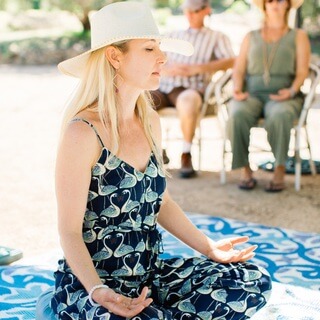
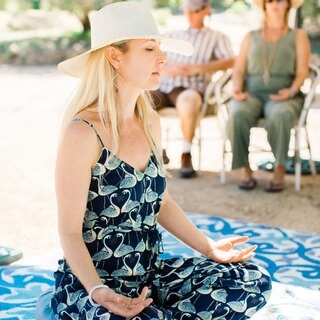
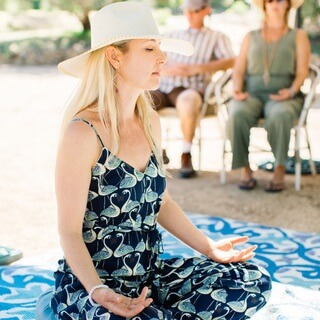
I meet every Tuesday morning as part of this meditation group and we talk on a topic.
We pick a word and we've covered all sorts of words like dissatisfaction and acceptance and openness and this week's word is truth.
We are learning truths about ourselves over the course of our lifetime.
There are universal truths,
There's spiritual truths,
There's scientific truths.
And in this episode,
You'll hear me unpack this concept of truth,
As well as dare you a little bit at the end to live your truth.
It's a truth or dare episode.
Oh,
Hi.
Come on in.
Perfect timing.
You love being perfect in all things.
We're a small group.
It always has a slumber party feel for me in here.
So we're a small group,
And before we officially get started,
I'm going to give the gift to all of you,
Because it's a gift that you all might want to participate in.
So this gift requires a ball jar.
And a sprouting lid.
To be purchased at Whole Foods.
And then it requires an organic bean of choice.
These are my favorite,
Which is organic mung beans,
But you could also use mung,
M-U-N-G,
But you can also use a lentil.
You could use a garbanzo bean.
These ones just always work well for me.
I got these at Cantwell's.
I mean,
Come on,
Like easy.
So you take a couple of tablespoons of the mung bean.
You put them in the jar.
You cover it with water.
Leave it overnight.
Yeah,
Leave it overnight.
Then you put it on your kitchen sink.
And in the morning,
You dump it out.
And every morning when you wake up,
You fill it with water and you dump it.
You fill it with water and you dump it.
And then it'll eventually become a sprout.
And you put it in your salad.
So I always have something growing in my kitchen at all times.
Sauerkraut or sourdough or sprouts.
Yeah,
There you go.
Please,
You don't need that many mung beans,
But you can make the rest until dull.
Okay.
So today we are,
I have,
I am Stevie Nicks,
Janis Joplin,
Whoever you want me to be.
I'm losing my voice.
I'm on day five of getting over a cold and I always lose my voice at the end of a cold.
So forgive me while I suck on lozenges.
So today we're exploring truth.
Truth.
And I have some of my favorite books.
This is one of my favorite books,
Why Buddhism is True.
It's a lot about the science behind Buddhism.
And yeah,
I see lots of nodding out there.
And then this is super fun,
Which is Bold Truths.
It's a great coffee table book.
And it has all these lovely big truths.
Look,
I opened up to this random one.
This is all there is.
This is like in kindergarten when your teacher used to hold up a book and show it to everybody in the corners.
No one has enough real friends.
Okay,
So these lovely images.
I'll give you one more.
Know yourself.
So in Tibetan Buddhism,
It's believed that early morning and dusk is when the dakinis come.
And the dakinis are sort of like mystical ghost-like female figures that come to you.
And that's a lot of reason why people often will meditate early in the morning or they'll meditate at dusk.
And there's a Dakini,
Dakini Niguma,
Who is known for saying that the truth has these four qualities to it.
It's so close that you can't see it.
You've had that experience.
It was so It was so close,
You just didn't see it and then all of a sudden you had that aha moment where it becomes so clear for you.
The truth is so simple,
We can't believe it.
Like the Beatles line,
Love is all you need,
Right?
And the truth is also so profound,
We can't fathom it.
So profound,
It's so big.
How could you fathom it?
And then this last one,
It's so good,
Can't accept it.
There's some truths in your life that are so good that it's hard to just really take it in.
Can't accept it.
And so I love those as sort of these reminders of truth.
And when we're talking about truth here,
We're not talking about absolute debates of right or wrong.
There are so many truths.
There's collective truth.
There's personal truths.
There's truths that you believed that then change and we're open and flexible to holding many truths at once.
I interviewed this professor,
Jonathan Schouler,
Who he's a fascinating professor,
But he's out at UCSB.
I didn't even know he was here at UCSB because so well known in areas of,
He's known for research on mind wandering and mind wondering.
And then he's also known for research on consciousness.
And some of his research on consciousness has to do with this idea that our consciousness is nested.
And so we have our consciousness,
But there's like little nested windows within there's other consciousness.
And so we're not conscious of different parts of our own knowing,
And then it pops up in like in places that we didn't know,
Like our unconscious pops up.
And he said that he's currently working on two different theories of consciousness with two different people that are actually completely divergent from each other.
So we can hold many truths at once.
And it's actually very important to hold many truths at once.
And there's truths that we have that are within us.
And often some of the truths that come to us or that we learn in life come from what Francis Weller talks about as like rough initiations,
Rough initiations.
We're all going through like,
You know,
Initiation when you're in a sorority or fraternity,
You have to go through initiation.
Well,
We're all going through initiations all the time.
And when you have a particularly rough one,
Like the first time you lose someone that you love or,
You know,
First time you lose a pet or you have the initiation into aging and your body starts to hurt,
Like,
Wait a minute,
It.
I'm aging here,
Right?
So these rough initiations offer you truths.
And that's where you learn is often from the rough initiations,
Your inner truths,
The things that are true for you.
And then we also can learn the truth through deep listening.
And the deep listening inside,
Deep listening to your body.
Your body kind of often can tell you.
Whole body yes or a whole body no or what you need,
But also deep listening to the intuition that comes from life experience.
And then truth also can come from that popping up of consciousness.
So Thomas Edison,
And Dali was known for doing this too,
But Thomas Edison used to hold these ball bearings when he'd go to sleep.
And then he had a steel plate underneath them.
And then as soon as he would fall asleep,
You know when you fall asleep and you move into N1 sleep,
So the early stages of REM when your body kind of moves into paralysis,
As soon as he'd move into N1 sleep,
The early stages of REM,
His hands would drop.
And the ball bearings would hit the plate and wake him up.
And that was his most creative,
Ingenious insights.
Right then.
There's a consciousness,
And they call it hypnagogic fuse,
So you know like when you're kind of in that like falling asleep state and you have an aha moment,
Or you're early in the morning,
You have those aha moments.
There's consciousness that comes to you,
Truths that come to you at unexpected times.
And there's also a truth that comes from solitude,
From solitude,
From having time alone with yourself,
The space to just mind wonder,
As Jonathan Schooler would say.
Just let your mind wonder on things and have that.
It's different than loneliness.
It's just having solitude,
Which is actually one of the things that we have less and less of,
Is time alone with ourselves,
Or even just like children playing with toys.
I'm like,
What's going to happen to toys?
Because there's iPads.
They're so much better than toys.
But all the creative things that can happen from a pile of Legos or when you were a kid and you made forts in your backyard or on your couch.
So there's the truth within us.
And what I actually would encourage you to do,
And I do this with my clients,
Especially the ones that are going through something pretty hard,
Is to keep a little notebook where you write down a truth that comes to you.
I have this community that meets online,
There's people from all over the world and all over the country and we were meeting yesterday morning in this community and I was asking them to take a moment to write down some of the truths that they know about themselves or what do they know to be true and they said things like one person said that I'm inherently good.
And I forget that all the time.
I think,
You know,
Like my critic comes in and I have to remember that I'm inherently good.
And,
You know,
Sort of the other truths that maybe you've learned in your life about this one,
Another one's like,
Remember,
Tomatoes give me heartburn.
And anytime I eat Mexican food,
Like,
Don't eat all the chips,
Because then you're going to not want the meal,
You know,
Like some of those basic truths that we override.
But then there's deeper truths.
And then there's,
How do we get to the truth that's beyond ourselves?
So if we think about there's the truth within us,
But really we as selves are interconnected,
As Dan Siegel would say,
And there's the truth beyond us.
And we can get to truth by having conversation,
Not conversation where we're generating our response in our head to whatever the person's about to say,
But to true conversation where you're having,
You're taking in and you're like really taking in what the other person is saying,
Really listening and questioning and being open to being wrong.
To have what's called epistemic humility.
To know that you don't know,
And then there's stuff that you do know.
And then the truth that can come to us from being connected to nature.
So there was just actually,
I just got a text.
I'm part of this big 10 UC climate change project.
And there's all these researchers across all of the UC campuses.
And we're all kind of working on this big project of helping university students navigate the challenges of climate change and the future.
And someone just posted in our group last night this big study that came out across 75 different countries.
So first of all,
It's cool.
That 75 countries that we're starting to do research like that,
That it's no longer weird research.
It's actually research that isn't white,
Educated,
Industrialized.
But across 75 countries,
That your connection to nature is one of the most important resilience factors for well-being,
Your connection to nature.
Do you have a tree that you love,
That you drive by or you walk by?
And how connected you are to nature that can help you with that.
Some of these truths.
So I put on here the big truths from science,
Big truths from spirituality,
And big truths from your own life experience.
And what we often find is that there's a consilience between them,
That when you look at science,
It sounds a lot like spirituality.
And when you look at spirituality,
It all of a sudden looks like science.
And then when you look at your own personal truths,
They're very similar to the collective truths.
But I've interviewed so many people.
I mean,
I've been interviewing people for a decade,
And scientists,
And spiritual teachers,
Authors,
And some of them really stand out to me as like,
Wow,
Some of the truths that they have stated,
Both through science,
That you are not a separate self.
This is one of actually the true things that we're seeing,
You know,
Through science.
Dan Siegel talks about the me and the we,
And there's me we,
And we know that from brain research and neuroscience,
But that shows up in all sorts of religions and spiritualities.
We think about the Old Testament,
Of thy neighbor.
As yourself.
So we just finished this project of the,
We had to tear down the house and make it all the code.
And then guess what's happening right next door to me across the canyon.
This person bought this house,
People have been living in this house for 40 years or whatever.
Someone bought the house and then within like a week,
This giant structure is being built and I'm like,
Those effers,
They don't have permits.
I'm gonna call the city on them.
Uh-oh.
Love thy neighbor as thyself,
Right?
We are not that separate.
And then,
You know,
Annie Murphy-Paul has a great book called The Extended Mind.
And she's a journalist.
She's written journals for the BBC.
One of my favorite interviews of all time is Annie Murphy-Paul.
And she talks about how the mind is not just the brain.
The mind is in your gestures.
The mind is in your spaces.
She talks about how the mind is in the Post-it notes that you lay out on the floor.
My mind is on this board.
You can think more generatively when you have a larger space to write on than a tiny space to write on.
So your mind is not just in your brain,
It's in your locations,
It's in your relationships,
Is a truth.
We have Rick Hansen's truth that what you place your attention on changes your brain.
Which you place your attention on.
So if you're criticizing and complaining and,
You know,
It'll change your brain to pay attention and strengthen the connections between criticism and complaints.
Versus if you're pointing out all the many victories and all the successes and all the positives and all the goods,
It'll shift towards that.
And then finally,
Awareness is different from what you are aware of.
You are not your thoughts.
You are not your feelings.
So all of this science is basically the same stuff that spirituality teaches.
And probably if you go to your own life experience,
What your life experience might teach you,
Too.
We can have truths.
That show up for us,
Insights.
Don't eat tomatoes that give you heartburn.
And we can make our list of truths or we can land on a truth that's percolating for us in our life right now.
The truth of vulnerability.
Vulnerability is what makes us feel,
You know,
Closer to you because you were vulnerable and now you know.
But then there's this other aspect of the game truth or dare,
Which is when you have a truth,
To dare yourself to take action when you know inside something is wrong.
To dare yourself to take action to support that truth.
And what I would encourage us all to do this week is maybe think about a truth that we want to dare ourselves to live out for the week.
What is your truth or dare?
And it may be just sort of like,
You know,
Yesterday in my meeting,
People were talking about just like,
I feel so much better when I wake up and I don't use my phone first thing and I go for my walk.
Okay,
That's a truth,
You kind of know that,
Then you dare yourself to do that.
And you took the dare of driving all the way from Santa Cruz to here.
So what was another way that you could dare yourself to be in this space of independence and trusting yourself?
So I just encourage you to think about that,
Truth or dare.
And then I dare you to make some mung bean sprouts.
When they get sprouted,
Put them in your fridge.
I should have said that,
Okay?
You can show us,
You can take a picture and show us.
Okay,
Bye.
Thank you so much for listening to this episode of the Wise Effort podcast.
Wise Effort is about you taking your energy and putting it in the places that matter most to you.
And when you do so,
You'll get to savor the good in your life along the way.
I would like to thank my team,
My partner in all things,
Including the producer of this podcast,
Craig,
Ashley Hyatt,
The podcast manager,
And thank you to Bangold at Bell and Branch for our music.
This podcast is for informational and entertainment purposes only and it's not meant to be a substitute.