The origin of Easter in Finland is most interesting.
In pre-Christian times,
People across the Northern Hemisphere have celebrated Spring Equinox between the 19th and the 23rd of March.
In Finland,
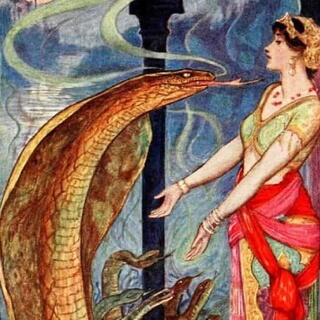
Spring Equinox was known as Matopäivä,
The Day of the Snakes.
Mato in Old Finnish meant both snake and worm and everything that slithered.
It was believed that on the day of the Spring Equinox,
Snakes and worms woke up from hibernation.
There are several myths in Finnish folklore telling how snakes came to be and according to one version,
Akka,
The earth goddess,
Was the one who created the snakes.
During Spring Equinox,
Akka woke up and all the snakes came out to dance in her honor.
The origins of Akka and the snake cult most likely was brought by the Baltic tribes.
Similar snake worship can be found from Latvia,
Lithuania and Estonia and it seems to have been very common in all Baltic countries in the past.
In Lithuania,
Snake was worshipped as one of the most sacred totem animals and it is very likely that the goddess Akka was inspired by Zemina,
Lithuanian goddess of the earth.
It was forbidden to let animals out to the fields during Spring Equinox because people believed that the fields were filled with dancing snakes.
Spring Equinox was a day when hunters and fishermen built small traps and fishing nets from willow twigs.
People made lots of weather forecasts on the Spring Equinox.
If there was a full moon on the night before,
Matopäivä,
The Spring Equinox,
Next day would be sunny,
But there would be frost during the night.
There were lots of taboos connected to this day.
Women were not allowed to do any chores that had something to do with snakes or handle objects that looked like worms or snakes,
Like sewing,
Spinning or even baking.
That was all forbidden.
If the pet was a snake,
People would give it milk and take good care of it.
People believed that there was powerful protective magic in the snakes,
Because they had access to the underworld.
The snake was the deliverer of hidden knowledge.
When Christianity arrived to Finland,
First in the form of Catholicism and later on as Lutheranism,
Easter got many new meanings and superstitions.
One of the weirdest customs that I have come across has to do with Maundy Thursday.
In Finnish,
Maundy Thursday is Kiirastorstai,
And Kiira was an evil spirit of Enviness.
People believed that if they were not good in terms with their neighbours,
They might send them kiiras to steal their luck.
To protect themselves,
They took a sleigh and put all kinds of metal objects to the sleigh and into their pockets.
They would hang a cowbell into their neck and pull the sleigh around the house while chanting a protection spell at the same time.
This custom was called Kiiranajo.
It is possible that this custom comes from the time period when pagan folk magic merged into Catholic traditions.
Incense was burned in the sleigh and driving the kiiras away became a purification ritual.
The more closer we come to the modern times,
Kiiranajo became a custom that was to mimic the sufferings of Jesus carrying the cross.
This custom is not practiced in modern day Finland,
And in fact,
I don't think most Finns have ever heard from it.
Four days of Easter,
From Maundy Thursday to Easter Sunday,
Were known as Piinaviikko,
The pain week.
After the Reformation in the 16th century,
Finland became a Lutheran country,
And the Finnish Lutheran Church has been often accused of highlighting such things as misery,
Suffering of Jesus' regression and self-loathe during Easter,
And this has made some psychological damage to some older Finnish generations.
Good Friday was known as Pitkä Perjantai,
The Long Friday.
It was called like that because people just wanted the day to end.
It was forbidden to laugh,
Make visits,
Cook food on the stove or make fire,
And people only ate cold foods.
Non-parents were allowed to spank their children.
Good Friday was followed by Easter Sunday,
Which in Finland was known as Langalauvantai,
The String Saturday,
Since according to the Bible nothing special was happening on Saturday.
It became the Witches' Day,
And it was filled with divination,
Superstitions,
Spells and magic.
Predictions were made to find out who was going to get married,
Who was going to have babies,
How the crop would grow and so on.
Spells that were performed during the night between Saturday and Sunday,
Standing on a crossroad of three roads during full moon,
Were extremely powerful.
In many cultures,
Autumn time is especially connected to witches,
But in Finland and other Scandinavian countries,
Spring is the time of witches,
And in the old times it was believed that witches were most powerful around Easter.
Holy Sunday was the end of fasting,
Good food was served and people were allowed to eat as much as they wanted.
In the old days eggs were a sacred food,
And in Finland eggs were only to be found during spring and the summer.
Like hunting predates way before the modern day commercial Easter,
There was one funny superstition about how to find eggs.
The person had to go to the cow shed,
Touch the testicles of a ram or a goat while chanting and then they would know where to find eggs.
Another superstition was that if a person went to get water from the spring in Easter morning before cows made any noise and then they would wash their face,
They would remain strong and fresh for the rest of the year.
In modern day Finland there are lots of decorations connected to Easter.
International symbols of Easter like baby chickens,
Eggs and bunnies are popular.
One of the most common Finnish Easter traditions which originates from Eastern Finland is picking willow twigs.
Willow twigs are decorated with colorful ribbons and feathers.
Sometimes eggs that are painted to other colors are attached to the twigs as well.
Willow twigs were originally used as wands in pagan rituals.
Fields were blessed with these willow twigs in the springtime.
One of the most fun and interesting Finnish Easter traditions are Easter witches.
The tradition is 200 years old and originally came to Finland from Sweden in the 18th century and it is still very popular tradition in Western Finland.
Easter witch is known as trulli which comes from Swedish word trollan meaning a troll or a tiny witch.
In the morning of Palm Sunday children dress up as trulli.
They put on very colorful skirts and scarves,
Both boys and girls,
And some paint freckles to their faces.
Trullis have copper coffee pots where they store all the sweets and candy they get.
Tradition is bit similar to American Halloween trick or treats tour.
Kids go in groups from house to house exchanging decorated willow twigs to money and sweets.
They cast a little spell with the twig.
It goes like this.
Virvon varvon tuoreeks terveeks,
Tulevaks vuodeks,
Vitsa sulle,
Paakka mulle.
I will make a spell for you to ensure good health for the coming year.
A twig for you,
A reward for me.
When I was a child dressing up as trulli was the best part of Easter.
Many times I and my friends planned carefully our route and went to the houses where we knew there was the best candies.
In most parts of western Finland,
Palm Sunday is the day when trullis are on the move,
But depending on the area,
Witching day can also be Easter Sunday or Holy Sunday.
In Finnish,
Easter is pääsiäinen,
And this word is derived from the Hebrew word pesach,
Which is a Jewish celebration becoming free from slavery,
And also from the Swedish word pask,
Meaning Easter.