The Day of the Bear is an old Finnish holiday.
Nowadays it is mostly celebrated by Finnish neo-pagans,
But back in the days it was an actual holiday.
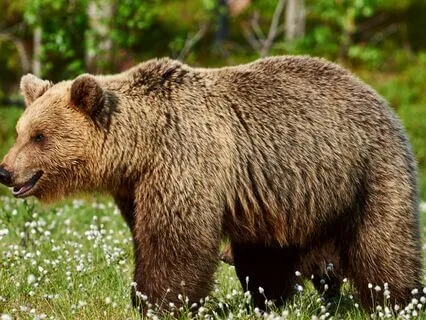
Bear was one of the most respected animals in Finland,
And there was a bear god who people worshipped.
The Day of the Bear is celebrated in 13th of July,
Which is the warmest day of the year.
It is the polar opposite to the Finnish midwinter day,
Which is 16th of January,
And the coldest day of the year.
Day of the Bear is the birthday of the bear.
Bear had its origins in the star sky.
It was the son of Honglötar,
And he was landed to the earth in a golden basket.
Bear was a shamanistic god,
And before the creation of the Finnish pantheon of gods,
The early inhabitants worshipped the bear as a totem animal.
There was something very human in the bear,
And people believed that bear was a mythical ancestor.
Because the bear was seen as a god-like creature,
Bear received more respect from men than any other animal.
Bear hunt was common in western Finland,
And that is when people celebrate the life of the bear after the hunt.
These rituals included entire performances about the life of the bear.
Groups of people would perform how the bear was landed from the sky,
How he married a human girl and became the ancestor of man.
This part was usually performed by a couple that recently got married.
In the end,
The bear was buried in a similar way to humans.
Bear was buried under a pine tree,
Usually near a lake,
So that the bear would be able to catch fish in the afterlife,
And the skull of the bear was hanged to the top of the pine tree,
Looking towards the constellation of Ursa Major,
The original home of the bear.
The day of the bear was really about celebrating the spirit of the bear.
People wished that the bears would not attack the cattle or people.
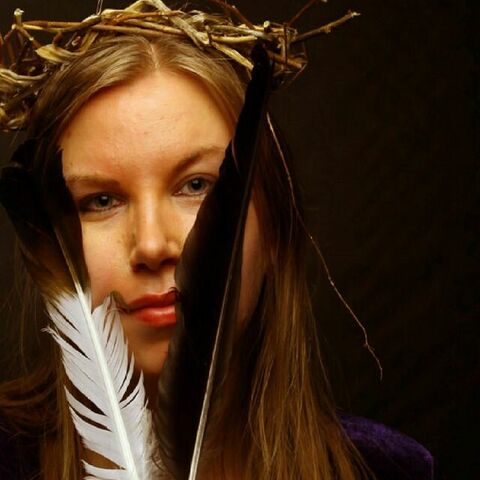
One of the customs of this day was that a young woman gathered into groups and walked to the mountains and sang.
This tradition was also something that was done in Finland's neighboring country,
Estonia,
Where the day of the bear was also celebrated.
People left food sacrifices to the sacred groves and altars to the woods.
One of the traditions was to throw copper coins to the oven.
This might have its origin in Finnish mythology,
Because in the folklore it is said that bear's claws are made of copper.
They can symbolize the golden basket,
Where the bear was landed to the earth.
Even after the arrival of Christianity,
For many centuries people left copper coins to the bear spirit in churches.
Other common spells of this day were related to fertility and keeping the evil spirits away.
Bear is a sacred animal in many cultures.
It is often connected to humans.
When bear is standing on two foot from far away it looks like a human.
Bear mutters breastfeed their cubs similar way to human mutters.
In Finland the magic of the bear had really to do with bear's winter sleep.
It's cold in Finland and bears go to hibernation.
But back in the days,
When people did not understand the science and biology behind bear's behavior,
People believed that bear had magic.
When the first snow came,
Bear went to its cave to sleep and when the spring began,
The bear woke up again.
But people genuinely believed that the bear died when the winter came and in the spring time it woke from the dead.
So for the ancient Finns,
Bear was a god and a shaman because only gods could overcome death and live forever.
The Finnish word for the bear is karhu and it comes from the word karher,
Which means rough fur.
But in the Finnish language we have thousands of words and nicknames for the bear.
This is because the bear was a god and people were not allowed to talk to the bear spirit directly,
Otherwise the bear would appear,
So people would come up with nicknames like honey puffs.
These names were usually very cute or very respectful,
Like the golden king of the forest,
Because living together with the bears required respect.
When these pagan beliefs were strongest,
Finland was an agricultural society and there was both respect and fear to the animals who lived in the woods.