The Water Babies,
A Fairy Tale for a Land Baby,
By Charles Kingsley,
Chapter 4,
Part 1.
So the salmon went up,
After Tom had warned them of the wicked old otter.
And Tom went down,
But slowly and cautiously,
Coasting along the shore.
He was many days about it,
For it was many miles down to the sea,
And perhaps he would have never found his way,
If the fairies had not guided him,
Without his seeing their fair faces,
Or feeling their gentle hands.
And,
As he went,
He had a very strange adventure.
It was a clear,
Still September night,
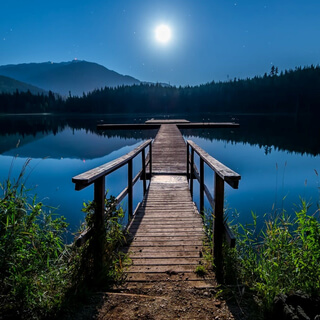
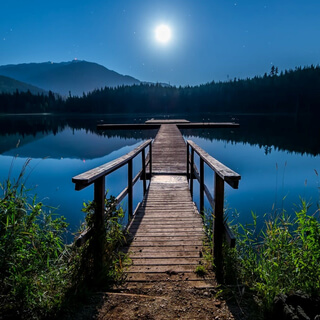
And the moon shone so brightly down through the water,
That he could not sleep,
Though he shut his eyes as tight as possible.
So at last he came up to the top,
And sat upon a little point of rock,
And looked up at the broad yellow moon,
And wondered what she was,
And thought that she looked at him,
And he watched the moonlight on the rippling river,
And the black heads of the firs,
And the silver frosted lawns,
And listened to the old owl hoot,
And the snipe's bleat,
And the fox's bark,
And the otter's laugh,
And smelt the soft perfume of the birches,
And the wafts of heather honey off the grouse moor far above,
And felt very happy,
Though he could not tell why.
You,
Of course,
Would have been very cold sitting there on a September night,
Without the least bit of clothes on your wet back.
But Tom was a water baby,
And therefore felt cold no more than a fish.
Suddenly he saw a beautiful sight.
A bright red light moved along the riverside,
And threw down into the water a long taproot of flame.
Tom,
Curious little rogue that he was,
Needed to go and see what it was.
So he swam to the shore,
And met the light as it stopped over a shallow run at the edge of a low rock.
And there,
Underneath the light,
Lay five or six great salmon,
Looking up at the flame with their great goggle eyes,
And wagging their tails as if they were much pleased at it.
Tom came to the top to look at this wonderful light nearer,
And made a splash.
And he heard a voice say,
There was a fish rose.
He did not know what the words meant,
But he seemed to know the sound of them,
And to know the voice which spoke them.
And he saw on the bank three great two-legged creatures,
One of whom held the light,
Flaring and sputtering,
And another a long pole.
And he knew they were men,
And he was frightened,
And crept into a hole in the rock from which he could see what went on.
The man with the torch bent down over the water and looked earnestly in,
And then he said,
Tack that muckle,
Fellow.
He's over fifteen pounds,
And hold your hands steady.
Tom felt that there was some danger coming,
And longed to warn the foolish salmon,
Who kept staring up at the light as he was bewitched.
But before he could make up his mind,
Down came the pole into the water.
There was a fearful splash and struggle,
And Tom saw that the poor salmon was speared right through,
And was lifted out of the water.
And then from behind there sprang on these three men three other men,
And there were shouts and blows and words which Tom recollected to have heard before.
And he shuddered and turned sick at them now,
For he felt somehow that they were strange and ugly and wrong and horrible.
And it all began to come back to him.
They were men,
And they were fighting,
Savage,
Desperate,
Up and down fighting,
Such as Tom had seen too many times before.
And he stopped his little ears,
And longed to swim away,
And was very glad that he was a water baby,
And had nothing to do with any more with horrid dirty men,
With foul clothes on their back,
And foul words on their lips.
But he dared not stir out of his hole,
While the rock shook over his head with the trampling and struggling of the keepers and the poachers.
All of the sudden there was a tremendous splash,
And a frightful flash,
And a hissing.
And all was still,
For into the water close to Tom fell one of the men,
He who held the light in his hand.
Into the swift river he sank,
And rolled over and over in the current.
Tom heard the men above run along,
Seemingly looking for him,
But he drifted down into the deep hole below,
And there he lay quite still,
And they could not find him.
Tom waited a long time,
Till all was quiet,
And then he peeped out and saw the man lying.
At last he screwed up his courage and swam down to him.
Perhaps,
He thought,
The water has made him fall asleep,
As it did me.
Then he went nearer.
He grew more and more curious.
He could not tell why.
He must go and look at him.
He would go very quietly,
Of course.
So he swam round and round him,
Closer and closer,
And as he did not stir,
At last he came quite close,
And looked him in the face.
The moon shone so bright that Tom could see every feature,
And as he saw,
He recollected bit by bit,
It was his old master Grimes.
Tom turned tail and swam away as fast as he could.
Oh dear me,
He thought,
Now he will turn into a water baby.
What a nasty troublesome one he will be,
And perhaps he will find me out and beat me again.
So he went up the river again a little way,
And lay there the rest of the night under an alder root,
But when morning came,
He longed to go down again to the big pool,
And to see whether Mr.
Grimes had turned into a water baby yet.
So he went very carefully,
Peeping around all the rocks,
And hiding under all the roots.
Mr.
Grimes lay there still.
He had not turned into a water baby.
In the afternoon,
Tom went back again.
He could not rest till he had found out what had become of Mr.
Grimes.
But this time,
Mr.
Grimes was gone,
And Tom made up his mind that he was turned into a water baby.
He might have made himself easy,
Poor little man.
Mr.
Grimes did not turn into a water baby,
Or anything like one at all.
But he did not make himself easy,
And a long time he was fearful lest he should meet Grimes suddenly in some deep pool.
He could not know that the fairies had carried him away,
And put him,
Where they put everything which falls into the water,
Exactly where it ought to be.
But do you know that what happened to Mr.
Grimes had such an effect on him that he never poached salmon any more?
And it is quite certain that when a man becomes a confirmed poacher,
The only way to cure him is to put him underwater for twenty-four hours like Mr.
Grimes.
So when you grow to be a big man,
Do you behave as all honest fellows should,
And never touch a fish,
Or a head of game which belongs to another man without his express leave?
And then people will call you a gentleman,
And treat you like one,
And perhaps give you good sport,
Instead of hitting you into the river,
Or calling you a poaching snob.
Then Tom went on down,
For he was afraid of staying near Grimes,
And as he went all the vale looked sad.
The red and yellow leaves showered down the river.
The flies and beetles were all dead and gone.
The chill autumn fog lay low upon the hills,
And sometimes spread itself so thickly on the river that he could not see his way.
But he felt his way instead,
Following the flow of the stream,
Day after day,
Past great bridges,
Past boats and barges,
Past the great town with its wharfs,
The mills,
The tall smoking chimneys,
And ships which rowed at anchor in the stream.
And now and then he ran against their hossers,
And wondered what they were,
And peeped out,
And saw the sailors lounging on board,
Smoking their pipes,
And ducked under again,
For he was terribly afraid of being caught by man,
And turned into a chimney-sweep once more.
He did not know that the fairies were close to him always,
Shutting the sailors' eyes lest they should see him,
And turning him aside from mill-races,
And sewer-mouths,
And all foul and dangerous things.
Poor little fellow!
It was a dreary journey for him,
And more than once he longed to be back in Vendale,
Playing with the trout in the bright summer sun.
But it could not be.
What has been once can never come over again,
And people can be little babies,
Even water-babies,
Only once in their lives.
Besides,
People who make up their minds to go and see the world as Tom did must need find it a weary journey.
Lucky for them if they do not lose heart and stop halfway,
Instead of going on bravely to the end as Tom did.
For then they will remain neither boys nor men,
Neither fish,
Flesh,
Nor good red herring,
Having learnt a great deal too much,
And yet not enough,
And sown their wild oats without having the advantage of reaping them.
But Tom was always a brave,
Determined little English bulldog who never knew when he was beaten,
And on and on he held till he saw a long way off the red buoy through the fog.
And then he found to his surprise the stream turned round and running up inland.
It was the tide,
Of course,
But Tom knew nothing of the tide.
He only knew that in a minute more the water,
Which had been fresh,
Turned salt all around him.
And then there came a change over him.
He felt as strong and light and fresh as if his veins had run champagne and gave,
He did not know why,
Three skips out of the water a yard high and his head over heels,
Just as the salmon do when they first touch the noble rich salt water,
Which,
As some wise men tell us,
Is the mother of all living things.
He did not care now for the tide being against him.
The red buoy was in sight,
Dancing in the open sea,
And to the buoy he would go,
And to it he went.
He passed grey shoals of bass and mullet,
Leaping and rushing in after the shrimps,
But he never heeded them or they him.
And once he passed a great black shiny seal who was coming in after the mullet.
The seal put his head and shoulders out of the water and stared at him,
Looking fat and greasy.
And Tom,
Instead of being frightened,
Said,
How do you do,
Sir?
What a beautiful place the sea is.
And the old seal,
Instead of trying to bite him,
Looked at him with his soft,
Sleepy,
Winking eyes and said,
Good tide to you,
My little man.
Are you looking for your brothers and sisters?
I passed all of them playing outside.
Oh,
Then,
Said Tom,
I shall have playfellows at last.
And he swam on to the buoy and got upon it,
For he was quite out of breath,
And sat there and looked round for water babies,
But there was none to be seen.
The sea breeze came in freshly with the tide and blew the fog away,
And the little waves danced for joy around the buoy,
And the old buoy danced with them.
The shadows of the clouds ran races over the bright blue bay and yet never caught each other up,
And the breakers plunged merrily upon the white sands and jumped up over the rocks to see what the green fields inside were like,
And tumbled down and broke themselves all to pieces and never minded it a bit,
But mended themselves and jumped up again,
And the terns hovered over Tom like huge white dragonflies with black heads,
And the gulls laughed like girls at play,
And the sea pies,
With their red bills and legs,
Flew to and fro from the shore to shore and whistled sweet and wild,
And Tom looked and looked and listened,
And he would have been very happy if he could only have seen the water babies.
Then when the tide turned,
He left the buoy and swam round and round in search of them,
But in vain.
Sometimes he thought he heard them laughing,
But it was only the laughter of the ripples,
And sometimes he thought he saw them at the bottom,
But it was only white and pink shells,
And once he was sure he had found one,
For he saw two bright eyes peeping out of the sand.
So he dived down and began scraping the sand away and cried,
Don't hide,
I do want someone to play with so much,
And out jumped a great turbot with his ugly eyes and mouth all awry,
And flopped away along the bottom,
Knocking poor Tom over,
And as he sat down at the bottom of the sea and cried salt tears from sheer disappointment.
To have come all this way and faced so many dangers and yet to find no water babies?
How hard!
Well,
It did seem hard,
But people,
Even little babies,
Cannot have all they want without waiting for it and working for it,
Too.
My little man,
As you will find out someday.
And Tom sat upon the buoy long days,
Long weeks,
Looking out to sea and wondering when the water babies would come back,
And yet they never came.
Then he began to ask all the strange things which come in and out of the sea if they had seen any,
And some said yes,
And some said nothing at all.
He asked the bass and the pollock,
But they were so greedy after the shrimps that they did not care to answer him a word.
Then there came in a whole fleet of purple sea snails floating along,
Each on a sponge full of foam.
And Tom said,
Where do you come from,
You pretty creatures?
And have you seen the water babies?
And the sea snails answered,
Once we come,
We do not know,
And whether we are going,
Who can tell?
We float out our life in the mid-ocean with the warm sunshine above our heads and the warm gulf stream below,
And that is enough for us.
Yes,
Perhaps we have seen the water babies.
We have seen many strange things as we sailed along,
And they floated away,
The happy stupid things,
And all went ashore upon the sands.
Then there came in a great lazy sunfish,
As big as a fat pig cut in half,
And he seemed to have been cut in half too,
And squeezed into a clothes press till he was flat.
But to all his big body and big fins he had only a little rabbit's mouth,
No bigger than Tom's.
And when Tom questioned him,
He answered in a little squeaky,
Feeble voice,
I'm sure I don't know,
I've lost my way.
I meant to go to the Chesapeake,
And I'm afraid I've got wrong somehow.
Dear me,
It was all following that pleasant warm water.
I'm sure I've lost my way.
And when Tom asked him again,
He could only answer,
I've lost my way,
Don't talk to me,
I want to think.
But,
Like a good many other people,
The more he tried to think the less he could.
And Tom saw him blundering about all day,
Till the coast guardsmen saw his big fin above the water,
And rowed out,
And struck a boat hook into him,
And took him away.
They took him up to the town,
And showed him for a penny a head,
And made a good day's work of it.
But of course Tom did not know that.
Then there came by a shoal of porpoises,
Rolling as they went,
Papas and mamas and little children,
And all quite smooth and shiny,
Because the fairies French polished them every morning,
And they sighed so softly as they came by,
That Tom took courage to speak to them,
But all they answered was,
Hush,
Hush,
Hush,
For that was all they had learned to say.
And then there came a shoal of basking sharks,
Some of them as long as a boat,
And Tom was frightened at them.
But they were a very lazy good natured fellow,
Not greedy tyrants,
Like white sharks,
And blue sharks,
And ground sharks,
And hammerheads who eat men,
Or sawfish,
And threshers,
And ice sharks,
Who hunt the poor old whales.
They came and rubbed their great sides against the buoy,
And lay basking in the sun with their back fins out of the water,
And winked at Tom.
But he could never get them to speak.
They had eaten so many herrings that they were quite stupid.
And Tom was glad when a collie or brig came by and frightened them all away,
For they did smell most horribly,
Certainly,
And he had to hold his nose tight as long as they were there.
And then there came a beautiful creature,
Like a ribbon of pure silver with a sharp head,
And very long teeth,
But it seemed very sick and sad.
Sometimes it rolled helplessly on its side,
And then it dashed away like white fire,
And then it lay sick again and motionless.
Where do you come from?
Asked Tom.
And why are you so sick and sad?
I come from the warm Carolinas,
And the sandbanks fringed with pines,
Where the great owl rays leap and flap like giant bats upon the tide.
But I wandered north and north upon the treacherous warm gulf stream till I met with the cold icebergs afloat in the mid-ocean.
So I got tangled among the icebergs and chilled with their frozen breath.
But the water babies helped me from among them and set me free again,
And now I am mending every day.
But I am very sick and sad,
And perhaps I shall never get home again to the owl rays anymore.
Oh!
Cried Tom.
And you have seen water babies?
Have you seen any near here?
Yes,
They helped me again last night,
Or I should have been eaten by a great black porpoise.
How vexatious!
The water baby's close to him,
And yet he could not find one.
And then he left the buoy and used to go along the sands and rounds the rocks and come out in the night,
Like the forsaken merman in Mr.
Arnold's beautiful,
Beautiful poem,
Which you must learn by heart some day,
And sit upon a point of rock among the shining seaweeds and the low October tides,
And cry and call for the water babies.
But he never heard a voice call in return,
And at last,
With his fretting and crying,
He grew quite lean and thin.
But one day among the rocks he found a playfellow.
It was not a water baby,
Alas,
But it was a lobster,
And a very distinguished lobster it was,
For he had live barnacles on his claws,
Which is a great mark of distinction in lobsterdom,
And no more to be bought for money than a good conscience or the Victoria Cross.
Tom had never seen a lobster before,
And he was mightily taken with this one,
For he thought him the most curious,
Odd,
Ridiculous creature he'd ever seen.
And there he was not far wrong,
For all the ingenious men and all the scientific men and all the fanciful men in the world,
With all their old German bogey painters and the bargain,
Could never invent,
If all their wits were boiled into one,
Anything so curious and so ridiculous as a lobster.
He had one claw knobbed and the other jagged,
And Tom delighted in watching him hold on to the seaweed with his knobbed claw,
While he cut up salads with his jagged ones,
And then put them into his mouth after smelling at them like a monkey.
And always the little barnacles threw out their casting nets and swept the water and came in for their share of whatever there was for dinner.
But Tom was most astonished to see how he fired himself off.
Snap!
Like the leapfrogs,
Which you make out a goose's breastbone.
Certainly he took the most wonderful shots,
And backwards too,
For if he wanted to go into a narrow crack ten yards off,
What do you think he did?
If he had gone in head foremost,
Of course he could not have turned around.
So he used his tail to do it and lay his long horns,
Which carry his sixth sense,
In their tips,
And nobody knows what sixth sense is,
Straight down his back to guide him,
And twist his eyes back till they're almost out of their sockets,
And then made ready,
Present,
Fire,
Snap.
And away he went,
Pop into the hole,
And peep out of the twiddled little whiskers as much as to say,
You couldn't do that.
Tom asked him about the water babies.
Yes,
He said,
He had seen them often,
But he did not think much of them.
They were meddlesome little creatures.
They went about helping fish and shells which got into scrapes.
Well,
For his part,
He should be ashamed to be helped by little soft creatures when they didn't even have a shell on their backs.
He had lived quite long enough in the world to take care of himself.
He was a conceited fellow,
The old lobster,
And not very civil to Tom,
And you will hear how he had to alter his mind before he was done,
As conceited people generally have.
But he was so funny,
And Tom was so lonely that he could not quarrel with him,
And they used to sit in holes in the rocks and chat for hours.
And about this time,
There happened to Tom a very strange and important adventure.
So important indeed,
That he was very near never finding the water babies at all.
And I'm sure you would have been sorry for that.
I hope that you have not forgotten the little white lady all this while.
At least,
Here she comes,
Looking like a clean,
White,
Good little darling,
As she always was,
And always will be.
For it befell in the pleasant short December days,
When the wind always blows from the southwest,
Till Old Father Christmas comes and spreads the great white tablecloth,
Ready for little boys and girls to give the birds their Christmas dinner of crumbs.
It befell,
To go on,
In the pleasant December days,
That Sir John was so busy hunting that nobody at home could get a word out of him.
Four days a week he hunted,
And very good sport he had.
In the other two he went to the bench and the board of guardians,
And very good justice he did.
And when he got home in time,
He dined at five.
For he hated this absurd new fashion of dining at eight in the hunting season,
Which forces a man to make interest with the footman for cold beef and beer as soon as he comes in,
And so spoil his appetite,
And then sleep in an armchair in his bedroom,
All stiff and tired,
For two or three hours he can get his dinner like a gentleman.
And do you like Sir John,
My dear little man,
When you are your own master?
And if you want either to read hard or ride hard,
Stick to the good old Cambridge hours of breakfast at eight and dinner at five,
By which you may get two days' work out of one.
But of course,
If you find a fox at three in the afternoon and run him till dark and leave off twenty miles from home,
Why,
You must wait for your dinner till you can get it,
As better men than you have done.
Only see that if you go hungry your horse does not,
But give him warm gruel and beer and take him gently home,
Remembering that good horses don't grow on the hedge like blackberries.
It befell to go on a second time that Sir John,
Hunting all day and dining at five,
Fell asleep every evening and snored so terribly that all the windows and hearth overshook and the soot fell down the chimneys,
Whereon my lady,
Being no more able to get conversation out of him than a song out of a dead nightingale,
Determined to go off and leave him and the doctor and Captain Swinger the agent to snore in concert every evening to their heart's content.
So she started for the seaside with all the children in order to put herself and them into condition by mild applications of iodine.
She might as well have stayed at home and used Perry's liquid horse blister,
For there was plenty of it in the stables,
And then she would have saved her money and saved the chance also of making all the children ill instead of well,
As hundreds are made,
By taking them to some nasty-smelling undrained lodging and then wondering how they caught scarletina and diphtheria.
But people won't be wise enough to understand that till they are dead of bad smells and then it's too late.
Besides,
You see,
Sir John did certainly snore very loud.
But where she went to nobody must know,
For fear young ladies should begin to fancy that there are water babies there,
And so hunt and hawk after them,
Besides rising the price of lodgings and keeping them in aquariums,
As the ladies at Pompeii,
As you may see by the paintings,
Used to keep cupids in cages,
But nobody ever heard that they starved the cupids or let them die of dirt and neglect,
As English ladies do,
By the poor sea beast,
So nobody must know where my lady went.
Letting water babies die is as bad as taking singing birds' eggs,
For though there are thousands,
Aye,
Millions,
Both of them in the world,
Yet there is not one too many.
And that is the end of our story this evening.
Until next time,
Sweet dreams.